
Wildlife at Great Sand Dunes: What You'll See and Where to Look
Great Sand Dunes is more than sand dunes. The Colorado national park covers three distinct ecosystems: the semi-arid grasslands of the San Luis Valley, the dune field itself, and the conifer forests covering the foothills of the Sangre de Cristo Mountains. Three habitats, each with its own wildlife, occasionally meeting at the edge of the sand.
Here are the five signature species to remember: pronghorn, elk, black bear, coyote, and Ord's kangaroo rat. From grassland sprinters to nocturnal sand dwellers, their lifestyles couldn't be more different.
Great Sand Dunes' Signature Wildlife
Pronghorn
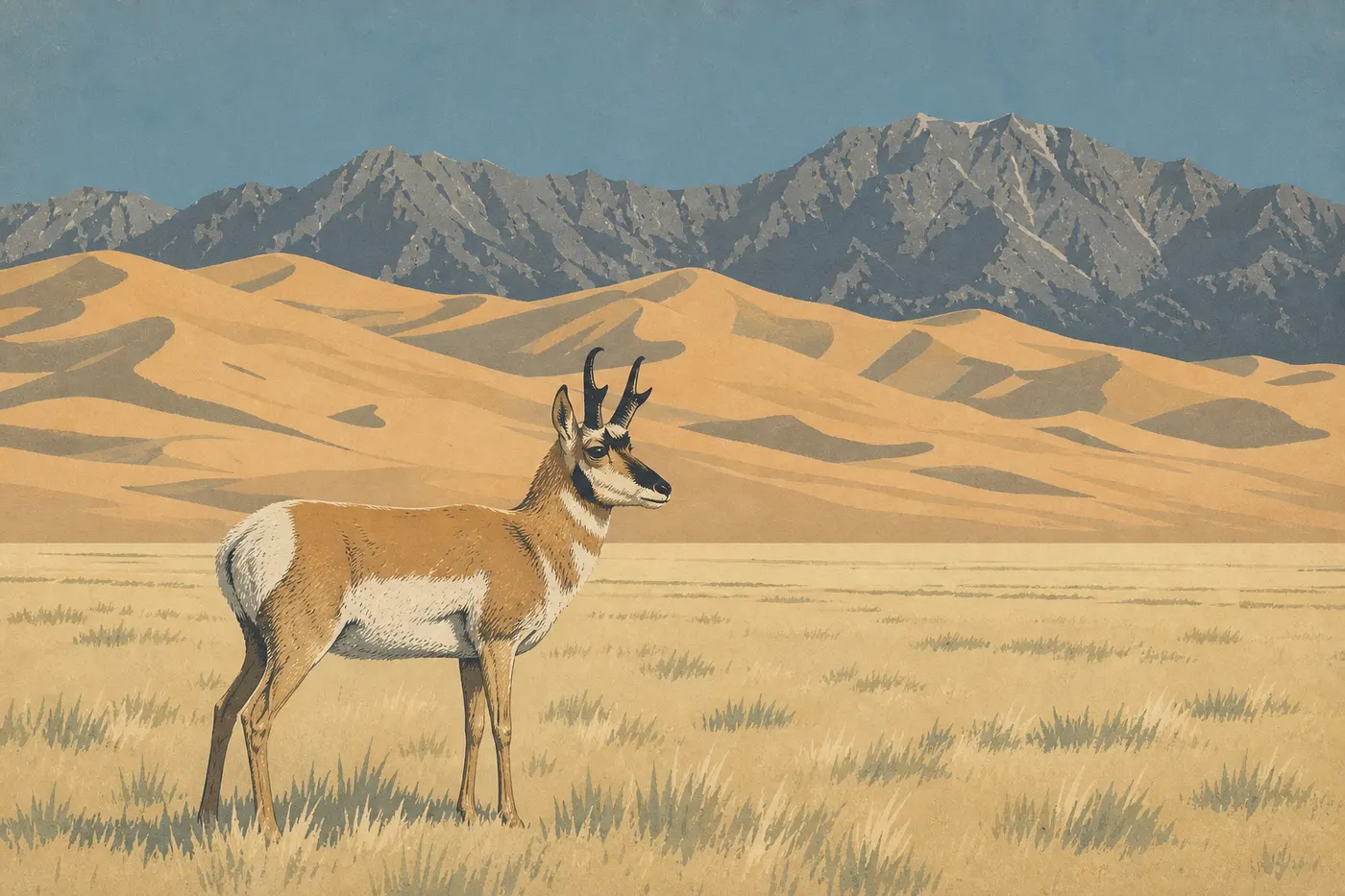
Pronghorn are the animals you're most likely to spot in the park. They graze in the valley's grasslands east of CO 150, often in groups of several dozen. Their tawny coats stand out against the dry grass, and their short, forked horns make them unmistakable.
Their calm appearance hides North America's fastest land animal. Pronghorn can top 53 mph and maintain 34 mph for several miles, an endurance trait inherited from coevolution with prehistoric predators that have since disappeared. From the car, they'll barely notice you. Approach on foot, though, and they'll be gone in seconds.
Elk
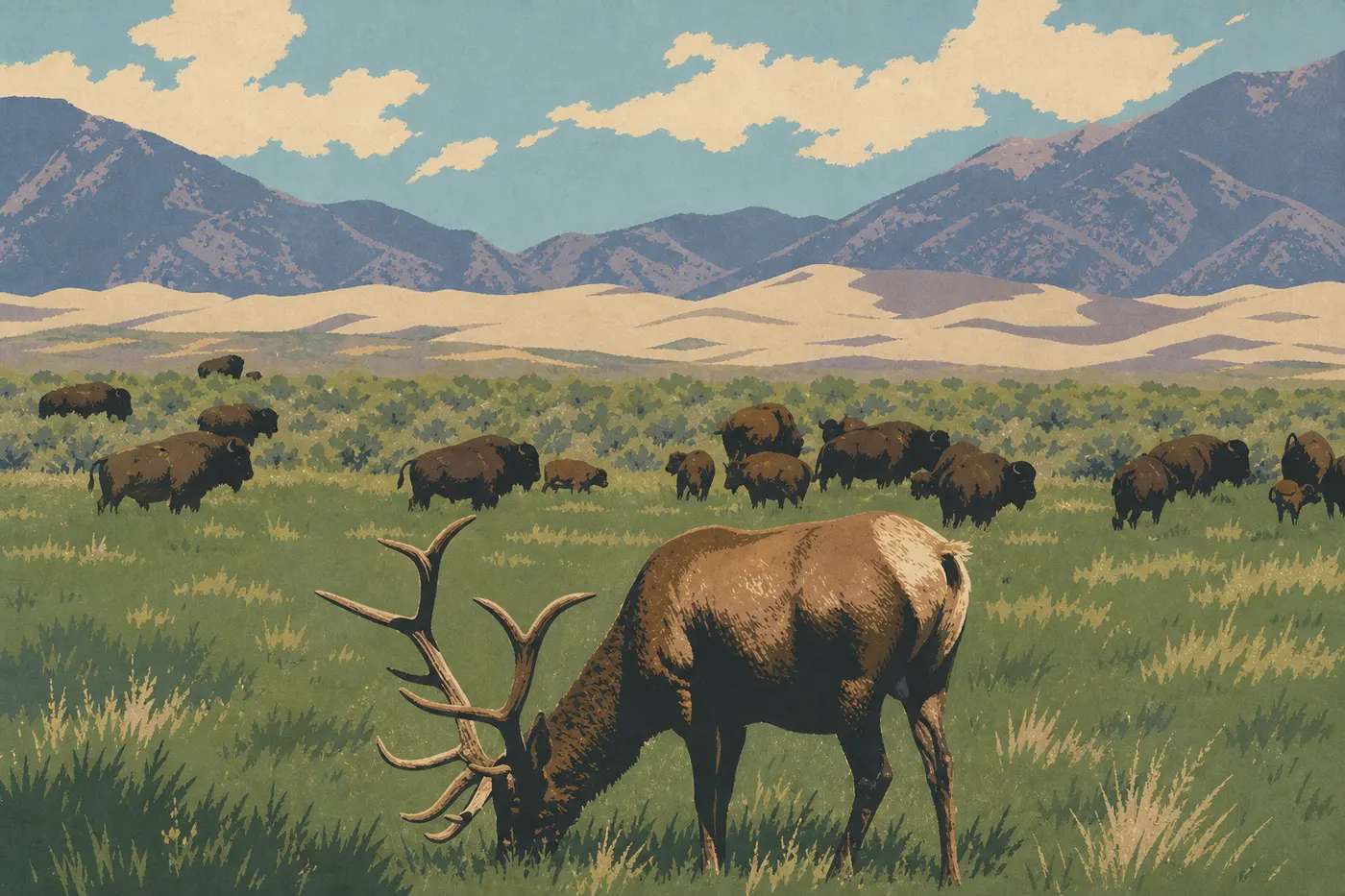
Elk are the park's largest mammals. Adult males weigh between 550 and 730 pounds and carry antlers that span more than 3 feet by late summer. They mostly frequent the forest edges at higher elevations on the Sangre de Cristo side, sometimes coming down to Medano Creek at dawn.
In September and early October, the rut transforms the park. Before dawn and at dusk, males let out a sharp, raspy bugle that echoes through the conifers. If you're visiting then, set your alarm for 5:30 a.m.
Black Bear
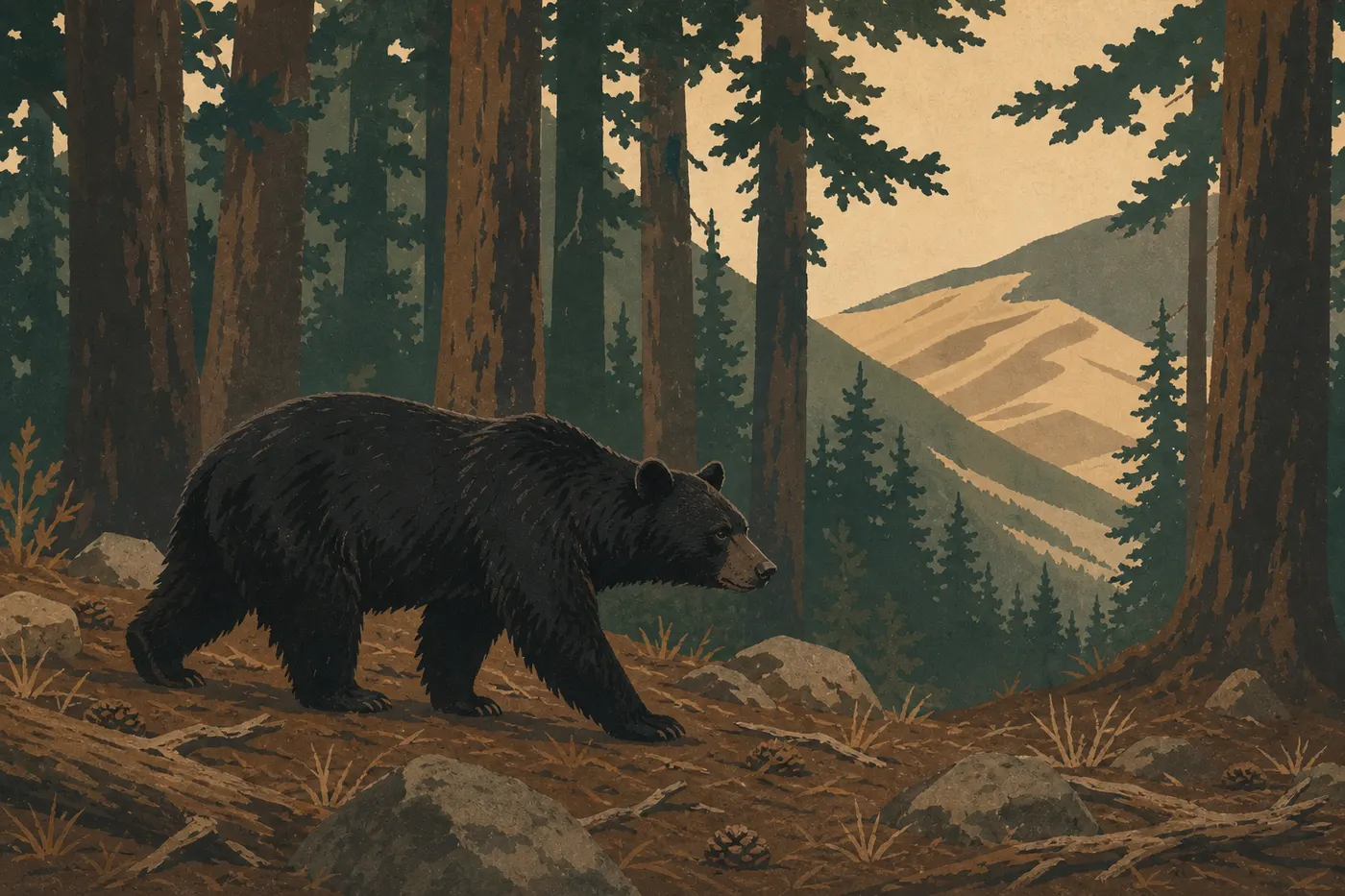
Black bears (Ursus americanus) live in the park's wooded areas and the adjacent preserve. Omnivorous and opportunistic, they eat berries in summer, acorns in fall, and readily dig into anthills in any season. Their coats range from deep black to cinnamon brown, which often leads to confusion with grizzlies.
Black Bear or Grizzly? Clearing Up the Confusion
The question comes up every season: are there grizzlies at Great Sand Dunes? No. Grizzlies (Ursus arctos horribilis) disappeared from Colorado, and the state's last confirmed sighting dates to the 1970s. Every bear here is a black bear.
To tell them apart, look for these visual differences. A grizzly has a pronounced muscular hump between its shoulders, a broad, flat facial profile, and long, pale claws that are easy to see. A black bear has a straight back, a slender muzzle, and short claws. The distinction also changes how you should respond to an encounter (see the safety section below).
Ord's Kangaroo Rat
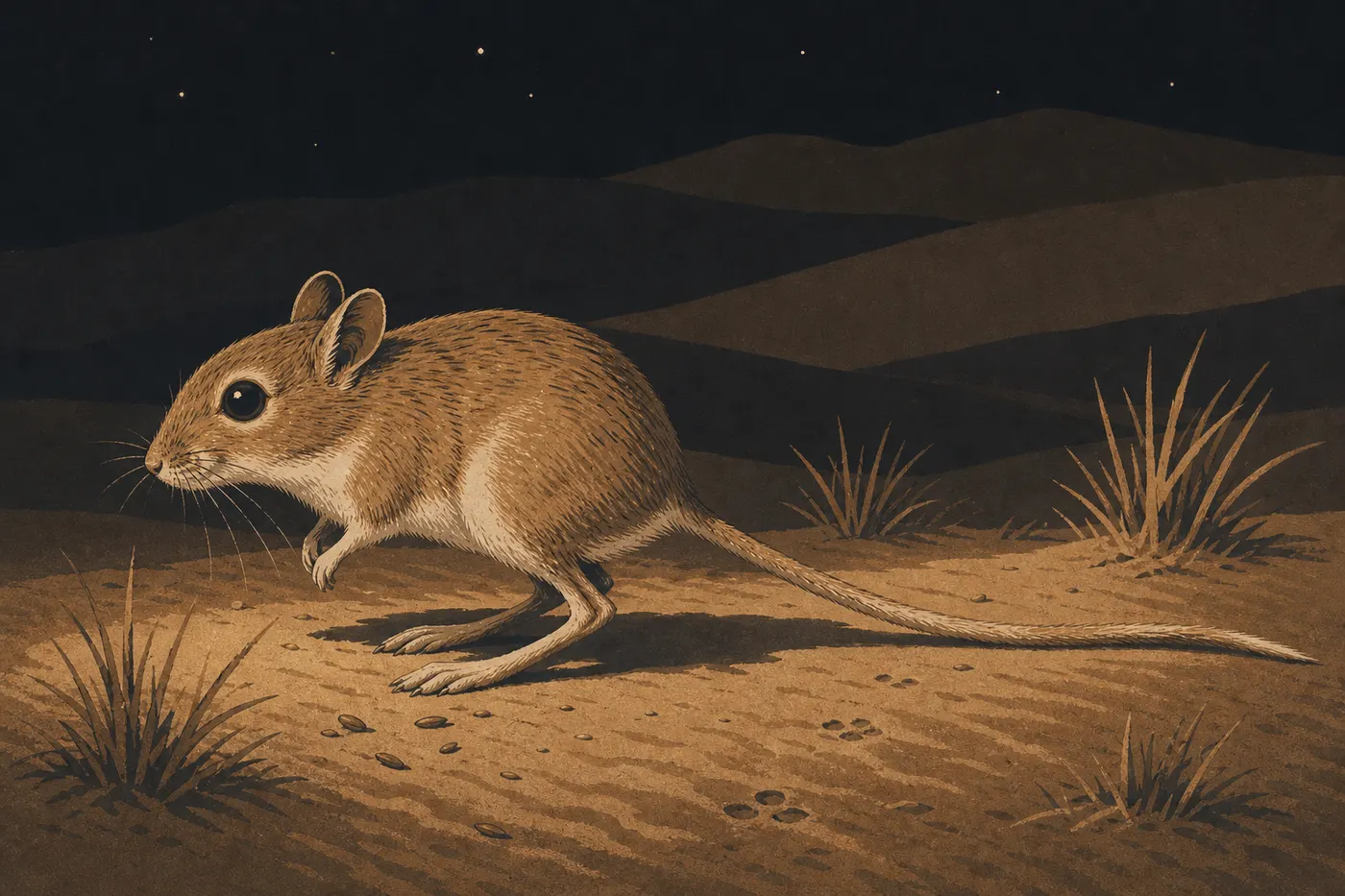
Ord's kangaroo rat (Dipodomys ordii) is the dune field's most specialized resident. Its oversized hind legs let it make quick leaps and sharp turns to escape predators. It spends the day in a burrow dug into loose sand and comes out only after sunset.
Its most striking trait is that it never drinks. All the water it needs comes from metabolizing the seeds it stores in quantity in its burrows. It is entirely self-contained and never needs to visit a water source.
To spot one, head out onto the dunes after 10 p.m. with a headlamp set to a soft beam. Its eyes reflect the light from a few yards away in the darkness.
Coyote
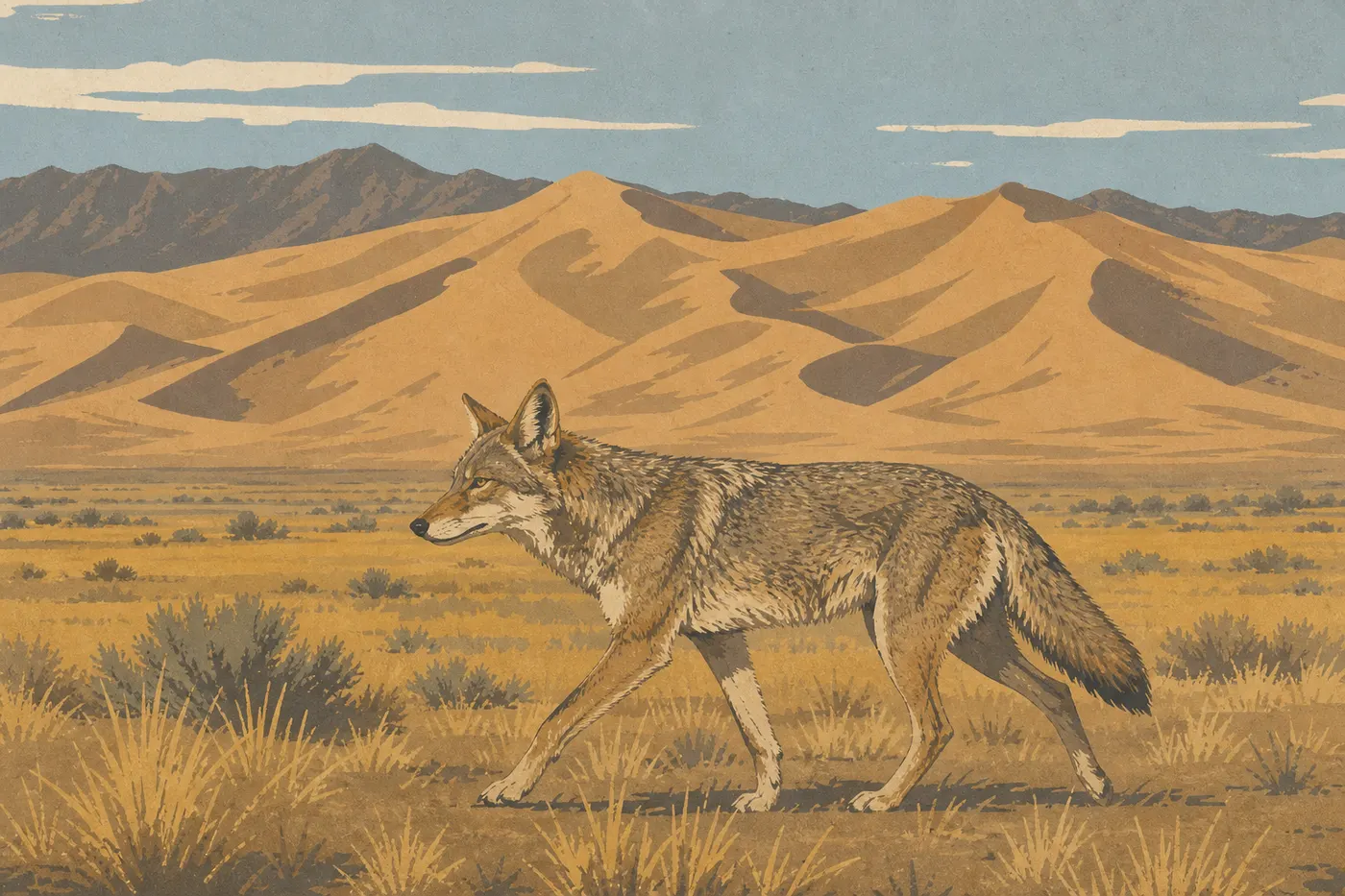
Coyotes are the quiet actors of dawn and dusk. You'll hear one long before you see it. Its short, staccato calls at nightfall are part of the park's soundtrack. When it does appear, it's usually along the edge of a meadow, trotting with quiet confidence.
Here's a practical warning. A coyote that approaches people without the slightest hesitation has almost certainly been fed by visitors. Report it immediately to the Visitor Center.
Where to See Wildlife at Great Sand Dunes
Each habitat in the park has its characteristic species.
The grasslands along CO 150, the road connecting US 160 to the park, are pronghorn territory year-round. Watch from the car with the engine off. They'll stay put as long as nobody gets out.
The Medano Creek area, along the edge of the dune field in spring, is a critical water source. Mule deer, elk, and a wide variety of birds gather there at dawn. Seasonal runoff creates an almost unreal scene, with animals drinking against a backdrop of North America's tallest sand dunes.
Montville Nature Trail (about 1 mile from the Visitor Center) is a good starting point early in the morning for small mammals and forest birds. The trail is short and quiet at dawn, which is invaluable for wildlife watching.
The preserve's wooded areas (the area next to the national park, accessible by hiking) offer the best chances of seeing elk and, with patience, black bears. The trails leading into these areas are listed in our Hiking Guide.
The dunes at night, after 10 p.m., are a playground for kangaroo rats, owls, and scorpions. Move away from the lights at the Dunes Parking Lot so your eyes can adjust.
When to Watch Wildlife
The rule at Great Sand Dunes is simple: avoid the middle of the day in summer. The dune surface can reach 160°F at noon, so animals follow the same strategy as savvy visitors and seek shade. The best window is between 6 and 9 a.m., and again after 6 p.m.
For nocturnal wildlife (kangaroo rats, great horned owls, and coyotes), go after 10 p.m., away from the campground lights.
For the elk rut, the window is short: mid-September through early October. Outside that period, elk are still around but much harder to locate.
For pronghorn, any time of year works. You'll see them in January and July alike, as long as you arrive early in the morning or late in the afternoon.
Season-by-season details, including temperatures, precipitation, and seasonal road closures, are in our When to Visit Guide.
Predators and Large Animals at Great Sand Dunes
The mountain lion (cougar, Puma concolor) is the park's apex predator. Nocturnal and territorial, it hunts mule deer and elk in the preserve's forests. A direct encounter is extremely rare. Fresh tracks in the snow or a recently killed deer are usually the only signs that it's nearby.
Black bears eat mostly plants and become a problem only in three situations: when surprised at close range, when accompanied by cubs, or when conditioned to human food. In every other case, they'll move away without seeking contact.
Golden eagles soar over the grasslands in search of prairie dogs, rabbits, and small rodents. Their wingspan, between 6 and 7 feet, immediately sets them apart from the much more common hawks.
Rattlesnakes deserve a clear warning. They live in the park's rocky areas, and their hemotoxic venom requires prompt medical care. There's no need for excessive concern, but stay alert in the field.
Watching Wildlife Safely
Keep at least 100 feet away from all large mammals (pronghorn, mule deer, elk, and bears). If an animal changes its behavior because of you, you're too close. With a mother bear and cubs or an animal that's feeding, increase the distance to 330 feet.
Never feed wildlife. An animal conditioned to human food poses a public danger and must be euthanized by rangers. Feeding wildlife in the park is a federal offense.
Secure your food. Odors travel far through a dry valley that often has little wind. Food, cosmetics, and trash must be kept in an airtight container or in your car's trunk, day and night at the campground.
For rattlesnakes, never put your hand into a rocky crevice without looking first. Wear high-top shoes on trails outside the dunes. If you're bitten, immobilize the limb, don't try to suck out the venom, and get to an emergency room.
For scorpions, always shake out shoes and clothing left on the ground before putting them back on, especially after a night of camping.
If you encounter a black bear, speak firmly, make yourself look large, and back away slowly without running. Don't climb a tree. Black bears climb much better than you do. If you're hiking in the wooded area, carry bear spray.
For the park's complete rules, including fires, drones, and off-trail camping, check with the Visitor Center at the park entrance.
In Brief: Must-See Species and Where to Find Them
Pronghorn in the CO 150 grasslands (year-round, morning and evening). Elk along the forest edge on the Sangre de Cristo side (rut in September and October). Black bears in the wooded preserve (present year-round, more visible in fall). Kangaroo rats on the dunes after 10 p.m. (spring and summer). Coyotes throughout the park, at dawn and dusk. Mountain lions live throughout the park, but seeing one is purely a matter of luck. For complete trip logistics, our Complete Great Sand Dunes Guide is the best place to start.
Frequently Asked Questions
What animals live in the sand dunes at Great Sand Dunes?
The dunes themselves are home to specialized species, including Ord's kangaroo rats (nocturnal and unable to drink), beetles adapted to loose sand, and scorpions. The surrounding grasslands and forests support a much wider range of wildlife: pronghorn, elk, mule deer, black bears, coyotes, golden eagles, and mountain lions.
Are there bears in the national park at Great Sand Dunes?
Yes. Black bears (Ursus americanus) live in the park and the adjacent preserve. Colorado has no grizzlies. The species disappeared from the state several decades ago. Black bears are less aggressive than grizzlies, but the same precautions apply: secure food, keep your distance, and carry bear spray in the forest.
What is the most common animal at Great Sand Dunes?
Pronghorn are probably the animals seen most often. Groups graze year-round in the grasslands visible from CO 150 as you approach the park.
What is the largest animal at Great Sand Dunes?
Elk are the park's largest mammals. Adult males reach 550 to 730 pounds, and they mostly use the preserve's higher-elevation forests.
What predators live at Great Sand Dunes?
Mountain lions are the apex predators. They're rarely seen but definitely present. Black bears and golden eagles round out the list. Coyotes are the most visible predators, but they mainly hunt small rodents and rabbits.
What animals are active at night at Great Sand Dunes?
Wildlife that's hard to spot during the day comes alive after sunset. Kangaroo rats, scorpions, rattlesnakes, great horned owls, and coyotes become active. Heading onto the dunes after 10 p.m. with a headlamp is the best way to spot these nocturnal species.