
National Park Passport: The Stamp Book, Where to Buy It, and How to Use It
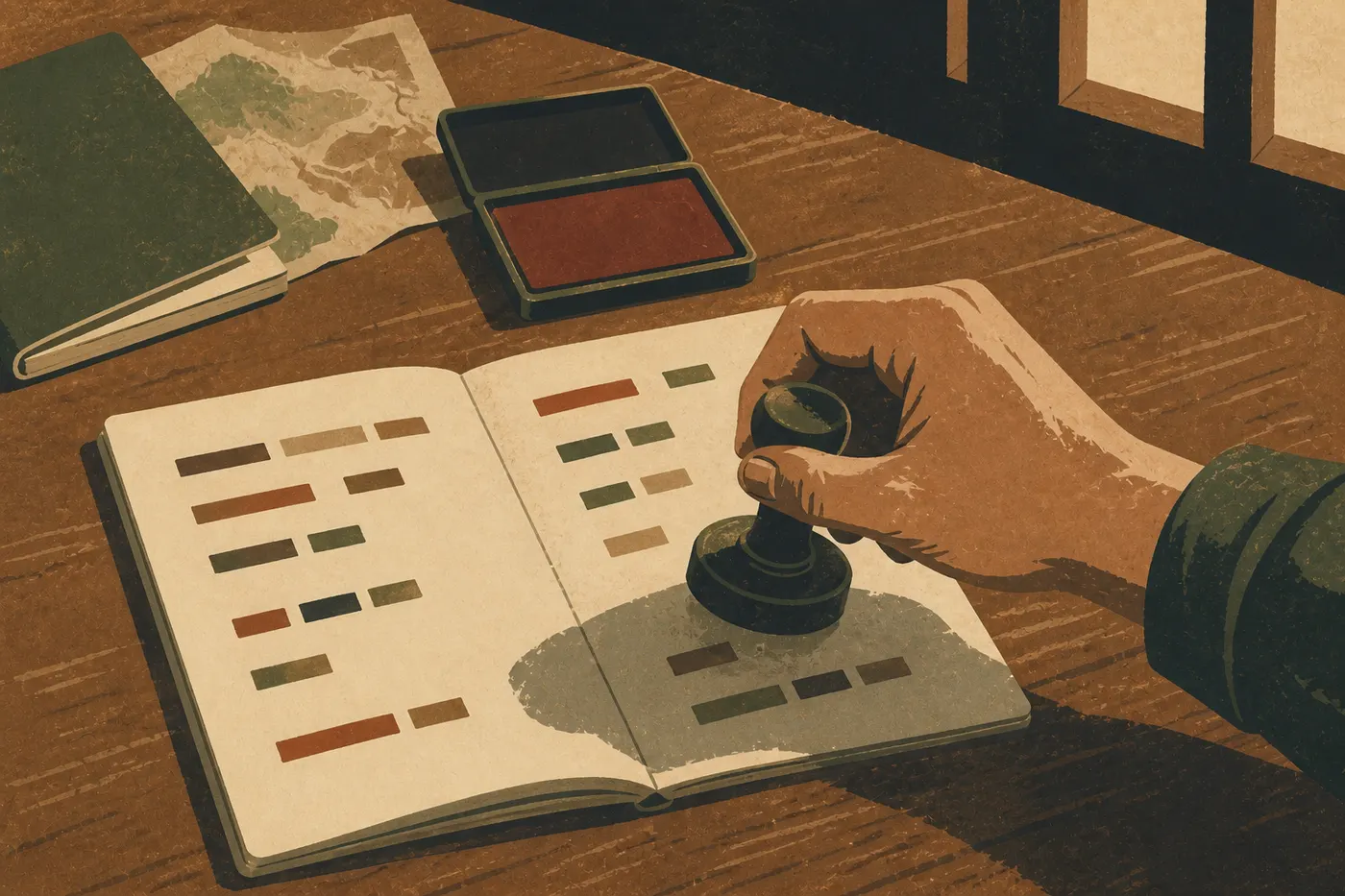
At the counter of a visitor center, a ranger slides an ink stamp and its pad toward you. You open your book, press down, and the park's name appears with today's date. Thousands of travelers repeat this small gesture in every park they visit. It's the ritual of the National Parks passport. Be careful with the name, though. This passport isn't a travel document. It doesn't replace your official passport, ESTA, or any entry formalities for the United States. It's a collection book, stamped from park to park and kept like a travel journal. Here's the complete guide: what this book is, why the stamp is free, where to buy one before your trip, how to start your collection, and how to get the kids involved.
What the National Parks Passport Is, and What It Isn't
The National Parks passport is a small collection book published since 1986 by Eastern National, now operating under the America's National Parks brand. The idea is simple. At each site you visit, you get a dated stamp, and the book fills up as your trip unfolds. The pages are organized by broad regions of the United States and include an official map of the park network, so your collection gradually traces your journey across the country.
Let's be clear about what this book isn't. It's not an official document. It's not a pass that gets you into the parks. Entrance fees and the America the Beautiful pass are a separate matter, covered in our guide to Fees and Passes. And it has absolutely nothing to do with the formalities for entering the United States. The passport we're talking about here has one purpose: keeping a record, stamp by stamp, of the parks you've visited. That distinction shapes everything that follows. The book costs money, but the stamp is free.
The Stamp Is the Heart of the Ritual, and It's Free
The real heart of the collection isn't the book. It's the stamp. Every site in the network has its own ink cancellation stamp, which prints the site's name and today's date. You'll find it at visitor center counters and in park stores, either set out for self-service or kept by a ranger. It's completely free. You don't have to buy anything to use it, not even the official book. A personal journal, a travel notebook, or any reasonably sturdy piece of paper will do.
This is the point travel blogs often fail to make clear, and it changes everything. You can collect National Parks stamps for next to nothing. The dated impression is what gives the collection its meaning because it records the exact day you were there. There's one catch, though. The stamp follows the hours of the visitor center that houses it. If the center is closed, it's the off-season, or you've arrived at the end of the day, you won't get a stamp. In the larger parks, several centers may be open. In remote parks, there may be just one counter. Check the center's hours before you arrive. You can't make up a dated stamp from that day later.
The Official Book: Formats, Stickers, and Prices
If you want the real thing, it's called the “Passport To Your National Parks” and comes in several formats. The classic edition is a 112-page pocket-size spiral book measuring 6 by 4 inches, and it costs $14.95. The larger collector's edition has 192 pages and room for more than 400 sites. It costs $32.95. Above that, the Explorer edition is the top-of-the-line option at $79.95.
Alongside the ink stamps, the publisher releases an illustrated sticker set each year called the “Passport Stamp Set,” priced at $6.99. It contains about ten stickers highlighting different parks, which you can place opposite the dated stamp. Don't confuse the two. The stickers are a decorative, paid, optional product. They have nothing to do with the visitor center's ink stamp, which remains free. You can buy the stickers ahead of time in a store and use them to illustrate the book. The dated stamp, on the other hand, goes in your book at the counter and costs nothing. The 2026 set, for example, features Zion. The publisher also sells the classic book and the 2026 sticker set together in an official bundle for $19.75, a ten percent discount on the $21.94 total when bought separately. These prices were recorded in the official store on August 16, 2026. They may change, so check before you buy. To be honest, the official book gives your collection a nice structure, but you don't need it. Any notebook will work.
Where to Buy It: Online or in the Parks
There are two ways to get the book. Buying it in a park is easiest. Stores at visitor centers and larger parks sell it, often with that year's stickers, so you can head out and get your first stamp right away.
Before you leave, the official source is the americasnationalparks.org online store, which ships across the United States, and you can arrive with the book already in hand, ready for your first stamp. If you're coming from abroad (Canada, the UK, Australia, Germany...), there's one caveat: the shipping policy only lists delivery times for the United States and doesn't provide an international rate. Check whether it ships to your country when you place your order, or use a package-forwarding service. Otherwise, buying it in the parks is still the safest option. For many travelers, the best compromise is to slip a personal notebook into their bag before leaving so they don't miss a stamp at the first park, then pick up the official book in a park if they feel like it.
How to Collect Stamps: A Practical Guide
Collecting stamps takes a little planning. First, find the stamp stations. In a large park, there are often several, one for each district or visitor center. Grand Canyon has one at the South Rim center, while Isle Royale has stamps at both Rock Harbor and Windigo. That means several different stamps for one park.
Next, plan your visits around the centers' hours, since the stamp depends on them. Look out for bonus stamps, too. The network includes more than the 63 national parks, and a monument, memorial, or recreation area you pass on the way may have its own stamp. The dated impression is what gives the collection its sentimental value. A stamp from Lake Clark, picked up at the Port Alsworth information center in remote Alaska, or one from Dry Tortugas, reached by boat, feels earned. One final tip to confirm with each park: some sites will mail a stamp to you if you missed the counter.
With Kids: The Junior Ranger Program
The kid-focused counterpart to the passport is the Junior Ranger program, and it's free, too. At the visitor center, a child receives an activity booklet made for that park, with puzzles, observations, and drawings to complete during the visit. The program is aimed mainly at kids ages 5 to 14, but everyone is welcome.
Once the booklet is complete, the child brings it back to a ranger. The ranger reviews the work, talks it over with the child, and has them recite the Junior Ranger pledge, with one hand raised and a promise to protect the park and tell others about it. In return, the child receives a badge, sometimes a patch, and leaves with a signed booklet. It's free in almost every park. A few charge about $3 for the booklet. From park to park, the badges pile up alongside the stamps, creating a childhood collection that makes a lovely companion to the passport.
Which Parks Have a Stamp
Almost all of them. Stamps aren't limited to the 63 national parks. You'll find them at most National Park Service visitor centers, and the agency manages more than 400 sites in all, including parks, monuments, memorials, battlefields, and recreation areas. In other words, the collection never really runs out.
In practical terms, the counter where you can get a park's stamp, along with the relevant center's hours, is listed on that park's profile. This page explains the ritual. Each park profile tells you where to carry it out. That's how the site works: the guide here, the on-the-ground details park by park.
Practical guides
Frequently Asked Questions
Can you still get stamps in national parks?
Yes. The ink stamp is still available and remains free. You'll find it at visitor center and park store counters during opening hours. It prints the site's name and today's date in whatever book you choose.
Do National Parks stamps cost money?
No. The ink stamp is free. Only the official “Passport To Your National Parks” book costs money, starting at $14.95, along with the annual sticker sets at $6.99. You can use any personal notebook for stamping.
How do you get the National Parks passport?
Buy the book online from the official americasnationalparks.org store before you leave, or at visitor center stores in the parks. Then get it stamped for free at each park's visitor center counter.
Which parks have a stamp?
Almost all of them. Beyond the 63 national parks, you'll find stamps at most of the National Park Service's more than 400 sites, including monuments, memorials, battlefields, and recreation areas. Each park's profile lists the exact counter.
Do you need to buy the official book to collect stamps?
No. Any notebook will work, and the stamp remains free. The official book simply organizes the collection by region and includes that year's illustrated stickers, but it's entirely optional.
What are the passport stickers for?
They're illustrated stickers released each year under the name “Passport Stamp Set.” You place them in the book opposite the dated stamp to brighten up your collection. They're a decorative, paid product costing $6.99, and they're entirely optional. They don't replace the park's ink stamp, which remains free and is the true heart of the collection.
How to Start Your Collection
Let's recap the ritual: a book, either your own or the official one; a free dated stamp at each park; and a Junior Ranger badge for the kids. That's all you need to keep a lasting record of your travels. The first stamp is the best one. Pick a starting park, tuck a notebook into your bag, and get going, perhaps along our Pacific Coast road trip, which offers plenty of great places to get a stamp.