
Great Sand Dunes with Kids: What to Do and How to Plan Your Visit
Great Sand Dunes is one of the most family-friendly national parks in the United States. Kids as young as 3 can splash in Medano Creek and explore the first dunes. For teens, the climb to High Dune, with about 600 feet of elevation gain over 0.9 miles from the dune field, is a real physical challenge. The most important thing to know is that the sand can reach more than 160°F by noon in summer. Start early, head back around midday, and return in the late afternoon.
Why Visit Great Sand Dunes with Kids
Colorado's dunes are a giant natural playground. Here's what makes them especially well suited to kids.
Sand works its magic at any age. Kids can climb, slide, roll, and dig for hours without any special equipment. The dunes rise as high as 750 feet, making them the tallest in North America.
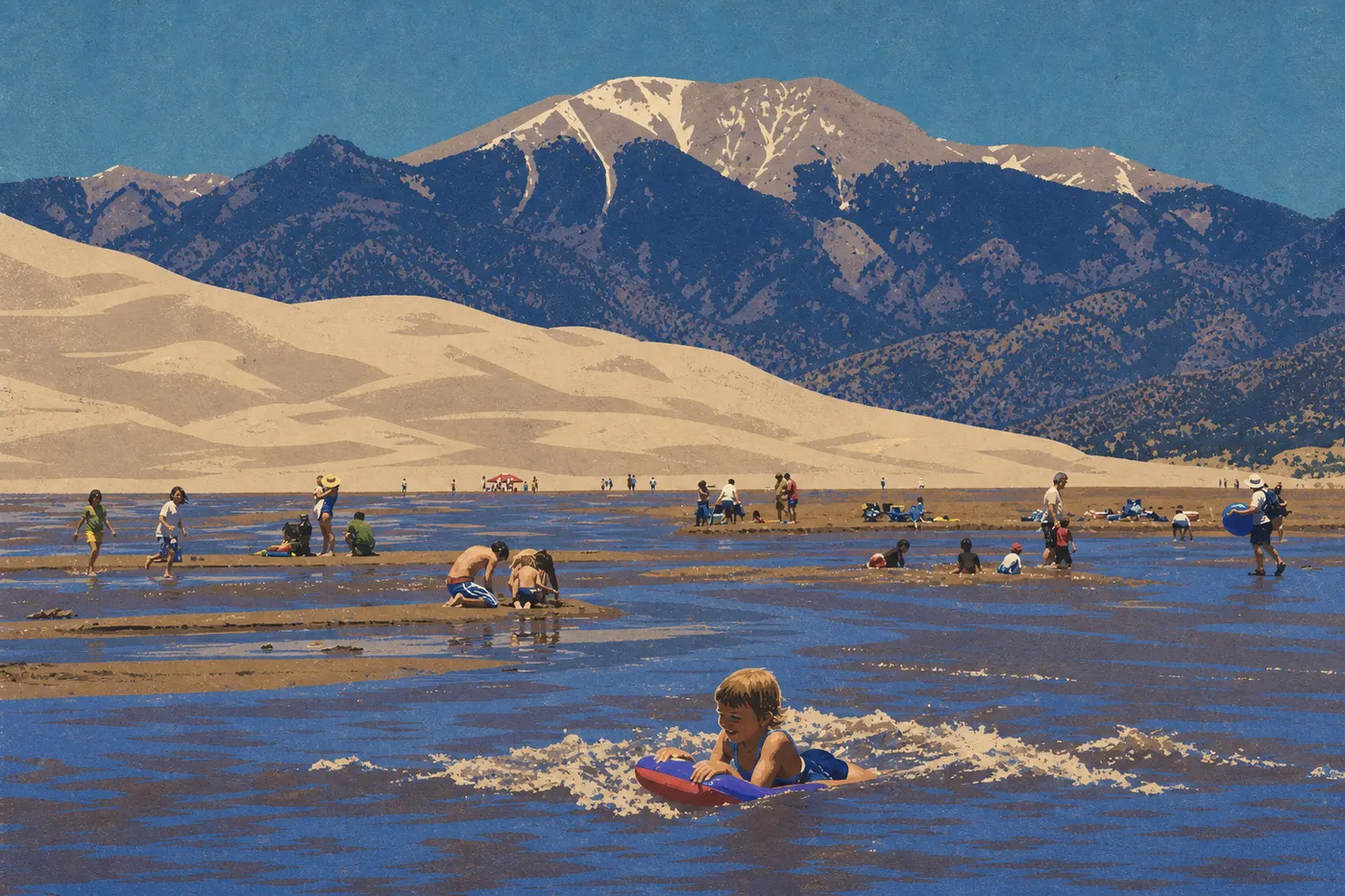
Medano Creek is a seasonal bonus. From late May to early July, a snowmelt stream runs along the foot of the dunes. Shallow and refreshing, it creates a natural mini-wave phenomenon known as surge flow that fascinates kids. When we visited in June, families spent the whole morning there without ever getting close to the dunes.
You reach the park's main attraction right away. Within minutes of leaving the parking lot on foot, you'll be standing on the sand. There's no approach hike first.
The night sky. The park is an International Dark Sky Park. On summer nights, the stars are enough to pull teenagers away from their phones.
Is Great Sand Dunes Good for Kids? What Age Is Best?
Yes, Great Sand Dunes works for families with kids of all ages, as long as you adjust your plans accordingly.
Under 3: Medano Creek and the first dunes are more than enough. The ground is flat at the base, and the sand is soft. A stroller won't work on the dunes themselves because the sand is too loose, but a baby carrier or a wagon with wide wheels works for the first few hundred yards.
Ages 3 to 8: Kids will naturally climb up, then run or roll back down. The climb to High Dune is ambitious but doable with breaks. Plan on 2 to 3 hours for the dune portion alone.
Ages 9 and up: The park really opens up. There's sandboarding, the climb to Star Dune, the highest point, which is about 1.8 miles round-trip from the edge of the dune field, and wooded trails around the campground.
For specific accessibility questions, including wheelchairs and mobility accommodations, the official park website at nps.gov/grsa details the available facilities.
When to Visit Great Sand Dunes with Kids: The Easiest Season for Families
Spring, from mid-May through late June, is the ideal window. Medano Creek is running high, daytime temperatures are mild, from 59°F to 77°F at the park's elevation of about 7,900 feet, and weekday crowds remain manageable.
Summer, in July and August, is doable, but it requires discipline. Get up early. The sand can reach 160°F at noon, and afternoon thunderstorms are common. On the other hand, evenings are cool, and the park stays open 24 hours a day, giving you plenty of flexibility to move activities to early morning or after 5 p.m.
Fall, in September and October, is quiet and pleasant. The fall color of the aspen groves in the valleys is worth the trip.
Winter is beautiful under the snow, but it is best left to families experienced with winter camping or visitors making a day trip from Alamosa.
For a month-by-month breakdown, see the Great Sand Dunes weather guide and the guide to the best times to visit.
How Many Days to Plan for a Family Visit
Two days is the minimum for a comfortable visit. One day works if you're coming only for the dunes, but you'll miss Medano Creek in the evening and the night sky.
Day 1: dunes and Medano Creek in the morning, the Visitor Center in the early afternoon, and sunset from the main parking lot.
Day 2: a family hike nearby, such as Montville Nature Trail or Sand Sheet Loop, the Junior Ranger program, and an evening astronomy program at the campground.
Three days gives you time for a half-day trip to Zapata Falls, 7 miles south, plus shopping and stocking up on supplies in Alamosa.
The Great Sand Dunes itinerary guide offers sample plans for one, two, and three days.
What to Do at Great Sand Dunes with Kids: Our Picks
Climb and Slide on the Dunes
This is the park's main activity. For a first visit, we recommend aiming for High Dune, the first major summit visible from the parking lot, rather than Star Dune. The climb gains about 600 feet from the edge of the dune field. It is more strenuous than it looks. Loose sand wears out your calves, but 5- and 6-year-olds regularly make it with breaks. The descent is fast and hilarious.
Sandboarding and Sand Sledding
Several shops in Mosca, a small community a few miles from the entrance, rent sandboards and sleds for $15 to $30 depending on the rental period. The larger slopes offer good runs. Bring wax for more compacted surfaces.
Medano Creek (May through Early July)
The creek carves small channels through the sand. Surge flow creates natural mini-waves every few minutes. The water rarely rises above knee level. It is the favorite spot for kids under 8.
Visitor Center
The Visitor Center has interactive exhibits on dune geology, local wildlife including bison, mule deer, and golden eagles, and the history of the San Luis Valley. Allow 30 to 45 minutes. It is also where the Junior Ranger program begins.
Stargazing
Stay after dinner for a session of stargazing with the naked eye. Rangers occasionally host evening programs. Check the schedule at nps.gov before you go.
For a complete list of activities and points of interest, the Great Sand Dunes activities guide covers the entire park.
Easy Family Hikes: Short, Little Elevation Gain, and Stroller-Friendly
The dunes themselves aren't marked trails. They're open terrain with no defined path. Here are the official trails that work well for kids.
Montville Nature Trail (0.5 miles round-trip)
The trail starts near the park entrance. This short loop follows the edge of the forest, with interpretive signs about trees and wildlife. It is ideal for kids under 6. There is almost no elevation gain.
Sand Sheet Loop (1.6 miles)
This flat loop crosses the grassy plain between the Visitor Center and the dune field. You may spot bison herds there. There is no technical difficulty. Allow 45 minutes to 1 hour.
Mosca Pass Trail (3.7 miles round-trip, 1,280 feet of elevation gain)
Save this one for families with kids 10 and older who are used to walking. The trail passes through a cool pine forest. The view of the valley and the Sangre de Cristo Mountains on the way back makes the effort worthwhile.
For details on each trail, including maps, elevation profiles, and difficulty ratings, the Great Sand Dunes hiking guide covers them all.
The Junior Ranger Program
The Junior Ranger program is the NPS's signature educational program, and Great Sand Dunes offers a well-designed version.
Go to the Visitor Center to pick up the free booklet. Your child completes activities such as field observations, dune geology puzzles, and small nature sketches. Allow 1 to 2 hours, depending on age and pace.
Then return to the Visitor Center to take the pledge in front of a ranger and receive the official Great Sand Dunes badge. It is a tangible souvenir that gives the day a clear structure.
There are three levels, Junior, Explorer, and Ranger, depending on age. The booklet relies heavily on visuals, so families don't need to worry about a language barrier for younger kids.
Safety with Kids
Great Sand Dunes has a few specific hazards to know about before you go.
Hot sand. This is the number one summer danger. According to NPS data, the dune surface can reach 160°F at noon. Walking barefoot at that time can cause burns within minutes. The absolute rule is to wear closed-toe athletic shoes on the dunes between 10 a.m. and 4 p.m. Lightweight sandals don't provide enough protection.
Hydration. The elevation, high-mountain sun, and physical effort on the sand speed up dehydration. Bring at least 1.5 liters of water per person for a half-day on the dunes.
Lightning. Thunderstorms build quickly in the Rockies on summer afternoons. If the sky darkens, leave the dunes immediately. They are the most exposed high points on the plain, with nowhere to take shelter.
Wildlife. Bison frequent the plain at the foot of the dunes. Stay at least 25 yards away. Never feed wildlife, even when it seems harmless.
Currents in Medano Creek. Surge flow is harmless, but kids can trip on the small waves. Stay close to them in the water.
For real-time alerts and official park rules, check the official website at nps.gov/grsa before you go.
Where to Stay with Kids, in the Park and Nearby
Piñon Flats Campground is the park's official campground, just a few minutes' walk from the dunes. It is the most convenient option for families: get up early without driving, then spend the evening right on the sand. Reservations are essential during the busy season through recreation.gov.
Great Sand Dunes Lodge is just outside the park entrance. It offers traditional rooms, a pool that feels especially good after a day on the sand, and an ideal location.
Alamosa, 24 miles south, offers a wider range of hotels. It is convenient for families visiting the park as a day trip or on a road trip.
RVs: Piñon Flats accepts RVs. Electrical hookups are limited. The Great Sand Dunes RV camping guide covers full-service options in the area.
For a complete lodging comparison, see our Where to Stay page and our Camping page.
Meals and Breaks with Kids
The park has no restaurant. Stock up before you enter.
Mosca, 1.2 miles before the entrance, has a few seasonal stores and food stands during the season. Options are limited.
Alamosa is the closest town with a real selection of food, including grocery stores, fast food, and local restaurants. Shop on your way in rather than waiting until you're tired and heading home.
In the park: picnic tables are available at Piñon Flats and near the Visitor Center. Bringing a picnic from home is the simplest option with kids, and it saves you a trip back out by car. Potable water is available at the campground.
Family Budget
Entrance fee: $25 per vehicle, valid for 7 days. Kids under 15 enter free. For a family arriving by car, the total is $25, no matter how many people are in the vehicle.
America the Beautiful Pass: At $80 per year, it covers admission to all federal national parks for 12 months. It pays for itself as soon as you visit a second park. If Rocky Mountain, Mesa Verde, or Arches is also part of your trip, it is clearly the best value. Our National Park Fees & Passes guide explains entrance fees and pass options.
Junior Ranger program: free.
Sandboard or sled rental: $15 to $30 per board, depending on the rental period, at shops in Mosca.
Camping at Piñon Flats: about $20 to $25 per night, depending on the site.
Add-On Trips Near Great Sand Dunes for Families
Zapata Falls, 7 miles south on a road accessible to regular passenger cars, is reached by a short 0.25-mile walk to a waterfall tucked into granite. Kids have to wade across a creek, with 8 to 12 inches of water in summer. Bring shoes that can get wet.
Baca National Wildlife Refuge, next to the park, is a free-entry wildlife refuge. The spring and fall migration of sandhill cranes is worth the trip for nature lovers.
Alamosa and the Rio Grande State Wildlife Area: kids who enjoy fishing will find plenty to do.
San Luis Valley loop: Alamosa, Monte Vista, and Crestone. Families on a road trip can easily fill 3 or 4 days. Our Road Trip guide for the region offers ready-to-use itineraries.
Great Sand Dunes with Kids: Is It Worth It?
Yes, without a doubt. Great Sand Dunes has everything you want in a successful family park visit. The main activity is physical, immediate, and free once you've paid the entrance fee. Medano Creek adds a seasonal swimming hole that kids love. The Junior Ranger program gives the day structure. The climb to High Dune will stay with them much longer than a theme park.
The only thing to watch is the summer season. Hot sand means adjusting your schedule. It isn't an obstacle, but it is a constraint to plan around. Spend the morning on the dunes, take a lunch break in the shade, then spend the afternoon at Zapata Falls or the Visitor Center. The trip naturally comes together in a balanced way.
Our complete Great Sand Dunes guide brings together all the sections you need to fine-tune your plans.
Frequently Asked Questions
Is Great Sand Dunes a good park for kids and families?
Great Sand Dunes is a great fit for families with kids of all ages. The dunes are accessible to kids as young as 3, Medano Creek provides a shallow natural water area for little ones, and the Junior Ranger program keeps kids busy throughout the day.
Is Great Sand Dunes worth visiting?
Great Sand Dunes is well worth the trip, especially with a family. It is one of the most unusual landscapes in the United States, with 750-foot sand dunes at the foot of Colorado's Rockies. The experience is unique, active, and accessible to every budget.
What is the best time to visit Great Sand Dunes?
Spring, from mid-May through late June, is the best season for families. Medano Creek is running high, temperatures are mild, and crowds are lighter than in the middle of summer. Our When to Visit page explains the advantages of each season month by month.
What is there to do at Great Sand Dunes with kids?
Climb the dunes, sandboard, splash in Medano Creek, complete the Junior Ranger program, and look for wildlife on the grassy plain. Those are the main family activities. Our Things to Do page lists all the park's points of interest and experiences.
How much time do you need to visit Great Sand Dunes with kids?
Plan on two days to enjoy the dunes, Medano Creek, and the Junior Ranger program without rushing. One day is possible as a day trip from Alamosa or as part of a tight road trip. Our Itinerary & Trip Length page offers detailed examples for each option.