
Grand Teton National Park: The Complete Visitor Guide
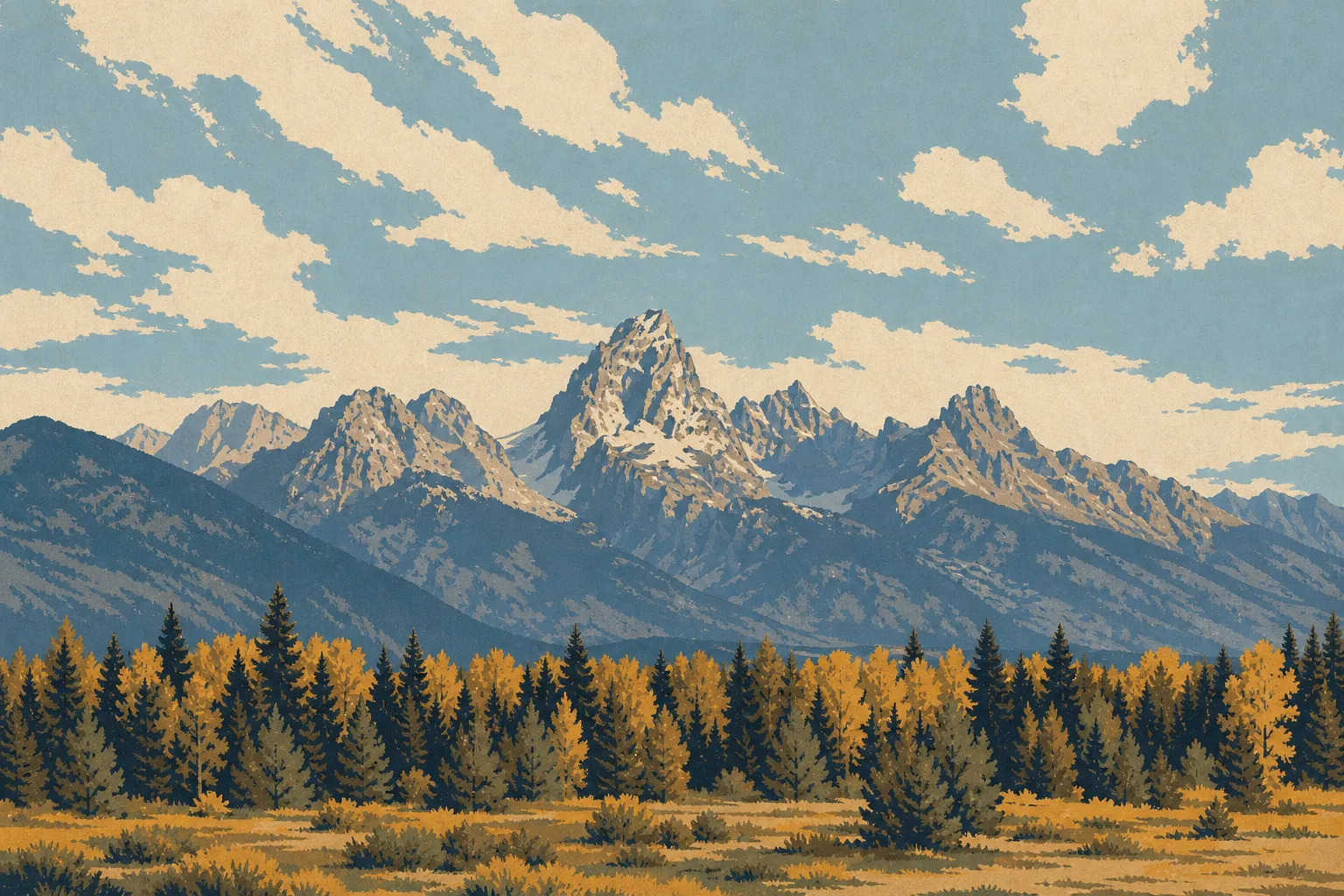
Grand Teton is a granite range that rises straight out of the plain, with no foothills to announce it, north of the small town of Jackson, Wyoming. The main peak reaches 13,770 feet and is reflected in a string of glacial lakes at its feet. People come for the viewpoints, wildlife (bison, elk, moose, and bears), and hikes that start right at the water's edge. Plan on 2 to 3 days to see the park without rushing. Yellowstone borders it to the south, and the two parks make a natural road trip combination.
Here's how to plan your visit: where the park is, how to get there, what admission costs, how much time to allow, what to see area by area, and where to stay. Each question has its own detailed guide, so follow the links as you read.
Grand Teton at a Glance: Where the Park Is and How to Get There
Grand Teton lies in northwestern Wyoming, between the town of Jackson to the south and Yellowstone's South Entrance to the north. The two parks are connected by a continuous road, the John D. Rockefeller Jr. Memorial Parkway, so you can go from one to the other without a detour.
Driving is still the most common way to arrive. From Salt Lake City, Utah, it's about 300 miles and a 5- to 6-hour drive. From Denver, Colorado, the distance is considerably longer, but it's an easy two-day drive.
The area's unusual feature is Jackson Hole Airport (JAC), which sits inside the park's boundaries. It's the only commercial airport inside an American national park. You'll land with the mountains right in front of you, about 20 minutes from the first viewpoints. Direct flights are limited and often expensive, so many visitors fly to Salt Lake City and rent a car.
The park stays open year-round, but road access and services, including visitor centers, shuttles, and stores, vary sharply by season. For arrival planning, detailed schedules, and transportation options, see our Grand Teton access guide.
Entrance Fees, Passes, and Reservations
Grand Teton admission costs $35 per private vehicle and is valid for 7 days. The fee is $30 for a motorcycle and $20 per person entering on foot or by bicycle. The National Park Service sets these fees, which cover the entire park for the full period of validity.
If you're visiting several parks on the same trip, two pass options are worth doing the math on. The Grand Teton annual pass costs $70. But for a road trip that includes Yellowstone or other parks, the America the Beautiful pass is almost always the better deal. It covers all federal recreation sites for one year.
The good news is that Grand Teton doesn't require a timed entry reservation. You arrive, pay, and enter. Our National Park Fees & Passes guide explains entrance fees and passes. If you're collecting stamps, check the Passport & Stamps page before you leave.
Reservations, Permits, and Rules to Follow
Do You Need a Reservation?
You don't reserve park admission. Pay at the entrance station or online at any time. Several other things do require advance reservations:
- Campgrounds: Most sites in the park (Jenny Lake, Signal Mountain, Gros Ventre, and Colter Bay) are reserved through Recreation.gov, often several months ahead for July and August.
- In-park lodges and lodging: Signal Mountain Lodge, Jenny Lake Lodge, and Colter Bay Village fill up months before the season opens. Don't wait.
- Guided activities: Kayak trips, wildlife excursions, and some NPS-led tours can be booked online.
Backcountry Permits
Any camping outside official campgrounds requires a wilderness permit. Apply through Recreation.gov starting January 15 for the summer season. Some permits are also issued in person at the Moose ranger station each morning on a first-come, first-served basis. If you're planning overnight hikes at higher elevations, reserve your permit as early as January.
Essential Rules
- Wildlife: Keep at least 25 yards from large mammals (bison, elk, and deer) and 100 yards from bears and wolves. Never get out of your car when a bison is on the road. Wait for it to move away.
- Food: Never approach or feed animals. Store food securely, in a bear-resistant container or your vehicle's trunk, anywhere in the park.
- Drones: Drones are prohibited throughout the national park.
- Fires: Only use designated grills and fire rings in campgrounds. Backcountry campfires follow area-specific rules.
- Flowers and rocks: Leave everything where you find it. This applies to rocks, fossils, plants, and downed wood.
Getting Around Grand Teton
The best way to see Grand Teton is by car. Two main roads shape the park, and it's worth knowing the difference.
US-89/191/26 runs along the eastern side of the valley, following the Snake River. It's the faster, free route and stays open year-round, with the main overlooks facing the range.
Teton Park Road hugs the mountains on the west and serves the lakes. It offers the closest views, but its inner section closes to motorized traffic in winter. It becomes a winter recreation area for snowshoes and cross-country skiing.
A shuttle boat crosses Jenny Lake during the season, cutting the hike to the waterfalls and west-shore trails considerably. Speed limits are low and strictly enforced, partly because wildlife crosses the roads. Parking at popular spots such as Jenny Lake and Mormon Row fills by midmorning in summer, so arrive early. Our Grand Teton getting-around guide brings together all these practical details, including shuttle schedules.
How Long Do You Need to Visit Grand Teton?
Plan on 2 to 3 days to see Grand Teton without feeling rushed. In one day, you can drive the road loop and stop at the main overlooks. That's a good introduction, but you'll leave without getting out on a trail.
With two days, add a hike around Jenny Lake or String Lake, a dawn wildlife drive, and sunset at Oxbow Bend. With three days, you can slow down: take a longer hike, spend time on the water, and leave room for changing weather.
Many travelers combine Grand Teton with Yellowstone. If you do, plan time for each park separately rather than squeezing them into the same window. The drive between them takes time. To build a day-by-day plan, our Grand Teton itineraries guide offers outlines based on how much time you have.
Plan your visit
What to See and Do in Grand Teton
The park breaks down into clearly defined areas. We've organized them geographically from south to north, so you can picture where your day will take you.
Road trip journal · 5 areas
Teton Park Road and Jenny Lake
This is the park's beating heart. Jenny Lake, tucked below Cascade Canyon, has the most dramatic views and the trailheads for Hidden Falls and Inspiration Point. Just north, String Lake has shallow, warmer water that's popular for paddleboarding and wading in summer. The road then climbs to overlooks that frame the range up close.
The Scenic Road and Its Overlooks
US-89/191/26 is lined with postcard views. Oxbow Bend, a quiet bend in the Snake River, reflects Mount Moran. It's a favorite spot at dawn for the light and waterfowl. Snake River Overlook recreates the composition made famous by photographer Ansel Adams. Down below, Schwabacher Landing offers a perfect reflection in calm weather. On our last visit, this was where I watched mist rise from the river just before the sun reached the peaks.
Mormon Row and Antelope Flats
East of the road, in the Gros Ventre area, the wooden barns of Mormon pioneers who settled here in the late 19th century stand in a line. The T.A. Moulton Barn, with the range behind it, is one of Wyoming's most recognizable photo subjects. The surrounding plains, known as Antelope Flats, are a good place to watch wildlife early in the morning.
Signal Mountain, Jackson Lake, and Colter Bay
Farther north, the short road up Signal Mountain climbs to an overlook with a full view of the valley. Jackson Lake, the park's largest body of water, is made for boat trips and quiet beaches. Colter Bay has a visitor center, marina, and easy lakeshore trails.
Moose and the Menors Ferry Historic District
At the south entrance, the hamlet of Moose is home to the main visitor center, the Craig Thomas Discovery & Visitor Center, and the Menors Ferry Historic District, including a reconstructed ferry on the Snake River. It's a good first stop to get oriented, pick up a map, and see what the day's weather is doing.
Every area deserves time. For a complete list of activities, including boat trips, biking, fishing, and wildlife viewing, see our Grand Teton activities guide.
Explore the park
Grand Teton's Best Hikes
Grand Teton has hikes for every level. The Jenny Lake loop, partly shortened by the shuttle boat, leads to Hidden Falls and Inspiration Point. It's the classic accessible hike. The String Lake loop is flat and family-friendly. For stronger hikers, Cascade Canyon reaches between the walls toward the high country, while Delta Lake, reached by an unmarked and technical trail, rewards you with a turquoise lake below Grand Teton.
Distances, elevation gains, durations, and safety advice, including bear awareness, are covered in our Grand Teton hiking guide. Always carry water, bear spray, and an extra layer. Weather changes quickly at elevation.
The detailed guide Grand Teton Hiking: The Best Trails for Every Skill Level The best hikes in Grand Teton by area, with trail details, difficulty levels,… Read the guide →Wildlife and Plants to Look For
The valley is one of the best places in the United States to see large mountain wildlife. You may encounter bison, elk, and pronghorn on the plains, moose near wetlands, and, if you're lucky and keep your distance, black bears and grizzlies. Wolves are present but elusive.
Two rules are nonnegotiable. Stay at least 100 yards from bears and wolves and at least 25 yards from every other animal. Never feed wildlife, keep your food secured, and don't get out of your car to approach an animal. Dawn and dusk are the best times for viewing. Our Grand Teton wildlife guide covers the species, areas, and safety rules.
The detailed guide Grand Teton Wildlife: Which Animals to See and Where to Find Them Grizzlies, moose, elk, bison, and pronghorns Read the guide →When to Visit Grand Teton
Grand Teton has long, cold winters, and snow and freezing temperatures are possible any month of the year. July and August bring warm days and cool nights, with frequent afternoon thunderstorms. September and October alternate sunny days with cold nights, beautiful light, and fewer visitors. From December through April, snow covers the mountains and valley, and some roads close.
Summer, from June through September, is the easiest window for seeing everything. Roads are open, trails are clear, and services are fully available. It's also the busiest time. Our complete month-by-month information is in the When to Visit Grand Teton guide, with detailed averages in our Weather guide.
The detailed guide When to Visit Grand Teton: Best Time, Weather, and Seasons September is the best time to visit Grand Teton Read the guide →Where to Stay in Grand Teton
Inside the park, lodging consists of historic lodges around Jackson Lake and Jenny Lake, along with park-run campgrounds. These spots book up early for summer, so reserve several months ahead. Just south of the park, the town of Jackson has a broad range of hotels. They're more expensive, but open year-round.
Our Where to Stay guide compares the main options. Find more detail in our Hotels & Lodges, Camping, and RVs guides, depending on how you're traveling.
Stay in the park
Around Grand Teton: Things to Do Nearby
The surrounding area is as rich as the park itself. Yellowstone is just north, connected by a protected road. It's the classic combination, but plan it as two separate visits. South of the park, the town of Jackson is worth a stop for its town square with elk-antler arches, galleries, and restaurants. The National Elk Refuge, just outside Jackson, draws large elk herds in winter. To extend your trip, our Road Trips and Regions guides place Grand Teton among the nearby stops.
Our Take: Is Grand Teton Worth the Trip?
Absolutely. Grand Teton offers an exceptional landscape-to-effort ratio in the American West. The mountains appear right from the road, with no approach hike, and still reward anyone who hits the trail. Wildlife is abundant and visible, the lakes are unusually peaceful, and Yellowstone's proximity makes Grand Teton an almost essential stop. Our only caveat is that summer parking lots and lodging fill quickly. Start your days early, reserve early in the year, and stay at least two nights. To go further, start with our Itinerary & Length of Stay page and our Things to Do guide.
Frequently Asked Questions
How Do You Visit Grand Teton?
To visit Grand Teton, drive the park's two main routes: US-89/191/26 for the major overlooks and Teton Park Road for access to the lakes. Add one or two hikes and a dawn wildlife drive. Plan on 2 to 3 days and reserve your lodging in advance.
When Should You Visit Grand Teton National Park?
The best time to visit Grand Teton National Park is June through September, when roads and trails are open and services are fully available. September and October bring beautiful light and fewer crowds. Winter closes some roads under the snow. Find the details on our When to Visit page.
How Many Days Do You Need for Grand Teton?
Plan on 2 to 3 days to see Grand Teton without rushing. One day is enough for the overlook loop, but two to three days let you add hikes, boat trips, and wildlife viewing. Our Itinerary & Length of Stay page offers plans for different schedules.
How Much Does Grand Teton Admission Cost?
Grand Teton admission costs $35 per private vehicle for 7 days, $30 per motorcycle, or $20 per person entering on foot or by bicycle. The park's annual pass costs $70. For a multi-park road trip, the America the Beautiful pass is often a better value. For current rates, our National Park Fees & Passes guide explains entrance fees and passes.
Is Grand Teton Worth Visiting?
Yes. Grand Teton is worth visiting. The range unfolds right from the road, wildlife is abundant and visible, and the glacial lakes are unusually peaceful. The park combines easily with Yellowstone, making it an almost essential stop in the American West. Reserve early and plan on at least two nights.
The American Parks shop
Bring Grand Teton home
Our park-inspired creations, made to order and shipped to your door.
Latest park news
- Road Work on US 26/89/191: Expect 20-Minute Delays in Grand TetonRoad work south of Moran Junction is slowing US 26/89/191 in Grand Teton, with delays of about twenty minutes in both directions.
- Grand Teton: Black Bear Euthanized After Being Fed by VisitorsA black bear habituated to human food was euthanized near Delta Lake, according to Scripps News. Here's what it means for your trip.
- Grand Teton: South-End Construction This Summer, Leave Yourself Extra TimeConstruction underway in southern Grand Teton: delays on Moose-Wilson Road, no roadside parking, a trail detour, and one road closed on weekdays.