
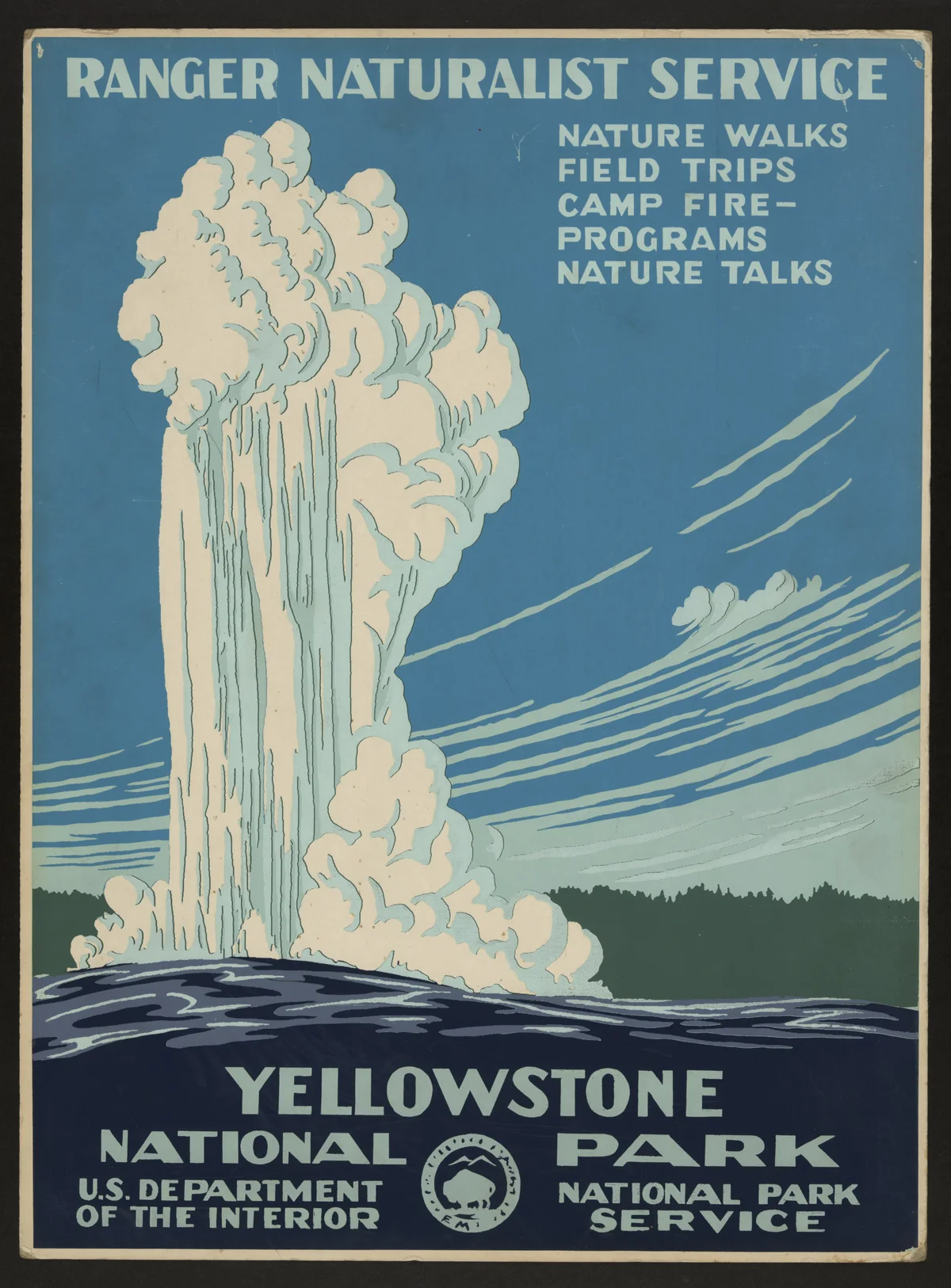
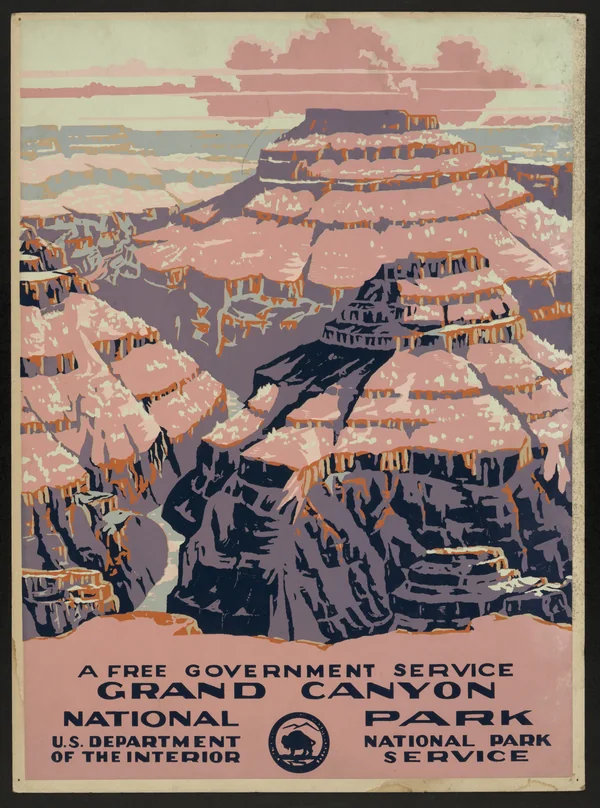
A white geyser splitting a flat sky, a canyon reduced to three bands of ochre, a condensed typeface announcing a "Ranger Naturalist Service": if you have ever seen a national park poster, you have seen the legacy of the WPA. Between 1938 and 1941, a small federal workshop in Berkeley hand-printed fourteen posters for thirteen parks and monuments, sold for twelve cents apiece. The war closed the workshop, the posters were thrown away, and the style nearly vanished with them. It took a seasonal ranger pulling one from the burn pile, in 1973, for the series to become the visual reference for every American park. Here is its story, its originals, the man who brought it back, and why, from Europe, it remains so hard to hang on your own wall.
- 1935The WPA and its Federal Art Project: 35,000 designs in eight years.
- 1938The National Park Service joins in. Berkeley, silkscreen, 12 cents.
- 1941Fourteen designs for thirteen sites. The war closes the workshop.
- 1973At Grand Teton, ranger Doug Leen saves a poster from the fire.
- 1993Ranger Doug reissues the series and extends it.
- 202663 parks, one poster each, printed near you.
A Poster for Twelve Cents
In 1935, at the bottom of the Great Depression, the Roosevelt administration created the Works Progress Administration, the WPA, to put millions of Americans back to work. Its Federal Art Project employed artists, engravers and printers: in eight years, its workshops produced some 35,000 poster designs, printed in more than two million copies, for public health, education, theater, safety and travel.
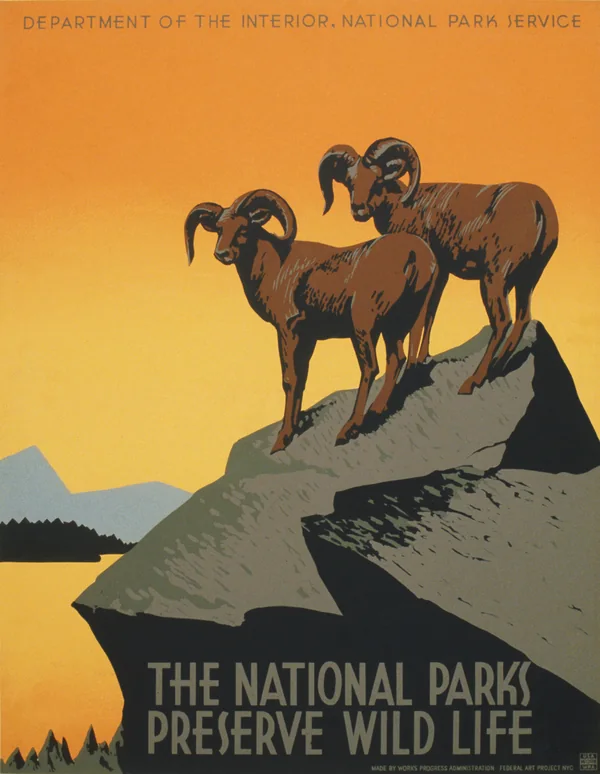
The National Park Service joined the program in 1938. The parks had just been renovated by the Civilian Conservation Corps, and now visitors had to be brought in. A poster cost 12 dollars per hundred, twelve cents each, and sold nothing but a free public service: "Ranger Naturalist Service," "a free government service," "the national parks preserve wild life." This was far from tourist advertising, and that sincerity still shows.
Berkeley, the Silkscreen Workshop
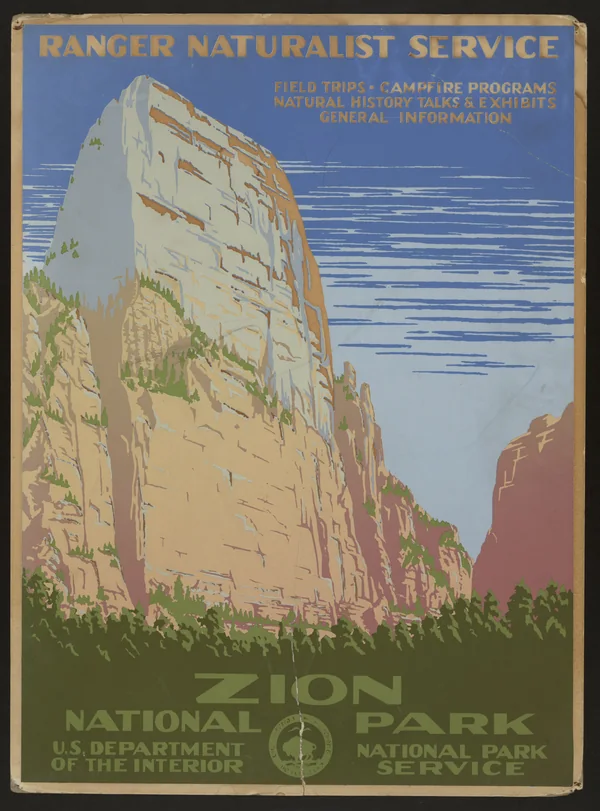
The series was born at the Western Museum Laboratories in Berkeley, California, at the initiative of Dorr Yeager, a National Park Service naturalist. Designer C. Don Powell drew most of the models, screen printer Dale Miller printed them: one silk screen per color, a few flat areas, no gradients. That constraint is what makes the style: three to five colors, a sky that is a single color, a mountain that is a single silhouette.
The screens of the time were fragile: each design was printed in only fifty to one hundred copies, hence the extreme rarity of the originals. The program ended when the United States entered the war. After 1941 the workshop closed, and the posters still in circulation mostly ended up in visitor center trash cans.
The 14 Posters, the 13 Parks
Powell and Miller only had time to produce fourteen designs. Thirteen sites are represented, Yellowstone having earned two posters, the geyser and the falls. The list tells the priorities of the National Park Service in 1938: the great Western parks first, two historic monuments next.
- Yellowstone (two posters)
- Grand Canyon
- Grand Teton
- Glacier
- Yosemite
- Zion
- Mount Rainier
- Lassen Volcanic
- Petrified Forest (a national park since 1962)
- Wind Cave
- Great Smoky Mountains
- Bandelier National Monument
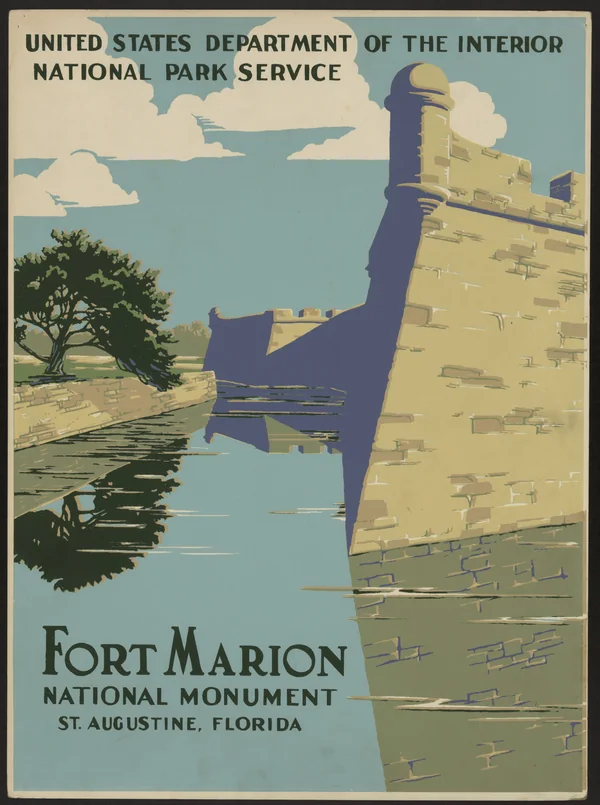
- Fort Marion National Monument (today Castillo de San Marcos)
Eleven of these sites are national parks today. The two monuments are not, and above all: the original series covers only a handful of today's 63 national parks. Anyone offering you an "original WPA poster" of Bryce Canyon, Arches or the Everglades is selling you a contemporary creation. Nothing shameful about that, provided they say so.
The originals
Library of Congress scans, public domain. Click to enlarge.
-
Yellowstone National Park, Ranger Naturalist Service (Old Faithful), C. Don Powell, vers 1938LC-DIG-ppmsca-13399 / LCCN 2007676133 -
Grand Canyon National Park, a free government service, C. Don Powell, vers 1938LCCN 2007676131 -
Zion National Park, Ranger Naturalist Service, C. Don Powell, vers 1938LCCN 2007676134 -
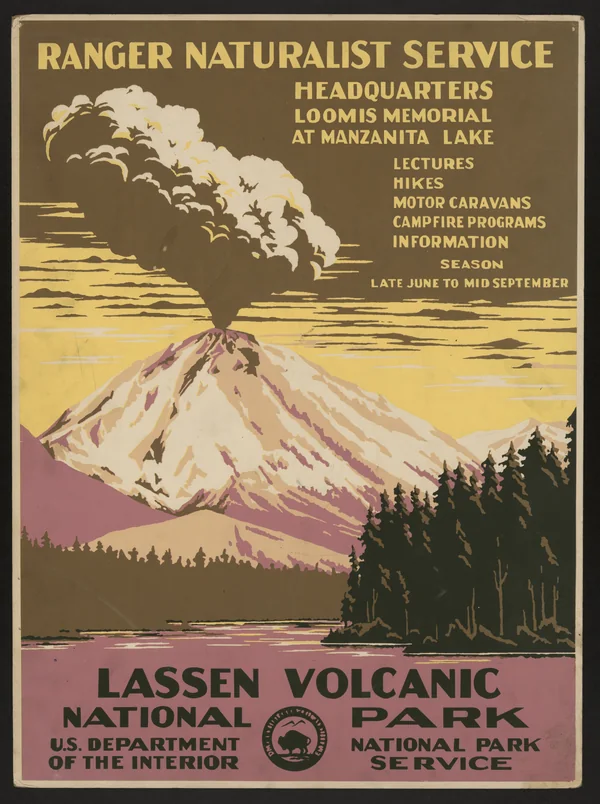
Lassen Volcanic National Park, Ranger Naturalist Service, vers 1938LCCN 2007676132 -
Fort Marion National Monument, St. Augustine, Florida, vers 1938LCCN 2007676130 -
The national parks preserve wild life, affiche WPA pour le National Park Service, vers 1938Library of Congress, WPA Posters -
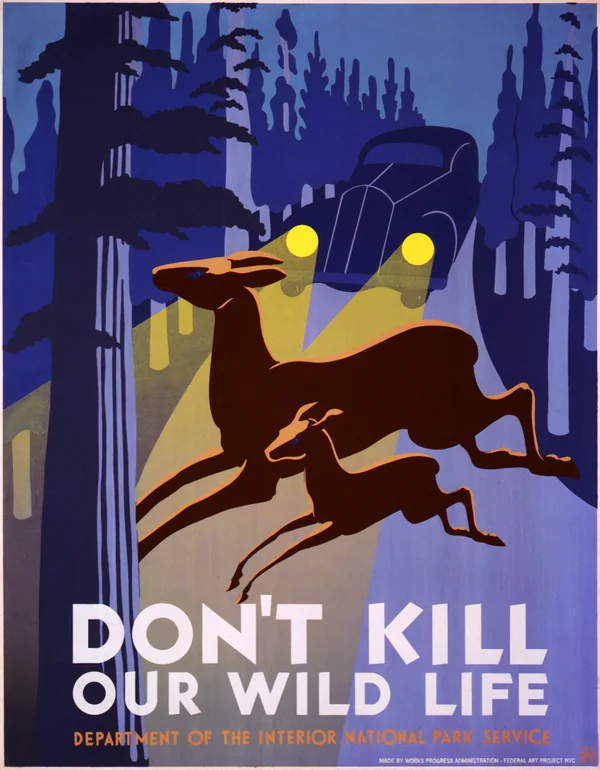
Don't kill our wild life, affiche WPA, 1936-1940Library of Congress, WPA Posters
Why These Posters Became Iconic
Produced in a few hundred copies, forgotten for thirty years, the series became one of the most copied graphic languages in the United States. Three reasons. Silkscreen forbids detail, so it imposes synthesis: a roughly 3,475-square-mile park becomes a geyser, a forest becomes a row of triangles, exactly what a traveler's memory does. Condensed capitals, stacked on two or three lines, give each poster the look of an official plaque: the park's name is not a title, it is an inscription. And these posters came out of a public program, not an agency: they sold nothing but access to a common good.
1973: The Poster Saved From the Fire
Without Doug Leen, this story would end in 1941. In 1973, this seasonal Grand Teton ranger was cleaning out a park storage shed when he came across a poster headed for the burn pile. He took it home, hung it on the wall, and began an investigation that would last twenty years. Nobody at the National Park Service remembered the series. The originals had disappeared; those that survived slept in private collections.
The investigation ended in the file drawers of the National Park Service archives at Harpers Ferry, West Virginia: thirteen black-and-white negatives had survived there. They made it possible to reconstruct the whole series and reissue it, with the colors recorded from the few known copies. Twelve originals have since been located.
Ranger Doug, the Man Who Brought the Series Back
Now "Ranger Doug," Doug Leen founded Ranger Doug's Enterprises in Seattle in 1993, initially to raise funds for Grand Teton, his former park. His work has two sides. First, faithful reissues of the fourteen originals, printed as in 1938: silkscreened at Tahoma Print in Fife, Washington, up to ten colors per poster, stabilizing base coat and anti-scuff varnish included. Then, and this is where the story goes on, new designs "in the style of the WPA" with illustrator Brian Maebius, commissioned by the parks themselves, for those the 1938 program never illustrated. There are about sixty of them today, roughly seventy designs in the catalog with the originals, some in limited editions.
It is the only workshop in the world extending the series with its original technique, and rangerdoug.com is worth the visit for that reason. It has one limit, and for us it is a big one: Ranger Doug does not ship to Europe. His shipping is built for North America; from here, his silkscreens come home in a suitcase or through a forwarder, at a steep price.
See Ranger Doug’s silkscreens ↗ External site, ships within North America
What You Bring Back From a Visitor Center
Because that is where you find them most often: in the shops of visitor centers and lodges, where Ranger Doug's reissues and new designs sit next to topographic maps and passport stamp books. You have surely walked past them, rolled in their tubes, at the register at Old Faithful or Zion Canyon. It is the park souvenir par excellence: one image, one name, one founding date, nothing else.
The problem is getting it home. An 18 × 24 inch poster in a suitcase, or a rigid tube in the cabin, rarely survives the trip without a crease, a crushed corner or a scratch. And you have to be there.
My Collection, and the Problem From Europe
At home, every park I have visited has its poster. Yellowstone next to Zion, Yosemite above the couch, one per park, brought back from the visitor center or ordered on my return, when that was possible. That wall tells years of road trips, and it is what started this site.
It also tells a frustration. From France, completing that wall is an obstacle course: park posters are nowhere to be found in shops, the only faithful workshop does not ship to us, the resellers who do charge shipping and customs fees that sometimes exceed the price of the poster, and the tube arrives folded one time in three. And for most parks, there is simply no poster to buy at all: the 1938 series covers thirteen, Ranger Doug about sixty, and the 63 national parks are covered nowhere.
What We Did
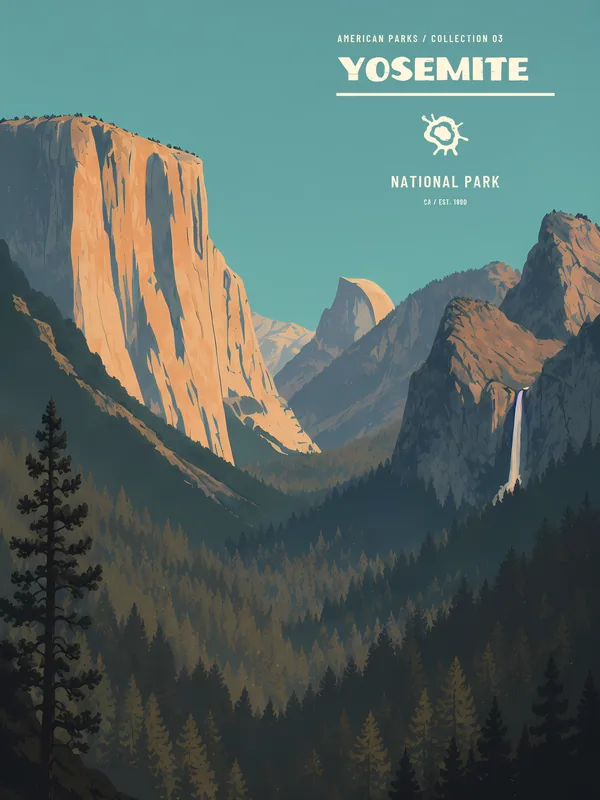
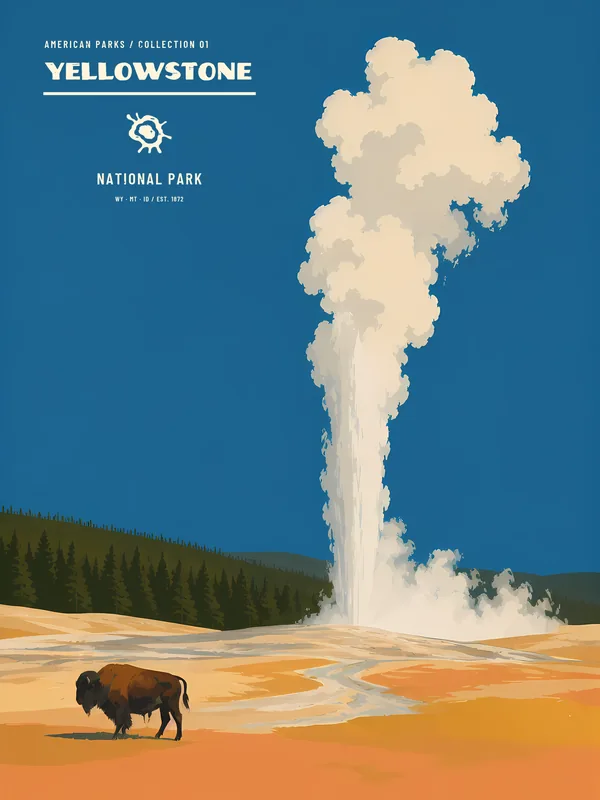
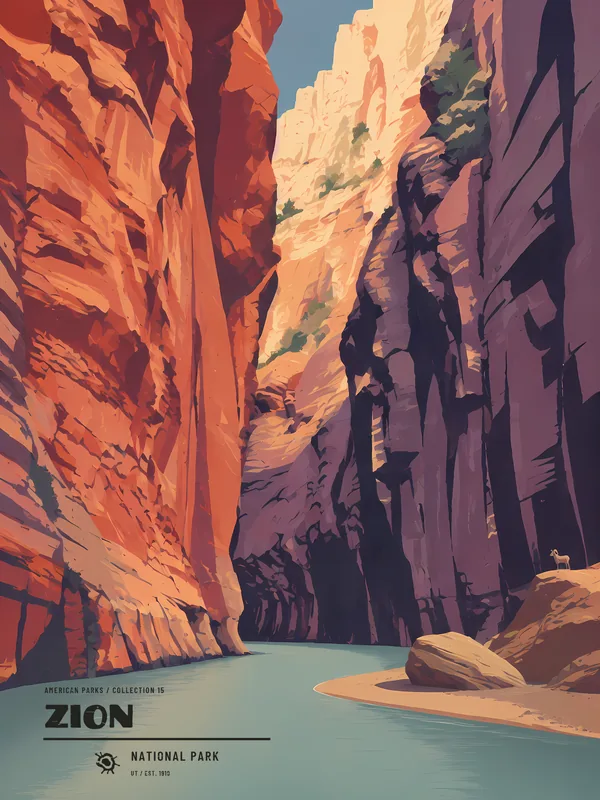
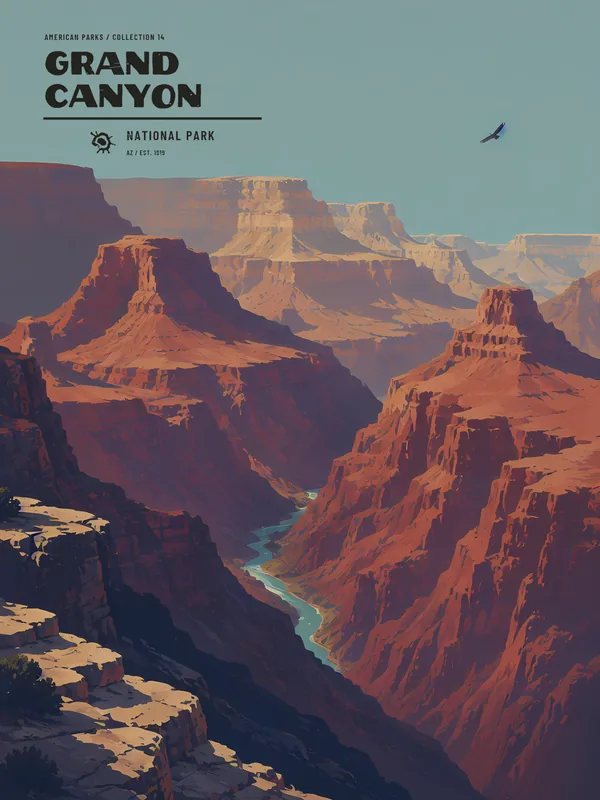
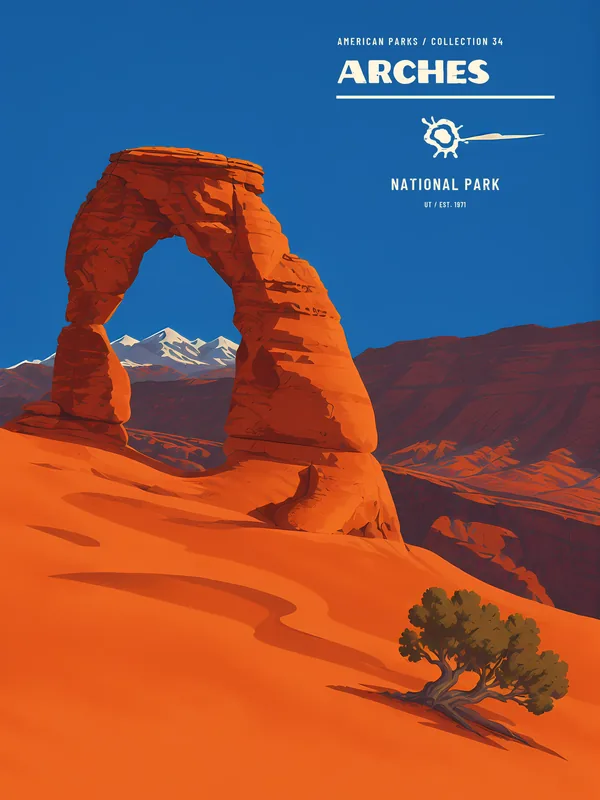
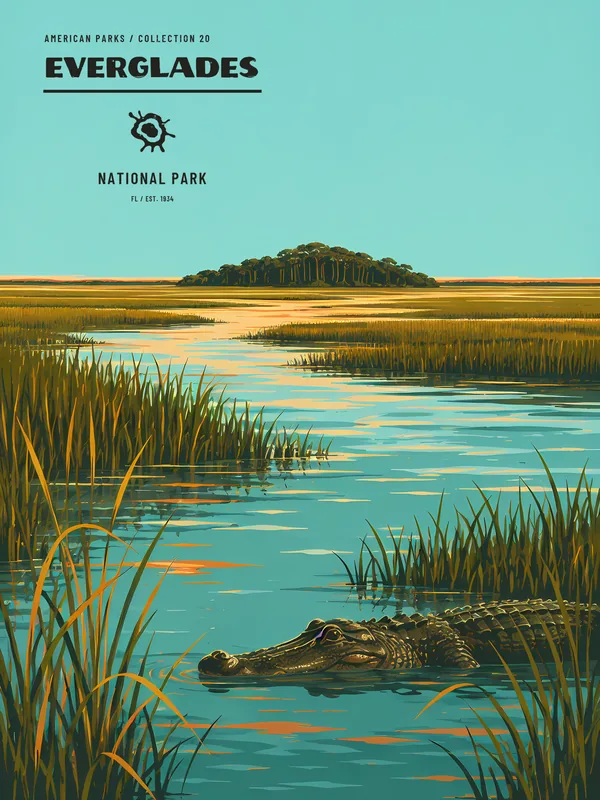
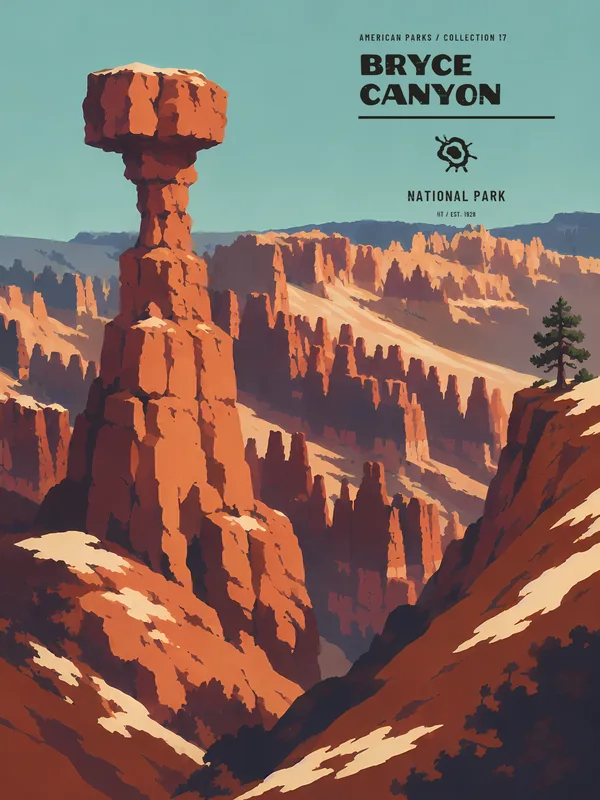
We drew our own. One original illustration per national park, sixty-three in all, in the grammar of 1938: large masses, flat inks, a short palette, condensed capitals, the park's name and its founding year in the official order, from Yellowstone (1872) to New River Gorge (2020). They are not reissues of originals, and we never present them as such: they are contemporary creations inspired by the WPA series, for the parks that never had one as much as for those that did.
Above all, they are printed near you. Each poster is printed to order on art paper, 200 g matte or 250 g museum, in three sizes, in a workshop located in Europe, North America or elsewhere depending on your address, and shipped rolled in a rigid tube within two to five business days. No customs, no suitcase, no crease. A poster damaged on arrival is reprinted, no questions asked. It is the wall of my collection, made possible from anywhere.
The collection, one poster per park
Printed near you, shipped in 2 to 5 days. Reprinted for free if it arrives damaged.
Where to See the Originals
The originals are first seen online. The Library of Congress keeps, in its WPA poster collection, the digitized copies of Yellowstone, Zion, Grand Canyon, Lassen Volcanic and Fort Marion, as well as the National Park Service's generic wildlife-protection posters. Those public-domain scans are the ones you see on this page. Grand Teton, the park of the 1973 discovery, showed five originals during a talk by Doug Leen in 2015; the Harpers Ferry archives, where the negatives sleep, are not open to visitors.
Frequently Asked Questions
How many WPA national park posters were produced?
Fourteen designs, for thirteen parks and monuments, between 1938 and 1941, each printed in fifty to one hundred hand-silkscreened copies. The program stopped when the United States entered the war.
Which parks had an original WPA poster?
Yellowstone (two posters), Grand Canyon, Grand Teton, Glacier, Yosemite, Zion, Mount Rainier, Lassen Volcanic, Petrified Forest, Wind Cave and Great Smoky Mountains, plus two national monuments: Bandelier and Fort Marion. No other park has a period WPA poster.
Can you buy a WPA poster in Europe?
Ranger Doug's faithful reissues are not shipped to Europe: they have to be ordered from North America or brought back from a visitor center. Our posters are creations inspired by the series, printed to order in a workshop near your address, Europe included.
Are the WPA posters copyright-free?
Yes. Produced by a United States federal agency, they are in the public domain. The Library of Congress scans can be freely reproduced, which is what this page does. The style itself belongs to no one.
Are your posters WPA posters?
No. They are contemporary creations inspired by the 1938 series, one per national park, printed to order. For a reissue of an original silkscreened the old way, turn to Ranger Doug's Enterprises.
What does "Ranger Naturalist Service" mean?
It was the parks' interpretation service of the time: ranger naturalists led guided hikes, campfire talks and museum tours, free of charge. The posters promoted it, hence the slogan.