
Everglades Wildlife: What Animals to See and Where to Find Them
The Everglades shelter a level of biodiversity that few American national parks can match. Five animals capture the park's identity: the American alligator, American crocodile, Florida panther, roseate spoonbill, and West Indian manatee. Alligators are by far the most common and show up on the very first trail. The other four take a little more strategy to find, which is where a good briefing makes all the difference.
Iconic Everglades Animals
American Alligator (Alligator mississippiensis)
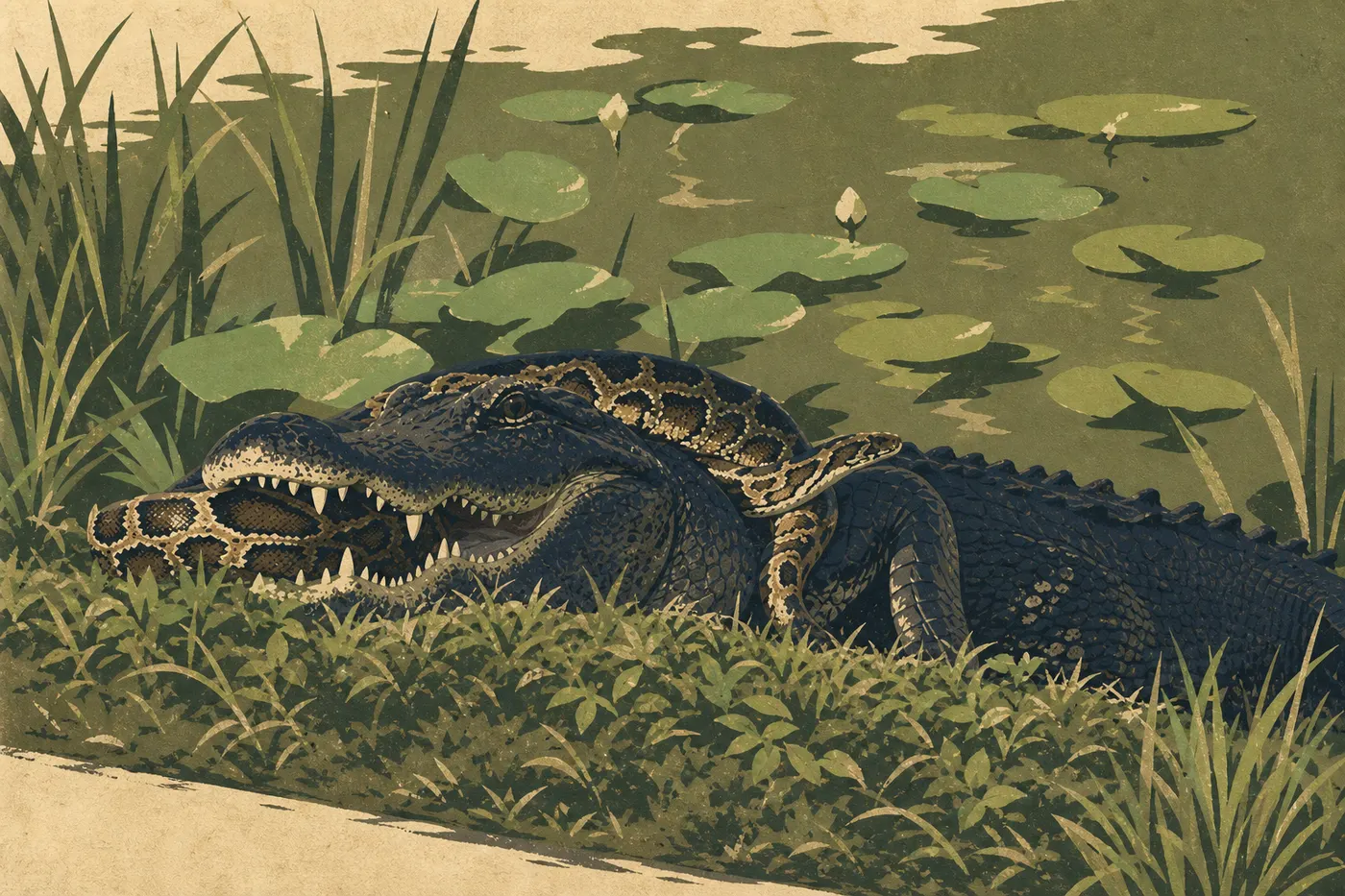
This is the park's signature animal and the easiest one to spot. The Everglades are home to tens of thousands of them, in nearly every aquatic environment: ponds, canals, and flooded ditches along the road. Adults reach 10 to 13 feet and can weigh more than 440 pounds. Their broad, rounded U-shaped snout sets them apart from their crocodile cousins at a glance.
During the dry season, alligators dig depressions in the mud called alligator holes. These hold water through the driest months. The makeshift ponds become vital refuges for fish, turtles, and birds. The NPS officially recognizes the alligator as an ecosystem engineer.
The best guaranteed spot is Anhinga Trail in the Royal Palm area, 6.2 miles from the main entrance. You can watch alligators from 6 to 10 feet away along a paved trail without ever leaving the marked path.
American Crocodile (Crocodylus acutus)
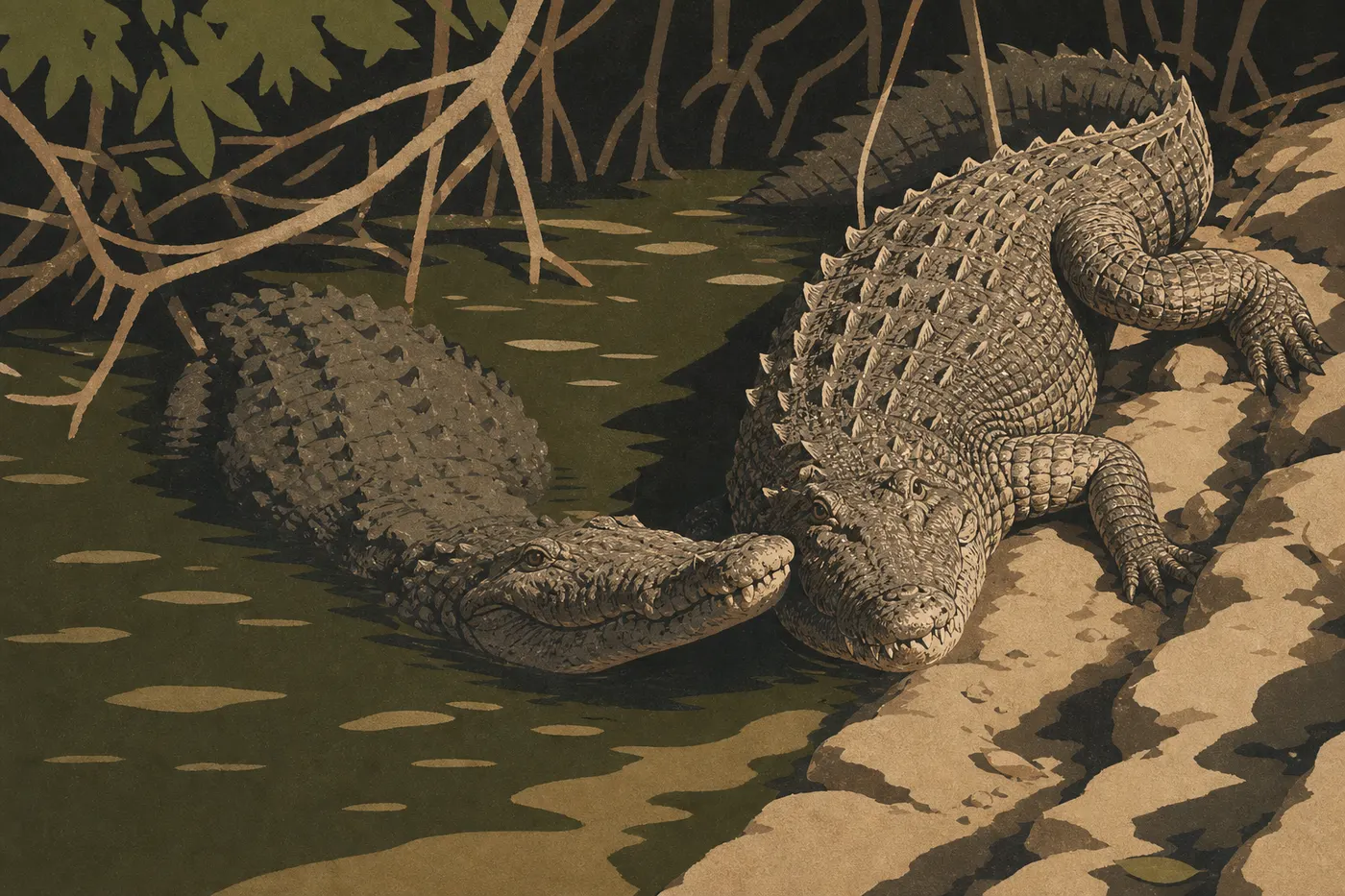
The Everglades are the only place in the world where American alligators and crocodiles live side by side. Crocodiles prefer brackish and salt water. They frequent coastal areas and the canals around Flamingo, at the southern end of the park.
Their population fell to just a few hundred animals in the 1970s because of hunting and habitat destruction. Since legal protection began, their numbers have been slowly recovering.
How to Tell an American Alligator from a Crocodile
Three clues are enough:
- The snout: broad and U-shaped on an alligator, narrow and V-shaped on a crocodile.
- The color: blackish green on an alligator, lighter gray-green on a crocodile.
- The fourth lower tooth: visible even when the crocodile's mouth is closed, but hidden on an alligator.
- The location: in salt or brackish water around Flamingo, the answer usually becomes clear quickly.
Florida Panther (Puma concolor coryi)
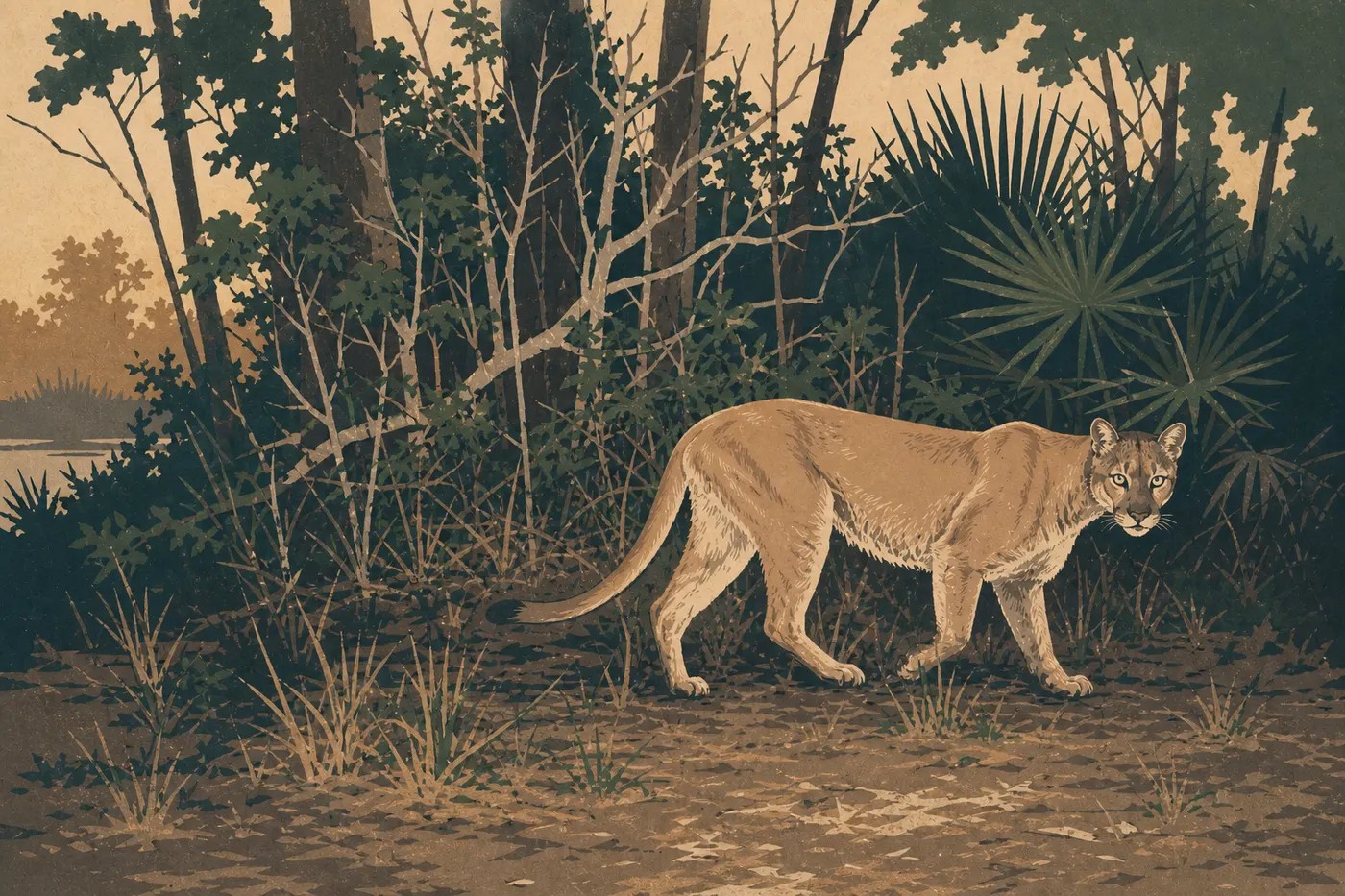
The Florida panther is the official state animal and one of North America's most endangered cats. Fewer than 200 still live in the wild, mainly in the southern Florida peninsula. Everglades National Park protects part of this remnant population.
Nocturnal and solitary, the panther avoids contact with humans. In practice, a direct sighting is an exceptional stroke of luck. On Road 9336 in the late afternoon, you may occasionally spot tracks in the mud along the roadside, more often than the animal itself. Every confirmed sighting matters. Report it to the Ernest F. Coe Visitor Center.
Signature Birds: Roseate Spoonbill, Anhinga, and Herons
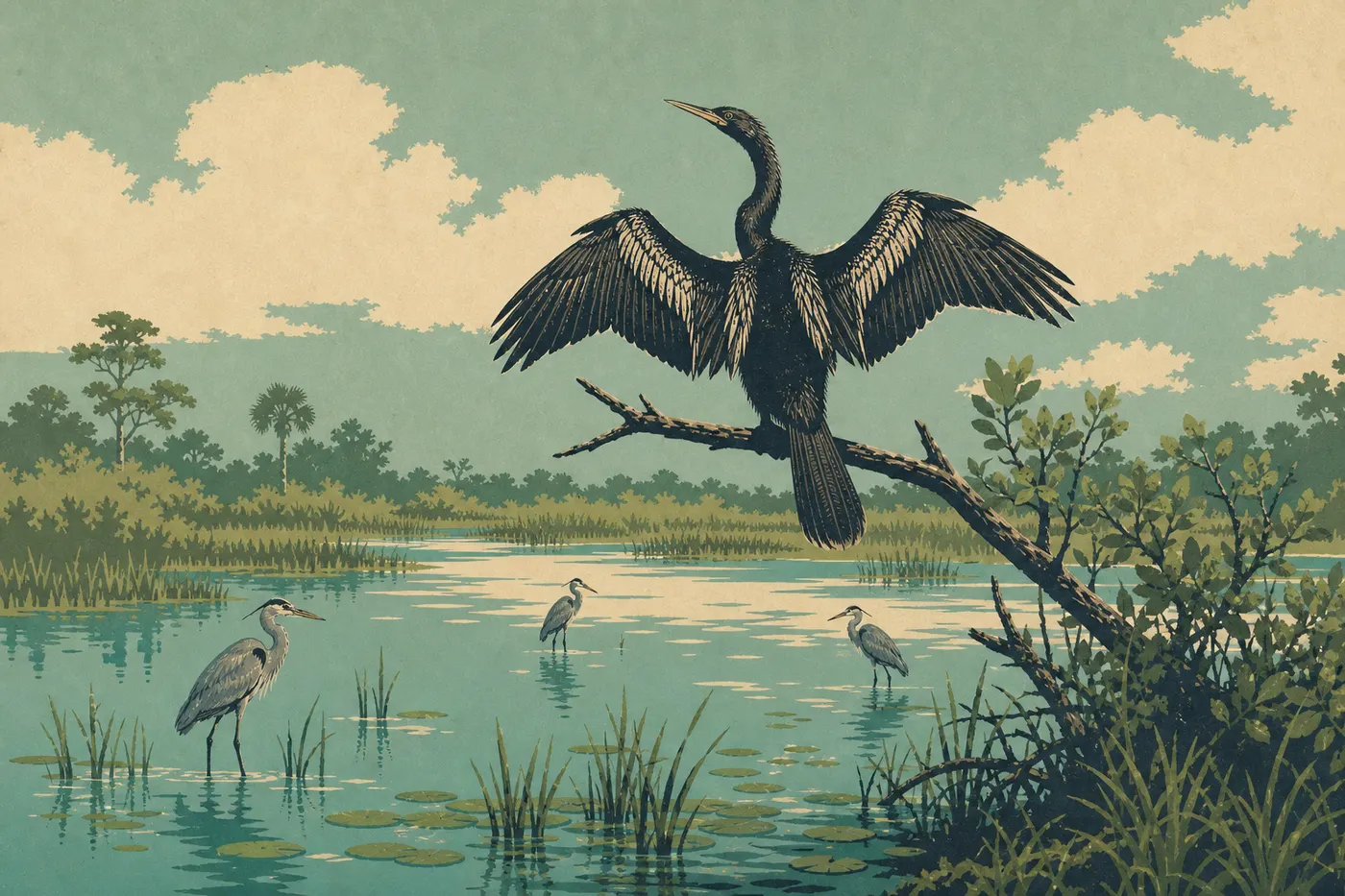
The Everglades are home to more than 350 bird species. A few stand out as visual signatures of the park.
The roseate spoonbill (Platalea ajaja) is impossible to miss in the wetlands during the dry season. Bright pink with a flat, spoon-shaped bill, it sweeps the water from side to side to filter out small crustaceans. Those food pigments are exactly what give it its color. Eco Pond and Mrazek Pond in the Flamingo area are its two favorite spots.
The anhinga (Anhinga anhinga) is a diver with non-waterproof feathers. It swims underwater to spear fish, then settles on a branch to dry its outstretched wings in the sun. You can see this distinctive pose almost for certain along Anhinga Trail.
The great blue heron (Ardea herodias), wood stork (Mycteria americana), and white ibis (Eudocimus albus) round out the scene. Shark Valley and Pa-hay-okee hold impressive colonies during the dry season.
West Indian Manatee (Trichechus manatus)
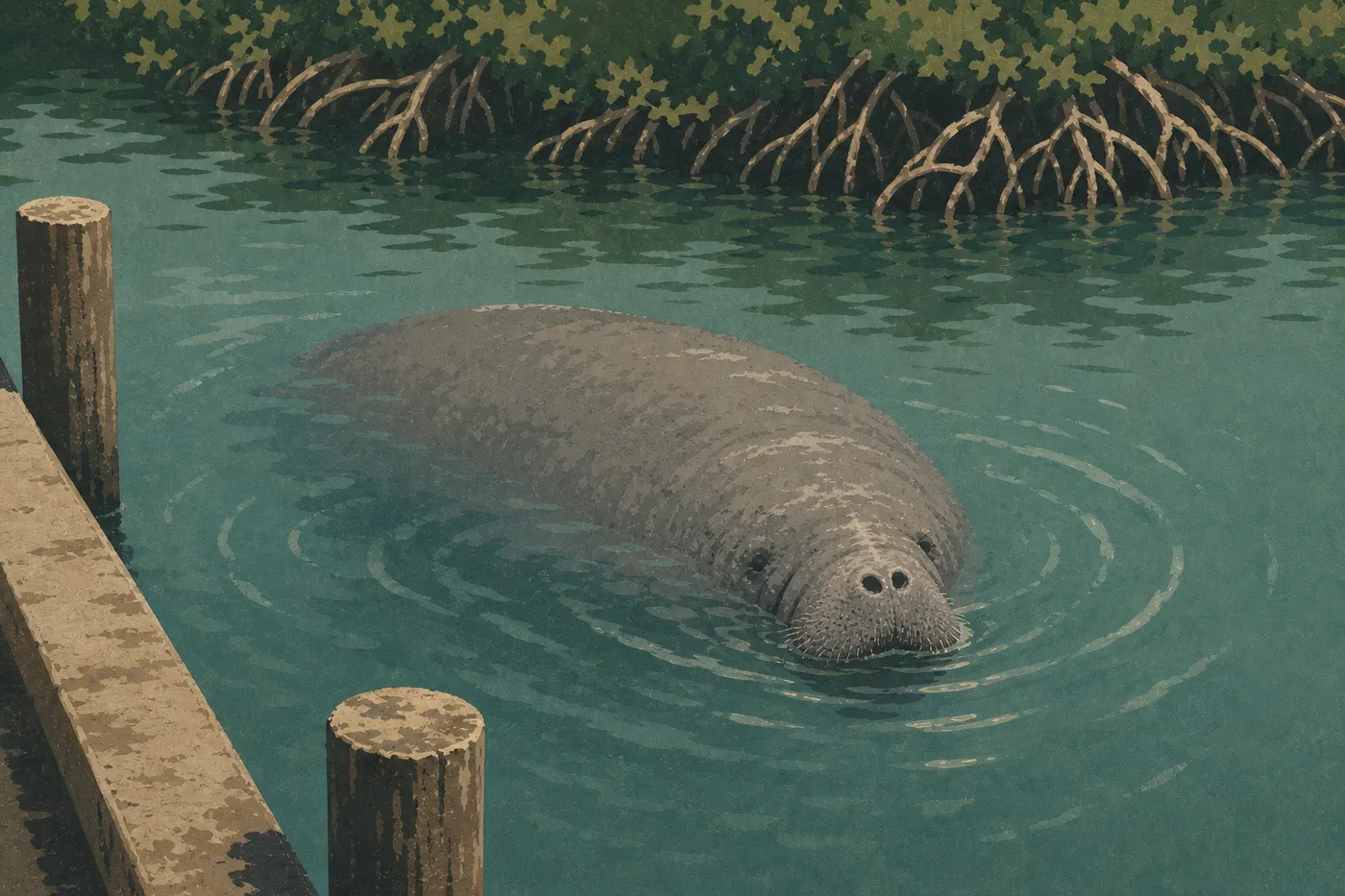
This herbivorous marine mammal is one of the park's most elusive animals. It quietly grazes on seagrass in coastal waters and surfaces only to breathe every few minutes. An adult can reach 13 feet and weigh 1,100 pounds, making it the park's largest mammal.
You have the best chance of seeing one from November through March, when colder water in northern Florida pushes them toward the warmer waters of the south. On a calm morning, Flamingo Marina is the best place to watch from shore. Encounters are possible by kayak on Florida Bay. Keep at least 50 feet away.
Where to See Animals in the Everglades
The park covers about 2,400 square miles, but a few areas account for most wildlife sightings.
Anhinga Trail (Royal Palm): the essential stop for every visitor. Located 6.2 miles from the Ernest F. Coe entrance, this 0.5-mile paved trail follows a permanent pond. Alligators, anhingas, herons, and egrets are here year-round, within camera range from the first few minutes.
Shark Valley: accessible from Road 41, the Tamiami Trail, at the park's northern entrance. A 15-mile loop, by bike, on foot, or aboard a guided tram, crosses a sawgrass prairie. The central observation tower offers a 360-degree panorama, making it ideal for spotting alligators, vultures, and large wading birds across the vast marshes.
Flamingo: 39 miles from the main entrance, at the southern end of the park. This is headquarters for crocodiles, manatees, and coastal birds. Eco Pond, steps from the campground, holds remarkable diversity during the dry season, often with dozens of species gathered around a single pond.
Pa-hay-okee Overlook: a raised platform over the sawgrass prairie. It's ideal for birds of prey and vultures soaring above the open horizon.
For more wildlife-viewing itineraries, the Everglades hiking guide lists the trails best suited to each type of visitor and length of stay.
When to Watch Everglades Wildlife
The dry season, from December through mid-May, is the prime time. As water levels fall, alligators, birds, and fish gather around the remaining ponds. The concentrations seen on Anhinga Trail or in Shark Valley in January and February can be spectacular.
During the wet season, from mid-May through November, wildlife spreads across a much larger flooded area. Sightings are less concentrated, but the vegetation is lush. Mosquitoes are a real challenge then, so bring repellent containing at least 20% DEET.
Best times: dawn and dusk remain the most productive windows for mammals and most birds. Alligators also come out in the middle of the day to regulate their body temperature in the sun. Nocturnal animals become active after dark, including Florida panthers, raccoons, Virginia opossums, and snakes. A slow drive along Road 9336 after 8 p.m. with the windows down can bring some good surprises.
To choose your visiting month based on your priorities, such as wildlife, crowds, and weather, our Everglades seasonal guide explains what to expect month by month.
Predators and Large Animals of the Everglades
The American alligator is the top predator in the park's freshwater. With no natural predators as an adult, it regulates fish, turtle, and small mammal populations. The Florida panther is its only potential land-based rival, but direct confrontations are extremely rare.
The panther mainly hunts white-tailed deer (Odocoileus virginianus), which are well represented in the park, as well as feral pigs found in some areas.
One ecological threat to know about is the Burmese python (Python bivittatus). Accidentally introduced in the 1980s, this nonvenomous reptile can exceed 16 feet and has become firmly established in the park. NPS studies document a sharp decline in small mammal populations, including raccoons, opossums, and rabbits, in the hardest-hit areas. Removal programs are underway. If you see one, report it immediately to the nearest ranger or through the Florida Fish and Wildlife Conservation Commission's IveGot1 app.
Bottlenose dolphins (Tursiops truncatus) frequent the coastal waters of Florida Bay. Encounters are common by kayak or boat from Flamingo.
Watching Wildlife Safely
The Everglades are wild country. The animals that live here aren't domesticated and never will be.
Alligators and crocodiles: never come within 16 feet of a reptile, even if it appears to be asleep. An alligator can charge a short distance with surprising speed. Females with young are especially aggressive. If you hear small, high-pitched growls in the vegetation, back away without running.
Never feed an alligator. Federal law prohibits it, and violations can bring a fine. It can also be fatal for the animal. An alligator accustomed to people associates humans with food. The NPS may then have to euthanize it.
Manatees: by kayak or boat, stay 50 feet away and turn off the engine as you approach. Propeller strikes remain the leading cause of injury and death for these animals in Florida.
Venomous snakes: four venomous species live in the park, including the water moccasin (Agkistrodon piscivorus) and eastern diamondback rattlesnake (Crotalus adamanteus). Watch your step off marked trails, especially in dense vegetation or near shorelines.
Mosquitoes: during the wet season, they are everywhere at dawn and dusk. Cover your arms and legs, apply effective repellent, and choose midday outings if you don't have suitable protection.
For general park rules, including speed limits on park roads and what to do if you unexpectedly encounter wildlife, rangers at the park's entrance stations can provide additional advice.
In Short: Species You Shouldn't Miss and Where to Find Them
| Species | Top area | Best time |
|---|---|---|
| American alligator | Anhinga Trail, Shark Valley | Dry season (Dec.-Apr.) |
| American crocodile | Flamingo, coastal canals | Year-round |
| Florida panther | Road 9336 (dusk/dawn) | Year-round (rare) |
| Roseate spoonbill | Eco Pond, Mrazek Pond | Dry season |
| West Indian manatee | Flamingo Marina, Florida Bay | November through March |
| Anhinga | Anhinga Trail | Year-round |
| Great blue herons and ibises | Pa-hay-okee, Shark Valley | Dry season |
| Bottlenose dolphin | Florida Bay (kayak/boat) | Year-round |
To plan your visit from start to finish, our complete Everglades guide brings together access, lodging, itineraries, and entrance fees.
Frequently Asked Questions
What animals live in the Everglades?
The Everglades are home to more than 350 bird species, dozens of reptiles including American alligators and crocodiles, mammals such as Florida panthers and West Indian manatees, several snake species including four venomous ones, sea and freshwater turtles, and hundreds of fish and crustacean species.
What is the most common animal in the Everglades?
The American alligator is the most frequently seen wild animal in the park. Found in nearly every aquatic environment in the Everglades, it can turn up anywhere from Anhinga Trail to the Flamingo area, all year and at any time of day.
What is the largest animal in the Everglades?
The West Indian manatee is the park's largest mammal, reaching up to 13 feet and 1,100 pounds as an adult. Among reptiles, large male alligators can exceed 13 feet and 550 pounds.
What snakes can be found in the Everglades?
Several dozen snake species live in the park, including four venomous ones: the water moccasin, eastern diamondback rattlesnake, eastern coral snake, and dusky pygmy rattlesnake. The Burmese python, a large, nonvenomous invasive species, is also now well established in the park.
What animals are out at night in the Everglades?
The most active nocturnal animals are the Florida panther, raccoon, Virginia opossum, and several snake species. Alligators also hunt at night, especially during the wet summer season. A slow drive on park roads after 8 p.m. may let you spot them in the headlights.
What is Florida's iconic animal?
The Florida panther is Florida's official state animal. Fewer than 200 remain in the wild, mainly in the southern peninsula, including some in the Everglades.