
Everglades with Kids: What to Do and How to Plan Your Visit
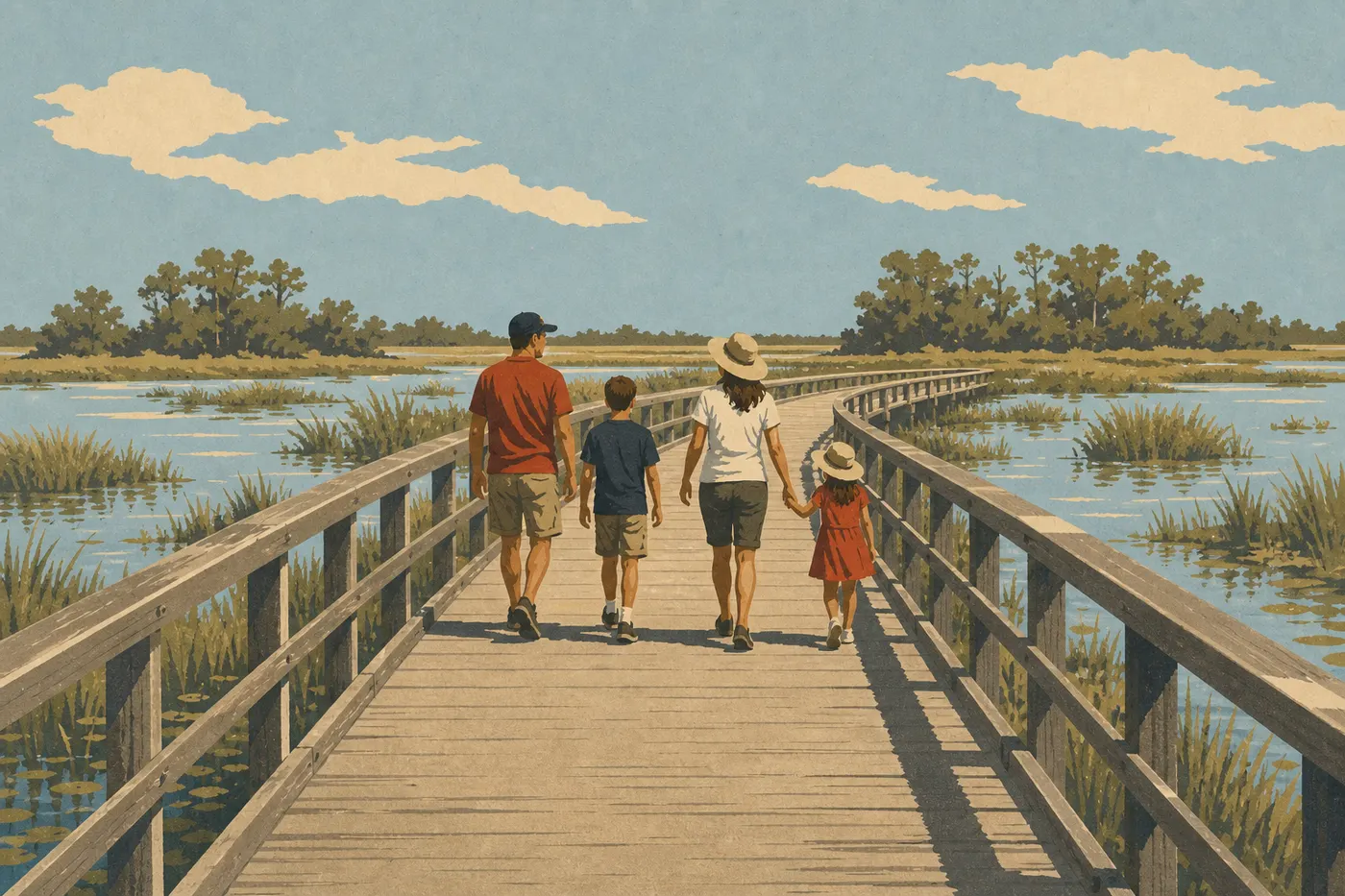
Yes, the Everglades work well for families. The signature trails are flat, often stroller-friendly, and wildlife can be spotted just a few feet away without much effort. Kids ages 4 or 5 and up can really take part in the experience, from the Junior Ranger program to airboat tours and alligator watching. The boardwalks work from birth. The only real constraint is choosing the dry season, from December through March, to avoid extreme heat and mosquitoes.
Why Visit the Everglades with Kids?
The Everglades offer something rare in travel: wild nature at eye level, with almost no exertion. There’s no elevation gain and no eight-hour hike. Alligators lounge a few yards from the boardwalks, herons and anhingas come within camera range on Anhinga Trail, and manatees can be watched from the marina at Flamingo. Kids who can barely make it through two hours in a museum will stay glued to the railing here for hours.
The second advantage is how the park is divided into areas you can reach by car. You move from Royal Palm to Shark Valley as you would from one stop to the next on a road trip, with specific stops along the way. You don’t need a serious physical commitment to see spectacular wildlife. For a complete overview of the park’s wildlife, the Everglades wildlife guide lists the species you can spot in each season.
The third advantage is the Junior Ranger program, which turns a visit into a mission. Kids get a booklet, a goal, and an official badge to take home. It’s the kind of tangible souvenir that stays with them.
Are the Everglades Good for Kids? What Age Works Best?
The Everglades are a good fit for families. Anhinga Trail and Gumbo Limbo Trail in the Royal Palm area are stroller-friendly, as is Pa-hay-okee Overlook Trail. The visitor centers can accommodate school groups.
The youngest practical age depends on the type of visit:
- From birth: flat boardwalks and visitor centers.
- Ages 4 or 5 and up: the Junior Ranger program and airboat tours, depending on the operator, with minimum ages ranging from 3 to 5.
- Ages 8 to 10 and up: independent kayaking or canoeing.
There are two things to plan for. Heat and humidity during the wet season, from June through October, quickly wear out young children. Some trails are also partly flooded outside the dry season. December through March remains the ideal window.
When to Visit with Kids: The Easiest Season for Families
The dry season, from December through mid-May, is the best time to visit with kids. Temperatures range from 68 to 81°F, mosquitoes are almost nonexistent, and wildlife gathers around the remaining water sources, which makes it easier to spot. It’s also the only season when every trail is generally usable without boots.
From July through September, temperatures climb above 95°F, with humidity close to 90%. Mosquitoes take over the park at sunset and sometimes during the day in wooded areas. Visiting with kids isn’t impossible, but it’s genuinely uncomfortable.
For full details by month and average rainfall, see when to visit the Everglades. Week-by-week temperatures are available in the Everglades weather guide.
How Many Days to Plan for a Family Trip
Two full days is the minimum for seeing the essentials without rushing. Three days gives you room to slow down and add a kayaking trip or airboat tour without giving up the must-sees.
A good pace looks like this: day 1 on the Ernest Coe side, with Anhinga Trail, Gumbo Limbo Trail, and then the drive to Flamingo for sunset; day 2 at Shark Valley, with the bike loop, the observation tower, and short trails; and an optional day 3 in Everglades City for kayaking among the Ten Thousand Islands.
If you only have one day, focus on Royal Palm and Shark Valley. That’s where you’ll find the most wildlife and the most family-friendly facilities.
Several Everglades itinerary options cover the different entrances and trip lengths. For distances from Miami and ways to reach the various entrances, see how to get to the Everglades.
Things to Do in the Everglades with Kids: Our Picks
These are our top family picks:
Anhinga Trail (Royal Palm). A must-do. On a 0.5-mile round-trip walk along a concrete boardwalk, you’ll see resting alligators, snapping turtles, and a colony of anhingas drying their wings in the sun. Allow 45 minutes to an hour. Strollers are fine.
The Shark Valley Loop. This flat, 15-mile circular road has alligators literally lying on the pavement. Families can rent bikes on-site, with trailers available for toddlers, or take the guided tram with an NPS interpreter. At the center of the loop, a 49-foot observation tower offers a 360-degree view across the sawgrass prairie. It’s the experience everyone remembers.
An airboat tour. Private operators outside the national park offer 30- to 60-minute rides through the marshes. They’re loud, fast, and spectacular. Bring hearing protection for children under 6. Around Everglades City, tours run along the Ten Thousand Islands.
The Flamingo area. Forty miles from the Ernest F. Coe entrance, it feels like the end of the road in the Everglades. You can rent kayaks and canoes, watch manatees in the marina, and take in striking sunsets over Florida Bay.
Canoeing and kayaking. For kids 8 and older, Nine Mile Pond and the canals near Flamingo offer easy launches on calm water. Dolphins, stingrays, and seabirds are regular sightings.
For the complete list of park activities, including options for adults, see everything to do in the Everglades.
Easy Family Hikes: Short, Flat, and Stroller-Friendly
The Everglades have virtually no elevation gain. The highest point in the park is barely 7 feet above sea level. Every hike is therefore physically accessible, as long as you visit during the dry season to avoid temporary flooding.
Our family picks:
Anhinga Trail (Royal Palm): 0.5-mile round trip, paved, stroller-friendly, with wildlife sightings year-round.
Gumbo Limbo Trail (Royal Palm): a 0.4-mile loop beneath the canopy of a subtropical hammock. It’s shaded and pleasant in the middle of the day. Pair it with Anhinga Trail.
Pa-hay-okee Overlook Trail: 656 feet to a platform with an open view across the sawgrass prairie. Short, flat, and wide open, with a 360-degree panorama.
Bobcat Boardwalk and Otter Cave Trail (Shark Valley): two loops of about 0.3 miles each, both flat, with frequent alligator sightings. They’re perfect for kids who struggle with the full bike loop.
For intermediate trails and nighttime outings, our Hiking page covers them all with difficulty ratings, exact distances, and seasonal advice.
The Junior Ranger Program
The NPS Junior Ranger program is free and available at every visitor center in the park: Ernest F. Coe, Royal Palm, Shark Valley, Gulf Coast, and Flamingo. Here’s how it works: kids receive an age-appropriate activity booklet, with two levels for ages 5–7 and 8–12. They complete it during the visit, and a ranger officially presents their badge in a short ceremony.
The Everglades booklets focus on the ecosystem. Kids learn to tell an American alligator from an American crocodile, which share the park in a unique situation in the United States, understand the water cycle, and identify iconic species. It’s hands-on and engaging, and they leave with real vocabulary for the environment.
Allow 2 to 3 hours to complete the booklet as you follow trails and stop at visitor centers. The ceremony is brief and genuine. Kids ages 6 to 10 tend to love it.
Safety with Kids
The Everglades are a wild park. These rules are non-negotiable.
Alligators and crocodiles. Never get within 16 feet of an alligator or crocodile. Keep children in sight at all times along the banks. Never let a child approach a body of water alone. Alligators usually avoid people, but they can charge quickly over a short distance if they feel cornered or if someone gets between a mother and her young. Feeding alligators is illegal and dangerous.
Heat and dehydration. Outside the dry season, temperatures climb above 91–95°F, with humidity close to 90%. Give kids water regularly, before they ask for it. Avoid outings from 11 a.m. to 3 p.m. in summer. Signs of heat exhaustion in a child, such as clammy skin, sudden fatigue, or a headache, call for an immediate break in the shade and gradual rehydration.
Mosquitoes. During the wet season, mosquitoes are everywhere and aggressive. Apply repellent containing DEET, using a 20–30% formula for children over 2 months according to pediatric recommendations, or picaridin before every outing. Long sleeves and pants significantly reduce exposure.
Sun. Florida gets intense sun year-round. Apply SPF 50 sunscreen 20 minutes before exposure and reapply every 2 hours. Shade is scarce on the open trails at Shark Valley and in the sawgrass areas.
On the water. Kids must wear life jackets in kayaks and canoes. During the wet season, thunderstorms can build very quickly in the late afternoon. Check the forecast every morning and head back before 2 p.m. if clouds start building.
Where to Stay with Kids: In the Park and Nearby
Inside the park, lodging is rustic. Long Pine Key campground on the Ernest Coe side and the Flamingo campground welcome families. Flamingo also offers eco-tents and small cottages with bathrooms, which are much more comfortable for families with young children. Reservations are recommended several weeks ahead during the busy season, from December through March.
Outside the park, Homestead and Florida City on the east side have most of the area’s hotels and motels. Prices are considerably lower than in Miami, a 40- to 50-minute drive away. On the west side, Everglades City has a few small hotels and waterfront bed-and-breakfasts for families heading to the Ten Thousand Islands.
Our Where to Stay pages and Hotels & Lodges cover every option with prices and reviews. For campsites and reservations, our Camping page breaks down each area.
Meals and Breaks with Kids
Food service in the park is limited. The Flamingo Visitor Center cafeteria serves simple meals and snacks. At Shark Valley, a small snack bar operates during the busy season. Outside those two spots, there’s nothing.
Our practical recommendation is to pack a picnic. Shaded tables are available at Royal Palm, Long Pine Key, and Flamingo. For hydration, plan on at least 1.5 liters of water per person for a half day during the dry season, and more in summer.
Outside the park, Homestead has a good selection, including several well-established Cuban restaurants and familiar chains that kids recognize. Our Where to Eat page lists the places we’ve tried.
Family Budget
Park admission costs $35 per vehicle and is valid for 7 days, regardless of the number of passengers. Children under 15 enter all U.S. national parks free. The Junior Ranger program is free.
If you visit several parks in a year, the $80 America the Beautiful pass provides unlimited access to all federal recreation sites for 12 months. It pays for itself starting with the second park. The National Park Fees & Passes page explains entrance fees and pass options.
Main additional expenses include bike rentals at Shark Valley, $15–$20 per adult with reduced child rates; private airboat tours, $30 to $60 per adult; and kayak or canoe rentals at Flamingo, $20–$30 per boat per hour.
Places to Combine with the Everglades When Traveling with Kids
Biscayne National Park is 20 to 30 minutes east of Homestead, with snorkeling on coral reefs, glass-bottom cruises, and kayaking in the bay. It’s a good match for kids 8 and older.
Miami is about an hour north. Jungle Island, the Miami Children’s Museum, and the beaches at Crandon Park on Key Biscayne fit easily into an Everglades itinerary.
The Florida Keys continue southeast. Key Largo and John Pennekamp Coral Reef State Park, with snorkeling and sea kayaking, are 40 minutes from Homestead. For a complete Florida road trip with kids, the Regions and Road Trips sections offer combined itineraries.
Everglades with Kids: Is It Worth It?
Yes, as long as you visit during the dry season. The Everglades don’t look like any other American national park. There are no sweeping alpine views or towering cliffs, but the close-up wildlife experience is hard to find elsewhere. An alligator a few yards from the boardwalk, a Junior Ranger badge, and sunset at Flamingo over Florida Bay are the images that stay with you. For kids ages 5 to 12, it’s often the most memorable stop on a Florida road trip.
Our complete Everglades guide brings together all the practical information you need to plan your trip.
Frequently Asked Questions
How long does it take to visit the Everglades?
Plan on two full days for a satisfying family visit to the Everglades. One day is doable if you focus on Royal Palm, including Anhinga Trail, and Shark Valley, but you’ll miss Flamingo and the water activities. Three days is ideal for adding an airboat tour and a kayaking trip.
What’s the best place to visit in the Everglades?
For families, the best starting point is the Royal Palm area, with Anhinga Trail and Gumbo Limbo Trail, accessible from the Ernest F. Coe entrance. Shark Valley is a must for the bike loop and observation tower. Flamingo, 40 miles from the main entrance, is worth the drive for manatees and sunsets over Florida Bay.
What should kids wear in the Everglades?
During the dry season, from December through March, pack light layers, hats, closed-toe shoes, and SPF 50 sunscreen. During the wet season, from June through November, add long sleeves and pants for mosquito protection, a light rain jacket for afternoon storms, and DEET or picaridin repellent before every outing.
What activities can kids do in the Everglades?
The essential family activities are Anhinga Trail for boardwalk wildlife viewing, the Shark Valley bike loop, a private airboat tour, the Junior Ranger program, and a kayaking or canoeing trip for kids 8 and older. None requires special equipment.
Are the Everglades suitable for very young children?
Yes. The Everglades’ flat boardwalks are stroller-friendly from the earliest ages. With infants and toddlers, visit during the dry season, from December through March, to avoid extreme heat and mosquitoes. Summer is not recommended for children under 3.
What’s the best time to visit the Everglades with kids?
The best time for a family visit is December through March, when wildlife is easier to see, temperatures are mild, and mosquitoes are absent. Our When to Visit page explains the pros and constraints of each month.