
Everglades Hiking: The Best Trails for Every Skill Level
The Everglades are unlike any other American national park. You won't climb a mountain summit here. Instead, you'll step into an ecosystem of sawgrass prairies, mangroves, and tropical hammocks where wildlife is everywhere, often within camera range. Hiking in the Everglades is as much about watching and noticing as it is about physical effort.
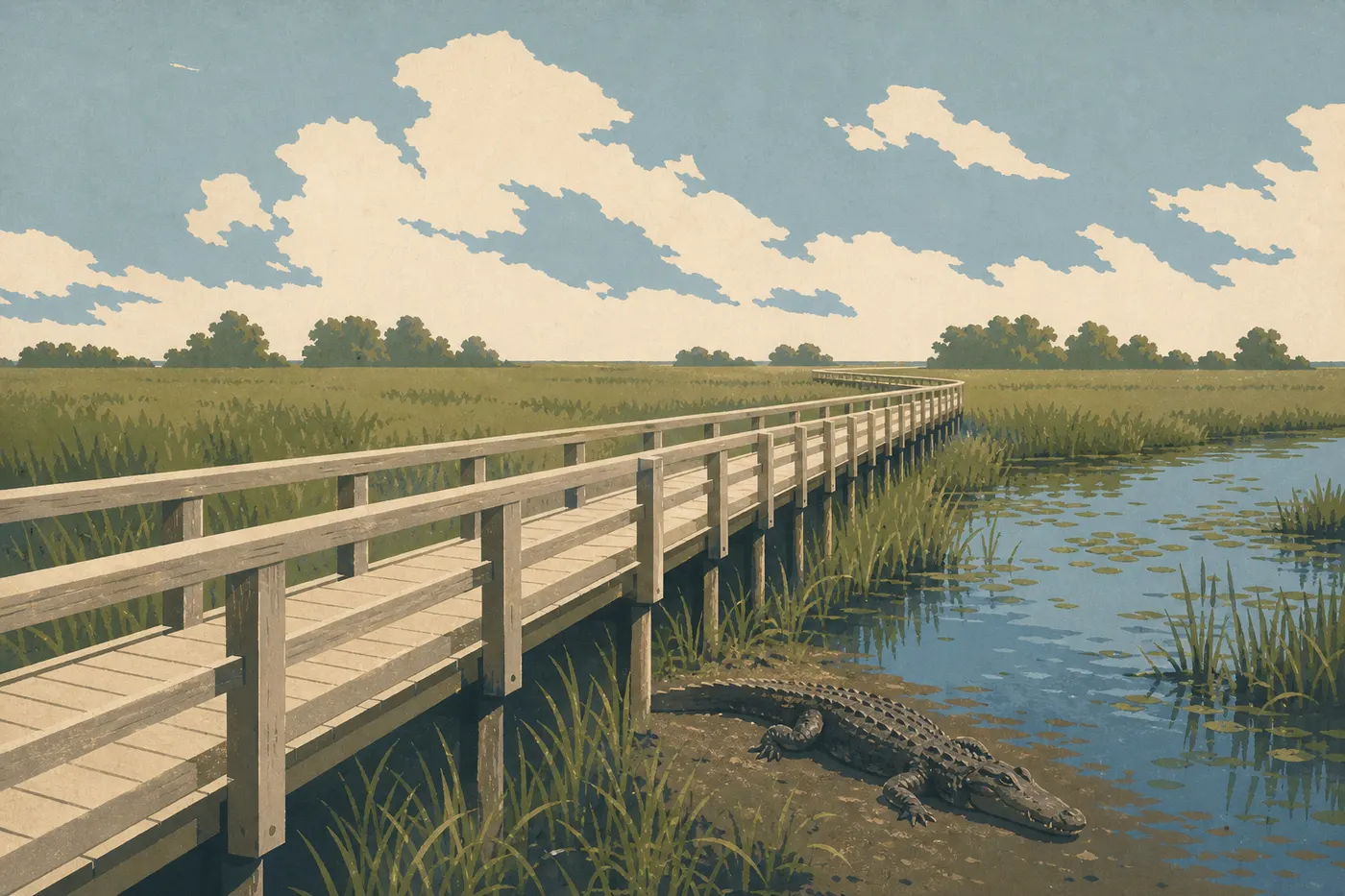
If you only do one hike, make it the Anhinga Trail (0.8 miles, loop, flat, suitable for everyone), near the Royal Palm Visitor Center. Alligators just 6 feet away, anhingas drying their spread wings in the sun, and herons standing patiently like statues. If you've only got an hour, this is where to spend it.
For something longer, try the Shark Valley loop (15 miles, flat, by bike or on foot) if you want a full day of abundant wildlife, or Bear Lake Trail (3.1 miles round-trip) near Flamingo for mangrove scenery without the crowds.
How to Prepare for an Everglades Hike
Permits and Reservations
You don't need a permit for day hikes. The entrance fee is all you need: $35 per vehicle or $20 per person entering on foot or by bike. The park's annual pass ($70) pays for itself after two visits in a year, or if you combine it with other parks covered by the America the Beautiful pass. For current fees and annual passes, the National Parks Fees & Passes page lays out the basics.
Backcountry camping, meaning an overnight stay in the wilderness, requires a paid permit obtained from a visitor center. Without an advance reservation, you can't camp overnight.
Safety and Wildlife
The risks in the Everglades are real, well known, and avoidable if you follow a few specific rules.
Alligators stay along the trails during the dry season. Keep at least 16 feet away, never feed them, since doing so can bring a federal fine, and never approach a nest. Venomous snakes, including water moccasins and pygmy rattlesnakes, blend into the vegetation. Watch where you place your hands and feet on unpaved trails.
Heat is the other serious risk. During the dry season, expect temperatures of 82 to 90°F. During the wet season, the heat index can easily top 100°F with the humidity. Set out before 8 a.m., bring at least 1.5 liters of water per person for every hour of hiking, and wear a hat. Trails offer little shade, so dehydration can set in faster than you expect.
Lightning is common from June through September. If you hear thunder, leave exposed areas immediately, including boardwalks and open prairies, and return to your vehicle.
Dogs
Dogs aren't allowed on Everglades hiking trails. They're permitted only in paved areas, such as parking lots and Flamingo's main road, and in campgrounds, where they must stay leashed at all times. If you're traveling with a pet, our Family Guide to the Everglades lists suitable alternatives.
Water and Gear
There isn't any drinking water on the trails. Fill your water bottles at visitor centers before setting out. During the wet season, strong insect repellent with at least 30% DEET is essential, not optional. Wear closed-toe shoes. Wooden boardwalks can be slippery, and snakes use the dirt trails too.
The Best Hikes, Area by Area
The Everglades have three main access areas, each with its own entrance and trails. Choose your area based on how much time you have and what kind of experience you're looking for.
Royal Palm Area: The Heart of the Wildlife Experience
Royal Palm is 5 miles west of the Ernest F. Coe Visitor Center on SR-9336. This is where wildlife is most concentrated and easiest to see.
Anhinga Trail 0.8 miles · loop · no elevation gain · very easy · year-round
This is the Everglades' signature trail. The paved path follows a canal that is always full of life. Alligators lounge a few feet away, anhingas dry their wings on branches above the water, and white ibises cross your view. During the dry season, wildlife gathers around the remaining water sources, making sightings even more intense. Start at the Royal Palm parking lot. Tip: arrive when the park opens to beat the crowds and the heat.
Gumbo Limbo Trail 0.4 miles · loop · no elevation gain · very easy · year-round
It starts from the same parking lot as Anhinga Trail, but the setting is completely different. You plunge into a dense tropical hammock filled with gumbo-limbos, whose peeling red bark has earned them the nickname “tourist trees,” sabal palms, and shady understory. Wildlife is less dramatic here, but the trail is a welcome chance to cool off in the shade and see the tropical vegetation that defines the Everglades. Allow about 20 minutes.
Pinelands and Pa-hay-okee Area: Pine Rocklands and Open Horizons
Pinelands Trail 0.4 miles · loop · no elevation gain · very easy
This short trail crosses a pine rockland on unique karst limestone terrain. Cracks in the ground create natural drainage, allowing this pine forest to coexist with the surrounding wetlands. It's a good way to break up the succession of boardwalks and discover some of the park's less familiar plant life.
Pa-hay-okee Overlook 0.3 miles · loop · no elevation gain · very easy
A short boardwalk leads to a raised platform with a sweeping view over the sawgrass prairie. It's one of the Everglades' most iconic vistas. In late afternoon, the low light across the grass is worth the stop. Alligators sometimes cross the boardwalk during the dry season.
Mahogany Hammock Trail 0.5 miles · loop · no elevation gain · very easy
This trail protects one of the largest stands of mahogany in the Northern Hemisphere. The canopy filters the early-morning light in spectacular ways. The dry season is your best bet. After rain, algae can make the wooden boards slippery.
Shark Valley Area: Alligator Highway
Shark Valley is reached from the Tamiami Trail (US-41), about 37 miles west of Miami. It's the most popular area for seeing large numbers of alligators and the only one where you can rent a bike.
Shark Valley Tram Road 15 miles · loop · no elevation gain · moderate because of the distance · on foot or by bike
This paved loop crosses the heart of the park and reaches a 50-foot observation tower halfway around. The 360-degree view of the sawgrass from the tower is one of the park's most powerful sights. During the dry season, dozens of alligators line the road. On foot, allow 5 to 6 hours. By bike, allow 2 to 3 hours, with rentals available on-site. Start early. There's no shade anywhere along the route.
Bobcat Boardwalk 0.4 miles · loop · no elevation gain · very easy
This nature trail begins beside the Shark Valley visitor center. It passes through wet prairies and marshes and is good for wading birds. It's a good introduction before you tackle the longer loop.
Otter Cave Hammock Trail 0.7 miles · loop · no elevation gain · easy
This forest loop runs through a bald cypress hammock near the Shark Valley visitor center. It's more enclosed than the main loop and better suited to quietly watching forest birds.
Flamingo Area: Mangroves and Florida Bay
Flamingo sits at the southern tip of the park, 37 miles from the Ernest F. Coe Visitor Center via Main Park Road. This is where you reach Florida Bay, expansive mangroves, and wide-open coastal landscapes.
Guy Bradley Trail 2.1 miles · out and back · no elevation gain · easy
The trail follows the shore of Florida Bay, with good views of the bay and its islands. It honors ranger Guy Bradley, who was killed in 1905 while defending egrets from plume hunters. It's a good trail for coastal birds, including brown pelicans, magnificent frigatebirds, and egrets. Start at the Flamingo visitor center.
West Lake Trail 0.6 miles · out and back · no elevation gain · very easy
A wooden boardwalk crosses a mature mangrove forest to the edge of West Lake. The Everglades' mangrove forest is among the largest in the temperate world, and this trail gives you a tangible sense of its scale in about 20 minutes. Bring repellent. Mosquitoes are especially fond of this area.
Bear Lake Trail 3.1 miles · out and back · no elevation gain · easy to moderate
This more isolated trail can be muddy during the wet season. It leads to Bear Lake through a forest of mangroves and buttonwoods. Since few people hike it, you have better odds of spotting more elusive wildlife, including Florida turtles, limpkins, and raccoons. The trailhead is marked from Main Park Road, 1.9 miles before Flamingo.
Easy, Family-Friendly Hikes
The Everglades are very accessible for families with children. Nearly all of the short trails are flat, often on boardwalks, and some are stroller-friendly.
Here are our family picks:
- Anhinga Trail (0.8 miles, Royal Palm): the obvious choice. Seeing the first alligator just 6 feet away is guaranteed to impress kids, and there's enough wildlife to hold their attention all the way around.
- Gumbo Limbo Trail (0.4 miles, Royal Palm): quick, shady, and ideal for adding to Anhinga Trail without overheating.
- Bobcat Boardwalk (0.4 miles, Shark Valley): accessible and varied, with a good introduction to marsh birds.
- Pa-hay-okee Overlook (0.3 miles): short, with a platform offering a view few children forget.
Our Family page covers all the kid-friendly activities in the park beyond hiking.
More Challenging Hikes for Going Farther
If you want to leave the busiest trails behind and spend a full day in the park, two options stand out.
Shark Valley Tram Road on foot (15 miles, 5 to 6 hours): this is the park's only truly long hike. With no shade or water refill points, it requires serious preparation. Bring at least 3 liters of water per person, set out before 8 a.m. during the dry season, and don't underestimate the mental fatigue of 100% flat terrain with no change in elevation for visual reference.
Coastal Prairie Trail (about 12.4 miles round-trip to the coast): starting from Flamingo, this trail crosses coastal prairies to the shore of Florida Bay. Outside the dry season, vegetation and mosquitoes often take over. There are no water sources along the route and no quick help if something goes wrong. Birders can find coastal species here that don't occur elsewhere in the park. Everyone else will find a memorable lesson in humility.
If your trip includes an overnight backcountry stay at the end of one of these trails, contact a visitor center directly for current backcountry permit conditions.
Access, Trailheads, and Parking
The Everglades have three main entrances, and the park's internal roads don't connect them.
Main entrance (Ernest F. Coe Visitor Center): 40001 State Road 9336, Homestead, FL 33034. From Miami, take Florida's Turnpike (Road 821) south to Florida City, then turn right onto Palm Drive (SW 344th St) and continue to the park entrance. This entrance provides access to Royal Palm, Pinelands, Pa-hay-okee, Mahogany Hammock, and Flamingo.
Shark Valley: accessible only from the Tamiami Trail (US-41), about 37 miles west of Miami. There's no internal road connection to the main entrance, so plan on a separate drive.
Gulf Coast (Everglades City): the park's northwest gateway, focused on kayaking and excursions into the Ten Thousand Islands. This entrance has no notable land trails.
Parking is included with the entrance fee. The Royal Palm and Shark Valley parking lots fill up during the busy season, from January through March, even on weekdays. Arrive before 9 a.m. There's no internal shuttle. You'll need a vehicle for each area.
The Everglades Access Guide covers transportation options from Miami and routes to each entrance.
When to Hike in the Everglades
The dry season, from December through mid-May, is by far the best time to hike. Trails aren't flooded, wildlife gathers around the remaining water sources, and mosquitoes are manageable.
During the wet season, from mid-May through November, several dirt trails are partly underwater. Mosquitoes reach levels many visitors find unbearable, and the heat is intense. That doesn't mean you have to skip the park entirely. Boardwalk trails remain usable, and sunrises are spectacular. You'll need to adjust your schedule, hiking before 8 a.m. or after 5 p.m., and cover up properly.
The Everglades Seasons Guide analyzes conditions month by month and helps you choose the best window for your itinerary.
Which Hike Is Right for You?
You've got 2 hours and want to see wildlife: Anhinga Trail at Royal Palm. It's accessible, efficient, and the clear choice. Add Gumbo Limbo Trail if you still have 20 minutes.
You're traveling with young children: Do Anhinga Trail and Gumbo Limbo Trail back to back. Allow 1.5 hours if you're walking slowly and stopping to watch the alligators.
You want an iconic panoramic view: Visit Pa-hay-okee Overlook in late afternoon, or climb Shark Valley's observation tower halfway around the main loop.
You want a full day of walking: Hike Shark Valley Tram Road on foot, 15 miles in 5 to 6 hours. Bring plenty of water, start at dawn, and don't forget your hat.
You're passionate about birding: Choose Guy Bradley Trail at Flamingo for Florida Bay's shorebirds, or Coastal Prairie Trail early in the dry season for rare coastal species.
You want to avoid crowds: Try Bear Lake Trail or Otter Cave Hammock Trail. Both see few visitors, work well for families, and offer wildlife that gets less human attention.
To combine hiking with other activities, such as canoeing, airboat rides, or kayaking through the mangroves, our Complete Everglades Guide covers the entire park.
Frequently Asked Questions
What is the best hike in the Everglades?
For most visitors, the best Everglades hike is Anhinga Trail (0.8 miles, loop, very easy). It's packed with wildlife, suitable for every skill level, and open year-round. For a full day, the Shark Valley loop (15 miles) is the park's only truly long hike.
Is hiking in the Everglades difficult?
Hiking in the Everglades isn't physically difficult. There's almost no elevation gain anywhere. The challenge comes from the heat, wet-season humidity, and lack of drinking water on the trails. Short hikes under 1.2 miles are suitable for everyone without special preparation.
Is it safe to hike in the Everglades?
Hiking in the Everglades is safe if you follow the basic rules. Stay 16 feet from alligators, never feed them, carry enough water, and start early to avoid the afternoon heat. Serious incidents on the trails are rare and almost always happen after someone deliberately approaches wildlife.
Do you need a permit to hike in the Everglades?
You don't need a permit for day hikes in the Everglades. The park entrance fee is enough ($35 per vehicle). A wilderness permit is required for an overnight backcountry stay, and you can get one from a visitor center.
Are there easy, family-friendly hikes in the Everglades?
Several short trails work well for families. Anhinga Trail (0.8 miles), Gumbo Limbo Trail (0.4 miles), Bobcat Boardwalk at Shark Valley (0.4 miles), and Pa-hay-okee Overlook (0.3 miles) are all flat, short, and suitable for kids as young as 4 or 5.
Can you hike with your dog in the Everglades?
No. Dogs aren't allowed on Everglades hiking trails. They're permitted only in paved areas and campgrounds, and they must stay leashed at all times.
When is the best time to hike in the Everglades?
The best time to hike in the Everglades is December through April, during the dry season. Mosquitoes are scarce, trails are usable, and wildlife is easier to spot. Our When to Visit page covers conditions month by month.
Are there loop hikes in the Everglades?
Yes. The main loop hikes are Anhinga Trail (0.8 miles), Gumbo Limbo Trail (0.4 miles), Mahogany Hammock Trail (0.5 miles), Pinelands Trail (0.4 miles), Bobcat Boardwalk (0.4 miles), and the Shark Valley loop (15 miles).
How do you reach the trailheads in the Everglades?
The trails at Royal Palm, Pinelands, Pa-hay-okee, and Mahogany Hammock are accessible from the main entrance at the Ernest F. Coe Visitor Center in Homestead. Shark Valley has its own entrance on the Tamiami Trail (US-41). Flamingo is at the end of Main Park Road, 37 miles from Ernest F. Coe. There is no shuttle between areas, so you'll need to drive to each one.
Which trails offer the best wildlife viewing in the Everglades?
Anhinga Trail at Royal Palm has the highest concentration of wildlife. Alligators, anhingas, ibises, and herons are nearly guaranteed. The Shark Valley loop offers alligator sightings along the entire route. In the Flamingo area, Guy Bradley Trail is the best choice for Florida Bay's coastal birds.