
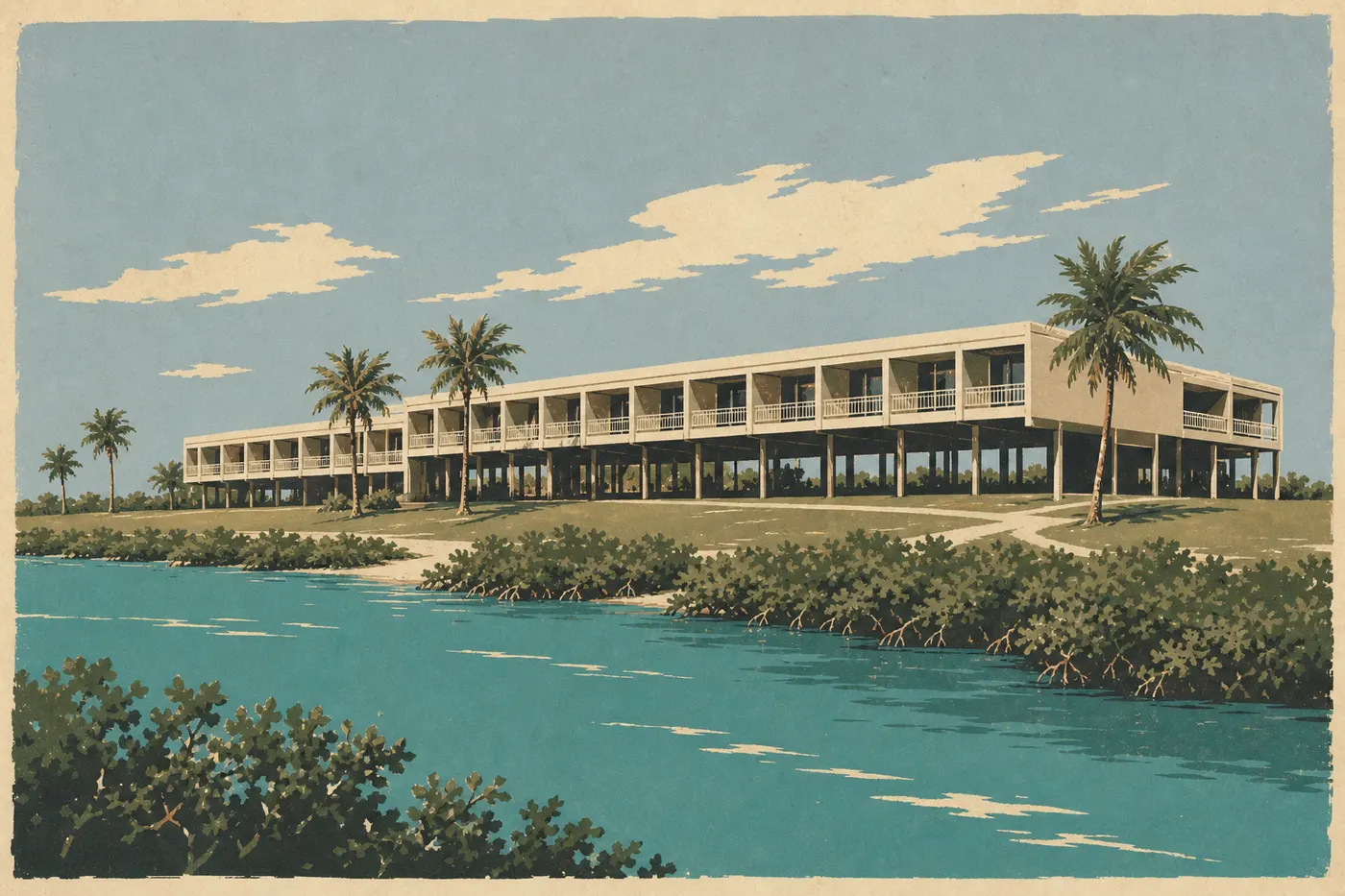
Where to Stay in the Everglades: Inside the Park, Nearby Towns, and Campgrounds
The short answer. For a first visit, make Homestead your base. This city in Miami's southern suburbs sits about 9 miles from the park's main entrance and has most of the area's reasonably priced hotels. Plan on 2 to 3 nights to explore the different areas without feeling rushed. If your itinerary includes the park's west coast, adding a night in Everglades City is often the most practical choice. To build your Everglades itinerary, the detailed itinerary helps you plan each stop.
Where to stay: towns, lodges and campgrounds (8)
- Gateway town Florida City entrance Ernest Coe · hotels, supermarket, gas station Directions ↗
- Gateway town Homestead entrance Ernest Coe · hotels, supermarket, gas station Directions ↗
- Gateway town Everglades City entrance Gulf Coast · hotels, gas station, restaurants Directions ↗
- Gateway town Naples entrance Gulf Coast · hotels, supermarket, gas station Directions ↗
- Gateway town Sweetwater entrance Shark Valley · hotels, supermarket, gas station Directions ↗
- Lodge Flamingo Lodge Flamingo · Nov-Apr Directions ↗
- Campground Long Pine Key Campground see NPS · 108 sites Directions ↗
- Campground Flamingo Campground see NPS · 274 sites Directions ↗
 Base map © OpenStreetMap · © CARTO
 ⚠ Gateway town & Lodge data is undergoing editorial review.
Stay Inside the Park or Outside?
Everglades National Park covers more than 2,300 square miles of wetlands, mangroves, and freshwater prairies. Unlike Yellowstone or Yosemite, it doesn't have a developed lodge network inside the park. The options with solid walls are limited to an eco-camp in Flamingo and two NPS campgrounds accessible by car.
Here's the decision tree we find most useful:
Stay inside the park if... you want to be out at dawn, when birds and alligators are most active, you're traveling light with a tent or van, or you're looking for total immersion in the heart of the wetlands.
Stay outside the park if... you prefer an air-conditioned hotel, which is a real necessity during the wet season from mid-May through November, when temperatures rise above 86°F and mosquitoes are out in force, you're traveling with young children, or you're combining the Everglades with Miami or the Florida Keys during the same week.
The dry season, from December through mid-May, is the only time of year when camping is genuinely pleasant. Temperatures stay mild, between 68°F and 77°F, mosquitoes disappear, and wildlife gathers around water sources. That's when we recommend heading for the NPS campgrounds or the eco-tents.
Staying in the Everglades: Flamingo Eco-Tents
The park's only lodging with solid walls is in Flamingo, about 37 miles from the main entrance at the Ernest F. Coe Visitor Center, at the very end of Main Park Road. The concessioner Flamingo Adventures offers equipped eco-tents with beds, a fan, and a raised platform overlooking Florida Bay. It's a good middle ground between backcountry camping and a hotel stay.
The benefit is straightforward: you're in the heart of the park, within walking distance of areas where you can spot manatees and American crocodiles, one of the few species found nowhere else in the United States. The sunset over Florida Bay from Flamingo is worth the drive on its own.
The limitation is just as clear. Sites are limited, and demand is high from January through March. You have to book ahead. For details and seasonal opening dates, see the Everglades camping guide.
Camping in the Everglades: NPS Campgrounds
The park has two frontcountry campgrounds accessible by car, both managed directly by the NPS.
Long Pine Key
About 6 miles from the Ernest F. Coe Visitor Center entrance, Long Pine Key is the park's most accessible campground. It has sites for tents and vehicles, along with restrooms and drinking water. It's a good base for trails through pine rockland, a rare type of vegetation on limestone in this subtropical setting. Reservations are made through Recreation.gov. During the busy season, the sites closest to the trails fill quickly after reservations open.
Flamingo Campground
Farther into the park, Flamingo Campground sits along Florida Bay. This is where kayakers and canoeists returning from the backcountry set up their tents after several days of paddling. Sites with electricity are available for RVs. The offshore breeze naturally keeps many insects away, making this the park's most pleasant camping option.
For more adventurous campers, the park also offers backcountry sites accessible only on foot or by kayak. You'll need to get a permit at the visitor center. RV camping in the Everglades covers the options for road-trippers in vans or motorhomes.
Where to Stay Around the Everglades: Gateway Towns
Most visitors choose to stay outside the park, and that's often the most practical decision. Here are the main options, from closest to farthest away.
Homestead: The Go-To Base for Logistics
Homestead is the standard base for visiting the park from the east. It adjoins Florida City, the last outpost before the Ernest F. Coe Visitor Center entrance, about 9 miles away. The hotel selection is broad, with budget American chains, independent motels, and a few B&Bs. The atmosphere is functional rather than touristy, which suits visitors who spend their days in the park and only need a clean bed at night.
Homestead also offers easy access to Biscayne National Park, about 12 miles to the northeast, if you'd like to round out your trip with a dive or a kayak outing along the coral reef.
Everglades City: For the Park's West Coast
Everglades City is the essential starting point for the Ten Thousand Islands area, a maze of mangroves and small islands along the Gulf of Mexico. This is where kayaking and saltwater fishing enthusiasts set up base.
The lodging selection is modest, with small motels, guesthouses, and bed-and-breakfasts, but the atmosphere is much more charming than Homestead's. There are a few restaurants serving fresh seafood, a picturesque village, and the feeling that you're right on the edge of the wetlands. Driving from Everglades City to the main entrance at the Ernest F. Coe Visitor Center takes about 1.5 hours, making it a self-contained base rather than a direct alternative to Homestead.
Naples: Comfort Within Reach of the Wetlands
About 43 miles north of Everglades City, Naples is an affluent city with a much broader selection of lodging, including midrange chain hotels, pool resorts, a walkable historic district, and a beach thrown in. If you'd like to alternate days in the mangroves with evenings at a restaurant overlooking the Gulf, Naples is your option. Allow 45 minutes to 1 hour of driving to reach the Ten Thousand Islands area.
Marco Island: A Tropical Resort Experience
About 19 miles south of Naples, Marco Island offers higher-end accommodations, including large beachfront hotels and condos with kitchenettes. It's the resort option for travelers who want upscale amenities without going all the way to Miami. The park's west coast is about a 45-minute drive away.
Miami: The Big City an Hour from the Park
Miami is about 37 miles from Homestead, or 45 minutes to 1 hour of driving without traffic. There can be traffic on Florida's Turnpike. It's a sensible option if you're combining the Everglades with a stay in South Beach, Wynwood, or Key Biscayne.
Choosing Miami as your base for the Everglades makes the most sense if you only have one day for the park or if Miami is your flight hub. For a park-focused visit, the closer options are much more convenient.
When to Book Your Everglades Lodging
The peak season runs from December through March, bringing ideal temperatures of 68°F to 77°F, dry weather, few mosquitoes, and concentrated, easy-to-spot wildlife. It's also the busiest time of year, especially with North American retirees escaping winter farther north.
During this period, the best-located lodging, especially the Flamingo eco-tents and the Homestead hotels near the main entrance, fills up quickly. Book 3 to 4 months ahead for January and February, particularly if you're traveling as a family or need a camping site.
Outside this window, demand drops and prices fall. But the wet season from mid-May through November requires good preparation, with mosquitoes everywhere, intense heat, and real weather risks during hurricane season from June through November. When to visit the Everglades explains the best travel windows for different profiles and heat tolerances.
Lodging Budget: How Much Does It Cost to Stay in the Everglades?
Prices vary widely depending on the type of lodging you choose.
NPS camping: $20 to $35 per site per night, plus the park entrance fee of $35 per vehicle, or $70 with an annual America the Beautiful pass valid at all national parks.
Flamingo eco-tents: Prices vary by season. During peak season, expect to pay $100 to $150 per night for two people, with basic equipment included.
Motels and hotels in Homestead: An average of $60 to $110 per night for a double room outside peak season. Prices rise by 30% to 50% in January and February.
Hotels in Naples or Marco Island: $150 to $300 per night for a standard room, with higher prices at beachfront resorts. To compare lodging around the park, the Everglades hotels and lodges guide provides current rates.
Miami: Highly variable. Plan on $120 to $250 for a decent hotel in South Beach or Downtown. The ranges above provide the key benchmarks for planning your Everglades trip budget.
Our Recommendation Based on Your Travel Style
There's no one-size-fits-all answer. Here's how we'd steer each type of traveler.
First visit, reasonable budget. Homestead, for at least 2 nights. Access to the Ernest F. Coe Visitor Center entrance is direct, prices are reasonable, and everything you need is close by, including grocery stores, gas stations, and restaurants.
Family with children. Homestead or Naples are the most comfortable options. The Flamingo eco-tents are fun for kids 10 and up, but the lack of full bathroom facilities can be challenging with very young children. Visiting the Everglades with kids offers more advice.
Nature immersion or backcountry camping. Start with Long Pine Key or Flamingo Campground, then head into the backcountry if you have kayaking gear. This is the option we favor when we have a few days to spare and the heat remains manageable.
Everglades, Florida Keys, and Miami road trip. Homestead on the way in, the Florida Keys on the way back via US 1, and Miami for your departure flight. This loop is the most common and efficient sequence. The Everglades guide lays out the basics.
Comfort seekers or couples' getaway. Stay in Naples or Marco Island and take a day trip to the park. Enjoy the beach in the morning and the mangroves in the afternoon without ever feeling cramped.
Frequently Asked Questions
Where should I stay in the Everglades?
For most visitors, Homestead is the most convenient place to stay in the Everglades. It's about 9 miles from the main entrance at the Ernest F. Coe Visitor Center and has plenty of reasonably priced lodging. For the park's west coast, Everglades City is the logical alternative. Inside the park, the Flamingo eco-tents and two NPS campgrounds, Long Pine Key and Flamingo, round out the options.
What is the best place to visit the Everglades?
The Ernest F. Coe Visitor Center entrance on the east side, approached from Homestead, has the trails, wildlife-viewing spots, and frontcountry campgrounds. The Ten Thousand Islands area on the west side, approached from Everglades City, is essential for kayaking and saltwater fishing. Both areas are worth visiting if you have time.
How long do I need to visit the Everglades?
Two nights allow you to cover the east side's highlights. Three nights give you time to explore both sides of the park. For a detailed itinerary tailored to the length of your stay, our Itinerary & Length of Stay page lists the options.
What is the closest town to the Everglades?
Florida City, which adjoins Homestead, is the closest community to the main entrance at the Ernest F. Coe Visitor Center. In practice, Homestead and Florida City form one urban area where visitors stay, shop for supplies, and set out for the park in the morning.