
Where to Eat in the Everglades: Restaurants in the Park and Nearby
Let's be honest: people don't come to the Everglades to work their way through a restaurant guide. Here, 2,300 square miles of wetlands, mangroves, and sawgrass matter far more than shady patios. Food options inside the park are limited, but the gateway towns more than make up for it. In short, there's a camp store in Flamingo for anyone heading deep into the park, plus two solid options outside it: Florida City to the east and Everglades City to the northwest.
Eating in the Park: Camp Store and Supplies in Flamingo
Of the park's three main entrances, only one has food service. The Everglades rule is simple: arrive fed or plan ahead.
Flamingo: The Only In-Park Supply Stop
About 39 miles from the Ernest F. Coe Visitor Center, at the end of Main Park Road, the Flamingo area has most of what the park offers for food. The marina's camp store sells snacks, packaged sandwiches, drinks, and basic supplies. It's practical, no-frills, and enough to get you through before a kayaking trip or a boat tour of Florida Bay.
Hours vary by season. During the dry season, from December through mid-May, the store is generally open during the day. During the wet season, hours are reduced. Check directly with the park before counting on it for lunch.
Shark Valley and Gulf Coast: No Food Available On-Site
Shark Valley, on the Tamiami Trail, offers a bike trail and sightseeing tours, but no food service. Gulf Coast, near Everglades City, opens onto the Ten Thousand Islands and mangrove cruises. In both areas, plan your meals before you enter.
Groceries and Picnics in the Park
This is the option we recommend most for a full day in the park. You won't be tied to a schedule or waiting for an open table, and you'll eat lunch with a view few restaurants can match.
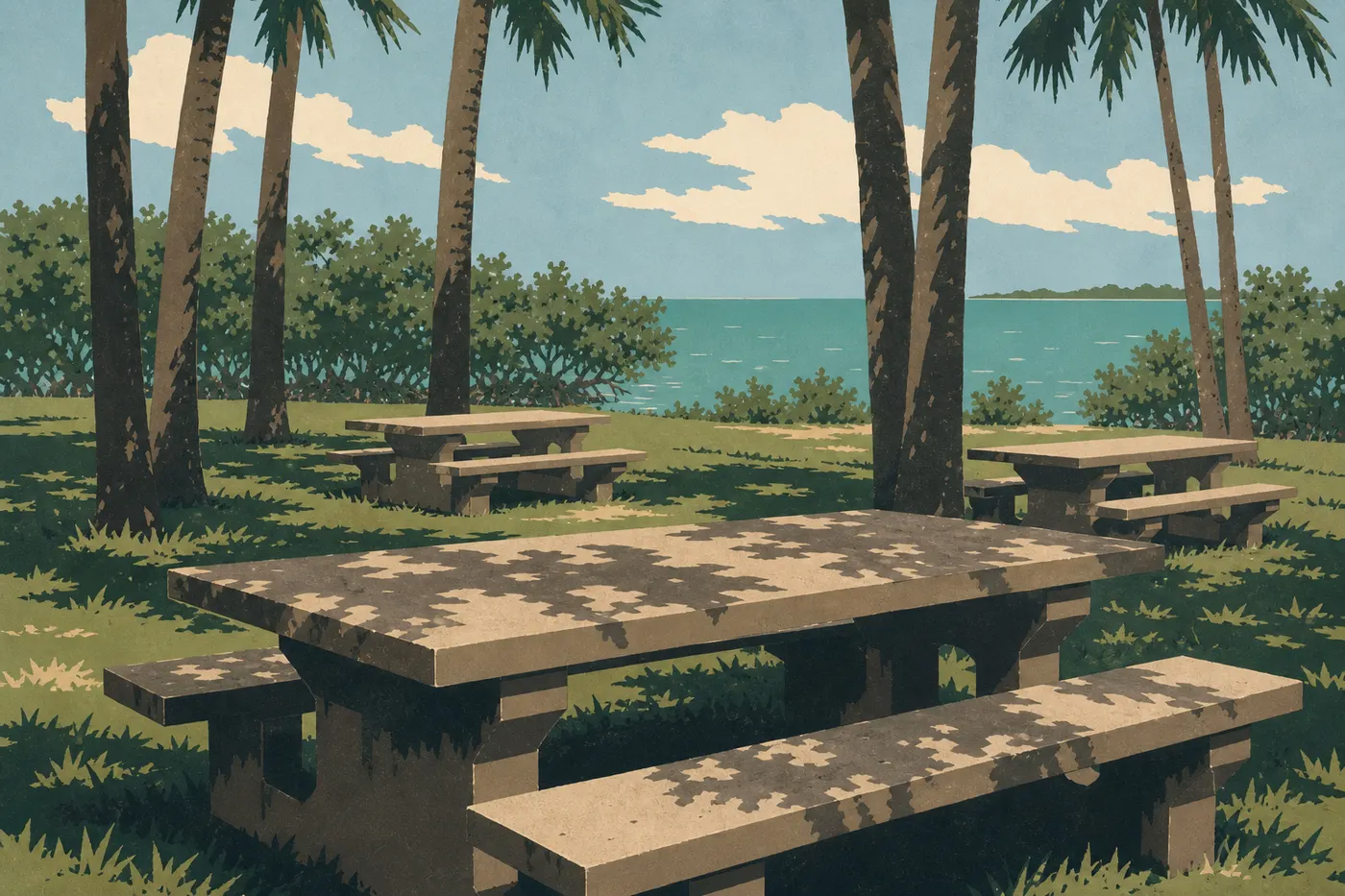
Several picnic areas line Main Park Road from the Ernest F. Coe Visitor Center: Royal Palm, the starting point for the Anhinga Trail, Pa-hay-okee Overlook, and Mahogany Hammock. Tables and shelters are available.
Stock up before you enter. Homestead and Florida City have supermarkets a few minutes from the east entrance. If you're coming through Gulf Coast, the convenience stores in Everglades City are good enough for basic supplies.
Where to Eat Nearby: The Gateway Towns
Things improve considerably as soon as you leave the park.
Florida City and Homestead (East Entrance)
These two towns are the natural base for visitors using the main entrance. The place everyone mentions is Robert Is Here, a fruit and vegetable stand that has been open since 1959 in the heart of Redland's farming country. It's not a restaurant, but it's a must-stop. Mango and papaya smoothies, jams made with rare tropical fruits, and fresh produce you won't find anywhere else. It's ideal in the morning before entering the park, or at the end of the day when you want to bring something back to your cooler.
For a sit-down meal, Homestead offers plenty of variety: family restaurants, Florida-style barbecue, and Caribbean food that reflect its diverse local population. Shiver's BBQ is a long-established local spot known for smoked pork and a laid-back roadside atmosphere.
Everglades City (Northwest Entrance)
This small fishing town has two dependable spots. Camellia Street Grill overlooks the river, with a shaded patio, grilled fish, and local shrimp. It's the town's go-to restaurant, and the only one where you should think about making a reservation. For a more casual experience, City Seafood operates like a dockside counter: order at the window, eat outside while watching the boats, and inevitably order more stone crab because you couldn't resist. Both restaurants embrace an unmistakable Old Florida style, with no fuss and seafood pulled from the water that morning.
Our Picks for Every Craving
A quick bite before entering the park: Robert Is Here for a smoothie and some tropical fruit. You'll leave with energy and a bag full of papaya.
With the family: City Seafood in Everglades City works for all ages. You eat outside, the kids watch pelicans beg for their share, and the no-frills setup is easy on the wallet.
For a view of the water: Camellia Street Grill has a riverside patio with reliable shade. Make a reservation if you're visiting during the high season, from January through March. The dining room is often full on weekends.
For a local atmosphere: Shiver's BBQ in Homestead serves smoked pork and Florida-style coleslaw in a setting with no Instagram ambitions, and it's better for it.
The Specialty to Try in the Everglades
The question comes up on every travel forum, and it's easy to understand why: where can you eat alligator in the Everglades? The answer is straightforward. Alligator is the region's signature meat, served as fried nuggets, a burger, or a grilled skewer. The texture is somewhere between chicken and white fish, with a little extra chew. You can find it at Everglades Gator Grill on the Tamiami Trail (US-41) and at Coopertown, a little farther east, where the 1950s roadside American atmosphere remains intact.
The other specialty you shouldn't miss is stone crab, in season from October through May. City Seafood is the most straightforward place to get it fresh, without touristy packaging and at a fair price.
For something different, Schnebly Redland's Winery & Brewery in the Redland area produces tropical fruit wines made with mango, lychee, and star fruit. Tastings take place on-site, and there's nothing quite like the experience anywhere else in Florida.
Practical Tips: Hours, Reservations, and Budget
Season: The peak tourist season runs from December through March. Restaurants in Everglades City may be fully booked on weekends in January and February. A reservation the day before is usually enough to avoid surprises. During the wet season, from mid-May through November, the gateway-town restaurants stay open and are less crowded and more relaxed.
In-park hours: The Flamingo camp store follows a seasonal schedule. The park entrance is open 24 hours a day, and visitor services staff are on duty from 8 a.m. to 4:30 p.m.
Meal budget: Expect to pay $10 to $15 for a quick meal from a stand or counter, and $20 to $35 for a sit-down meal with a drink. Stone crab prices vary with the market. For admission fees and annual pass information, see National Park Fees & Passes.
Supplies: If you're spending a full day starting from the Ernest F. Coe Visitor Center, stock up in Homestead. Between the park entrance and Flamingo, there's no store along the 39 miles of road. No exceptions.
In Short: Where to Eat Based on Your Area of the Park
| Area | In-Park | Outside the Park |
|---|---|---|
| Main entrance (Ernest F. Coe Visitor Center) | Flamingo camp store (39 miles) | Homestead, Florida City |
| Shark Valley | No food service | Tamiami Trail (Coopertown, Everglades Gator Grill) |
| Gulf Coast | No food service | Everglades City (Camellia Street Grill, City Seafood) |
To plan your day around these supply stops, see our Itinerary & Duration guide and the Things to Do in the Everglades page.
Frequently Asked Questions
Where can you eat alligator in the Everglades?
Fried alligator is mainly available at Everglades Gator Grill and Coopertown, two Tamiami Trail establishments that combine airboat rides with regional food. City Seafood in Everglades City also serves it, depending on availability.
What is the best area to visit in the Everglades?
The complete Everglades guide and Itinerary & Duration can help you choose an area based on your priorities and the time you have.
How long does it take to visit the Everglades?
Plan on one day for the main entrance, from the Ernest F. Coe Visitor Center to Flamingo, and two days if you add Shark Valley and the Gulf Coast. Our Itinerary & Duration page lays out the options for different schedules.