
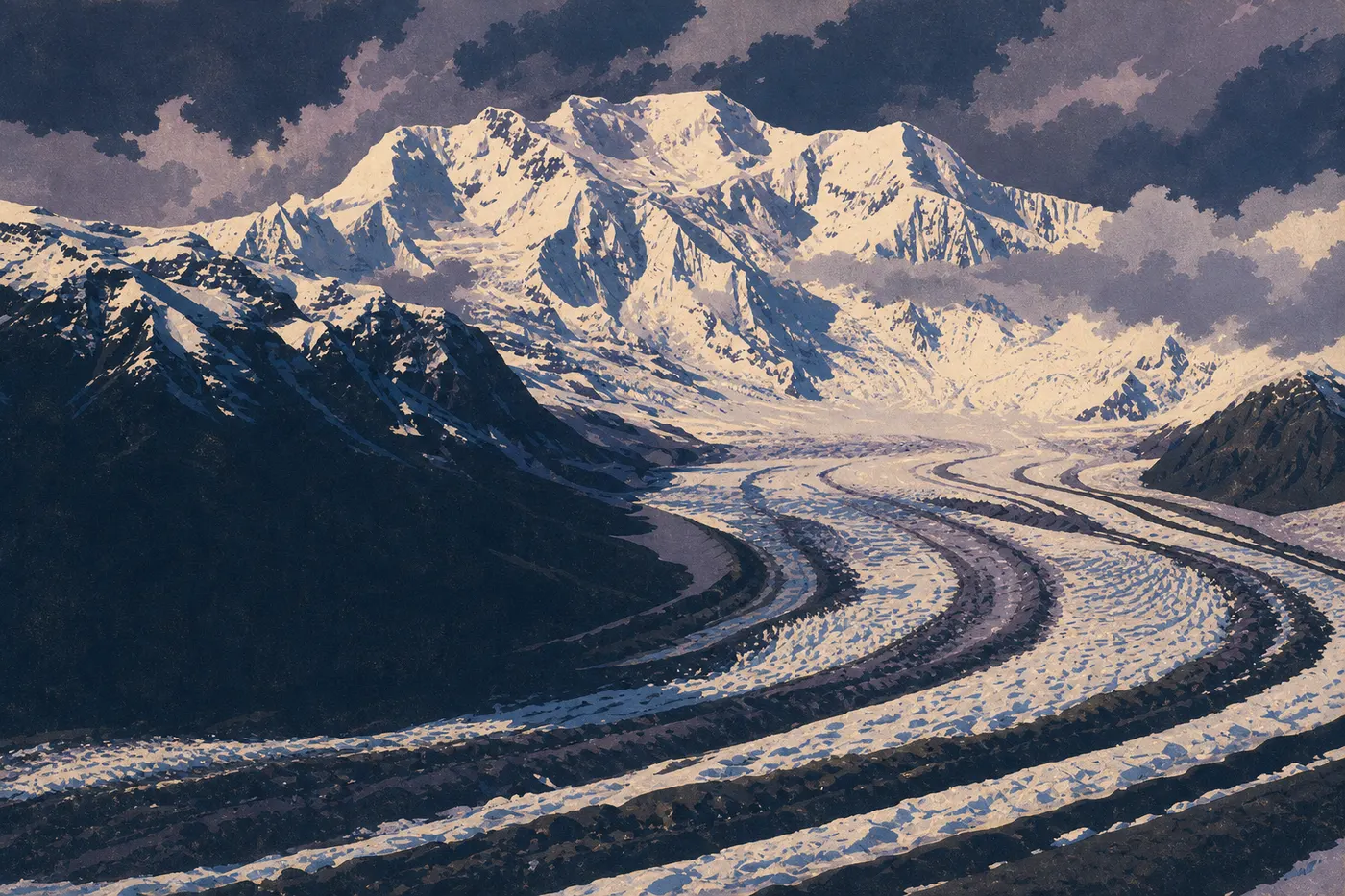
Wrangell–St. Elias Weather: Forecasts, Climate, and Current Conditions
Wrangell–St. Elias covers more than 20,500 square miles between Alaska's mountain ranges and the Gulf of Alaska. Across an area larger than Switzerland, the climate can't be summed up in a single sentence. In short, the interior valleys have a continental subarctic climate, with winter temperatures below 0°F and summer temperatures around 68–73°F. The southern coastal side is wetter and less extreme. The easiest window for a visit runs from June through early September.
Current readings are unavailable. See the seasonal averages farther down this page.
Open-Meteo readings · updating… · park time zone
Wrangell–St. Elias Climate Month by Month
The averages below apply to the Copper Center area, at an elevation of about 985 feet, the park's main gateway. The farther you go toward McCarthy or higher elevations, the lower temperatures get, especially in winter.
| Month | Avg. High | Avg. Low | Precip. |
|---|---|---|---|
| January | 14°F | -8°F | 0.8 in. |
| February | 18°F | -4°F | 0.6 in. |
| March | 30°F | 7°F | 0.6 in. |
| April | 46°F | 23°F | 0.7 in. |
| May | 59°F | 36°F | 1.1 in. |
| June | 70°F | 45°F | 1.6 in. |
| July | 73°F | 50°F | 2.2 in. |
| August | 70°F | 48°F | 2.2 in. |
| September | 55°F | 36°F | 1.8 in. |
| October | 37°F | 18°F | 1.4 in. |
| November | 19°F | 0°F | 1.0 in. |
| December | 10°F | -8°F | 0.8 in. |
These are general averages for the Copper Center area. Temperatures are significantly lower at high elevations and in glaciated areas.
Is Wrangell–St. Elias Cold? Records and Extremes
Yes, genuinely cold. The interior of Alaska around Glennallen is one of the coldest areas in the American continent outside the true Arctic. Regional records fall below -58°F during exceptional cold spells. Summer brings the opposite extreme: the valleys can approach 86°F during brief heat waves, creating a striking contrast. You can sweat in the Chitina Valley and watch thousand-year-old glaciers just 9.3 miles away.
At higher elevations, the rule is simple: it's always cold. Mount Saint Elias rises to 18,009 feet, making it the second-highest summit in the United States after Denali. At that elevation, temperatures don't rise above freezing, even in the middle of July. Any trip into glaciated areas means Arctic conditions in every season.
What to Wear by Season
Summer (June to August): The key is layering. Bring a T-shirt or lightweight shirt, a midlayer such as fleece or a soft shell for cool mornings and evenings, and a compact rain jacket that stays within easy reach. Waterproof hiking shoes are essential because trails regularly cross wet areas and streams. Long sleeves and insect repellent are a must from June through mid-August.
Spring and fall (May, September): Add an insulated jacket, such as a lightweight puffy or heavy fleece, plus light gloves and a beanie. Nights can freeze at any point during this period.
Winter (October to April): Bring serious cold-weather gear. You'll need an insulated parka rated for -22°F or colder, a technical thermal base layer, a down midlayer, mittens rather than ordinary gloves, a hat that covers your ears, and insulated footwear rated for extreme cold. Fingers and toes can freeze within minutes below -22°F in windy conditions.
In every season, bring a headlamp and a small emergency kit with an emergency blanket and waterproof matches. Cell service is nearly nonexistent inside the park, so don't count on your phone to call for help.
Alerts and Conditions to Watch
Gravel roads: McCarthy Road, about 60 miles long, and Nabesna Road, about 46 miles long, may close temporarily after heavy rain or during the spring thaw. Before heading toward McCarthy or Kennecott, check road conditions with the Copper Center visitor center at 907-822-7250. Potholes and frost cracks can damage the tires on an ordinary vehicle.
Glacial outburst floods: Proglacial lakes sometimes drain suddenly within a few hours, washing out trails and temporary bridges. Never ford a glacial stream without assessing its flow. Start early in the morning, when overnight melt is lower.
Summer thunderstorms: These are common in July and August, often in the late afternoon. On ridges and in exposed areas, descend as soon as you hear thunder. Don't wait to see lightning.
Infrastructure closures: Visitor centers close from mid-September through late April. Outside that window, it can take rescuers several hours to reach your location. Always leave a detailed itinerary with someone you trust before entering the park.
Frequently Asked Questions
What's the weather like in Wrangell–St. Elias right now?
Current conditions in Wrangell–St. Elias vary widely by location and elevation. The widget at the top of this page shows real-time weather for the Copper Center area, the park's main gateway.
What's the current temperature in Wrangell–St. Elias?
Temperatures in Wrangell–St. Elias depend on the season and the area. Interior valleys range from -8°F in January to 73°F in July. The widget at the top of the page shows the current reading.
Is Wrangell–St. Elias cold?
Wrangell–St. Elias is one of the coldest national parks in the United States. In winter, valley temperatures regularly drop below 0°F, with regional records below -58°F. Even in summer, nights are cool, around 45–50°F, and glaciated areas stay cold in every season.
What should I wear to visit Wrangell–St. Elias?
In summer, bring layers, a compact rain jacket, and waterproof hiking shoes. In winter, serious cold-weather gear is essential, including a parka rated for -22°F, mittens, and insulated footwear. From June through mid-August, wear long sleeves and use insect repellent in every season.
What is the climate like in Wrangell–St. Elias?
Wrangell–St. Elias has a continental subarctic climate in its interior valleys, with long, very cold winters and short, warm summers. The southern coast, toward the Gulf of Alaska, is wetter and milder. The month-by-month table above gives the averages for the Copper Center area.
Which Alaska city is the warmest, and does the park really get hot?
The warmest areas of Alaska in summer are interior cities such as Fairbanks, where temperatures can exceed 86°F during heat waves. In its main area around Copper Center, Wrangell–St. Elias sees summer highs around 73–77°F, with cool nights. That's warm for Alaska, but far from a tropical summer destination.