
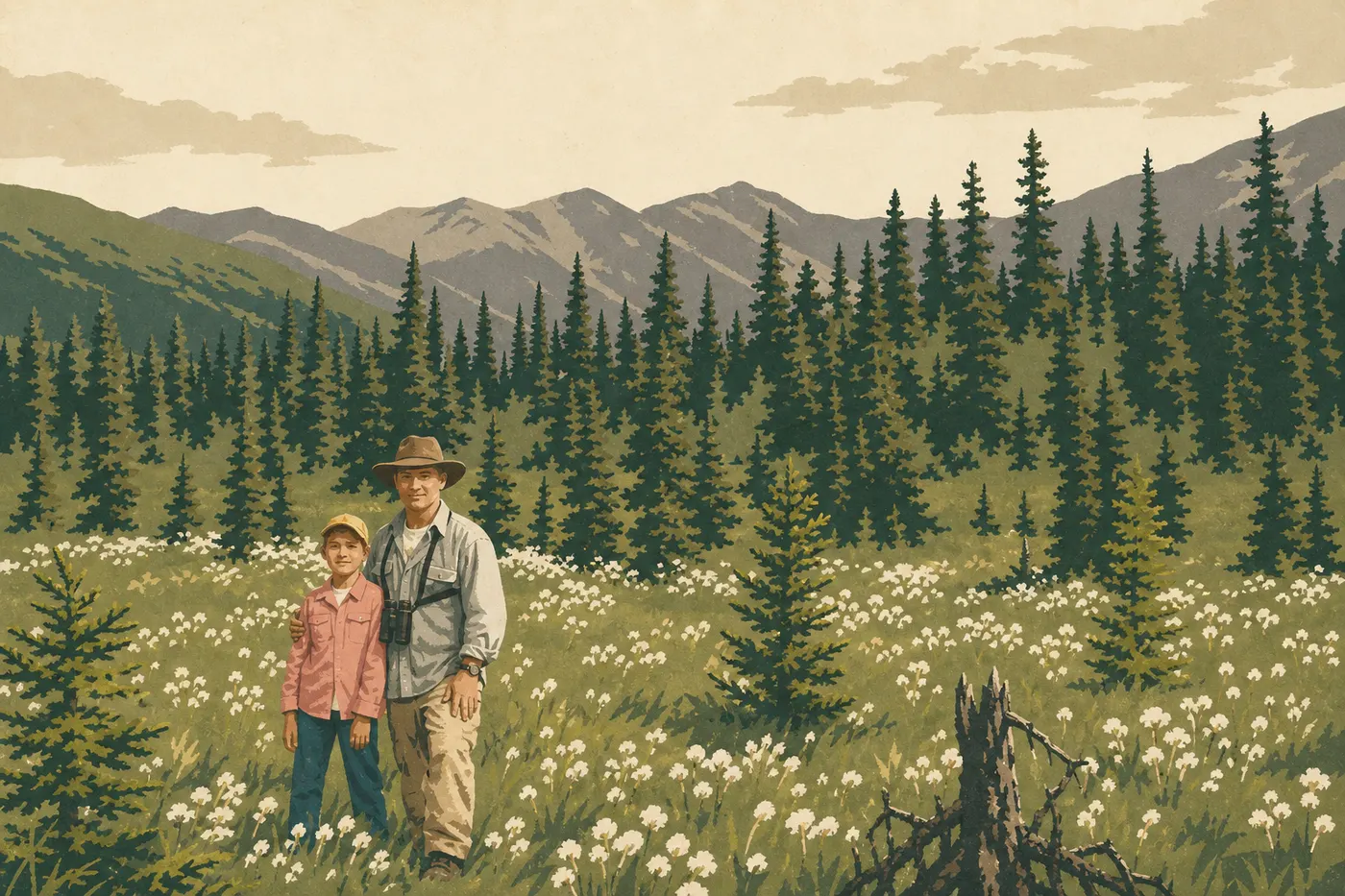
Wrangell–St. Elias with Kids: What to Do and How to Plan Your Trip
Is Wrangell–St. Elias a good fit for families? Yes, as long as you set realistic expectations. The largest national park in the United States is unlike any other: no packed shuttles, no trail markers every few minutes, and no souvenir shop at every turn. This is vast, remote, untamed wilderness, and it's absolutely breathtaking. With kids who can walk and handle a few hours on a gravel road, the park delivers experiences you won't find anywhere else.
Recommended age: ages 7–8 and up for a comfortable visit; ages 10–12 and up for hikes to the glaciers. Younger children can manage it, but you'll need to plan much more carefully.
Why Visit Wrangell–St. Elias with Kids
This park has one rare advantage: scale. Here, kids instinctively understand that they're looking at something immense. Glaciers reach to within a few miles of the roads you can drive; peaks rise above 16,400 feet; forests stretch as far as you can see without interruption. This isn't a packaged attraction. It's a real encounter with Alaska's wilderness.
Another practical advantage is that admission is free. There's no entrance fee, no timed entry reservation. You arrive and explore. For a family with several children, the budget difference is immediately noticeable.
The Kennecott site adds an educational dimension that's accessible from a young age. The buildings of the former copper mine, a UNESCO World Heritage Site, capture kids' attention like the set of an adventure movie: bright red structures suspended on the side of a glacier-covered mountain, abandoned machinery, and a fascinating working-class history. You see it, understand it, and let your imagination fill in the rest.
Is Wrangell–St. Elias Good for Kids? What Age Should They Be?
Honestly, the park requires a certain level of logistical maturity. McCarthy Road, the only route to the main attractions, is a gravel road for about 59 miles. There's no gas, no cell service, and no clinic. This reality isn't a problem or an obstacle. It's simply part of the place.
For kids around 7 or 8, a visit works very well. They can walk far enough to reach Root Glacier, understand Kennecott's history, and proudly finish their Junior Ranger booklet. Younger children can manage it too, but you'll need to plan around meals, naps, and a quick retreat if the weather turns. We saw families carrying babies in backpacks on the Root Glacier Trail. It's doable, though not always comfortable.
Teenagers, meanwhile, are often captivated. The limitless wilderness, high-elevation hikes, and feeling of being somewhere few people have seen make Wrangell–St. Elias a rare chance to step outside the usual tourist circuit.
In short: ideal from ages 7–8; possible at younger ages with careful preparation; an “adult adventure” destination from ages 12–13 for more demanding outings.
When to Go as a Family (The Easiest Season with Kids)
The window is short: June through mid-August offers the best conditions. Roads are passable, visitor centers are open, and the days are nearly endless. In Alaska, the sun sets very late in summer. Before June, McCarthy Road can be muddy and difficult to travel; after mid-August, temperatures drop and facilities begin to close.
July is our go-to month for a first family visit: more stable weather, dry trails, and wildlife sightings. August brings the first fall colors, which are beautiful but come with more changeable weather.
You can find all the month-by-month details, including temperatures, precipitation, and road conditions, in our Wrangell–St. Elias weather and seasonal guide and our guide to choosing the best time to visit.
How Many Days Should You Plan for a Family Trip?
Plan on at least 3 nights in the area, or 4 days, including the round trip from Richardson Highway to McCarthy and Kennecott. The gravel road takes about 2 hours each way, so don't underestimate it when you're traveling with kids.
With 4 nights, you can really breathe. Spend one day at Kennecott and on the Root Glacier Trail, one day on a longer family hike, and one day in reserve for bad weather or wildlife encounters. We strongly recommend building in this buffer. The “spontaneous” days are often the most memorable.
Our Wrangell–St. Elias itinerary guide offers detailed plans for different trip lengths.
What to Do in Wrangell–St. Elias with Kids: Our Picks
Kennecott and the Copper Mine
This is the essential starting point. The buildings of the former mine, which operated from 1903 to 1938, form a monumental complex that kids naturally associate with a fort or a Western movie set. Guided tours inside the structures are available in summer, and the concentrator tour gives a clear explanation of how copper was extracted. Allow 2 to 3 hours here.
Hike to Root Glacier
The Root Glacier Trail, about 2.8 miles round-trip with minimal elevation gain, is the classic family hike. You leave from Kennecott, follow the moraines, and arrive in front of a glacier tongue you can approach. The trail is easy and the visual payoff is huge. Wear closed-toe shoes and bring a warm layer. The cold radiating from the ice can surprise you even in the middle of July.
The Copper Center Visitor Center
For visitors discovering the park from Richardson Highway, the Copper Center Visitor Center is a solid starting point. Exhibits cover geology, wildlife, and mining history, and the staff tailor their advice to the children's ages and the day's conditions. Make it your first stop before heading onto McCarthy Road.
Watch for Wildlife from the Road
Wrangell–St. Elias is home to grizzly bears, Dall sheep, moose, and wolves. Spotting a moose from the road or seeing Dall sheep on a ridge is often the number-one memory for kids. There's no guarantee, of course, but the odds are real. Our Wrangell–St. Elias wildlife guide lists the areas and times of peak activity.
For the complete list of activities, including scenic flights, rafting, and guided glacier excursions, see our guide to activities in Wrangell–St. Elias.
Easy Family Hikes (Short and with Little Elevation Gain)
The park's marked, family-friendly options are concentrated around Kennecott and McCarthy.
Root Glacier Trail: 2.8 miles round-trip, little elevation gain, and a well-defined route. It works for confident walkers as young as 6 or 7. The endpoint is the glacier's edge, with the option to walk on the ice with a guide. This is the park's classic family hike.
Kennecott Building Tour: a short loop around the historic structures that's ideal for younger children. The ground is relatively flat, with suitable interpretive signs. It's perfect for families with children under 6.
Walk to McCarthy: you can walk to the village of McCarthy from the main parking area by crossing the pedestrian suspension bridge. It's a short, different-from-home kind of walk, and a perfect way to end a family day.
For families with children ages 12 and up, the Bonanza Mine Trail, about 6.2 miles round-trip with significant elevation gain, offers panoramic views of glaciers and the surrounding mountain ranges. We recommend it only for experienced hikers.
All of the park's hikes, with distances and difficulty levels, are covered in our park hiking guide.
The Junior Ranger Program
This is one of the NPS's best tools for getting kids engaged with a visit. The Wrangell–St. Elias Junior Ranger booklet offers age-appropriate activities: observing nature, drawing landscapes, and answering questions about geology and the mine's history. Once the booklet is complete, the child takes an oath in front of a ranger and receives an official badge.
The booklet is available for free at visitor centers in Copper Center and Kennecott. The program works for kids as young as 4 or 5 with the simplified versions, and through ages 12 or 13 with the full versions.
Practical tip: pick up the booklet as soon as you arrive at the Copper Center Visitor Center, not at Kennecott. Kids can check off activities throughout the trip instead of scrambling to finish everything on the last afternoon.
Safety with Kids
Wrangell–St. Elias is wilderness. Its safety guidelines aren't optional.
Bears: Grizzly and black bears live throughout the park. Travel in a group, make noise on the trails by talking loudly and clapping regularly, and carry bear spray where you can reach it, not at the bottom of your pack. Never let a child wander away from the group alone. Rangers at the visitor center can tell you where bears have been active recently, so ask every time.
No cell service: Cell coverage is nearly nonexistent in the park. Download offline maps before you leave, tell someone your itinerary and expected return time, and consider carrying a satellite GPS messenger such as a Garmin inReach or SPOT. With kids, this isn't overkill. It's basic logistics.
Weather: Conditions can change within hours in Alaska. In July, temperatures can easily go from 68°F to 41°F with rain and strong winds. Pack waterproof clothing for every child and a thermal midlayer, even if the morning is bright and clear.
Rivers and glaciers: Never approach the edge of a glacier without professional supervision. Meltwater riverbanks are unstable, and the water is dangerously cold. Keep children away from unprotected edges.
Insects: Alaska's mosquitoes are aggressive in June and July, especially in wet areas. Picaridin- or DEET-based repellent is essential, and long pants and sleeves are recommended for children from sunset onward.
All of these guidelines are covered in our general park guide.
Where to Stay with Kids (In and Around the Park)
Lodging in the park is limited but high quality. In Kennecott, the Kennecott Glacier Lodge offers comfortable rooms in a spectacular setting. In McCarthy, 5 miles away, several more affordable options welcome families. Dispersed camping is allowed throughout the park without a permit, subject to strict Leave No Trace rules.
For families with young children, we recommend staying in McCarthy or Kennecott rather than dispersed camping. Having bathroom facilities makes the logistics considerably easier.
Our Where to Stay guide, covering campgrounds, lodges, and RV options, details all the possibilities and reservations.
Meals and Breaks with Kids
Let's be clear about this: Wrangell–St. Elias isn't a park with restaurants at the end of every trail. Food options are limited to a few establishments in McCarthy and the Kennecott Glacier Lodge restaurant, which is reserved for lodge guests in the evening. Outside these spots, you'll be relying on picnics and supplies.
Shop in Glennallen or Valdez before entering the park, and plan for two more days of food than you think you'll need. Kids eat more than expected on hikes, and the nearest resupply point may be 3 hours away. An energy snack in every child's backpack, if they're old enough to carry one, seems obvious but is an expensive thing to forget here.
Our Where to Eat guide lists the few available spots in the area.
Family Budget
Admission to the park is free. Wrangell–St. Elias doesn't charge an entrance fee. That's a rare advantage among America's major national parks.
If you're planning to visit several parks, such as Denali, Katmai, and Glacier Bay, the America the Beautiful pass costs $80 and covers annual admission to all federal recreation areas and national monuments for an entire vehicle. For a family with two or more children, the math works out quickly. The federal Every Kid Outdoors program also gives fourth-grade students free admission for the entire school year.
For families, the biggest expenses are lodging, especially lodges in peak season, and gas, given the distances involved. For national park entrance fees and passes, our editorial page on national park fees and passes covers the essentials.
Places to Combine with Wrangell–St. Elias on a Family Trip
Located in Alaska's interior, the park fits well into a longer road trip. Denali, about 6 hours northwest, is the most natural pairing: two complementary wilderness parks with different activity profiles. Denali has more developed visitor infrastructure, which makes it a good comfort stop between two stretches of immersion in nature.
To the south, Valdez and Prince William Sound offer a marine alternative: kayaking among icebergs, watching sea otters and sea lions, and taking cruises to glaciers. For kids drawn to marine wildlife, it's a natural complement to the wilderness of Wrangell–St. Elias.
Our Road Trip guide covers the classic combinations and realistic trip lengths.
Wrangell–St. Elias with Kids: Is It Worth It?
Yes, without question, if you arrive prepared. This park doesn't offer a packaged experience. It offers something rarer: the feeling, shared with your children, of having ventured somewhere very few people have seen. Touching a glacier on foot, earning a Junior Ranger badge, and spending hours on a rough gravel road all leave a real impression.
This isn't the easiest park to plan. That may be exactly why it's the one you remember best.
For everything beyond the family angle, our complete Wrangell–St. Elias guide is the place to start.
Frequently Asked Questions
Is Wrangell–St. Elias suitable for families with young children?
Wrangell–St. Elias works for families as long as the kids can walk comfortably and the parents are prepared for no cell service and long distances between services. We recommend the park from ages 7–8 for a comfortable experience; younger children can visit too, but you'll need to plan carefully around food, fixed lodging, and short itineraries.
What are the best Alaska landscapes to see with kids?
The most accessible family landscapes in Wrangell–St. Elias are the face of Root Glacier, reached by an easy trail from Kennecott, and the historic complex of the Kennecott copper mine. The views of the mountain ranges from McCarthy Road are also spectacular and require no hiking.
What is the closest town to Wrangell–St. Elias National Park?
The closest town is Glennallen, on the Glenn Highway, about 30 minutes from the Copper Center Visitor Center. It's where you'll do your last grocery run before entering the park. Valdez to the south and Anchorage, about 4–5 hours away, have the most complete flight and equipment options.
What can you do in Alaska in summer with kids?
Summer in Alaska offers unusual activities: hiking to glaciers in Wrangell–St. Elias, watching bears fish for salmon in Katmai, trekking in Denali, and kayaking in Prince William Sound. The continuous light of the midnight sun makes the days of exploration feel remarkably long. The season is short, from June through August, so book early, especially lodging in Kennecott and Denali National Park.
Is Wrangell–St. Elias worth it for a family?
Wrangell–St. Elias is worth it for any family looking for an authentic adventure away from established tourist routes. Admission is free, the landscapes are on an extraordinary scale, and Kennecott's history captivates kids. The logistics are more demanding than in a lowland park. That's precisely what makes the trip memorable.