
Where to Eat in Wrangell–St. Elias: Restaurants in and Around the Park
Let's be direct: Wrangell–St. Elias is the largest national park in the United States, with more than 20,500 square miles of Alaskan wilderness, and dining options match the scale of the place. They're scarce, spread out, and entirely seasonal. Inside the park, only the Kennecott area has a restaurant. Everywhere else, you'll cook or eat the lunch you packed along the way. The gateway towns of McCarthy and Copper Center add a few modest options. Here's what we found on the ground.
Eating in the Park: Lodges, Restaurants, and Cafeterias
Kennecott: The Park's Only Dining Room
In summer, Kennecott Glacier Lodge is the only place inside the park serving full meals. Its dining room welcomes lodge guests and walk-in visitors by reservation. The setting is worth the trip on its own, at the foot of the nationally designated historic copper mines and facing the Kennicott Glacier. The kitchen uses whatever Alaska products are available, including local salmon and seasonal vegetables. Menus change with the supplies, which arrive by way of 60 miles of rough road from Chitina.
Outside Kennecott, there isn't a restaurant, cafeteria, or snack bar anywhere else in the park. Wrangell–St. Elias has no food service open to the general public in remote areas. Keep that in mind when you're planning your trip.
Groceries and Picnics in the Park
Rule number one: prepare your meals before you enter the park. For a multiday stay in the backcountry, most visitors leave Anchorage or Fairbanks with a fully stocked cooler.
In McCarthy, the area's only general store sells a few dry goods, snacks, and drinks. It's enough to supplement your supplies, not to stock up from scratch. Supplies arrive by road and disappear quickly during the peak season.
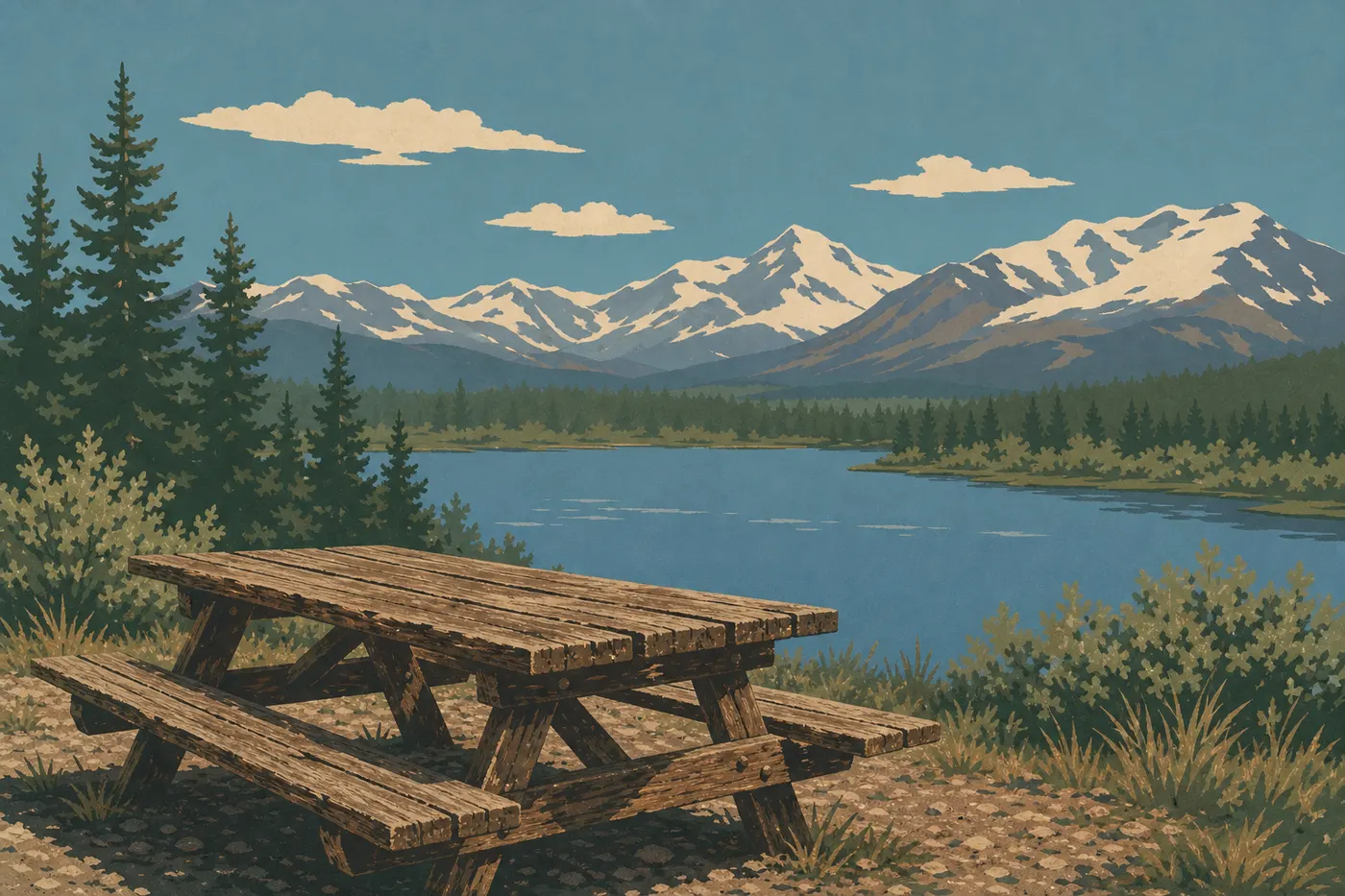
Picnicking is still the best fit for the park's geography. The areas around the Copper Center visitor center and the Kennecott area offer places to stop and eat. In remote areas, set your pack down wherever the landscape allows, while following the usual precautions. Black bears and grizzlies are present, so keep your food in an approved bear-resistant container or hang it well out of reach. Our Camping guide covers the gear you should bring.
Where to Eat Nearby: Gateway Towns
McCarthy: The Lively Town at the End of the Road
McCarthy is the main gateway to the Kennecott mines. It's a small town with a few dozen year-round residents, but it really comes alive in summer. You'll find several small restaurants and cafés open from May through September, a local pub, and a few places serving home-style cooking. The atmosphere is frontier-style. Expect less polish and more authenticity than you would in an ordinary town.
Ma Johnson's Hotel, a historic building dating to around 1916, offers a dining room for its guests and, when space allows, for walk-in visitors. Eating in this wooden building, where Kennecott miners once came and went, is an experience in its own right. Make a reservation before you arrive.
Copper Center: A Stop Along the Richardson Highway
The village of Copper Center, home to the park's main visitor center, has a few options along the Richardson Highway (Highway 4). Copper Center Lodge, a local institution, has a dining room open to guests and passing travelers. The food is solid and straightforward, with portions sized for hungry hikers. It's the natural stop if you're coming from Anchorage in the north or Valdez in the south.
Chitina and Glennallen: Stocking Up Along the Way
Chitina is the last town before the road to McCarthy. It has a general store and a few light dining options, but choices are limited. Glennallen, where the Glenn and Richardson highways meet, is the area's largest community, with about 500 residents. It has a supermarket, gas stations with snack counters, and several restaurants open year-round. This is where you should stock up before entering the wilderness.
Our Picks by Craving
Quick bite: McCarthy's general store after the drive. A sandwich, a cold beer, and boots still covered in dust. Practical and well-earned.
With the family: Copper Center Lodge, with a spacious dining room, straightforward food, and fair portions. Kids are comfortable here.
With a view: Kennecott Glacier Lodge. Mountain, glacier, and a plate of salmon. It's hard to do better for hundreds of miles.
Historic dining: Ma Johnson's Hotel in McCarthy. The building dates to the early 20th century. You eat in the same rooms where miners came to unwind in town after weeks at high elevation.
The Specialty to Try in Wrangell–St. Elias
Wild Alaska salmon is the obvious answer, and the right one. Five species run up the region's rivers: sockeye, which is especially good smoked; king, the meatiest; and coho, among them. From June through September, local lodges buy from nearby fishermen. Smoked, grilled, or poached, it's a fish directly tied to this place.
Caribou and moose also appear in local cooking, often as stew or jerky. These game meats are part of the culinary heritage of the Alaskan bush. If you get the chance to try them at a local home or family-run lodge, don't pass it up.
Practical Tips: Hours, Reservations, Budget, and Season
Season: Almost everything closes from September through May. The Kennecott visitor center, like the one in Copper Center, is closed from early September through late April. Plan your visit between June and August if you want access to most dining services.
Reservations: At Kennecott Glacier Lodge, book your table when you book your room, especially in July and August. Hiking groups fill the dining room quickly.
Budget: Plan on about $20 to $35 per person for a meal at a lodge, and $10 to $15 for fast food in a gateway town. Prices reflect the logistical isolation. Everything that reaches Kennecott has traveled 60 miles of unpaved road.
Food self-sufficiency: For any stay of more than two days in a remote area, bring all your meals. Stove, freeze-dried meals, nuts, energy bars, and an approved bear-resistant container. This isn't a luxury. It's a safety requirement.
At a Glance: Where to Eat in Each Area
| Area | In the Park | Nearest Gateway Town |
|---|---|---|
| Kennecott / McCarthy | Kennecott Glacier Lodge (reservations required) | McCarthy: seasonal restaurants, Ma Johnson's Hotel |
| Copper Center | No options | Copper Center Lodge, Richardson Highway |
| Chitina | No options | General store, light dining |
| Remote areas | No options | Stock up in Glennallen before entering |
For help planning your entire trip, see our complete guide to Wrangell–St. Elias.
Frequently Asked Questions
Where can I eat in Wrangell–St. Elias?
Inside the park, only Kennecott Glacier Lodge serves full meals, by reservation, during the peak season from June through August. The gateway towns of McCarthy, Copper Center, and Glennallen offer alternatives, from quick meals to a lodge dining room.
What do people eat in Wrangell–St. Elias? What's the local specialty?
The regional specialty is wild Alaska salmon, caught in the park's rivers from June through September and served smoked or grilled at local lodges. Caribou and moose, prepared as stew or jerky, are also part of Alaskan bush cuisine.
Is there a grocery store inside the park?
No. McCarthy's general store sells basic supplies, but its inventory is limited. Stock up in Glennallen or Anchorage before entering the area.
Do I need a reservation to eat at Kennecott Glacier Lodge?
Yes, reservations are strongly recommended, especially in July and August. Contact the lodge directly when you book your stay or your visit to Kennecott.
Can I picnic in the park?
Yes, and it's often the best option for visitors in the backcountry. Use an approved bear-resistant food container and settle in at developed areas near visitor centers or in the backcountry while following wilderness regulations.