
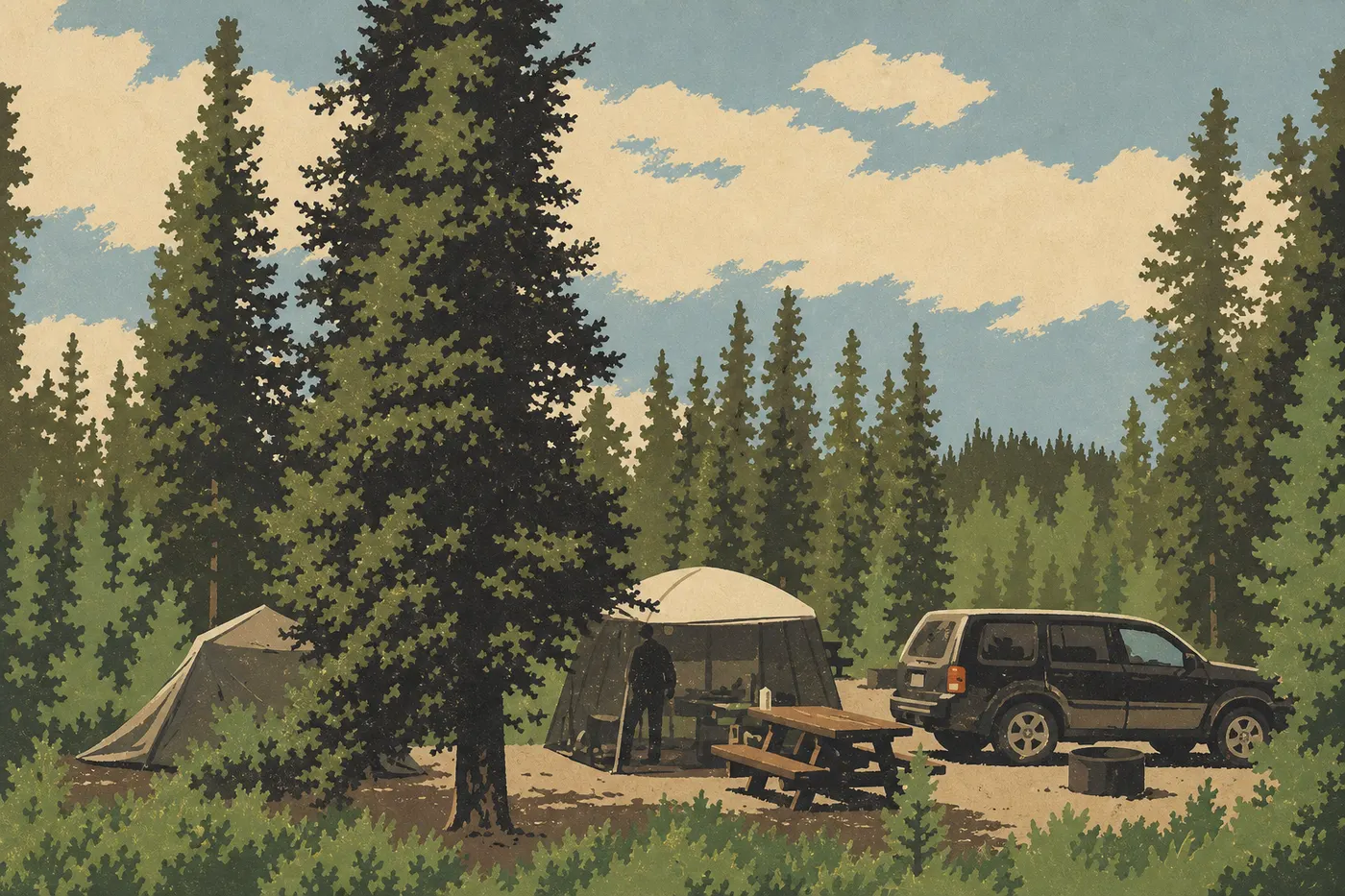
Wrangell–St. Elias by RV: Campgrounds, Rules, and Tips
Wrangell–St. Elias, in Alaska, is the largest national park in the United States, covering about 13.1 million acres, more than the entire country of Switzerland. Here, an RV isn't a luxury. It's often the only practical option. Lodging is scarce, distances are huge, and the park's interior roads can be counted on one hand. As a result, most visitors who venture beyond the visitor center sleep in an RV.
The number-one restriction to know before booking your rig is that the park's two main routes are unpaved gravel roads. A compact motorhome can handle them. A 40-foot trailer combination is a very different story.
Can you drive and camp in an RV at Wrangell–St. Elias?
Yes, as long as you adjust your expectations. The park charges no entrance fee, which is unusual for a site of this size in the U.S. national park system. The interior road network, however, comes down to two routes: Nabesna Road in the north, about 45 miles of gravel from Slana, and McCarthy Road in the south, about 62 miles of gravel from Chitina. Richardson Highway follows the park's western edge on pavement, with the main visitor center in Copper Center eight miles south of the Glenn Highway/Richardson Highway junction.
RVs can use all of these roads in principle. In practice, the size of your vehicle determines where you can go. Compact rigs, including campervans, Class B motorhomes, and short Class C motorhomes, can handle the gravel without major difficulty. Large Class A motorhomes and trailer combinations longer than 23 to 26 feet will need to plan for tight turns, rough surfaces, and limited parking.
RV restrictions and regulated roads
McCarthy Road is the most challenging route for large units. It follows the former Copper River & Northwestern Railroad line. The gravel surface can hide metal debris that may puncture tires, and some bridges have weight limits. The NPS strongly advises against using trailer combinations on this road. Check the current road alerts on the NPS website before setting out.
At the end of McCarthy Road, the private road to Kennecott is closed to private motor vehicles. You'll need to park your RV in the paid parking area by the Kennicott River, then walk or take a shuttle to the town of McCarthy and, afterward, to the historic mines. Make sure there's enough room for your rig in the parking area before you plan this part of the trip.
Nabesna Road is generally more manageable for mid-size rigs, but deep ruts can appear at the beginning and end of the season. Check road conditions with the Slana visitor center before heading out, especially after heavy rain.
For seasonal road conditions, see the Wrangell–St. Elias access guide.
The park's official campgrounds
Kendesnii Campground
Located along Nabesna Road, a few miles from the Slana entrance, Kendesnii is the NPS campground that's easiest to reach by RV. The sites are primitive, with no electrical hookups and no running water. Sites accommodate reasonably sized rigs, but there are no pull-through sites for very long units. Pit toilets are available. Camping is free or costs only a nominal fee. Check the current fee schedule on the NPS website when you travel.
Primitive sites along Nabesna Road
The NPS allows dispersed camping in several designated areas along Nabesna Road. These spots have no facilities. You arrive, set up, and pack everything out when you leave. It's a good idea to check in with the Slana visitor center beforehand and let staff know you'll be in the park.
McCarthy area
There is no developed NPS campground along McCarthy Road or in Kennecott. A few private operators offer sites in McCarthy itself, but you can reach them only after parking your RV in the parking area by the river. Most visitors heading to Kennecott in an RV spend the night in the parking area or in designated areas outside the park.
Boondocking and camping areas around Wrangell–St. Elias
This is where the park really stands apart. Camping in the wild is a longstanding Alaska tradition, and the federal lands managed by the NPS and BLM around the park offer excellent boondocking opportunities. Away from the interior gravel roads, you can set up on designated shoulders or pullouts as long as you don't block traffic and follow Leave No Trace principles.
The Richardson Highway near Copper River offers direct views of glaciers and informal pullouts that RV travelers use regularly. Farther east, BLM lands around Tok allow free nights in a truly wild setting. See our regional guide for spots around the Glennallen/Tok/Valdez triangle.
Dump stations, water, and services
Inside the park, dump stations and drinking-water sources are almost nonexistent. Manage your tanks carefully before entering the gravel roads. Once you're on Nabesna Road or McCarthy Road, 45 to 62 miles round-trip with no services is standard.
The closest services are in Glennallen, along Richardson Highway. You'll find gas stations, a grocery store, and dump stations there. Tok, farther northeast, also offers these services for RV travelers heading into the Alaska interior. Valdez, southwest via Richardson Highway, is another option if you're heading toward the Gulf of Alaska. Check hours ahead of time during the high season. Some services operate only seasonally.
Which campground is right for you
You want an easy base with accessible hikes. Choose Kendesnii Campground on Nabesna Road. You'll have access to trails in the northern half of the park, and the road remains manageable for a compact rig.
You're dreaming of Kennecott and glaciers. Take McCarthy Road in a short Class B or C motorhome without a trailer, park by the Kennicott River, and explore on foot or by shuttle. There is no NPS campground in this area. Plan to drive back toward Richardson Highway to sleep, or stay with a private operator in McCarthy.
You want complete solitude. Dispersed camping on NPS lands along Nabesna Road can give you nights without another person within binocular range. Check in with the Slana visitor center beforehand.
For tent-camping or lodge options, the Wrangell–St. Elias camping guide and the lodging overview round out the picture.
Renting an RV to visit Wrangell–St. Elias
Nearly all rental companies are based in Anchorage, a five- or six-hour drive away via Glenn Highway and then Richardson Highway. That's the logical starting point for planning your trip. Check these three things before you sign:
Permission to drive on gravel roads. Many rental companies prohibit using their vehicles on unpaved roads. If your contract includes that clause, you'll be limited to Richardson Highway, which rules out Nabesna Road and McCarthy Road.
Vehicle size. To reach the gravel roads, a compact rig under 23 feet long, such as a Class B or short Class C, is far more versatile than a large Class A. The added maneuverability more than makes up for the lost comfort.
Spare tire and tire-repair kit. McCarthy Road is known for loose road debris. A serviceable spare tire and a basic repair kit are essential. The nearest mechanic may be more than 62 miles away.
Budget, pets, and reservations: what to know
Budget. Wrangell–St. Elias is one of the few major American parks that doesn't charge an entrance fee. Existing NPS campgrounds are free or very inexpensive. You will, however, need to budget for fuel, since distances are significant in Alaska, possible shuttle fees to Kennecott, and private-site fees in McCarthy if you stay there.
Pets. Pets are allowed on roads and in campgrounds, but they must remain leashed at all times, with a maximum leash length of 6 feet. Outside developed areas, dogs aren't allowed on marked trails. A practical reminder for Alaska: black bears and grizzlies live in the park. Keep pets in sight and store food in the vehicle's cargo area or in an approved bear-resistant food locker.
Reservations. Wrangell–St. Elias NPS campgrounds operate on a first-come, first-served basis. No advance reservation system is available for these sites. Arrive early in the day if you're traveling in July or August. No reservation is required for boondocking spots on BLM lands. Facilities generally open from May through mid-September. Outside that window, visitor centers close and road conditions can be difficult.
Our guide to when to visit Wrangell–St. Elias gives you month-by-month guidance for planning this kind of trip.
Our RV plan for Wrangell–St. Elias
Wrangell–St. Elias is a great fit for RV travel if you arrive with the right vehicle and full tanks. Choose a compact rig without a trailer to reach the gravel roads. Base yourself at Kendesnii Campground or dispersed-camp along Nabesna Road to explore the northern part of the park. If Kennecott is your goal, take McCarthy Road in a short rig, park by the river, and walk or take a shuttle to the historic mines. Fill your water tanks and dump in Glennallen before entering the park. You won't find those services inside.
For an overview of the park before planning your route, our complete Wrangell–St. Elias guide is the place to start.
Frequently asked questions
Is Wrangell–St. Elias worth visiting?
Wrangell–St. Elias is worth visiting if you're looking for a deeper Alaska experience, without crowds or heavy tourist infrastructure. The park has more glaciers than any other American national park and offers a sense of scale that's hard to find elsewhere. The logistical effort is real. That's exactly what keeps the lines at zero.
Can you get to Wrangell–St. Elias National Park by RV?
Yes. You can reach the park by RV on paved Richardson Highway to the Copper Center visitor center, then take two gravel roads into the park, Nabesna Road and McCarthy Road. Compact rigs can use them without major difficulty. Large motorhomes and trailer combinations should stick to Richardson Highway or accept a significant risk of flat tires and challenging maneuvering.
Can you park an RV anywhere in Wrangell–St. Elias?
No, you can't park freely everywhere. Along the interior gravel roads, the NPS designates areas for parking and dispersed camping. At the end of McCarthy Road, the paid parking area by the Kennicott River is the only place private motor vehicles can use. The road beyond it is closed to private vehicles.
How large is Wrangell–St. Elias?
Wrangell–St. Elias covers about 13.1 million acres, making it the largest national park in the United States and larger than Switzerland. Its enormous size explains why you can spend several days on the gravel roads without seeing other visitors, and why an RV is the best way to travel beyond a quick look.