
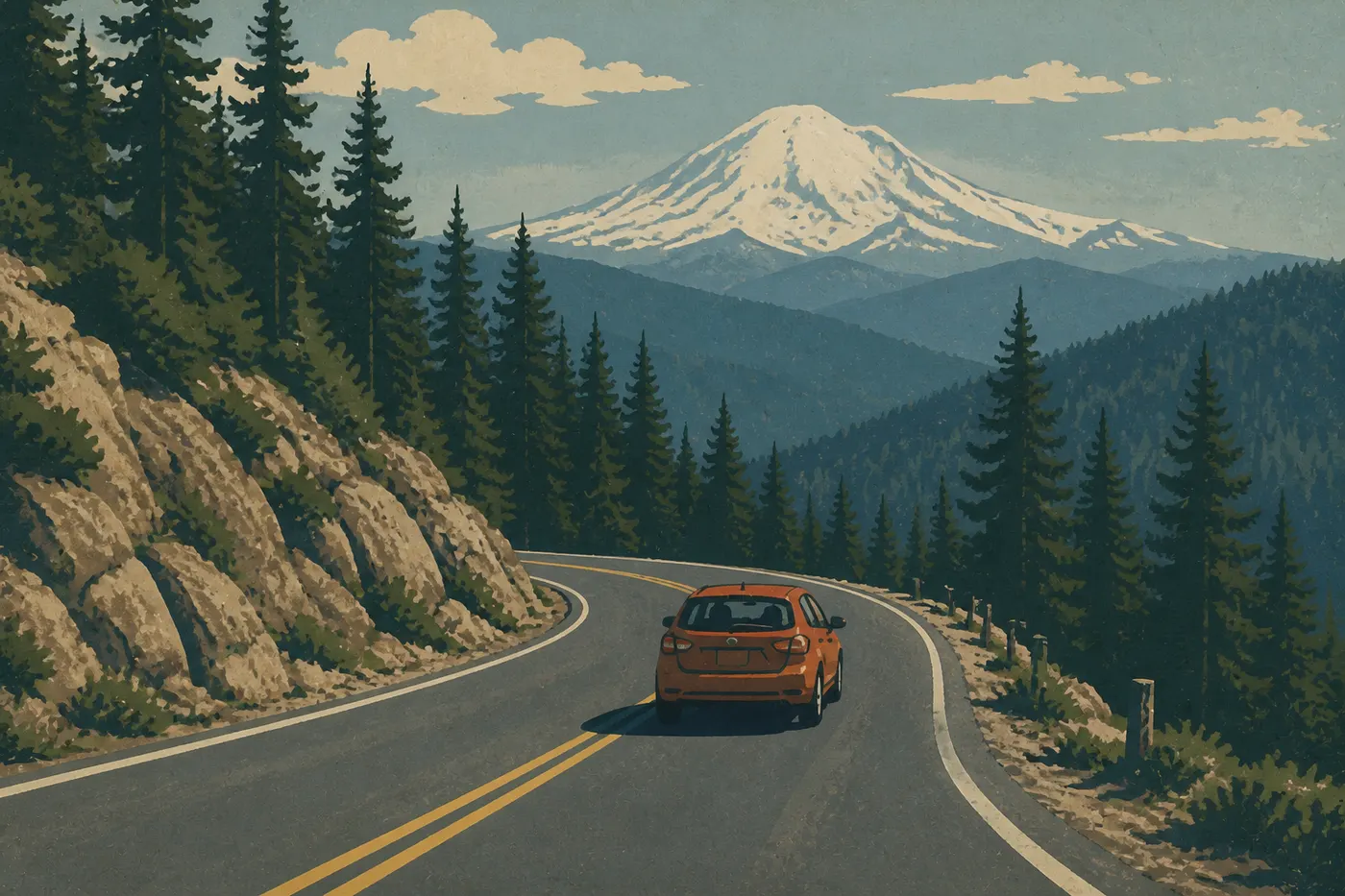
Getting Around Mount Rainier: Access, Entrances, Shuttles, and Parking
Mount Rainier isn't a park where shuttles are mandatory, as they are at Zion. A car remains the main way to get between the park's major areas. But at Paradise in midsummer, the parking lot fills up before 10 a.m. Here's what you need to know to get around without losing an hour along a mountain road.
How to Get to Mount Rainier
The park lies in west-central Washington State, within reach of the major cities along the Pacific Coast. Seattle is about 90 miles north, or a 1.5- to 2-hour drive depending on traffic on I-5. Tacoma, south of Seattle, is even closer. Figure on about 62 miles and 1 hour 15 minutes. Portland, Oregon, is roughly 149 miles to the southwest, a 2.5- to 3-hour drive depending on the route.
From Seattle-Tacoma International Airport (SEA), renting a car is the obvious choice. No regular bus service reaches the interior of the park, and the few private tour shuttles operating from Seattle are infrequent and inflexible.
For complete trip-planning information for the region and itineraries from Seattle or Portland, see our Region and Road Trips sections.
Park Entrances and Which One to Choose
Mount Rainier has five entrances spread across the park's four sides.
Nisqually Entrance (southwest, via State Route 706) is the only one open year-round. It provides access to Longmire and then Paradise, the two most visited areas. For GPS, enter “39000 State Route 706 E, Ashford, WA 98304.” This is the main entrance for the vast majority of visitors.
White River Entrance (northeast) opens in summer and provides access to Sunrise, the highest point in the park accessible by car. It's generally open from late June through October, depending on snow conditions.
Stevens Canyon Entrance (southeast) connects to the Ohanapecosh area and the Grove of the Patriarchs Trail. It's also seasonal.
Carbon River Entrance (northwest) leads to the park's temperate rain forest via a gravel road. It's not recommended for low-clearance vehicles or RVs.
Mowich Lake Entrance (northwest) is accessible in summer via an unpaved road and is mainly useful for hikers heading to the park's northern area.
For most visits, Nisqually Entrance is the right choice. It's open 365 days a year and has the best access from Seattle and Tacoma. For entrance fees and annual passes, see the National Parks Fees & Passes page.
Getting Around the Park
By Car
A car is the main way to get around Mount Rainier. The park roads, including Paradise Road, Stevens Canyon Road, and Sunrise Road, are well maintained but narrow and winding. The standard speed limit is 35 mph, and it's often lower in areas with heavy pedestrian traffic. Drive slowly. Deer and marmots can cross the road without warning.
Stevens Canyon Road and Sunrise Road close after the first major snowfalls, usually in October or November. Paradise Road from Nisqually is the only road that stays open year-round, weather permitting.
By Shuttle
A free shuttle operates in summer between the Ashford area outside the park and Paradise. It also runs within Paradise between parking lots and certain trailheads. The service was introduced to ease overcrowded parking in July and August. Check service dates on the official NPS website before you leave. The schedule changes each season.
There is no internal shuttle between Paradise and Sunrise. To get from one area to the other, you'll need a car.
By Bike
Bikes are allowed on all roads open to traffic but prohibited on trails. The climb to Paradise from Longmire is about 12 miles with 3,000 feet of elevation gain. It's a serious effort, rewarded by striking mountain scenery. There are no bike rentals in the park, so bring your own or arrange a rental in Ashford before entering.
Where to Park: Lots, Parking, and Tips
Paradise has the most sought-after parking in the park. In July and August, the lot fills up before 10 a.m., and rangers sometimes temporarily close the road. The strategy that works is to arrive before 9 a.m. or after 3:30 p.m. In the late afternoon, hikers return and spaces open up. You'll also get beautiful low-angle light on the volcano.
Sunrise sees the same pattern on summer weekends. The access road from White River is about 15 miles long, so turning around because the parking lot is full is especially frustrating.
Longmire is less pressured because it's a smaller area with more spread-out visitation. At Carbon River, parking is limited, and the access road isn't recommended for vehicles that aren't suited to it.
As of now, Mount Rainier does not require parking reservations. However, the NPS has been testing congestion-management measures for several seasons, including timed entry and reservation systems. Check recreation.gov before you leave. For information about crowd levels by season, our When to Go page summarizes the periods to avoid.
Distances and Drive Times Between Areas
Mountain roads significantly lengthen drive times within the park. Our park access guide provides distances from the major cities and between the different areas.
Special Cases: RVs, Camper Vans, Accessibility, and Pets
RVs and camper vans. Nisqually Entrance accommodates most vehicles, but the road to Paradise is narrow and has sharp curves. RVs longer than about 25 feet aren't recommended beyond Longmire. Carbon River Entrance is expressly not recommended for RVs or trailers. You'll find all the practical details on our RV page.
Accessibility. Longmire Museum, the Henry M. Jackson Memorial Visitor Center at Paradise, and Sunrise Visitor Center have accessible facilities. Several trailheads are wheelchair accessible. Contact the NPS for a list of trails that meet accessibility standards.
Pets. Dogs are allowed in the park only on paved roads, in parking lots, and in campgrounds. They're prohibited on all hiking trails and in undeveloped areas. In practice, traveling with a dog at Mount Rainier greatly limits your options for walks.
Practical Transportation Info: Gas, Cell Service, and Apps
Gas. There are no gas stations inside the park. The last station before Nisqually Entrance is in Ashford. Fill up before you enter. Running out of gas at 5,250 feet in the snow is an adventure you can do without.
Cell service. Coverage is nearly nonexistent across most of the park, including Paradise and Sunrise. Don't count on your phone for navigation or emergency calls once you're inside. Download offline maps before you leave, using Google Maps, Maps.me, or the official NPS app, and pick up a paper map at the entrance station.
Useful apps. The NPS app lists real-time road conditions, current closures, and weather alerts. For elevation-specific forecasts, including for Paradise at about 5,400 feet, the National Weather Service provides targeted bulletins. Our Weather page summarizes the park's climate patterns.
Frequently Asked Questions
How do you get around Mount Rainier National Park?
Most visitors get around the park by car. A free shuttle serves Paradise from Ashford in summer, but there is no internal connection between Paradise and Sunrise. The two areas are connected only by car, via a long detour.
Can you visit Mount Rainier by car?
Yes. A car is the park's main mode of transportation. The major park roads are open to ordinary vehicles, except for the Carbon River gravel road, which isn't recommended for low-clearance vehicles or RVs.
Where can you park at Paradise, Mount Rainier?
Parking at Paradise is free but fills quickly in July and August, often before 10 a.m. Arrive before 9 a.m. or after 3:30 p.m. to give yourself the best chance of finding a spot without waiting.
What's the best entrance for visiting Mount Rainier?
Nisqually Entrance (southwest, via State Route 706) works for most visitors. It's open year-round, easily reached from Seattle and Tacoma, and provides direct access to Paradise and Longmire.
Is there cell service in Mount Rainier National Park?
No. Cell coverage is nearly nonexistent throughout the park, including in the busiest areas. Download your offline maps and the NPS app before entering the park.
How much time do you need to visit Mount Rainier?
For help planning the length of your stay, our Itinerary & Length of Stay guide answers this question in detail.