
Mount Rainier Weather: Forecasts, Climate, and Current Conditions
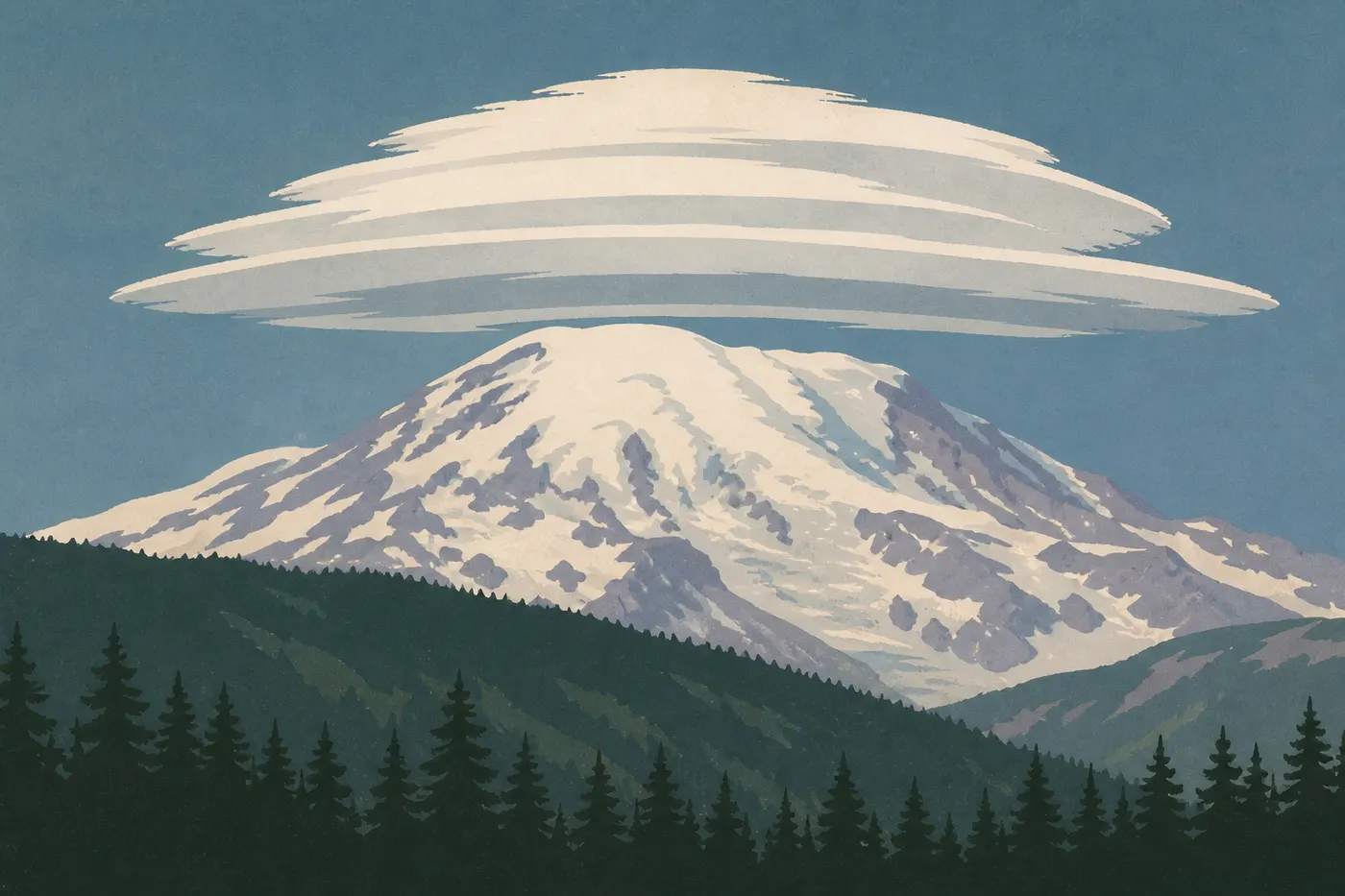
Mount Rainier rises to 14,410 feet in Washington State, and its climate matches its stature. The Pacific sends weather systems across the volcano's slopes year-round: humidity, low-elevation rain, high-elevation snow, and rapid changes are all normal. In short, summer is short and bright (July and August), spring and fall are very wet, and winter is long and deeply snowy. Weather can turn in less than an hour, even in August.
Current readings are unavailable. See the seasonal averages farther down this page.
Open-Meteo readings · updating… · park time zone
Current Conditions at Mount Rainier
Conditions vary widely by elevation. It may be a sunny 68°F at Nisqually and 41°F under the snow at Paradise (5,400 feet) on the same day. Always check both elevations before you head out.
14-Day Forecast for Mount Rainier
In the mountains, forecasts beyond 72 hours are only a general guide. Use them to get the big picture, then adjust your plans as the days unfold.
Mount Rainier Climate Month by Month
The table below reflects climate normals at Longmire (2,756 feet), a reference area accessible year-round. At Paradise (5,400 feet), temperatures drop another 9 to 14°F, and precipitation, mostly snow in the cold season, is much heavier.
| Month | Low | High | Precipitation | What to expect |
|---|---|---|---|---|
| January | 28°F | 41°F | Very high | Snow at higher elevations, roads may be closed |
| February | 28°F | 45°F | High | Persistent winter conditions |
| March | 34°F | 48°F | High | Partial snowmelt at low elevations |
| April | 37°F | 54°F | Heavy | Mostly rain, with snow still present at higher elevations |
| May | 41°F | 61°F | Moderate | Wildflowers beginning to emerge, lingering snow on trails |
| June | 46°F | 66°F | Moderate | First wildflowers, possible snow patches at Paradise |
| July | 50°F | 75°F | Low | Sunniest month of the year |
| August | 50°F | 75°F | Low | Driest month; peak wildflower season |
| September | 45°F | 68°F | Moderate | Fall colors, rain returns |
| October | 37°F | 55°F | Heavy | Snow at higher elevations, first road closures |
| November | 34°F | 46°F | High | Winter settles in, access to Paradise uncertain |
| December | 28°F | 41°F | Very high | Seasonal closures, full winter conditions |
Is Mount Rainier Cold? Records and Extremes
Yes, definitely. In winter, temperatures at Paradise commonly fall to 14°F, and cold snaps can be much more severe. Humidity and wind significantly intensify the chill, so the number on the thermometer isn't what really matters. At the other extreme, rare summer heat waves can push highs to 86°F at Longmire, but that's unusual. What you can count on is variability: a day that starts in sunshine can end in rain or snow at higher elevations.
The volcano also creates its own local weather. Thunderstorms can form directly over the summit while the lowlands remain clear. This is a mountain, not a postcard backdrop.
What to Wear in Each Season
The golden rule at Mount Rainier is to dress in layers and never underestimate the elevation.
Summer (July and August): moisture-wicking T-shirt, midlayer such as a light fleece or soft shell, and a waterproof windbreaker in your pack. Wear waterproof hiking shoes if you're going above 3,937 feet, where snow patches may linger.
Spring and fall: a real waterproof jacket, such as a Gore-Tex shell or equivalent, fleece or light puffy jacket, and water-resistant pants. A hat and gloves come in handy above 3,281 feet.
Winter: full mountain gear, with no shortcuts. Wear thermal base layers, a puffy jacket, a waterproof wind shell, a warm hat and gloves, and gaiters. Snow chains or snowshoes are required if you venture beyond Longmire.
In every season, sunscreen is essential at higher elevations. Snow and a thin cloud cover can reflect UV rays deceptively strongly.
Alerts and Conditions to Watch
Mount Rainier is an active volcano under constant USGS monitoring. The long-term seismic risk is real, but it doesn't affect day-to-day visiting conditions.
The alerts to watch before and during your visit are weather-related:
Road closures: State Route 706 to Paradise may close without warning during heavy snow or icy conditions. Check the NPS website the morning you leave. In winter, also check whether Nisqually Entrance is open.
Mountain thunderstorms: between June and September, thunderstorms can develop quickly in the afternoon, especially above 6,562 feet. If you're on a trail and hear thunder, descend immediately below the tree line and move away from ridges and open areas.
Flooding and trail closures: rapid spring snowmelt and heavy rain can cause flooding on park rivers, especially the Nisqually and Carbon River. Some low-elevation trails may close temporarily. Check conditions before choosing your route in the Mount Rainier hiking guide.
Frequently Asked Questions
What's the weather like at Mount Rainier right now?
The weather at Mount Rainier depends entirely on elevation. Conditions at Nisqually (2,756 feet) and Paradise (5,400 feet) can differ by 18°F and be radically different at the same time.
What's the current temperature at Mount Rainier?
The current temperature at Mount Rainier ranges from 64 to 75°F at Longmire in midsummer and around 54 to 64°F at Paradise. In winter, it regularly falls below 32°F at lower elevations and reaches 14°F or lower at higher elevations.
Is Mount Rainier cold?
Yes, Mount Rainier is cold. Even in August, nights at higher elevations drop below 50°F, and Paradise may remain snow-covered into July. In winter, the cold is intense, amplified by wind and humidity.
What should I wear to visit Mount Rainier?
Dress in layers to visit Mount Rainier: a base layer, an insulating layer such as fleece or a light puffy jacket, and a waterproof wind shell in every season. In winter, full mountain gear is required, along with snow chains or snowshoes above Longmire.
What is Mount Rainier's climate like?
Mount Rainier has a maritime mountain climate, strongly influenced by the Pacific. It's wet and changeable. Summers are short and mild (July and August), while winters are long and very snowy, especially at Paradise.
Could Mount Rainier erupt?
Mount Rainier is an active volcano classified by the USGS as a potentially high-risk volcano because of the surrounding population density. The likelihood of an eruption in the short term is considered low. This doesn't affect current visiting conditions or rule out a well-prepared trip.