
Kobuk Valley with Kids: What to Do and How to Plan Your Trip
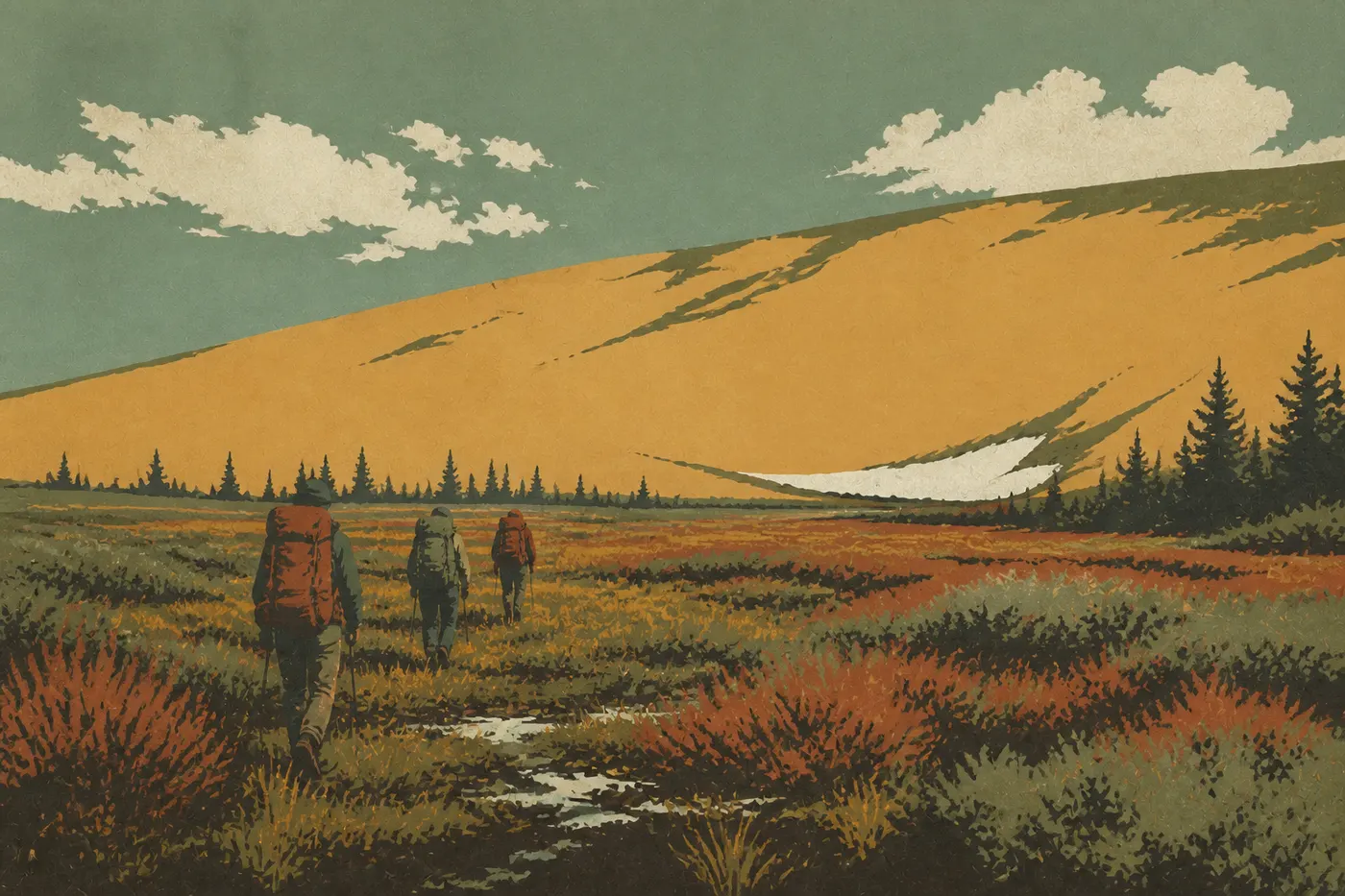
Is Kobuk Valley a good fit for families? Yes, but only with serious preparation. This Alaska national park is one of the most remote places in the United States. There are no roads, no lodging, and not a single marked trail. Instead, your kids will discover Arctic sand dunes as large as a city, a river to paddle by canoe, and one of the largest caribou migrations in the world. We recommend waiting until kids are at least 8 to 10 years old before taking them there, and building up some backcountry camping experience together first.
Why Visit Kobuk Valley with Kids
Kids' first reaction at the foot of the Great Kobuk Sand Dunes is often the same one: "What?" The dunes cover more than 25 square miles, with some rising over 165 feet, right in the Arctic beyond the Arctic Circle. In summer, the sand stores a surprising amount of heat. You can climb the dunes sweating and slide back down, with the boreal forest bordering the sand on three sides. It's a geographic shock that no documentary or zoo could ever reproduce.
As for wildlife, the Western Arctic caribou herd crosses the park twice a year during its spring and fall migrations. Watching thousands of animals move in a tight herd with the seasons is a fully immersive biology lesson. Grizzlies, wolves, moose, Arctic foxes, beavers, and salmon round out the picture in summer.
The expedition itself is educational. You travel by small plane, set up camp on a riverbank, and filter your own water. For teenagers especially, days like these build self-confidence in a way that's hard to replicate elsewhere.
Is Kobuk Valley Suitable for Kids? What Age Is Best
Kobuk Valley works for kids as young as about 8 to 10, as long as the family already has solid backcountry camping experience. For a first wilderness trip, this isn't the right place to start.
The reasons are straightforward. The park has no infrastructure at all: no official trails, no lodge, no drinking-water source, and no resupply. You bring every piece of gear and all your food with you on a charter plane. The terrain requires off-trail travel across tundra or sand, the weather can change quickly, and hypothermia is a real risk even in July.
On the other hand, teenagers who love the outdoors will feel right at home: wide-open, wild country without crowds or trail markers, where every decision matters. For 8- to 12-year-olds with experienced parents, the small-plane flight and the dunes can still be defining experiences, as long as you don't pack too much into the itinerary.
Strollers, bikes, and scooters won't work here. The park has no surface suitable for wheeled travel, so leave them at home.
When to Go as a Family: The Easiest Season with Kids
The only realistic window for a family is the Arctic summer, from late June to early August. On good days, temperatures range from 59°F to 72°F, the rivers are navigable, and the midnight sun gives kids an unforgettable experience: playing on the dunes at 10 p.m. under a sun that's still high in the sky.
July is the most stable month weather-wise, which makes it the best choice for families. June lets you avoid the peak mosquito season, which can be intense in mid-July in the park's wetlands.
Avoid May and September with kids. Arctic conditions are too unpredictable for anyone without experience. The Kobuk Valley weather data and the month-by-month calendar explain these windows, with monthly precipitation and temperature details.
How Many Days to Plan for a Family Trip
Plan on at least 4 to 5 days total. Air travel, including a commercial flight to Kotzebue or Bettles followed by a charter plane to the park, can easily take a full day each way. Add a buffer day for weather delays, especially on the return trip.
Once you're there, 3 nights give you time to explore the dunes, paddle the Kobuk River, and spend a full morning watching wildlife at dawn. If your kids are under 12, don't overpack the schedule. Camp fatigue, filtering water, and covering distances on foot add up quickly.
Our Itinerary & Duration guide offers flexible trip plans based on the kids' age and experience level.
What to Do in Kobuk Valley with Kids: Our Picks
Kobuk Valley doesn't have a list of attractions with opening hours. You choose what to do there and build the experience yourself. Here are the activities that work best for families.
The Great Kobuk Sand Dunes. The absolute must-do. Climbing Arctic dunes several dozen feet high and sliding back down with the boreal forest in the background is an experience kids take in slowly. The Little Kobuk Sand Dunes are less dramatic and easier for younger children to reach.
The Kobuk River by canoe or kayak. The river is navigable along several sections with a moderate current. Paddling in silence lets you approach wildlife from the water and move between camps along the banks. Some families combine river travel with exploring the dunes on foot.
Wildlife watching. Teach kids to identify tracks, including grizzly, beaver, and caribou tracks, before you leave, and bring lightweight binoculars. This active way of reading the landscape gives younger children responsibility and keeps them focused for hours.
Expedition life. Setting up camp, filtering river water, cooking on a camp stove, and reading a topographic map without GPS give teenagers practical skills that build real self-confidence.
Our Things to Do page covers all the park's activities, including guided sport-fishing opportunities.
Easy Family Hikes
Let's be direct: Kobuk Valley has no marked trails. You won't find a trail with mile markers, directional signs, or a graded gravel surface. You travel off-trail, following the natural contours of the land.
That said, some routes are still manageable for fit kids.
The sandy banks of the Kobuk River make it possible to walk for several hours without significant elevation gain. The ground is firm and the route is intuitive: follow the river, then return along the banks. It's the simplest option to manage with kids ages 8 to 12.
The boundary between the boreal forest and the dunes, whether the Great or Little Kobuk, offers an easy 1- to 2-hour walk depending on the landing spot. This is where you can best observe the ecological transition between Arctic tundra and sand desert.
Avoid wet tundra with young children. The spongy permafrost ground is exhausting, and the risk of falling or sinking into peat mud is very real.
Our Hiking page details recommended off-trail areas for different experience levels.
The Junior Ranger Program
The National Park Service offers the Junior Ranger program in all its national parks, including the most remote ones. At Kobuk Valley, kids can get the Junior Ranger activity booklet at the Northwest Arctic Heritage Center in Kotzebue, which serves as the park's visitor center.
Our advice is to pick up the booklet before boarding your charter plane to the park. Kids can complete the observation, drawing, and Arctic-nature activities during the trip, then receive their badge when they return to Kotzebue. For ages 6 to 14, it provides a concrete thread that gives meaning to the trip's observations and keeps younger kids motivated throughout.
Staying Safe with Kids
This is the most important part of the guide. Kobuk Valley is an Arctic wilderness park with no institutional safety net within its boundaries. There are no rangers on regular patrol and no marked emergency point. Your safety depends entirely on your preparation.
Hypothermia is the number-one threat. The golden rule is to stay dry. A cool wind combined with light rain can make the temperature feel 18°F colder within minutes, even in July. Dress kids in layers: a technical base layer, fleece, and waterproof wind shell. Skip cotton because it holds moisture and actively cools the body. Change a child's clothes immediately if they're soaked, before you even look for shelter.
Bears. Kobuk Valley is home to grizzlies. Before you leave, teach kids the basics: talk loudly while walking to announce your presence, never run, and store all food in a bear canister at night and whenever you're away from camp. Carry bear spray on you at all times and make sure the adults know how to use it.
Waterways. The Kobuk River's current varies by section. Any child who isn't a strong swimmer should wear a life jacket whenever they're near a boat or a steep bank. Wet rocks and clay riverbanks are slippery, even in good weather.
Weather and communication. Check conditions every morning. Don't head far from camp if a worsening forecast is expected within 6 hours. There is no cell service in the park, so bring a satellite communication device such as an inReach or SPOT to send an alert in a medical emergency. With kids, this isn't optional.
The Kobuk Valley guide covers these protocols and recommended gear.
Where to Sleep as a Family, in and Around the Park
Inside the park, the only lodging option is undeveloped backcountry camping. There are no restrooms, water sources, or trash receptacles. Families pitch their tent wherever they land, following Leave No Trace principles and leaving nothing behind.
For families with less experienced campers, the safest strategy is to spend nights in Kotzebue, where you'll find lodges, bed-and-breakfasts, and a few hotels, then take day trips by charter plane into the park. It's more expensive, but it significantly reduces the logistical complexity and the level of self-reliance required.
Our Where to Stay page lists the options in Kotzebue and Bettles, the two access bases for the park.
Meals and Breaks with Kids
There are no restaurants, snack bars, or stores inside the park. You bring everything you eat and pack out every bit of trash: wrappers, food scraps, absolutely everything.
Plan meals in advance for each full day: 3 meals per person plus regular snacks. Kids doing intense physical activity need fuel every 2 hours. Choose lightweight, high-calorie foods such as freeze-dried meals, energy bars, dried fruit, nuts, and vacuum-packed cheese.
For water, always filter river water before drinking it, even if it looks clean. A backpacking filter or purification tablets will do the job. Never give a child untreated water.
Kotzebue has grocery stores and a few restaurants where you can stock up before heading to the park. Our Where to Eat page points you toward the resupply options available in town.
Family Budget
Kobuk Valley is one of the U.S. national parks with no entrance fee. You don't need an America the Beautiful pass, which costs about $80 a year, but it can still be worthwhile if your road trip includes other U.S. parks that charge an entrance fee.
The main expense is air logistics. A round-trip commercial flight from Anchorage or Fairbanks to Kotzebue or Bettles costs several hundred dollars per person. The charter plane from one of those bases to the park is extra, with the price based on total weight, including people and luggage. For a family of 4 with a full camping setup, air transportation alone represents a substantial budget.
Add nights in Kotzebue if you aren't camping in the park, camping and safety gear, and the food you bring. Kobuk Valley is one of the most financially demanding family trips in the United States. The National Parks Fees & Passes page provides guidance on entrance fees and passes.
What to Combine Around Kobuk Valley with Kids
Kobuk Valley lies in northwestern Alaska, a region that takes real effort to visit. The trip is even more worthwhile when you fold it into a larger Alaska itinerary.
Denali is the most accessible Alaska stop for families with kids, with a bus-accessible road, lodging on site, and marked hikes. It's often the right introduction to Alaska before tackling the Far North.
Gates of the Arctic, an even wilder neighboring park, is a good fit for highly experienced families who already have one or two Alaska trips under their belts.
Our Region and Road Trip pages offer ideas for including Kobuk Valley in a larger Alaska itinerary. Our complete Kobuk Valley guide provides an overview of the park to help refine your overall plans.
Kobuk Valley with Kids: Is It Worth It?
Yes, without a doubt, but it's not for everyone. Kobuk Valley is one of the most genuinely wild national parks you can visit with a family. There are no crowds, no souvenir shop at the foot of the dunes, and no packed parking lot with background music. What you experience there can't be found anywhere else.
The tradeoff is real. Logistics are complex and expensive, the terrain demands serious self-reliance, and the trip isn't suitable for very young children or families without backcountry camping experience. But for adventurous parents with kids ages 10 and up, it can become one of the family's defining trips. You'll come home changed, together.
Frequently Asked Questions
Is Kobuk Valley suitable for kids and families?
Kobuk Valley works for families with kids at least 8 to 10 years old who have previous backcountry camping experience. The park has no tourist infrastructure within its boundaries, so the family is entirely responsible for lodging, resupply, and safety.
Is Kobuk Valley worth the trip?
Kobuk Valley is worth it for families looking for an authentic Arctic adventure. The Great Kobuk Sand Dunes in a polar setting, abundant summer wildlife, and complete absence of crowds make it an experience that's hard to replicate elsewhere.
What's the best time to visit Kobuk Valley with kids?
July is the best time for a family, right in the heart of the Arctic summer, with mild temperatures, navigable rivers, and nearly continuous daylight. Our When to Go page explains the benefits of each month and the windows to avoid with kids.
What is there to do in Kobuk Valley with kids?
Family-friendly activities include visiting the Great Kobuk Sand Dunes, paddling the Kobuk River, watching wildlife such as caribou, grizzlies, and Arctic birds, and camping in the wilderness. Our Things to Do page covers the full range of activities available in the park.
How long does it take to visit Kobuk Valley with a family?
Plan on at least 4 to 5 days total, including a transit day on each end. Once you're there, 3 nights give you time to explore the dunes and river comfortably. Add a buffer day for weather-related flight delays. Our Itinerary & Duration guide offers plans suited to different family experience levels.
{ "@context": "https://schema.org", "@type": "FAQPage", "mainEntity": [ { "@type": "Question", "name": "Is Kobuk Valley suitable for kids and families?", "acceptedAnswer": { "@type": "Answer", "text": "Kobuk Valley works for families with kids at least 8 to 10 years old who have previous backcountry camping experience. The park has no tourist infrastructure within its boundaries, so the family is entirely responsible for lodging, resupply, and safety." } }, { "@type": "Question", "name": "Is Kobuk Valley worth the trip?", "acceptedAnswer": { "@type": "Answer", "text": "Kobuk Valley is worth it for families looking for an authentic Arctic adventure. The Great Kobuk Sand Dunes in a polar setting, abundant summer wildlife, and complete absence of crowds make it an experience that's hard to replicate elsewhere." } }, { "@type": "Question", "name": "What's the best time to visit Kobuk Valley with kids?", "acceptedAnswer": { "@type": "Answer", "text": "July is the best time for a family, right in the heart of the Arctic summer, with mild temperatures, navigable rivers, and nearly continuous daylight." } }, { "@type": "Question", "name": "What is there to do in Kobuk Valley with kids?", "acceptedAnswer": { "@type": "Answer", "text": "Family-friendly activities include visiting the Great Kobuk Sand Dunes, paddling the Kobuk River, watching wildlife such as caribou, grizzlies, and Arctic birds, and camping in the wilderness." } }, { "@type": "Question", "name": "How long does it take to visit Kobuk Valley with a family?", "acceptedAnswer": { "@type": "Answer", "text": "Plan on at least 4 to 5 days total, including a transit day on each end. Once you're there, 3 nights give you time to explore the dunes and river. Add a buffer day for weather-related flight delays." } } ] }