
Kobuk Valley Itinerary: What to See in 1, 2, or 3 Days
Kobuk Valley has no roads. None. That's the first thing to take in when you start planning this trip, because it changes the usual logistics of visiting an American national park. You won't arrive by car from a visitor parking lot. You'll charter a plane from Kotzebue or Bettles, land on a gravel bar along the river or in the dunes, and set up camp. The ideal stay is 3 nights in the field (4 days including flights). That's long enough to avoid being completely at the mercy of the weather and to experience the park without rushing. If you're planning to float the Kobuk River, allow 7 to 10 days instead. The options below cover everything from a quick day trip to a multi-park expedition. Our complete Kobuk Valley guide covers the basics if this is your first look at the park.
How Long Do You Need to Visit Kobuk Valley?
Let's put the question in context first. There are no marked trails, lodges, shuttles, or visitor centers inside the park. The official visitor center, the Northwest Arctic Heritage Center, is in Kotzebue, about 75 miles away as the crow flies. How long you stay depends as much on your flight budget as on how much you want to explore.
1 day. Technically possible as an aerial excursion from Kotzebue, but you'll barely have landed before it's time to leave. Consider it only if your schedule truly can't accommodate a longer stay.
2 to 3 days. The ideal format for a first visit focused on the dunes. You'll have time to explore the Great Kobuk Sand Dunes, follow the Kobuk River, and watch wildlife without checking your watch.
5 to 10 days. Essential if you're planning a canoe or kayak trip on the Kobuk River. Launch and pickup logistics take a full day at each end.
2 weeks or more. Best for expeditions in the upper valley, or if you're combining Kobuk Valley with nearby Gates of the Arctic and Noatak National Preserve.
Our recommendation is 3 nights in the field, or 4 days including flights. That gives you enough flexibility to work around the weather (planes don't take off in bad weather) and lets you explore the park at your own pace. Our When to Go page covers favorable weather windows and caribou migration periods if you want to time your trip around a particular natural event.
Access, Gateways, and Getting Around the Park
Kobuk Valley has no road access. That's the basic fact that shapes the entire planning process.
The main gateway: Kotzebue (AK). Commercial flights connect Anchorage with Kotzebue several times a week (Alaska Airlines operates this route). The Northwest Arctic Heritage Center is here, and it's the park's only official visitor center. Stop there before entering the park. The NPS staff will provide orientation advice, wilderness permit forms, and a list of approved charter operators.
From Kotzebue, you'll charter a plane, such as a Cessna fitted with tundra tires or floats, to reach the park. Most pilots can land on the gravel bars of the Kobuk River or, depending on the season, directly near the dunes. Agree on the date and pickup location with your pilot as soon as you land, and discuss a weather backup plan for the return. Being grounded for two extra days happens regularly in Arctic Alaska.
The secondary gateway: Bettles (AK). Accessible from Fairbanks by regional flight, Bettles is the logistics base for reaching the upper Kobuk River and its headwaters. It's a better fit for long expeditions or river trips that begin east of the park.
Inside the park: no roads and no shuttle. You'll travel on foot across open terrain (tundra, sand, and low vegetation) or by boat on the river and its tributaries. A hiking GPS with topographic maps downloaded for offline use is essential. There is no cell service anywhere inside the park. The most frequently used approved charter operators and drop-off areas in Kobuk Valley are listed there.
Kobuk Valley's Main Areas
The park covers about 2,700 square miles in an east-west valley. It's divided into three areas based on accessibility and the kind of experience each offers.
The Dune Area (Southwest)
This is the park's photographic centerpiece and the destination for the vast majority of visitors. The Great Kobuk Sand Dunes form an active dune field of about 25 square miles, with ridges rising as high as 100 feet in an Arctic setting. The contrast is striking: shifting sand, silence, and the Brooks Range in the background. On a clear day, the view from the top of the dunes makes the trip worthwhile on its own. Nearby, the Little Kobuk Sand Dunes offer quicker access from some landing areas and a slightly more intimate atmosphere.
The Kobuk River Corridor (Central Area)
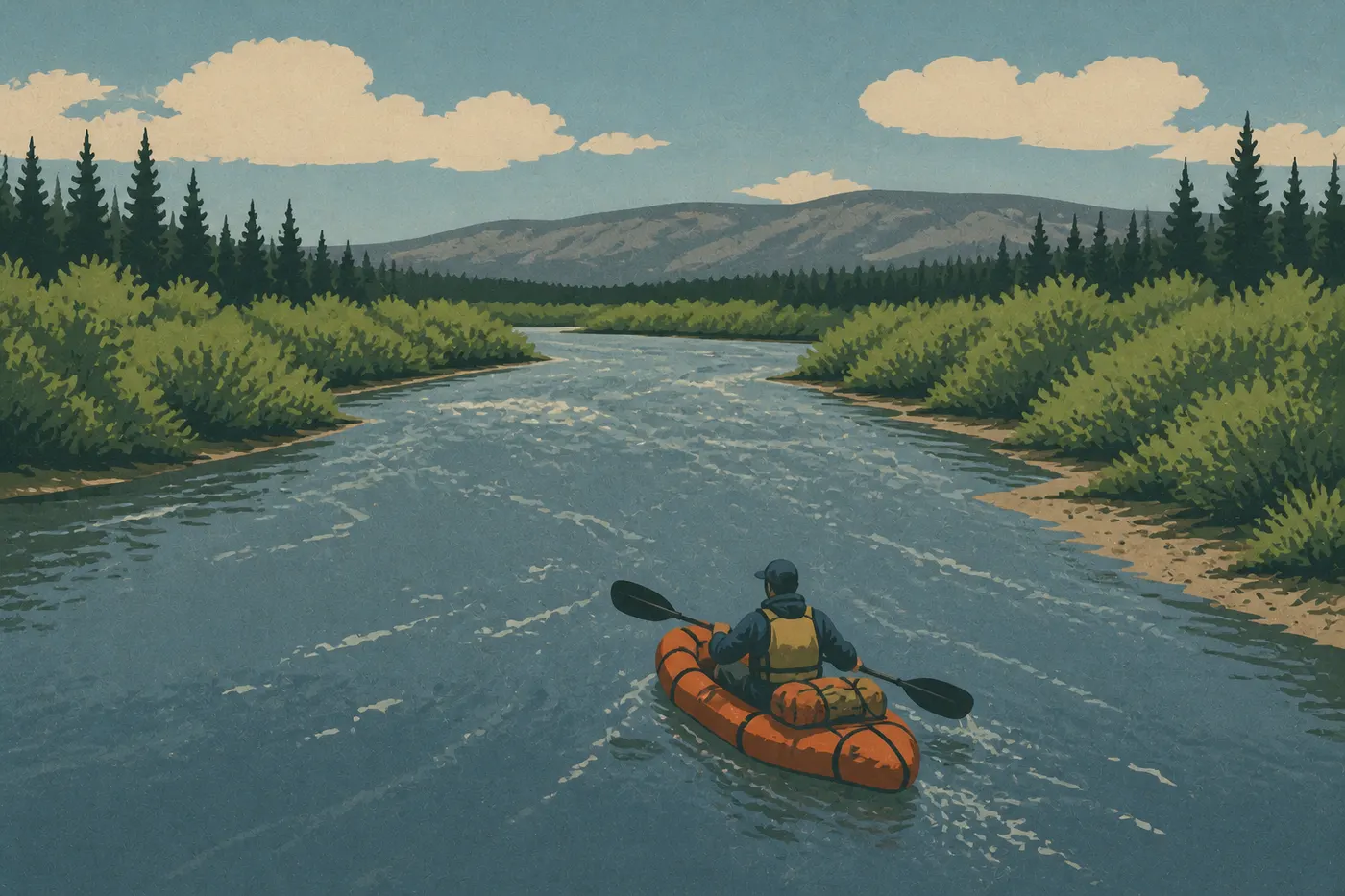
The Kobuk River runs east to west through the valley and forms the backbone of any extended stay in the park. In summer, you can travel it by inflatable canoe, packraft, or kayak, on water ranging from calm to moderately fast. The banks see western Arctic caribou during their major spring and fall migrations. This is one of the largest herds in the world. The river is also known for salmon fishing, with five species spawning here. Our Kobuk Valley wildlife guide covers migration periods and the best areas for wildlife viewing.
The Upper Valley and Headwaters (Northeast Area)
Accessible mainly from Bettles, this is the wildest and least visited area. It draws groups on multiweek backpacking trips and anglers looking for true Arctic solitude. The terrain is more demanding, and the logistics are more complicated because landing areas are so remote. This area is best left to groups with extensive self-sufficiency experience.
Day-by-Day Itinerary
The following itinerary is designed for a 3-day stay in the field (4 days total, including flights), starting from Kotzebue and focusing on the dunes and river. It's the most accessible format for a first expedition.
Day 1: Arrive in Kotzebue and Fly into the Park
Arrive in Kotzebue by midmorning so you have time to stop at the Northwest Arctic Heritage Center before your charter flight. The NPS staff will give you the day's weather conditions, recommended camping areas, and brown bear safety instructions: carry food and scented items in an approved bear canister, sleep away from your cooking area, and never run from a bear.
Take a charter flight from Kotzebue to a drop-off area in the dune area (30 to 45 minutes, depending on the aircraft). After landing on a gravel bar or sandy area, set up camp a reasonable distance from the river and away from migration corridors identified by the pilot. In the afternoon, an easy walk at the foot of the dunes is enough to get a sense of the scale of the place. In summer, Arctic daylight can last past midnight. Sleep whenever you can.
Day 2: Explore the Great Kobuk Sand Dunes
Head out early to enjoy the low morning light on the sand ridges and avoid the day's heat. The dunes can approach 86°F in direct July sun even while the surrounding air remains cool. Travel across open terrain toward the heart of the dune field, keeping your camp visible on your GPS and using a fixed landmark as a reference.
Plan on 4 to 6 hours of exploration, depending on your pace. Look for tracks in the sand: brown bear, wolf, and caribou. Depending on the season, you may encounter the leading edge of a moving caribou herd, an experience that's hard to match in a North American park. In the afternoon, head back down toward the Kobuk River for a fishing stop or to watch activity along the banks. Under the midnight sun, evening is when wildlife comes alive in silence.
Day 3: River, Wildlife, and Return to Kotzebue
Spend the morning beside the Kobuk, walking downstream or upstream as you please. Watch the tundra turn abruptly into a sandy desert within a few hundred yards, one of Kobuk Valley's visual paradoxes. Break camp after lunch and wait for your pilot at the location and time you agreed on the day before. The flight back to Kotzebue offers an aerial view of the valley that you can't get any other way. Plan to spend one night in Kotzebue before your return flight to Anchorage.
Variations Based on Your Available Time
Quick day trip, 1 day. Some Kotzebue operators offer same-day round-trip flights with a landing near the dunes. You'll have 3 to 4 hours on the ground. It's brief, but enough to grasp what makes this place unique.
Classic trip, 2 to 3 days. The day-by-day itinerary described above. It offers the right balance of logistical cost and depth of experience for a first visit.
Kobuk River trip, 5 to 10 days. Launch in the upper valley (or from Walker Lake, accessible by charter), then travel downriver to the village of Kobuk or farther on to Kiana. This format requires river travel experience (calm water to moderate rapids), a lightweight craft (packraft or folding canoe), and two separate charter flights for drop-off and pickup. See our Access & Transportation page for specialized operators.
Multi-park expedition, 10 days or more. Combine the trip with Gates of the Arctic National Park to the east or Noatak National Preserve to the north. These extensions share the same air-access logistics and the same Arctic wilderness setting. Our Regions section provides an overview of these Arctic park combinations.
Itinerary Map
The NPS publishes an official Unigrid map of Kobuk Valley. You can pick one up at the Northwest Arctic Heritage Center in Kotzebue or download it from the NPS website. It covers the entire park, including major areas, landforms, and waterways. Use it as your basic reference when planning air drops with your pilot.
For navigating in the field, the Unigrid map isn't enough. Before leaving Kotzebue, download large-scale USGS topographic layers through an offline app. You won't have any service in the park. The Kobuk Valley navigation guide covers recommended navigation tools and drop-off areas mapped by local operators.
Where to Sleep Along the Itinerary
Inside the park, backcountry camping is your only option. There are no lodges, shelters, or developed campgrounds. Camp in undeveloped areas while following Leave No Trace principles and food-waste guidelines for bear country (a bear canister is strongly recommended).
In Kotzebue, a few small hotels accommodate visitors before and after their expedition. Rooms are limited during the June-to-August high season, so book early, several weeks ahead if possible. The Kobuk Valley lodging guide lists available accommodations in Kotzebue and lodge options for upper-valley expeditions.
Extend Your Trip: What to See Around Kobuk Valley
Kobuk Valley is part of an arc of parks and preserves in Arctic Alaska that share the same air-access logistics and wilderness setting.
Gates of the Arctic National Park, to the east, is accessible from Bettles. It extends the experience with more pronounced Brooks Range terrain and glacial valleys of stark, austere beauty. The two parks combine naturally on a two-week expedition.
Noatak National Preserve, to the north, is crossed by the Noatak River, one of Alaska's most popular multi-day river-trip destinations. It follows Kobuk Valley's northern boundary before reaching the coast near Kotzebue.
Cape Krusenstern National Monument, to the west on the Arctic coast, is accessible from Kotzebue and offers a very different coastal and archaeological complement. Our Regions section provides an overview of these three protected areas.
The Ideal Itinerary for Your Time Frame
| Available time | Recommended format | Highlights |
|---|---|---|
| 1 day | Aerial excursion from Kotzebue | First impressions, close-up views of the dunes |
| 2 to 3 days | Base camp near the dunes | Dunes, river, and wildlife |
| 5 to 10 days | Kobuk River trip | Total immersion, fishing, and caribou |
| 10 days or more | Multi-park expedition | The full Arctic Alaska experience |
Kobuk Valley isn't a park you "check off." You go there to immerse yourself in an untouched Arctic landscape, without a safety net and with all the logistical preparation that requires. The effort is real. So is the reward: it's one of the few American national parks where you'll probably see more caribou than hikers.
Frequently Asked Questions
How do you visit Kobuk Valley?
Visiting Kobuk Valley necessarily involves flying. A commercial flight connects Anchorage with Kotzebue, then a charter plane leaves Kotzebue to drop visitors inside the park, on a river gravel bar or near the dunes. There is no road access. The essential logistics stop is the Northwest Arctic Heritage Center in Kotzebue, where NPS staff prepare visitors before they enter the park.
How much does a visit to Kobuk Valley National Park cost?
Park entry is free. The main expense is the charter flight from Kotzebue to the park and back. Rates vary by operator, season, drop-off distance, and number of passengers. You'll also need to pay for the commercial Anchorage-to-Kotzebue flight and lodging in Kotzebue before and after the expedition. Approved charter operators and budget estimates are detailed in our Kobuk Valley access guide.
How many days do you need to visit Kobuk Valley?
Allow at least 2 nights in the field (3 days total), plus one night in Kotzebue at each end. Four full days is the realistic format for a first visit focused on the dunes. For a river trip, plan on 7 to 10 days on site.
Can you drive across Kobuk Valley?
No. No road reaches or crosses Kobuk Valley National Park. All access is by charter plane from Kotzebue or Bettles. It's one of the park's most distinctive features among all American national parks.
Is Kobuk Valley worth it?
Kobuk Valley is worth the effort if you're looking for an authentic Arctic wilderness experience away from the crowds. The logistics are more complicated and more expensive than at a typical park, but the isolation, Arctic sand dunes, and caribou migrations make the effort worthwhile.