
Kobuk Valley Weather: Forecast, Climate, and Current Conditions
Kobuk Valley lies north of the Arctic Circle in Alaska, and its climate follows one simple rule: snow, rain, and freezing temperatures can show up any month of the year. In July, the height of the summer season, temperatures in the valley occasionally climb above 68 °F. The rest of the year brings the cold back with an intensity that leaves no room for improvisation.
Current readings are unavailable. See the seasonal averages farther down this page.
Open-Meteo readings · updating… · park time zone
Kobuk Valley Climate Month by Month
The averages below are useful reference values for the Kobuk Valley. Total annual precipitation remains low, between 250 and 300 mm, which technically makes this a cold desert. But that apparent dryness is no guarantee of comfortable conditions in the field. Tundra moisture, river crossings, and persistent drizzle soak visitors just as effectively as a typical rain shower.
| Month | Low | High | Precip. |
|---|---|---|---|
| January | -18 °F | 3 °F | 15 mm |
| February | -17 °F | 7 °F | 12 mm |
| March | -8 °F | 16 °F | 12 mm |
| April | 7 °F | 32 °F | 10 mm |
| May | 25 °F | 52 °F | 18 mm |
| June | 37 °F | 66 °F | 28 mm |
| July | 46 °F | 73 °F | 45 mm |
| August | 43 °F | 68 °F | 55 mm |
| September | 30 °F | 50 °F | 38 mm |
| October | 12 °F | 30 °F | 25 mm |
| November | -4 °F | 16 °F | 18 mm |
| December | -15 °F | 5 °F | 15 mm |
Reference averages based on a decade of data for the Kobuk Valley.
Is Kobuk Valley Cold? Records and Extremes
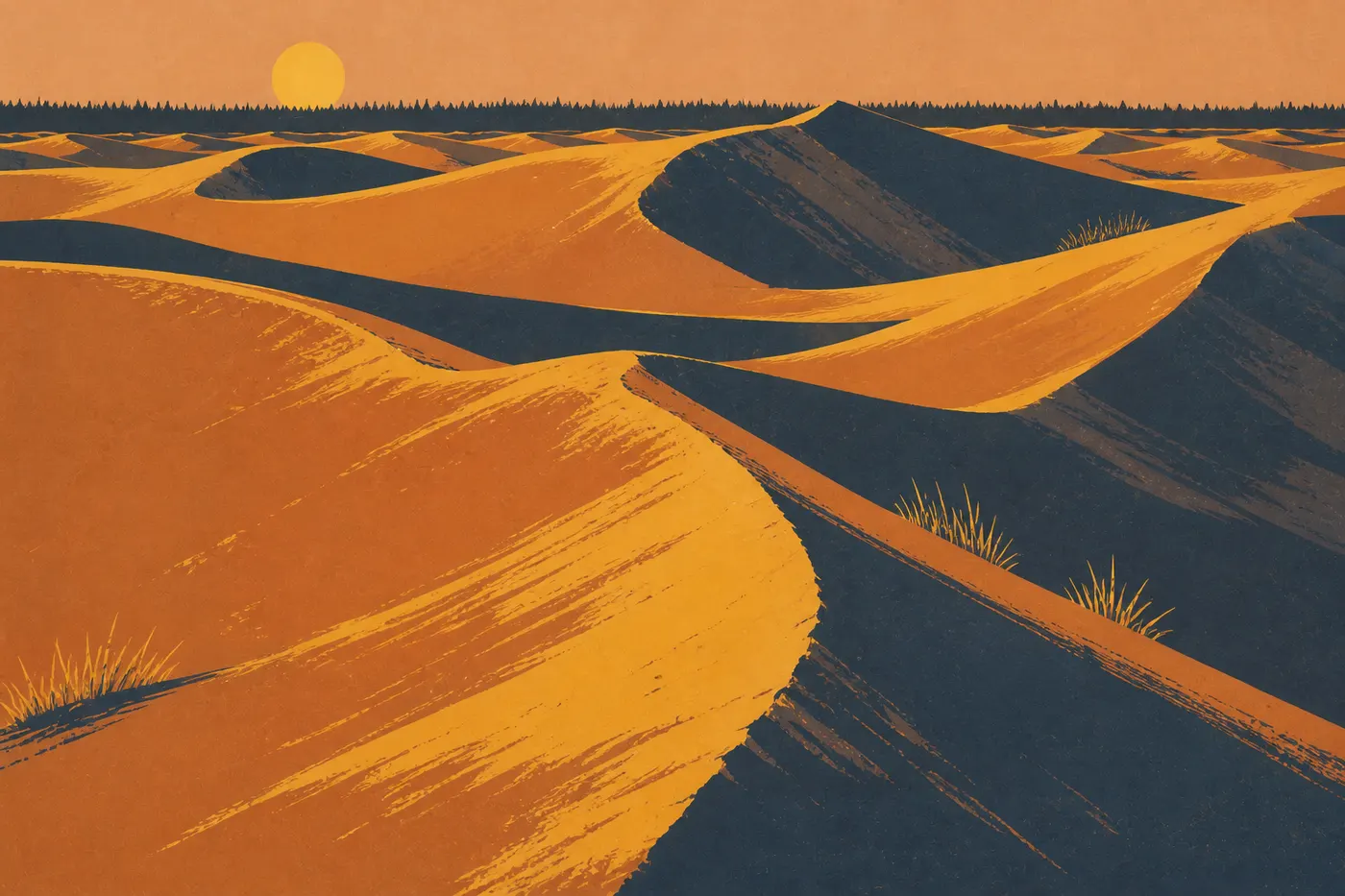
Yes, intensely cold in winter. Kobuk Valley ranks among the coldest areas in the United States from December through February, with nighttime lows regularly reaching -22 °F. On the other hand, the valley's bowl-shaped topography creates an unexpected summer heat effect: dune areas occasionally record surface temperatures above 86 °F in July.
But the real danger isn't the absolute temperature. The National Park Service (NPS) puts it plainly, and we couldn't agree more: wind combined with moisture can cause hypothermia, even in mild weather. At 41 °F with rain and wind, inadequate gear can put your life at risk. This park has no tolerance for poor preparation.
What to Wear in Kobuk Valley by Season
In winter: three layers are mandatory, no exceptions. Start with a merino wool or synthetic base layer, add a thick insulating layer such as a down jacket or high-loft fleece, then top it with a waterproof, windproof shell. Wear warm mittens over thin liner gloves, plus a balaclava and goggles to protect against snow glare. Below -4 °F with wind, exposed extremities can develop frostbite in less than 30 minutes without adequate protection.
In spring and fall: the layering system still works, adjusted for the wider swings of shoulder season. Add waterproof gaiters for mud and wet snow. Bring a proper rain shell with a Gore-Tex or equivalent certified membrane, not just a lightweight trail windbreaker.
In summer: use full insect protection, including a head net, repellent with at least 30% DEET, and tightly woven covering clothes. Pack warm layers even in July. Nights drop below 50 °F, and late-afternoon showers are cold. Waterproof hiking shoes are essential for wading across streams.
In every season: leave cotton at home. In Alaska, people say cotton kills. Synthetics and wool dry quickly and retain their insulating properties even when wet.
Alerts and Conditions to Watch
Kobuk Valley has no roads, so there are no road closures. Air access, the only access available, depends entirely on the weather. Dense fog, sustained wind, or a low cloud ceiling can ground a charter flight for several days. Always build at least two extra days into your itinerary, both on the way in and on the way out.
In summer, rising water levels on the Kobuk River after heavy rain can make some wading crossings impassable without the right equipment. Check with your local outfitter before planning routes that involve crossings.
Check the National Weather Service forecast for the Lower Kobuk Valley area before every departure. Always leave a trusted contact your complete itinerary, the GPS coordinates of your planned camp, and your return date.
Frequently Asked Questions
What is the weather like in Kobuk Valley National Park?
Kobuk Valley has a continental subarctic climate, with very long, cold winters and nighttime temperatures below -13 °F from December through February, followed by short but genuinely warm summers with valley highs of 73 to 77 °F in July. Snow and freezing temperatures can occur any month of the year. Wind and moisture make conditions feel harsher than the raw temperatures suggest.
What is the coldest month in Alaska?
January is generally the coldest month in Alaska. In Kobuk Valley, January and February have the lowest temperatures, between -13 °F and -31 °F at night, with more extreme lows during continental air outbreaks. Conditions vary with elevation and exposure in the valley.
What is the temperature at Kavik, Alaska?
Temperatures at Kavik River Camp, on the north side of the Brooks Range farther east, are comparable to those in Kobuk Valley in winter, around -22 to -40 °F in January. Summers there are slightly cooler than in Kobuk because the Kobuk Valley is more sheltered from coastal Arctic winds. Both areas share the same basic climate: extreme winters and brief summers.
What is there to do in Kobuk, Alaska?
Visitors come to Kobuk Valley mainly for the Great Kobuk Sand Dunes, salmon and Arctic char fishing on the Kobuk River, and watching caribou migration in the fall. For a complete selection of possible activities, see the Kobuk Valley activities guide.