
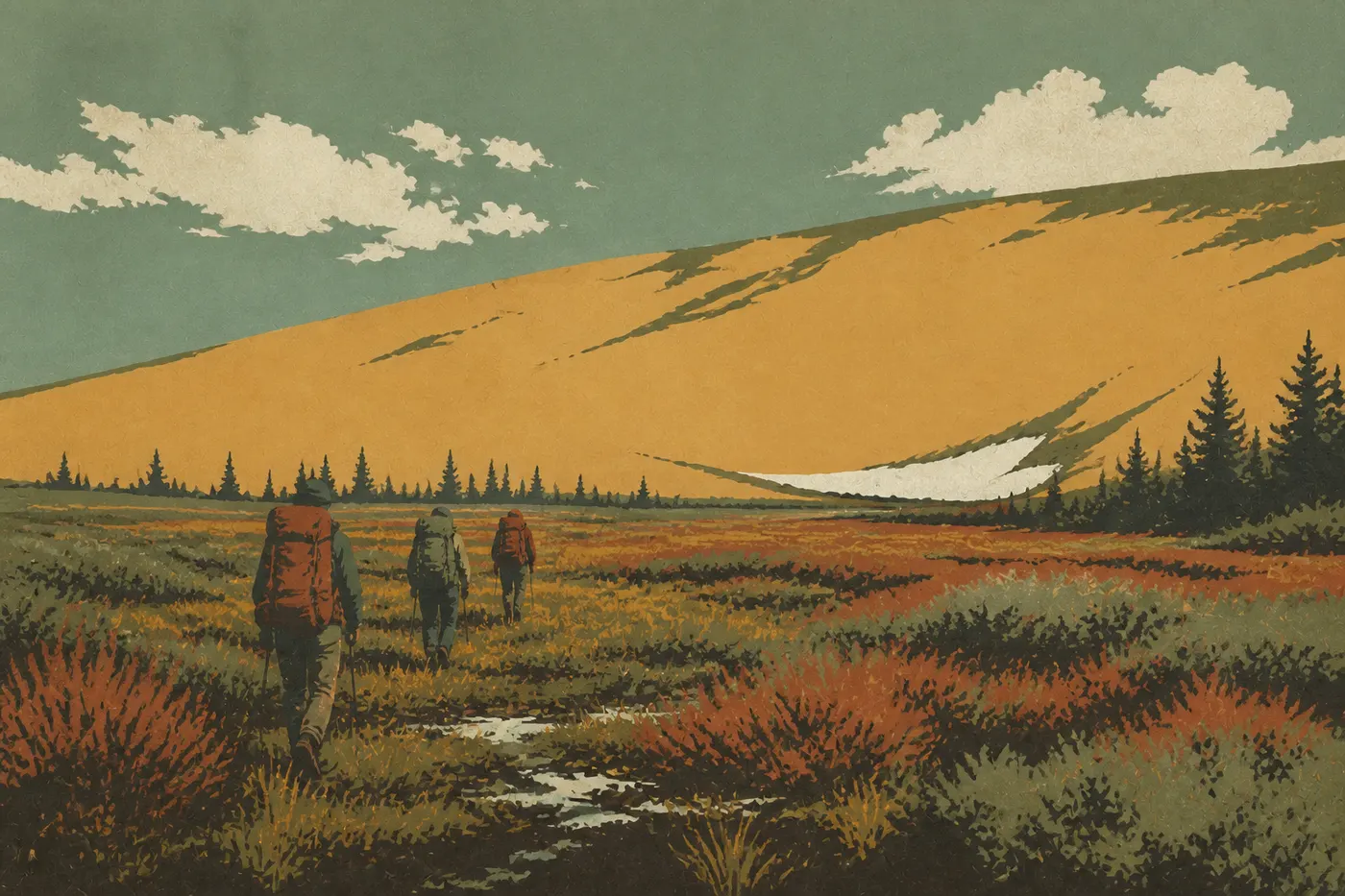
Hiking in Kobuk Valley: the Best Routes for Every Skill Level
Kobuk Valley has no marked trails. No signs, no developed trailheads, not a single trail marker in the field. You hike across open tundra with a compass or GPS, in a park where caribou outnumber visitors by several orders of magnitude. That is exactly why it deserves your attention.
The must-do hike: a day hike from a base camp on the Kobuk River to the Great Kobuk Sand Dunes and back. Plan on 6 to 9 miles round-trip, depending on where you're dropped off, across a mix of tundra and loose sand. There's no technical difficulty, but it is a real physical effort under surprisingly bright Arctic sun.
Two alternatives: walk along the river at Onion Portage, a remarkably flat route and one of Alaska's most important archaeological sites, or explore the foothills of the Baird Mountains on your own if you're an experienced hiker looking for wide-open views.
Preparing for Your Kobuk Valley Hike
A Park Without Infrastructure: What That Actually Means
There are no roads into Kobuk Valley. You can only get there by air taxi from Kotzebue or Bettles, which is served from Fairbanks. Once you're there, you're completely self-sufficient: no ranger patrols on a regular basis, no developed water sources, and no shelter.
Before you leave, contact the Northwest Arctic Heritage Center in Kotzebue. It's the park's only visitor center, and staff can brief you on current trail conditions and wildlife activity.
Permits: You don't need a permit to enter the park, and admission is free. You don't need a special permit for camping either. Alaska-specific regulations do apply to hunting and fishing, depending on your residency status.
Off-Trail Navigation and Essential Gear
Bring a fully charged GPS with topographic maps for the area. A compass and paper map are still essential backups. The tundra looks uniform and can disorient you quickly, especially in fog. Given the remoteness, a satellite locator beacon such as an EPIRB or PLB is strongly recommended for every outing.
You must treat water from rivers and streams before drinking it, using a pump filter or chemical purification tablets. In warm weather, when summer temperatures in the valley regularly climb above 77 to 86°F, dehydration sets in quickly on the dune sand.
Wildlife, Weather, and Safety
Grizzlies live in the park. Keep your bear spray readily accessible, hike in groups, and announce your presence out loud in dense vegetation. To clear up a common misconception, no polar bears live in Kobuk Valley. Their habitat is sea ice and the Arctic coast, far from here. Moose and wolves round out the list of species you should respect from a distance.
The park's most underestimated danger isn't wildlife. It's hypothermia. Rain, wind, and below-freezing temperatures can show up any day of the year, including July. Always pack insulating layers and a waterproof jacket. Staying dry is your top priority.
Dogs: Dogs are allowed in the park. Leashes aren't legally required, but keeping your dog leashed at all times is common sense around grizzlies and moose. A loose dog can trigger a confrontation.
The Best Hikes, Area by Area
The Great Kobuk Sand Dunes
Off-trail round-trip · 6 to 9 miles · Little elevation gain · 4 to 7 hours · Difficulty: moderate
The Great Kobuk Sand Dunes are the most striking geological feature in the Arctic region of Alaska. These dunes, left behind by past ice ages, stretch across several square miles at a latitude where you wouldn't expect to find them. Some rise nearly 200 feet. In summer, temperatures on the sand can climb above 86°F, creating a Sahara-like feel in the middle of the subarctic tundra.
The hike starts at the Kobuk River, where your air taxi drops you off. Crossing the alluvial plain requires careful reading of the terrain, with wetlands to go around and brush to push through. Once you're on the sand, progress is slow, but the 360-degree views of the Brooks Range make every step worthwhile.
Starting point: Coordinate with your pilot, who will identify a sandbar suitable for landing based on the river level.
Tip: Leave early to avoid the heat on the sand and catch the low-angle light on the dunes. Bring at least 2 liters of water per person for the day.
Little Kobuk Sand Dunes and the Alluvial Plain
Open-ended exploration · 2.5 to 6 miles, depending on your plans · Virtually no elevation gain · 2 to 5 hours · Difficulty: easy to moderate
Less well known than their larger neighbors, the Little Kobuk Sand Dunes offer more accessible terrain. The alluvial plain between the two dune systems is a major migration corridor. In August and September, thousands of caribou from the Western Arctic herd pass through it. Watching that migration on foot, in silence, is one of the most intense experiences Alaska can offer.
Starting point: The same arrangement as for the Great Kobuk Sand Dunes, from the riverbank along the Kobuk River.
Onion Portage: An Archaeological Walk
Open-ended exploration · 2.5 to 5 miles · Negligible elevation gain · 2 to 4 hours · Difficulty: easy
Onion Portage is one of Alaska's most important archaeological sites. People have used it for more than 12,000 years as a passage and caribou-hunting site. Walking these banks means crossing dozens of generations in just a few miles. The terrain is flat, the tundra vegetation stays low, and the Kobuk River flows below.
The site is protected. Don't disturb anything on the ground or remove any artifacts.
The Foothills of the Baird Mountains for Experienced Hikers
Multi-day trek · Variable distance · Significant elevation gain · 1 to several days · Difficulty: difficult to extremely difficult
The Baird Mountains north of the valley offer ridge hikes with views across the Brooks Range and the entire valley. There are no trails, so you'll travel over scree, alpine tundra, and bare rock. You need to read the terrain constantly, and flawless navigation is essential.
This area is for experienced off-trail hikers equipped for camping in Arctic conditions and able to manage several days of complete self-sufficiency.
Access: Take an air taxi to a base camp in the valley or one of its tributaries, then hike up toward the high country.
Easy Hikes and Family-Friendly Options
Let's be direct: Kobuk Valley isn't a family destination in the usual sense. The lack of roads, air logistics, and 100 percent wild environment put it out of reach for young children.
That said, the alluvial plain and Little Kobuk Sand Dunes are still accessible to families with kids at least 10 years old who are comfortable camping and used to wild places. The terrain is flat, with no particular technical hazards. The dunes and wildlife provide the rest.
Family tip: Stick to a day hike from your base camp and don't try to cover long distances. Caribou and dunes are often within easy reach of your landing site.
For options better suited to families with young children, the Kobuk Valley Family Guide explains how to choose among Alaska's different parks.
Strenuous and Day Hikes
For hikers looking for physical effort and big views, two options stand out.
Dunes-to-foothills traverse, long day: From a well-positioned camp, reach the Great Kobuk Sand Dunes and continue toward the first ridges of the Baird Mountains. Plan on a full day, covering 9 to 12 miles depending on the terrain, with a sustained climb through the mountain section. Carry all the water you'll need for the day.
Multi-day trek in the Baird Mountains: This is for seasoned hikers who want to spend several nights at elevation. The route is fully customized based on your air entry point. The ridges offer unobstructed views for hundreds of miles. Wildlife, including grizzlies, wolves, and caribou, is active at these elevations.
Common requirements: solid off-trail navigation skills, complete emergency gear including a satellite beacon, knowledge of bear procedures, and the ability to handle changing weather without outside support.
Access, Trailheads, and Logistics
Kobuk Valley has no trailheads in the conventional sense. Your starting point is wherever your air taxi lands: a sandbar on the Kobuk River or a flat stretch of tundra identified with your pilot before takeoff.
From Kotzebue: Air taxi companies provide service to the park. The Northwest Arctic Heritage Center in Kotzebue can connect you with local operators and brief you on current conditions before your flight.
From Bettles: Bettles, accessible from Fairbanks, is the gateway to the eastern areas of the park.
No parking: The concept doesn't apply here. If you have a vehicle, it stays in Kotzebue or Bettles.
The round-trip air taxi flight is the main expense of the trip. Book well in advance, especially for July and August. For companies, typical prices, and flight options from Anchorage, see the Kobuk Valley Access Guide.
When to Hike in Kobuk Valley
The workable season runs from early June through late September. Outside that window, snow, ice, and Arctic darkness make hiking extremely demanding.
July and August are still the most accessible months, with long days and midnight sun, mild temperatures in the valley, and dry tundra. They're also the busiest time for wildlife activity and visits to the dunes.
Late August and September bring exceptional photographic light and the first colors of the Arctic fall. The caribou migration is in full swing. Nighttime temperatures drop sharply.
Weather remains unpredictable year-round. Snow, rain, and freezing temperatures can arrive any day. Check the Kobuk Valley weather forecast before finalizing your dates, and leave a spare day for flight delays. The Kobuk Valley Seasons Guide covers conditions month by month.
Which Hike Is Right for You?
You're looking for the park's iconic image: Choose the Great Kobuk Sand Dunes. Set aside a full day, leave early, and bring at least 2 liters of water per person.
You're passionate about wildlife and migration: Choose the alluvial plain and Little Kobuk Sand Dunes, preferably in August or September when the caribou pass through.
You love archaeology and human history: Choose Onion Portage, with flat terrain and a historical richness unmatched anywhere else in Alaska.
You're an experienced hiker seeking complete isolation: Choose the Baird Mountains, with a full camping setup and a satellite beacon.
You're traveling with kids who have backcountry experience: Stick to the alluvial plain near your base camp and don't try to cover much ground. Let the wildlife and scenery do the work.
To plan your trip as a whole, the Kobuk Valley Guide covers lodging, access, and activities beyond hiking.
Frequently Asked Questions
Can you drive to Kobuk Valley?
No. You can't reach Kobuk Valley by car. It's one of the few U.S. national parks with no roads at all. The only way in is by air taxi from Kotzebue or Bettles, which are themselves served by commercial flights from Anchorage or Fairbanks.
Are there polar bears in Kobuk Valley?
No, there are no polar bears in Kobuk Valley. Polar bears live on sea ice and along the Arctic coast, hundreds of miles from this inland park. The bears found in Kobuk Valley are grizzlies, or brown bears. Bring your bear spray and follow the appropriate safety protocols.
Is hiking in Kobuk Valley difficult?
The dune and alluvial-plain areas aren't technically difficult. The challenge comes from the complete lack of marked trails, total isolation, the need for self-sufficient navigation, and unpredictable weather. Hiking in the Baird Mountains is physically and technically demanding.
Do you need a permit to hike in Kobuk Valley?
No. You don't need a permit to enter the park, take a day hike, or camp. Admission is free. Specific regulations apply to hunting and fishing depending on whether you're an Alaska resident or nonresident.
Are there easy or family-friendly hikes?
The alluvial plain and Little Kobuk Sand Dunes offer flat terrain accessible to families with children age 10 and up who are comfortable camping. The remoteness and air logistics are significant barriers for families with very young children.
Can you hike with your dog in Kobuk Valley?
Yes, dogs are allowed in the park. Leashes aren't legally required, but keeping your dog leashed at all times is strongly recommended around grizzlies and moose. A loose dog can trigger a confrontation with wildlife.
Are there loop trails in Kobuk Valley?
There are no marked loops in the park. You can plan your own loop routes by reading the map, based on your landing site and your off-trail navigation skills.
What's the best time to hike in Kobuk Valley?
July and August offer the best overall conditions, with mild temperatures, long days, and accessible tundra. Late August through September suits wildlife and photography enthusiasts, with the caribou migration underway. The Kobuk Valley Seasons Guide covers conditions month by month.