
Joshua Tree Wildlife: Animals to See and Where to Find Them
Joshua Tree sits at the crossroads of the Mojave Desert and the Colorado Desert, giving it remarkable biodiversity for a desert: more than 350 animal species have been recorded, including about 40 reptiles and 250 bird species. The five signature animals to look for as soon as you arrive are the desert tortoise, coyote, rattlesnake, Gambel's quail, and chuckwalla. If you're outside at dawn or late afternoon, you'll usually spot two or three without much effort.
Joshua Tree's Signature Animals
The Desert Tortoise
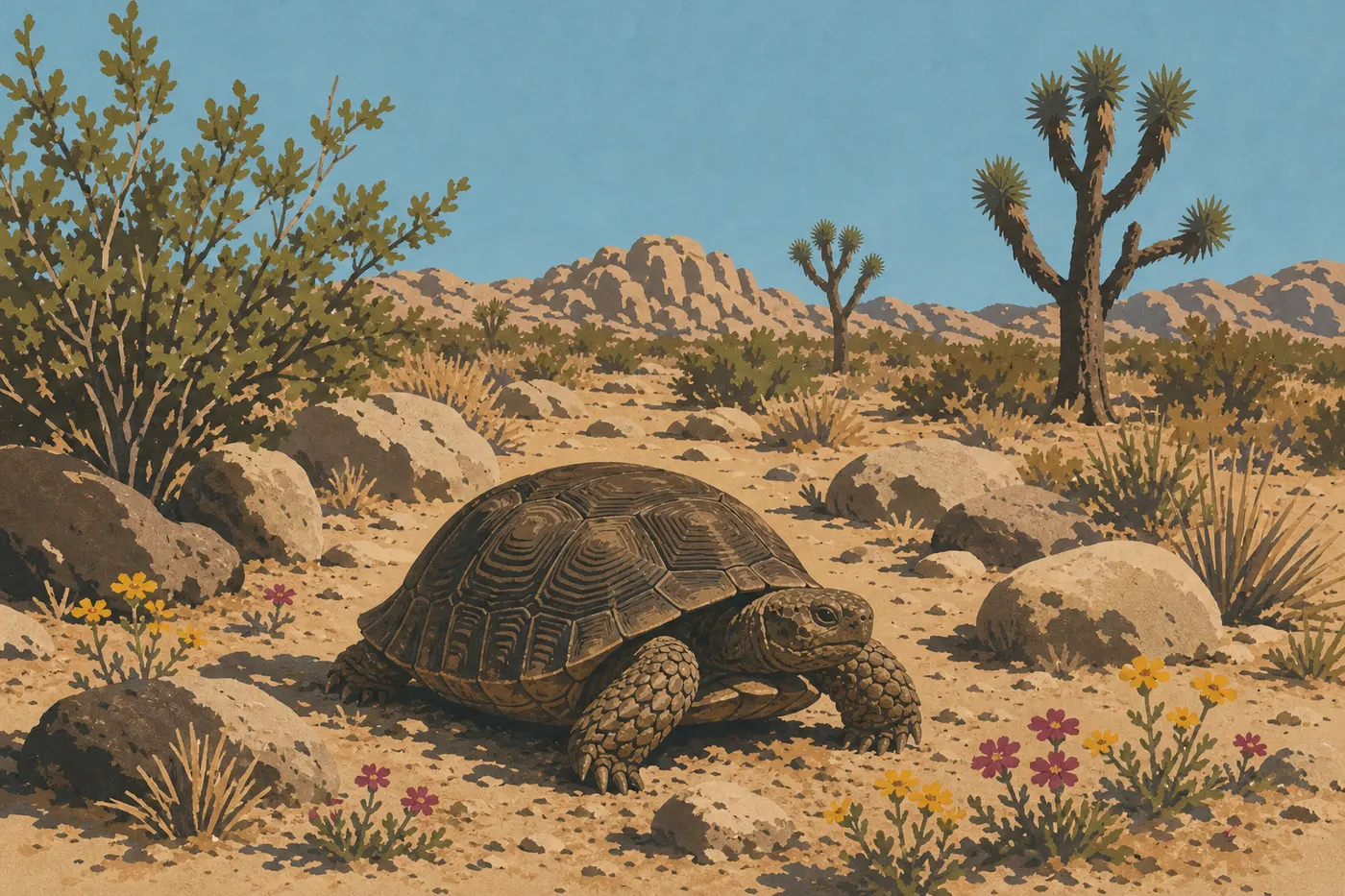
The desert tortoise (Gopherus agassizii) is the park's most protected species and its unofficial symbol. Its domed brownish-gray shell and short, sturdy legs, built for digging, make it instantly recognizable. It spends up to 95% of its life in burrows, protected from extreme surface temperatures.
Its active periods coincide with the mild seasons: March through May and September through October. You'll mainly find it in the morning on dirt roads and along the edges of low vegetation in the Colorado Desert south of the park. If you see one crossing the road, wait for it to get across. Picking it up causes severe physiological stress. It immediately empties its bladder and can die of dehydration in this arid environment.
The Coyote
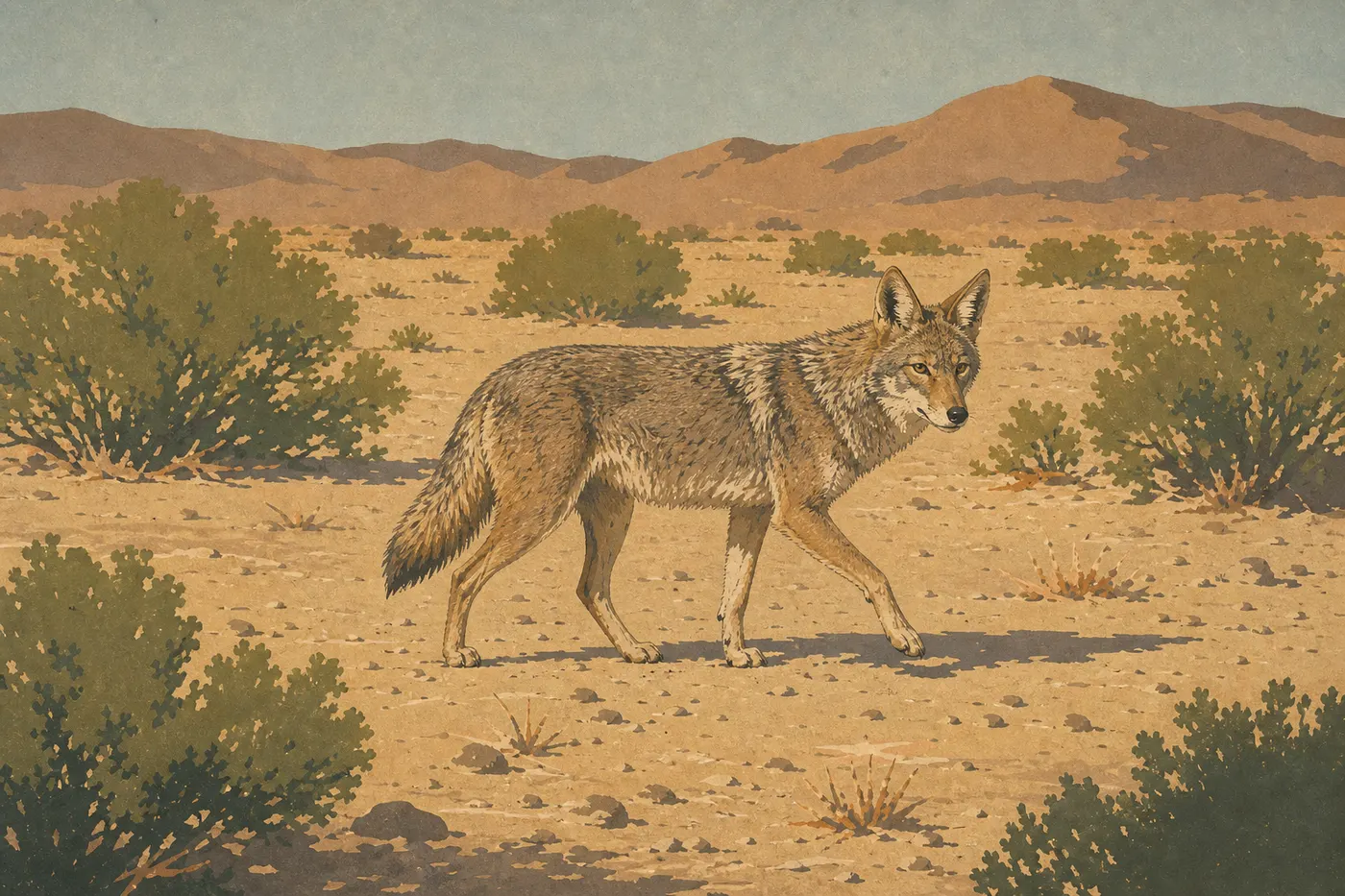
The coyote (Canis latrans) is Joshua Tree's most common animal. It looks like a skinny German shepherd, but its sharply pointed ears, narrow muzzle, and low-hanging tail make it unmistakable. It hunts alone or in pairs, targeting lizards, rodents, rabbits, and carrion.
You can see it at any hour, but most sightings happen around dawn and dusk. The area along Park Boulevard between the West Entrance and Skull Rock is a reliable spot. Here's a practical warning: don't offer it food, not even the last few crackers in your bag. A coyote that gets used to human food quickly becomes a problem and eventually gets euthanized.
Rattlesnakes: How to Tell Them Apart
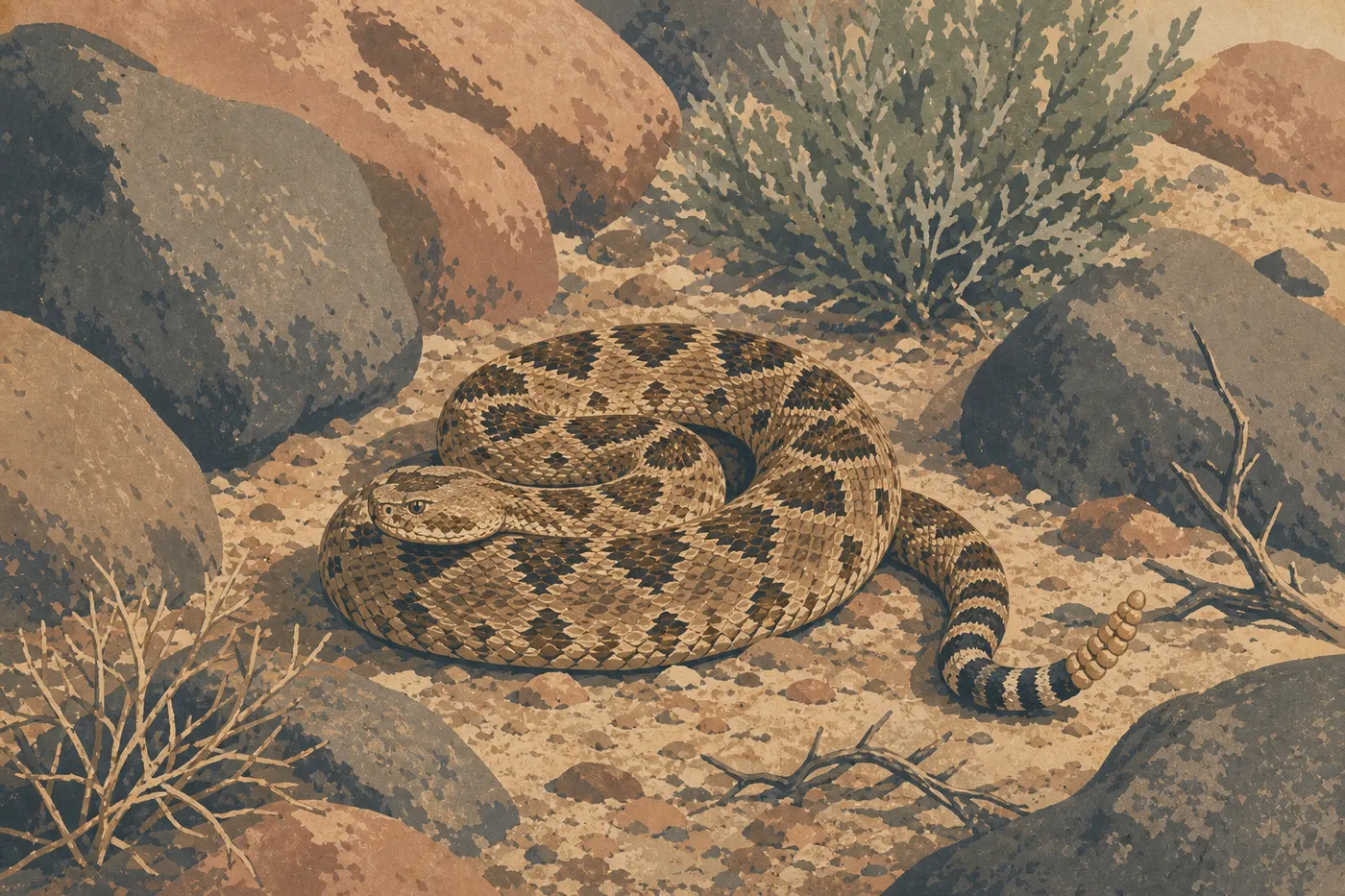
Two rattlesnake species share the park. Knowing the difference helps you avoid unnecessary panic and assess the actual level of risk.
The Western rattlesnake (Crotalus oreganus helleri) is the more widespread of the two. Its back has clearly defined dark-brown blotches on a light beige background, and its triangular head is noticeably wider than its neck. You'll find it throughout the park, from sandy plains to rocky high-elevation areas.
The Mojave green (Crotalus scutulatus) is rarer, but its primarily neurotoxic venom makes it more serious. It is olive green or grayish, with less contrasting markings. It mainly inhabits the low plains of the Colorado Desert in the south.
Both species are active during the day in spring and fall, then become nocturnal in summer when temperatures rise above 100°F. The rule is simple: use a headlamp for any outing after sunset, wear high-top shoes on rocky trails, and never put your hand into a crevice without looking first.
Gambel's Quail
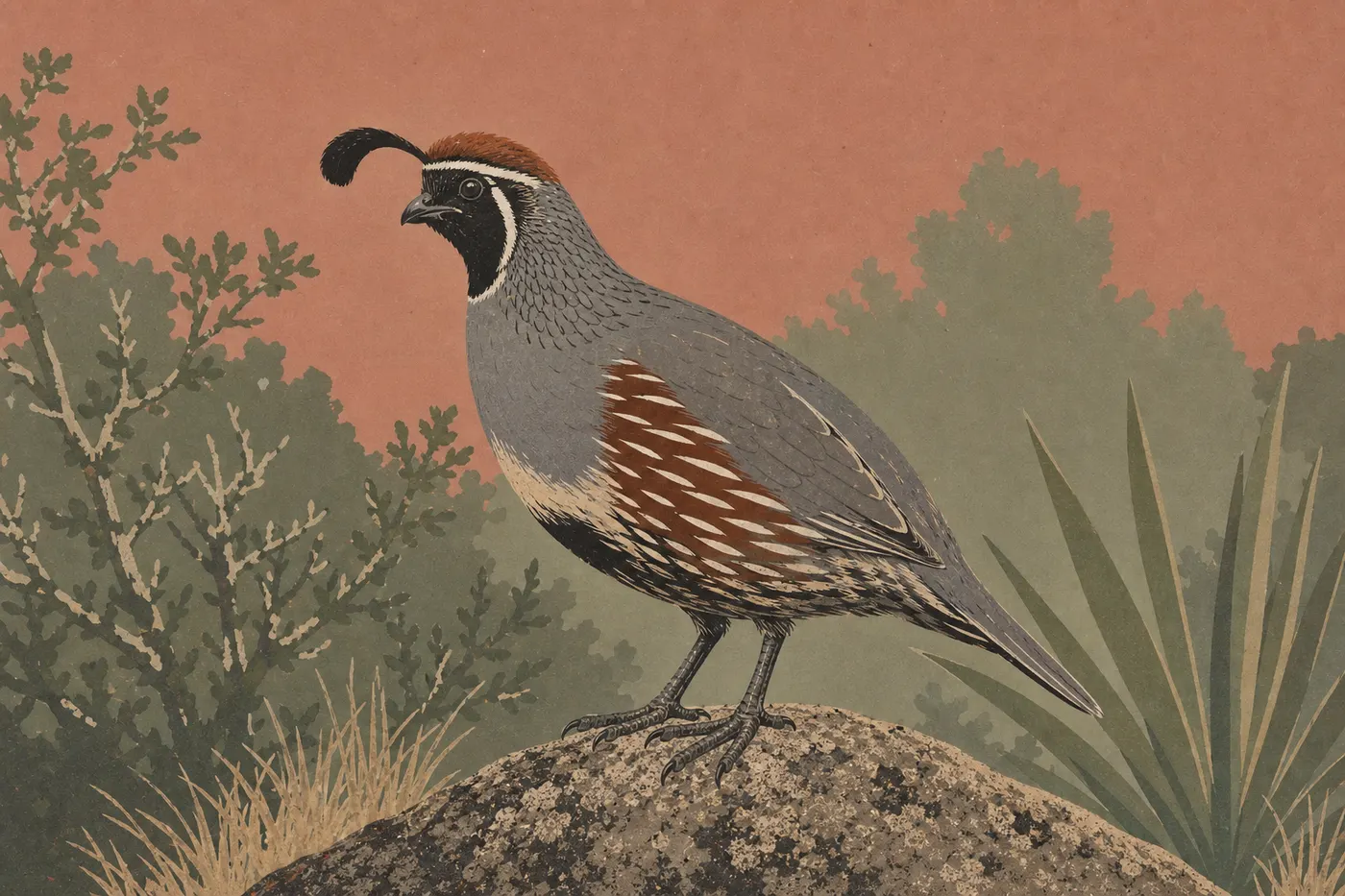
Gambel's quail (Callipepla gambelii) is the park's most striking bird. The male has a small, curved black plume on its forehead, a rusty cap, and finely barred sides. You'll almost always see them in family groups, running single-file on the ground or perched in a row on low branches.
This is an early-rising bird, active with the first light and in the shade before 9 a.m. The oases around Hidden Valley and the area near Barker Dam are the most reliable spots. For a good view, arrive before 7 a.m.
The Chuckwalla and Desert Lizards
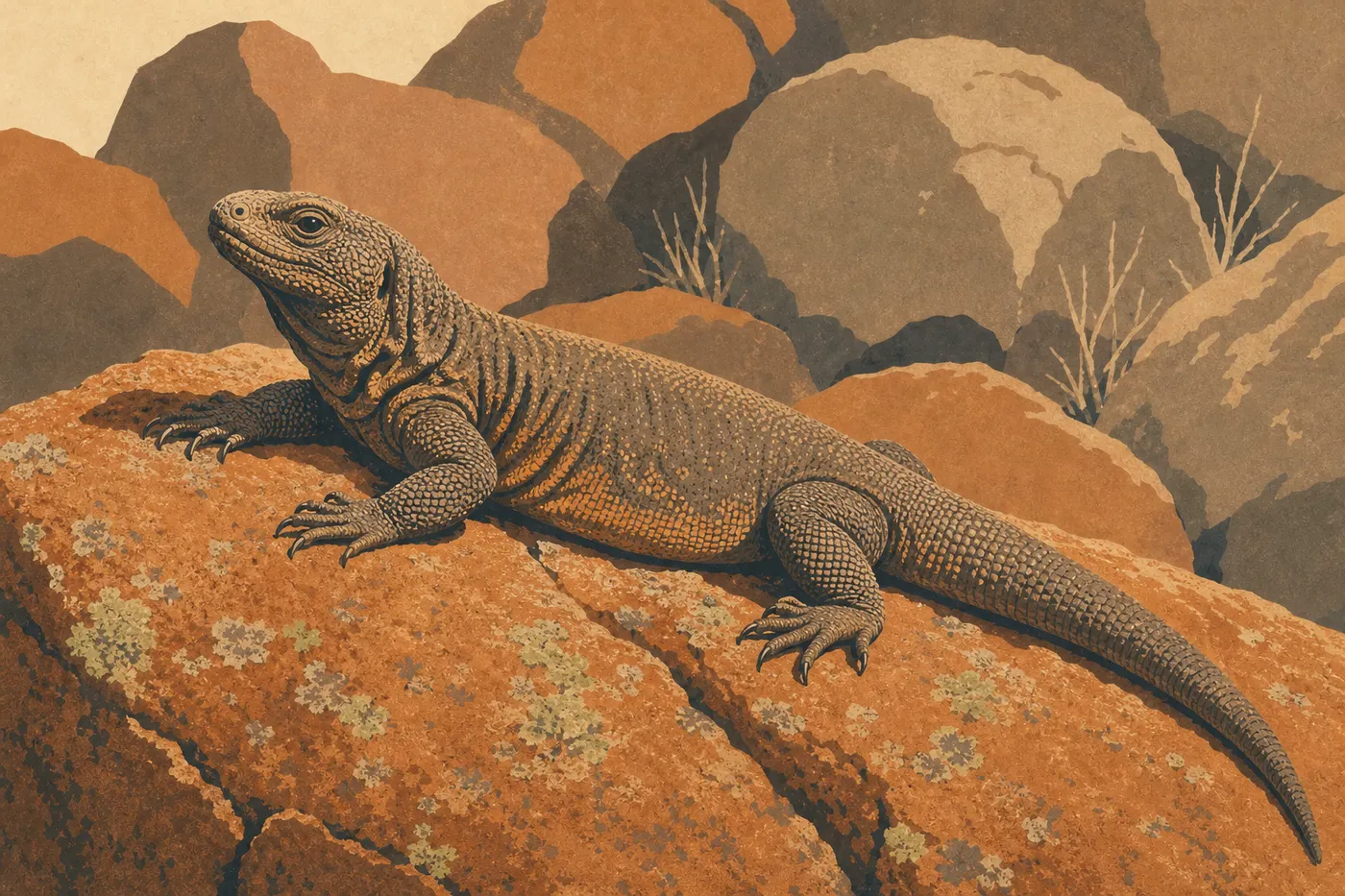
The chuckwalla (Sauromalus ater) is the park's largest lizard, growing up to 18 inches long. Its stocky body, brownish-gray skin, and wrinkled belly give it a prehistoric look. A strict herbivore, it spends its mornings stretched out on rocks, soaking up heat to get its digestion going. When threatened, it slips into a rock crevice and inflates itself with air so it stays firmly wedged inside. No predator can pull it out.
The park is also home to the desert night lizard (Xantusia vigilis), which is much harder to spot. Nocturnal, it hides beneath dead bark and in dry leaves at the base of Joshua trees. If you turn over a piece of bark to look for one, put it back exactly as you found it.
The Mojave Blonde Tarantula
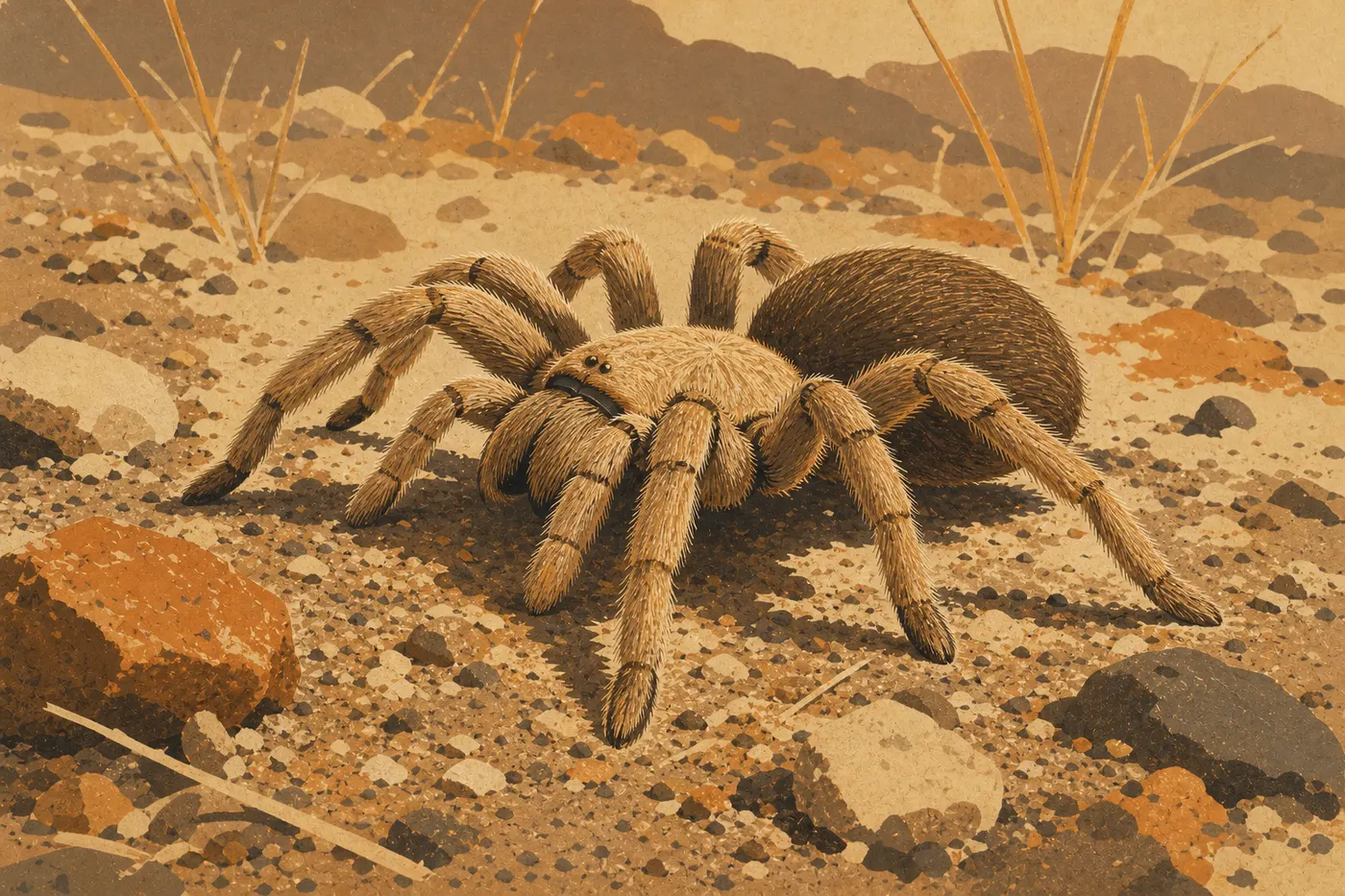
The Mojave blonde tarantula (Aphonopelma iodius) is large, hairy, and completely harmless to a healthy adult. Its bite causes, at worst, localized swelling comparable to a bee sting. It's most active in fall, when males start moving around to find a mate. That's when you'll see them crossing roads and trails, sometimes in large numbers.
When we visited in early October, we counted several in a single evening on the Skull Rock Trail, trotting along without paying any attention to us. Avoid sudden movements. They can kick irritating hairs if they feel threatened.
The Red-Tailed Hawk
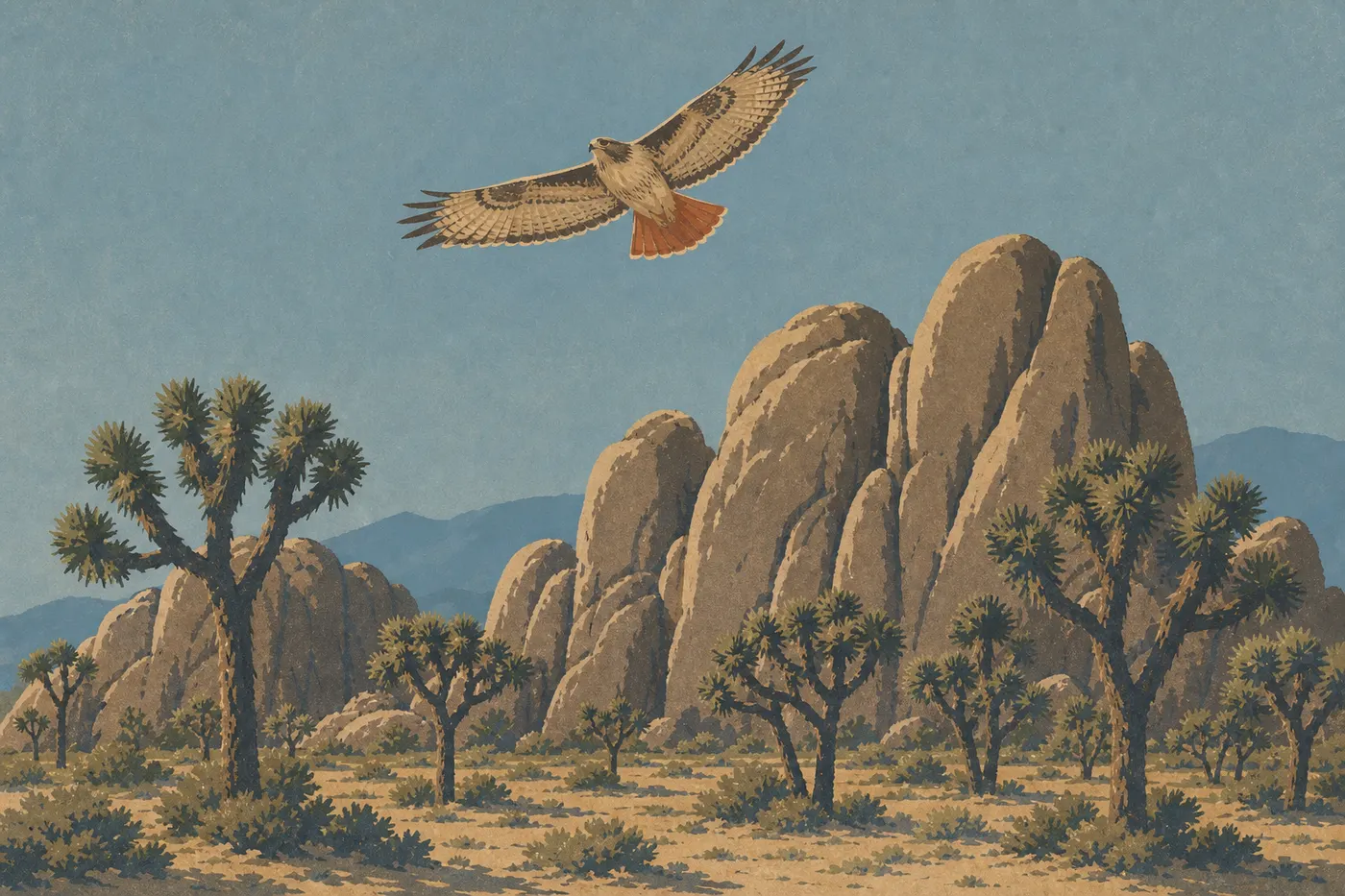
The red-tailed hawk (Buteo jamaicensis) is the park's most common daytime raptor. In flight, you can recognize an adult by its bright rusty-red tail, visible from far away against the blue sky. Its broad wings let it soar for long periods on thermals while searching for rodents and lizards.
It often perches on utility poles and high rocks. The access roads from Interstate 10 are good places to watch from your car, especially early in the morning.
Where to See Wildlife in Joshua Tree
The park is divided into two major ecological zones, and the wildlife follows that division.
The Mojave Desert (the northern part of the park, between 3,900 and 5,900 feet in elevation) is home to the Joshua trees and orange granite formations. Most of the signature species live here: chuckwallas on the formations at Jumbo Rocks Campground and Cap Rock, Gambel's quail at Hidden Valley, and coyotes along Park Boulevard. The Skull Rock area is ideal for reptiles in the morning.
The Colorado Desert (south and east, below 3,000 feet) is flatter and hotter, dominated by cholla and ocotillo. The desert tortoise is more common here. The Lost Palms Oasis Trail (8.7 miles round-trip) leads to a palm grove that attracts migrating birds, including species that are rare in the region.
Barker Dam is the park's most accessible water source. At sunrise, it becomes a natural gathering place for all kinds of birds, coyotes, and sometimes bighorn sheep coming down to drink. Arrive before 7 a.m. for the best sightings. Our hiking guide has detailed routes to these areas.
When to Watch Wildlife in Joshua Tree
Spring (March through May) is the ideal window. With temperatures ranging from 50°F at night to 84°F during the day, most species are active in daylight, including desert tortoises, rattlesnakes, and Gambel's quail. Visitor numbers peak during wildflower season, from late March through April.
Fall (September through November) is the other prime season: cooler temperatures, tarantulas emerging from their burrows, and bird migration. It's an excellent choice for a first visit.
Summer temperatures regularly climb above 100°F. Almost all wildlife switches to a nocturnal schedule after 9 p.m. Rattlesnakes, scorpions, kangaroo rats (Dipodomys spp.), and kit foxes come out after sunset. A nighttime outing with a headlamp is worth it.
Dawn and dusk remain the key times for mammals in every season. Our Joshua Tree seasonal guide breaks down conditions month by month and the advantages of each period.
Predators and Large Animals in Joshua Tree
The bighorn sheep (Ovis canadensis) is the park's largest mammal. Males have heavy, spiral horns and can weigh nearly 220 pounds. They favor ridgelines and steep rocky slopes where predators can't follow. Barker Dam and the Eagle Mountains are the best areas to look, so bring binoculars.
The mountain lion (cougar, Puma concolor) lives in the park, but sightings are extremely rare. Nocturnal and solitary, it hunts bighorn sheep and passing deer. If you encounter one, don't run. That can trigger its predatory instinct. Stay upright, make yourself look large, and speak in a firm voice.
There are no bears in Joshua Tree, neither black bears nor grizzlies. The desert environment doesn't provide the resources they need to survive. Visitors coming from Yosemite or Sequoia can leave their bear-safety habits behind. Bear lockers aren't required here.
Watching Wildlife Safely
Keep your distance. Stay at least 100 feet from birds and small mammals, and 165 feet from large mammals. For reptiles, keep at least 6 feet between you and the animal, and never try to handle it.
Never feed wildlife. No exceptions. That includes ground squirrels, ravens, and coyotes. An animal that associates people with food becomes aggressive and eventually has to be euthanized. The NPS can fine anyone who violates this rule.
Snake safety. Wear high-top shoes on all rocky trails. Look before stepping onto a flat rock or near a boulder. If you're bitten, stay calm, immobilize the affected limb, move away from the reptile, and call 911. Don't suck the wound or apply a tourniquet.
In summer. Animals shelter between 10 a.m. and 5 p.m. If you see a lethargic or disoriented animal in direct sunlight, don't approach it. Report it to the nearest ranger station. Our complete Joshua Tree guide brings together all the practical information you need to plan your visit with confidence.
In Brief: Species You Shouldn't Miss and Where to Find Them
| Species | Area | Best time |
|---|---|---|
| Desert tortoise | Colorado Desert (south) | Spring, morning |
| Coyote | Throughout the park | Dawn and dusk |
| Rattlesnakes | Rocky areas and southern plains | Spring/fall (day); summer (night) |
| Gambel's quail | Hidden Valley, Barker Dam | From dawn |
| Chuckwalla | Jumbo Rocks, Cap Rock | 9–11 a.m. |
| Mojave blonde tarantula | Throughout the park | September–October, night |
| Bighorn sheep | Ridgelines, Barker Dam | Early morning |
| Red-tailed hawk | Access roads, ridgelines | Morning, on thermals |
Frequently Asked Questions
What animals live in Joshua Tree?
More than 350 animal species have been recorded in Joshua Tree, including the desert tortoise, coyote, two rattlesnake species, Gambel's quail, chuckwalla, Mojave blonde tarantula, red-tailed hawk, and bighorn sheep.
What animals come out at night in Joshua Tree?
Joshua Tree's nocturnal animals include rattlesnakes, which are especially active at night in summer, scorpions, kangaroo rats, kit foxes, and, very occasionally, mountain lions. A headlamp is essential for any outing after sunset.
Are there bears in Joshua Tree?
There are no bears in Joshua Tree, neither black bears nor grizzlies. The desert environment doesn't provide the food resources they need, and no bears have been recorded in the park.
What is the most common animal in Joshua Tree?
The coyote is Joshua Tree's most common and easiest-to-spot animal. You can see it at any time of day, but especially around dawn and dusk along the park's roads and dirt tracks.
What is the largest animal in Joshua Tree?
The bighorn sheep (Ovis canadensis) is the park's largest mammal. Males can weigh up to 220 pounds. Look for them in steep, rocky areas, especially around Barker Dam and in the Eagle Mountains.
What are the predators in Joshua Tree?
The park's main predators are mountain lions, coyotes, the two rattlesnake species that prey on small animals, and several raptors, including red-tailed hawks, peregrine falcons, and great horned owls.