
What to Do in Joshua Tree: Must-See Spots and Activities
In a nutshell: Joshua Tree is where two deserts meet in a landscape unlike any other: monzogranite boulders stacked as if by a giant hand, Joshua trees twisted toward the sky, and nighttime clarity that turns every campsite into a planetarium. The three must-sees to prioritize are Hidden Valley for the essence of the park, Keys View for its panorama over the Coachella Valley, and Cholla Cactus Garden for the boundary between the two deserts. Add a night of camping under the stars if you can. Few American parks are more rewarding after dark.
Joshua Tree at a Glance: Areas, Access, and Getting Around
Joshua Tree National Park sits where two California deserts meet. To the west lies the Mojave Desert, with higher elevations, milder temperatures, and dense Joshua tree forests. To the east is the Colorado Desert, lower and hotter, with sparse vegetation dominated by chollas and ocotillos. This duality gives the park its visual richness and explains why wildlife and plants change completely depending on where you are.
The park has three main entrances:
- West Entrance (via the town of Joshua Tree): the busiest entrance, with access to Hidden Valley, Cap Rock, and Skull Rock.
- North Entrance (via Twentynine Palms): the gateway to the visitor centers and Cholla Cactus Garden.
- South Entrance (Cottonwood, via I-10, Exit 168): access to the park's least-visited area, on the Colorado Desert side.
Most visitors drive through the park on Park Boulevard, the paved road connecting the West Entrance and North Entrance for about 31 miles. Allow two to four hours for the crossing with the usual stops. There is no public transportation inside the park, so you'll need a car. For access rules, detailed fees, and visitor center hours, see Joshua Tree access information.
How Much Time Do You Need to Visit Joshua Tree?
One day is enough to cover the highlights along Park Boulevard, as long as you leave early and keep moving. Two days give you time to add a moderate hike, a night of camping, and a stargazing session. Three days let you explore the less-visited areas: Indian Cove in the northwest, Black Rock Canyon, and Lost Palms Oasis in the south.
Our recommendation is at least two nights. The park is open 24 hours a day, 365 days a year, and the dawn and dusk light are unusually photogenic. The best times to visit are spring, for wildflowers, and fall, when daytime temperatures hover around 84°F. For month-by-month details, our Joshua Tree seasons guide provides a month-by-month overview. For a day-by-day plan, see our 1-, 2-, or 3-day itinerary.
Joshua Tree's Must-Sees, Area by Area
West Area: Hidden Valley and the Heart of the Park
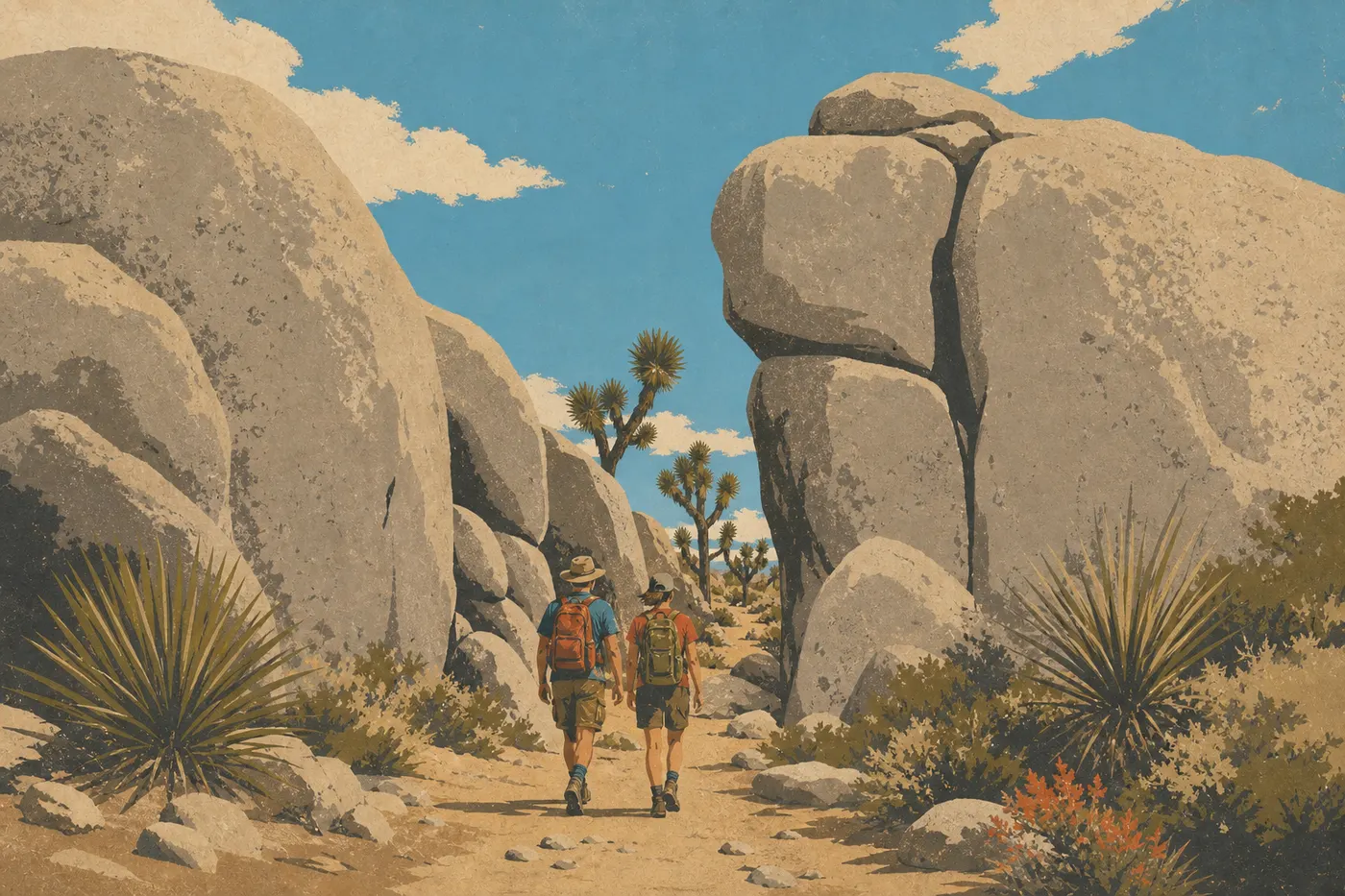
This is where almost every visit begins, and for good reason. The western area has the park's most iconic landscapes and its most accessible rock formations.
Hidden Valley (1-mile loop, 30 to 45 minutes) is an easy family hike. Local legend says cowboys once hid their cattle here, in this natural bowl enclosed by monzogranite boulders. Whether you believe it or not, the setting is striking: a basin surrounded by Joshua trees twisted by desert winds, where you feel cut off from the rest of the world within the first few steps.
Barker Dam (1.9-mile loop, about an hour) deserves a longer stop. The trail passes Native American petroglyphs before reaching a small reservoir built in the early 20th century for local ranchers. Water levels vary with the season. In winter and spring, ducks and other migratory birds stop here, a pleasant contrast to the surrounding aridity.
Cap Rock (0.8-mile loop, accessible to visitors with limited mobility) features a rock formation that looks, from certain angles, like a skull wearing a hat. It's ideal with kids or when you're short on time.
For climbing, this area is a world-class destination. With more than 8,000 documented routes across the park, Joshua Tree is one of the densest climbing destinations in the United States, from beginner-friendly bouldering to large granite walls for experienced climbers. Local guides based in Joshua Tree and Twentynine Palms offer guided introductions.
Keys View: Overlook of Two States
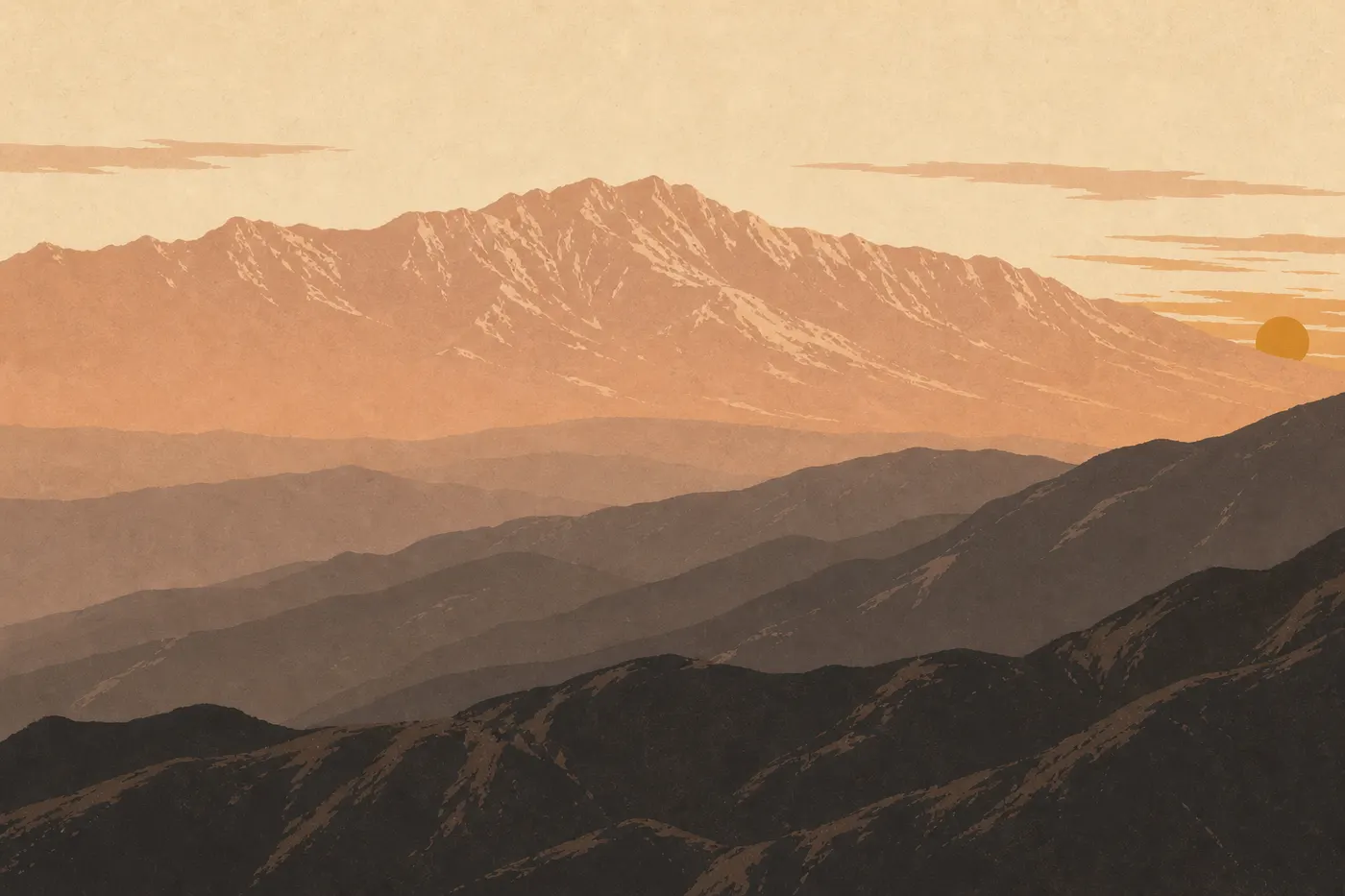
At 5,187 feet, Keys View is the park's most accessible viewpoint, with a parking area at the end of the road and a five-minute walk. On a clear day, the panorama takes in the Coachella Valley, snowcapped Mount San Jacinto in winter, and, with exceptional visibility, the glint of the Salton Sea to the southeast. You can also make out the San Andreas Fault, whose tectonic activity shaped these landscapes over millions of years.
Practical tip: come early in the morning, before heat haze blocks the views, or late in the afternoon for low-angle light across the ridges.
Central Area: Skull Rock, Jumbo Rocks, and Ryan Mountain
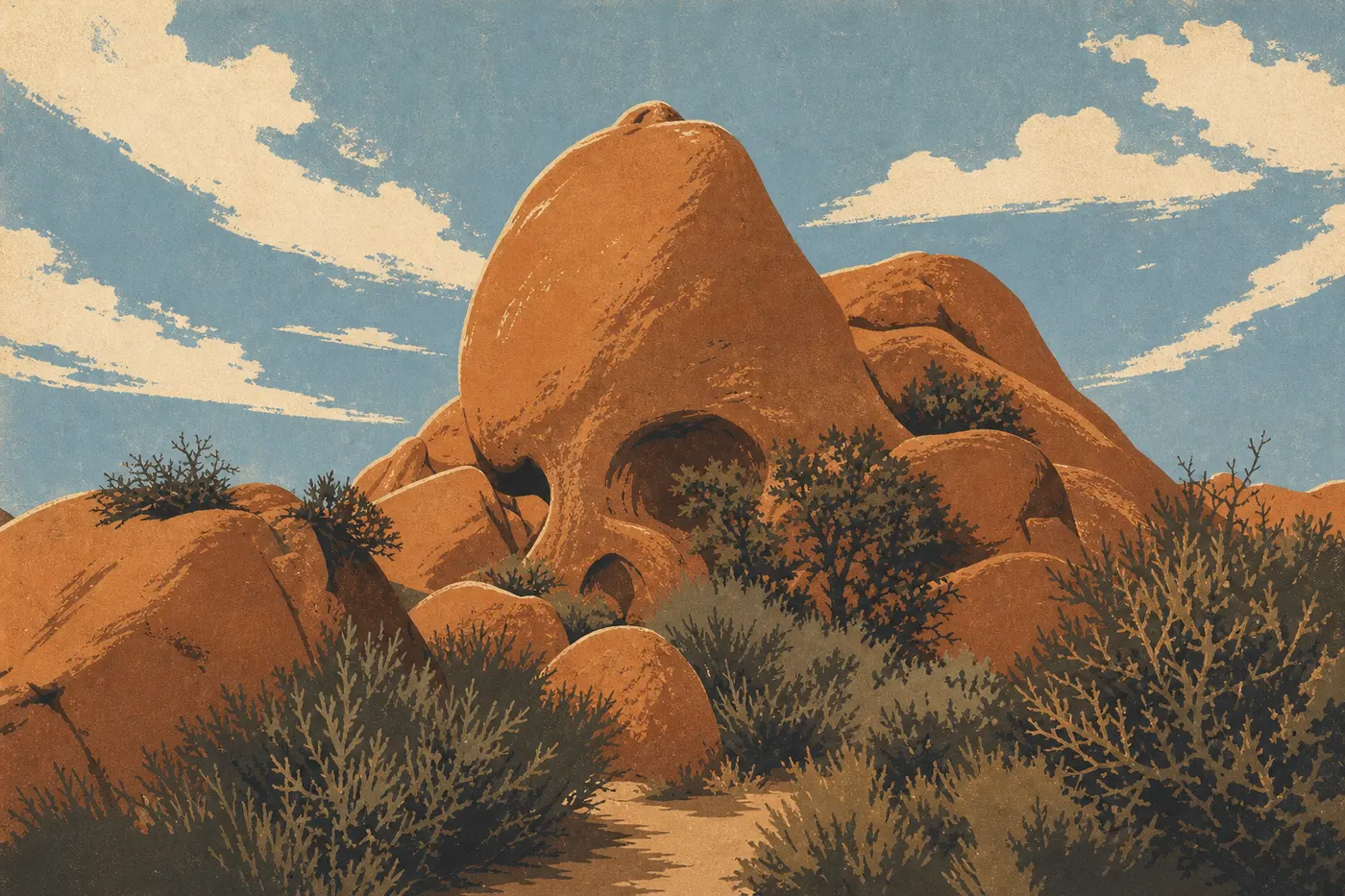
As you head east on Park Boulevard, the landscape grows rockier. Skull Rock is one of the park's most photographed formations: two natural cavities carved into the granite by erosion create the illusion of eye sockets. You can spot it directly from the road. The 1.7-mile nature trail from Jumbo Rocks Campground connects it with other equally spectacular formations.
Jumbo Rocks Campground is one of the park's most popular campgrounds, precisely because giant boulders fill the spaces between the sites. Even if you're not staying there, stop at sunset. The monzogranite boulders turn deep orange in the low-angle light.
Split Rock is worth a photo stop. Two giant boulders look as if they split cleanly apart, as though cut with a saw. It's also an excellent bouldering spot.
Ryan Mountain (2.7-mile loop, 1,083 feet of elevation gain) offers the most complete panorama of the park. From the summit, you get the best vantage point for taking in the park's geography all at once. Elevation gain, trail conditions, and practical tips are covered in our selection of Joshua Tree hikes.
Eastern Area: Cholla Cactus Garden and the Boundary Between Two Deserts
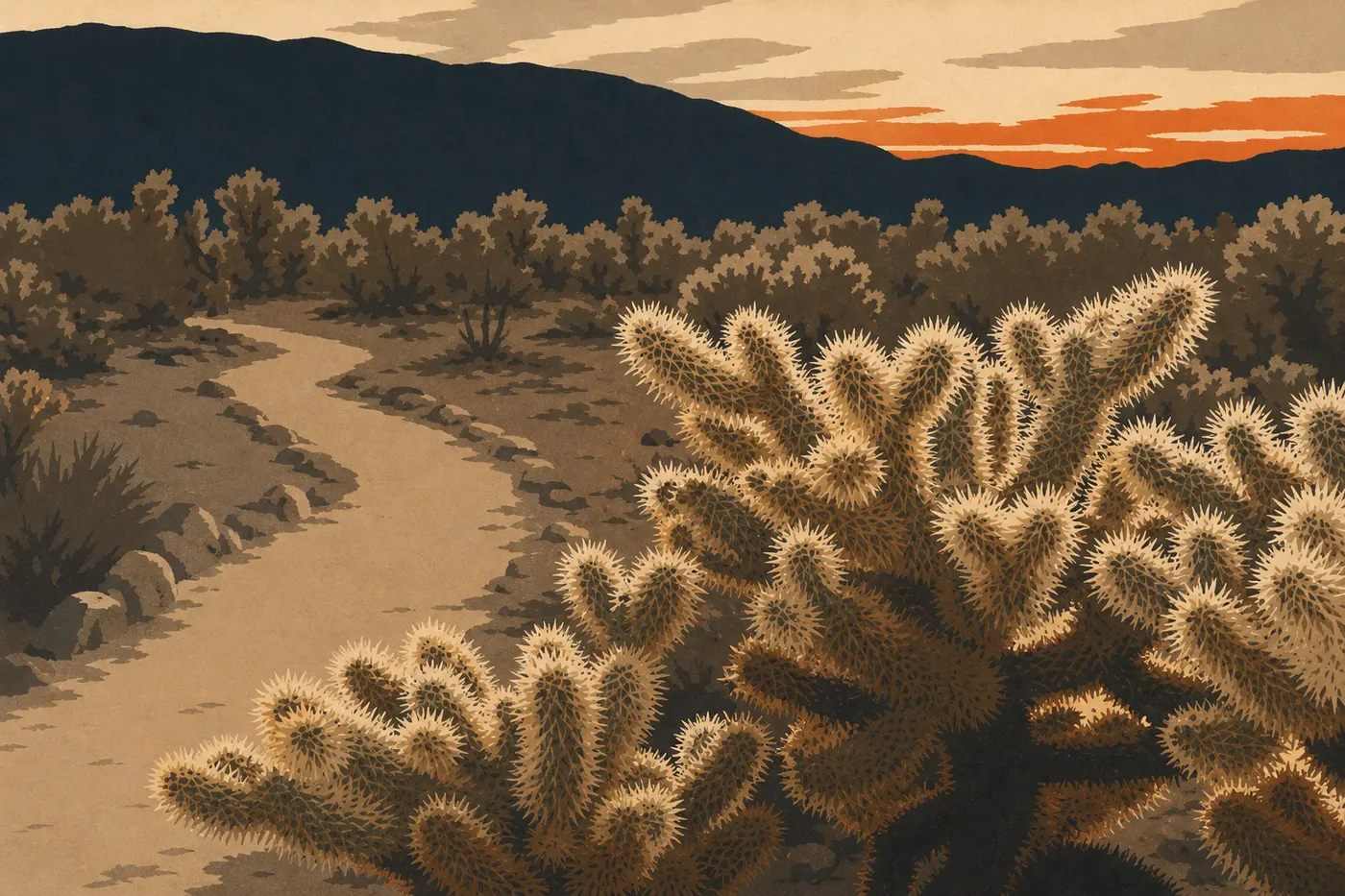
As the road descends eastward, Joshua trees become scarce and give way to ocotillos and chollas, pronounced “choy-ah.” Cholla Cactus Garden (0.25-mile loop, 15 minutes) is one of the park's most photographed stops. Face west with the sun behind you in the late afternoon. The chollas' translucent spines glow in backlight and create memorable images.
Serious warning: cholla spines detach and cling to clothing with astonishing ease. Stay strictly on the trail and don't touch anything with your hands. Dogs aren't allowed on this trail because their paws are especially vulnerable.
A little farther east, Ocotillo Patch features a forest of ocotillos, slender shrubs that bloom bright red in spring. The contrast with the rocky landscapes in the western part of the park is total. It's hard to believe you're still in the same park.
Southern Area (Cottonwood): Lost Palms Oasis and the Colorado Desert
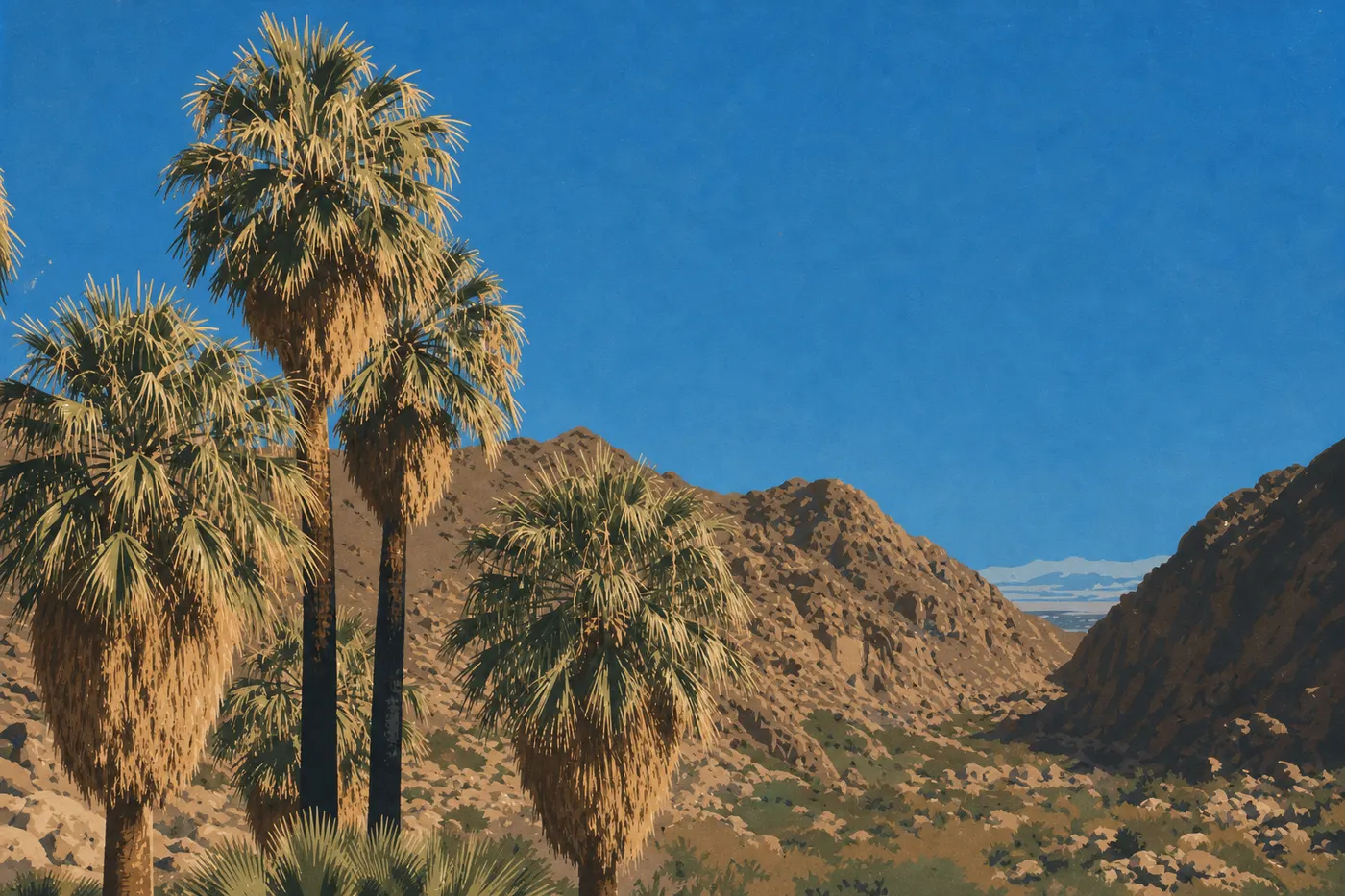
The Cottonwood entrance, accessible from I-10, leads to the park's least-visited and most climatically demanding area. Summer temperatures regularly exceed 104°F, so fall, winter, or early spring is the best time to visit.
Lost Palms Oasis (6.8 miles round-trip, 919 feet of elevation gain) is this area's signature hike. At the end of the trail lies the park's largest natural palm grove, tucked into a deep, unexpected canyon. You may spot bighorn sheep along the way. Carry at least 2.5 liters of water per person and start before 8 a.m. in any season.
Northwest Area: Indian Cove and Black Rock Canyon
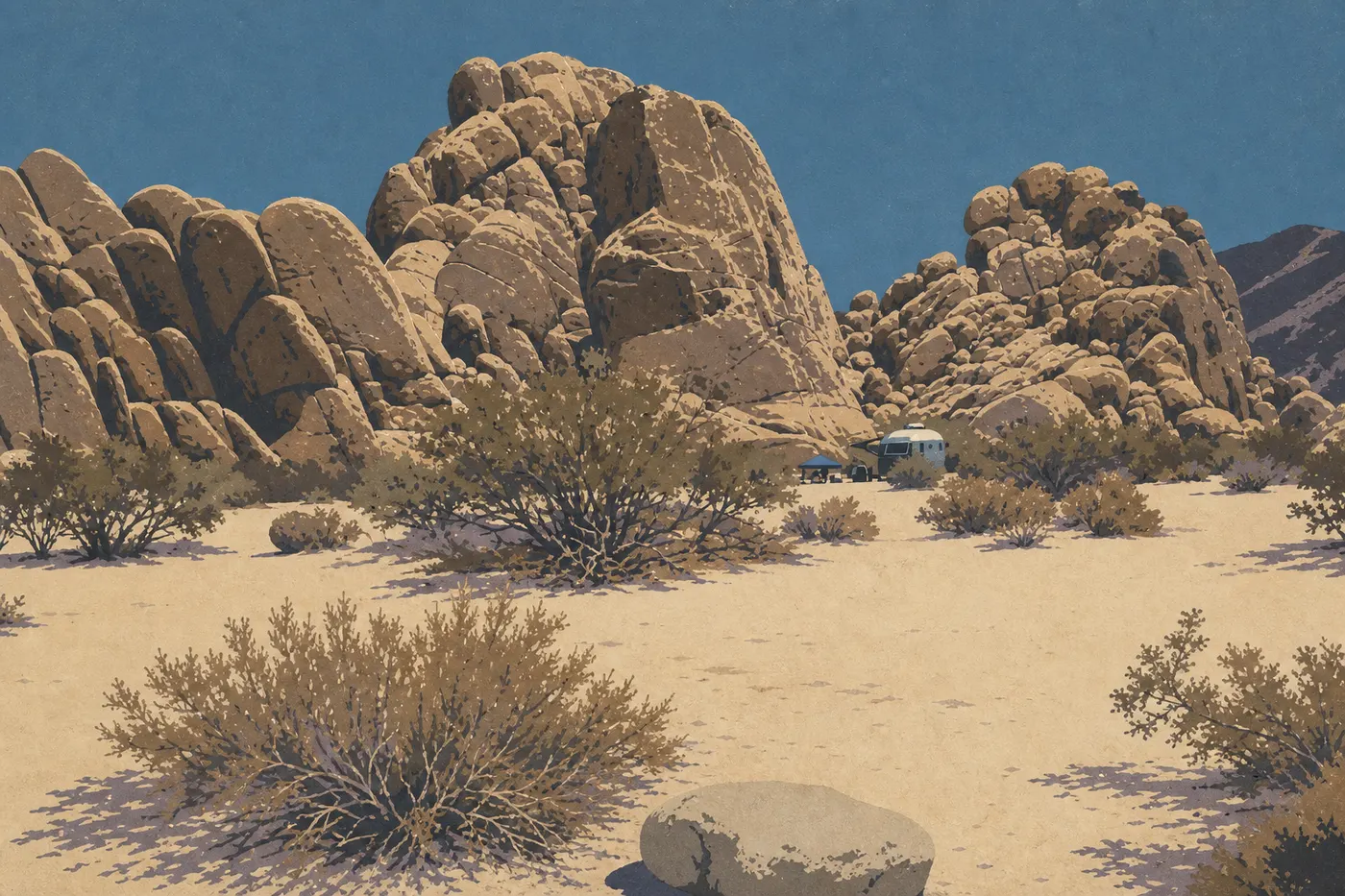
Indian Cove has its own entrance and a campground popular with climbers. The area contains hundreds of climbing routes in a more intimate setting than the western area, away from the crowds along Park Boulevard.
Black Rock Canyon (accessible from Yucca Valley) is the highest point in the park. Trails toward Warren Peak, about 5.6 miles round-trip, offer views of the San Bernardino and San Jacinto Mountains. Pinyon pines grow here but not in other parts of the park, a surprising change for anyone arriving from the desert.
The Best Hikes in Joshua Tree
Joshua Tree has more than 80 marked trails, from a 0.25-mile loop to a long-distance crossing. The names that appear on every list are Ryan Mountain, with views across the entire park; Lost Horse Mine, which combines 19th-century mining history with a 4-mile loop; Fortynine Palms Oasis, a wild palm grove on a 2.8-mile round-trip hike; and the California Riding and Hiking Trail for experienced hikers, 81 miles in all and usable in sections.
Our Hiking page covers every trail, including length, elevation gain, difficulty, and safety advice.
Other Activities for Every Kind of Traveler
Rock Climbing and Bouldering
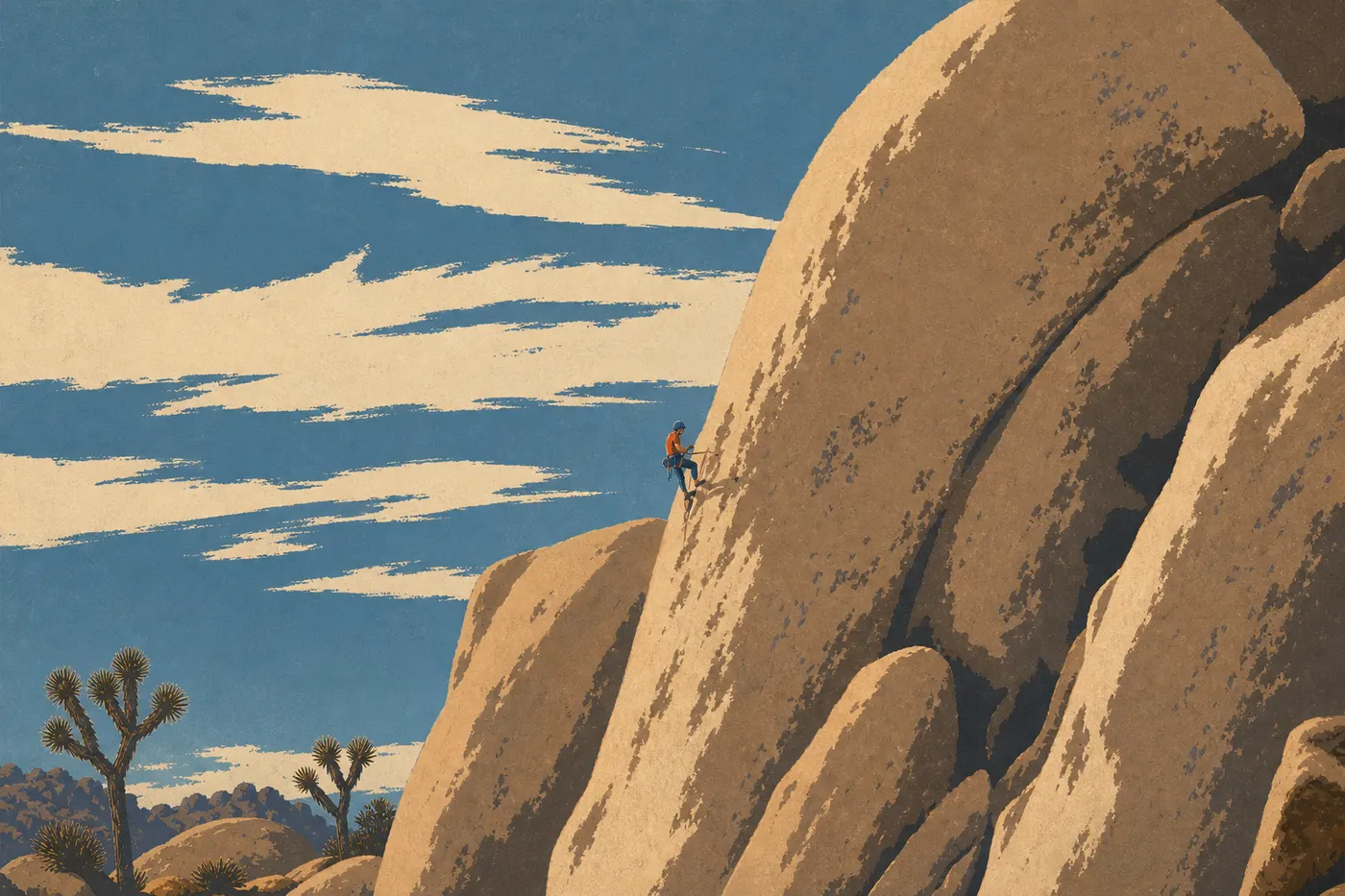
Joshua Tree is a world-famous climbing mecca. The optimal season runs from October through May. In summer, temperatures make the granite too hot to grip. If you're a beginner, a half-day with a local guide is the quickest and safest way to learn how the rock works. Book guides in advance during the busy seasons, March through April and November.
Stargazing
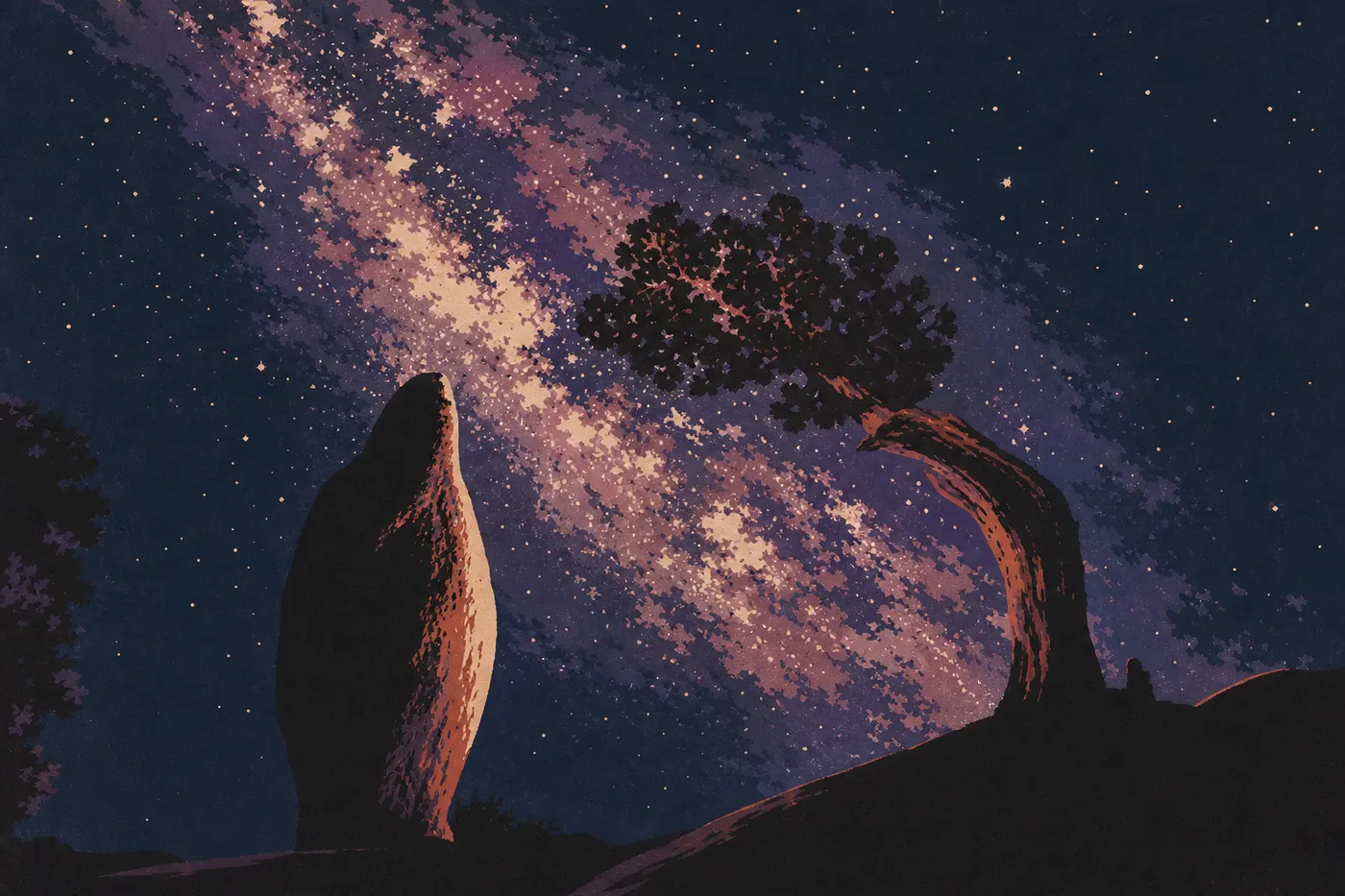
Joshua Tree is an International Dark Sky Park, certified by the International Dark-Sky Association. At more than 3,280 feet above sea level, far from the lights of Los Angeles and Palm Springs, the night sky is unusually clear for Southern California. You can see the Milky Way with the naked eye on moonless nights from April through September.
The Sky Tour offered by rangers in the evening is free and open to everyone. Availability varies by season, so check with the Twentynine Palms Visitor Center when you arrive.
Wildlife Watching
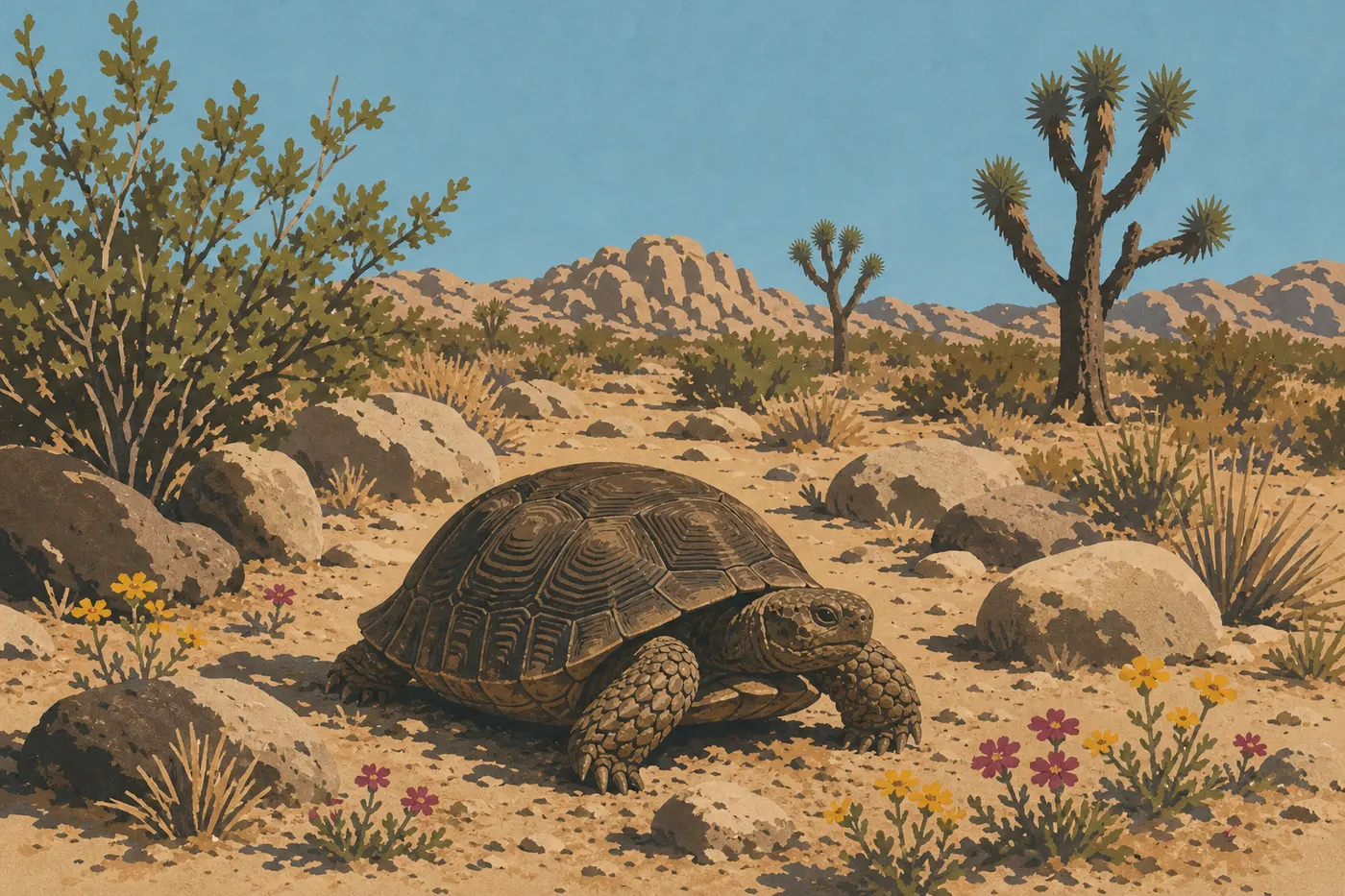
The park is home to fascinating desert wildlife, which is more active at dawn and dusk than in the middle of the day.
- Desert tortoise (Gopherus agassizii): this protected species emerges from its burrow in spring and fall. If you see one on a road, don't move it.
- Greater roadrunner: it really exists, and it really runs fast. You often see it near campgrounds and picnic areas.
- Coyote: active at dawn and dusk. Don't feed it, even indirectly by leaving food accessible at your campsite.
- Bighorn sheep: visible in the rocky areas around Cottonwood and Indian Cove, especially early in the morning.
For where and when to spot desert tortoises, bighorn sheep, and roadrunners, the Joshua Tree wildlife guide provides seasonal pointers.
Landscape and Astrophotography
The park offers compelling images at every hour of the day. In the morning, golden light falls across the boulders at Jumbo Rocks. During the day, hard contrast is ideal for close-ups of cactus flowers, lizards, and granite textures. In the evening, photograph sunset from Keys View or backlight the Cholla Cactus Garden. At night, capture star trails with Joshua trees in silhouette.
For astrophotography, plan around the new moon and check the weather forecast. Cloudy fall nights, influenced by the North American monsoon, can be disappointing.
Biking and Bike Touring
Bicycles are allowed on all paved roads in the park but prohibited on hiking trails. Park Boulevard is rideable, but vehicle traffic and the lack of a shoulder make it uncomfortable for families. Queen Valley Road, a marked dirt road about 6.2 miles long in the western area, is a quieter alternative suitable for most bikes. E-bikes follow the same rules as traditional bicycles.
Family Activities
Joshua Tree works well for families with children ages 5 or 6 and up. The Junior Ranger program, with a free booklet available at the Visitor Center, offers activities tailored to different ages. Kids complete the missions and then take an oath before a ranger. It's an American classic that works every time. Find practical advice for visiting Joshua Tree with kids.
Things to Do Around Joshua Tree
The park fits naturally into several California road trips.
Palm Springs (31 to 37 miles southwest via I-10): a resort town with midcentury modern architecture, plus an aerial tramway to the summit of Mount San Jacinto, 8,517 feet high. The contrast with the park's aridity is striking.
Pioneertown (about 12 miles northwest of the West Entrance): a Western town built in the 1940s as a movie set, now brought to life on weekends by country concerts at Pappy & Harriet's. It's a desert institution among California regulars.
The Salton Sea (east, about 50 miles from Cottonwood): an accidental inland sea created in 1905, now drying up and home to thousands of migratory birds. It's a post-apocalyptic landscape in its own right, for curious travelers.
For combinations of parks in Southern California and the American West, our Region and Road Trip sections offer ideas for pairing Joshua Tree with other destinations in the American West.
The Essentials: What to See First in Joshua Tree
If your time is limited, here's the minimum sequence to avoid leaving disappointed:
- Hidden Valley (morning): the essence of the park in a one-hour loop.
- Keys View (late morning): the easiest panorama to reach.
- Skull Rock and Jumbo Rocks (afternoon): boulders and late-day light.
- Cholla Cactus Garden (late afternoon): the backlight on the spines is worth the stop.
- One night of camping (strongly recommended): the stars alone make the trip worthwhile.
Joshua Tree is worth the trip without question, even for a single day. The park delivers striking scenery from the first few hours, without requiring great physical fitness or specialized gear. And if you want to go farther, climbing, astrophotography, and longer hikes open up another dimension.
Frequently Asked Questions
Is Joshua Tree worth visiting?
Joshua Tree is worth visiting if you're looking for an extraordinary desert landscape within reach of Los Angeles or Las Vegas. The combination of monumental monzogranite boulders, Joshua trees, and star-filled skies is unique among America's national parks.
What should you see in Joshua Tree?
The must-sees in Joshua Tree are Hidden Valley, Keys View, Cholla Cactus Garden, Skull Rock, and Jumbo Rocks Campground. This sequence covers the park's essentials in one day, from west to east.
What are the best things to do in Joshua Tree National Park?
The best activities in Joshua Tree are hiking, including Hidden Valley, Ryan Mountain, and Barker Dam; climbing, with more than 8,000 documented routes; stargazing in an International Dark Sky Park; and landscape photography at sunrise and sunset.
Is there an entrance fee for Joshua Tree National Park?
There is an entrance fee for Joshua Tree National Park: $30 per vehicle, $25 per motorcycle, and $15 per person entering on foot or by bicycle. An annual park pass is available for $55. The America the Beautiful pass, which costs $80 and is valid at federal recreation sites across the United States, is also accepted and is the best option if you're visiting several parks. For entrance fees and annual passes, see the National Parks Fees & Passes page.