
Where to Eat in Gates of the Arctic: Restaurants in and Around the Park
Gates of the Arctic is in a category of its own. No roads enter the park, no marked trails outline it, and no cafeteria is waiting with a tray. The short answer: inside the park, you carry everything you eat; on the eastern edge, Coldfoot Camp at Mile 175 on the Dalton Highway serves hot meals from June through September; and in Fairbanks, you'll stock up completely before flying into the middle of nowhere.
Eating in the Park: Self-Sufficiency Is the Only Rule
Gates of the Arctic has no lodge with a restaurant, no cafeteria, and no general store. That's not a temporary shortcoming. It's the very nature of this park: 11,600 square miles of Arctic wilderness with no visitor infrastructure.
You enter by air from Fairbanks, Bettles, or Coldfoot, or on foot from the Dalton Highway. From there, you're responsible for your own provisions. You need to take care of all your food logistics ahead of time in the gateway towns.
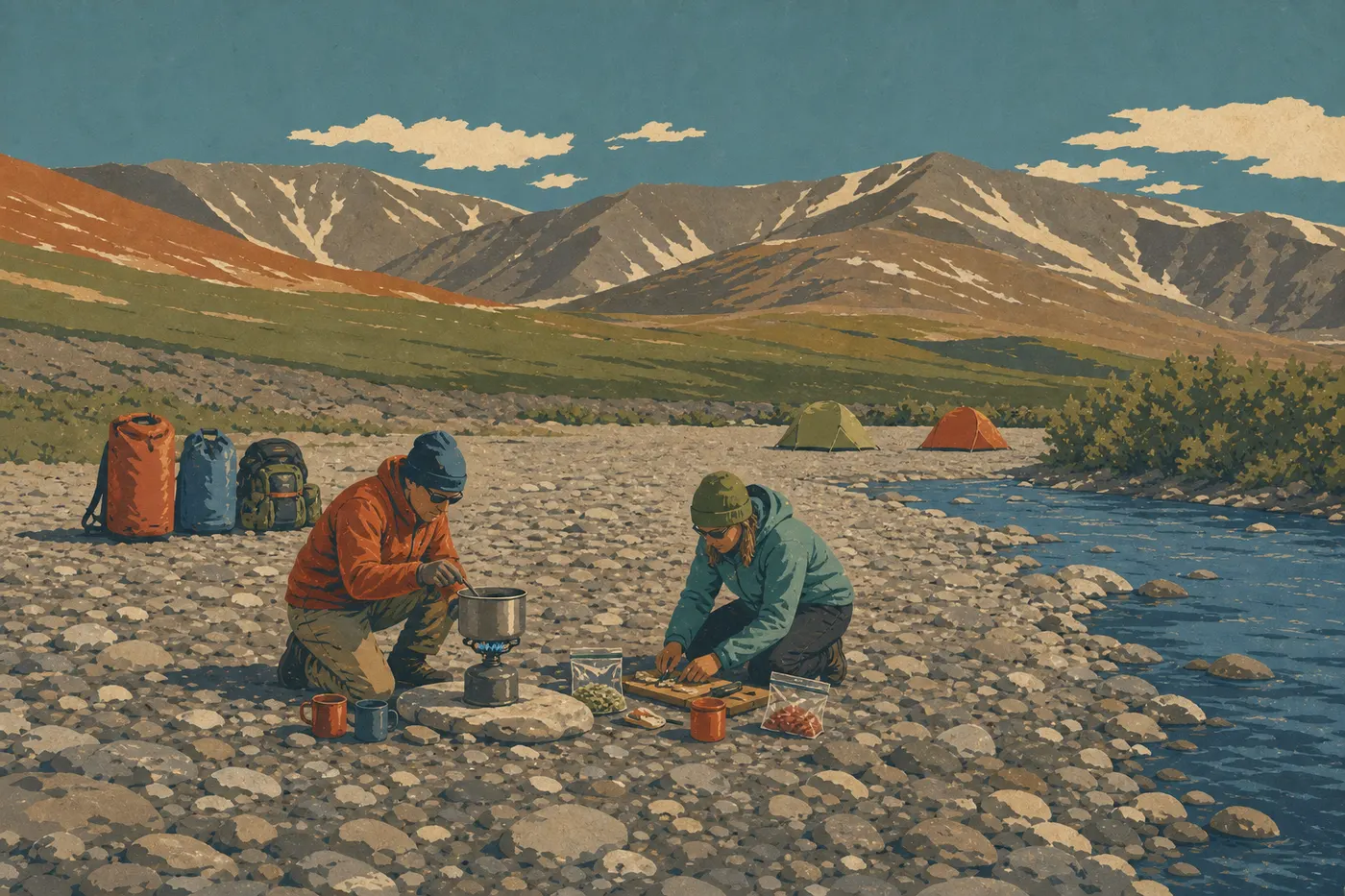
Groceries and Picnics in the Park: Pack Your Provisions
Since there are no places to resupply in the park, carrying your own food isn't one option among several. It's the only option.
What to bring:
- Freeze-dried meals that are light and quick to prepare with boiling water
- Energy bars, nuts, and dried fruit for snacks between carries
- Coffee, tea, and other hot drinks for July nights, when temperatures can dip into the upper 30s °F
- A compact camp stove and enough fuel canisters for the length of your trip
Required food storage: park regulations require a certified bear canister for all food. This isn't optional advice. The Gates of the Arctic practical guide lists approved models and campsite storage requirements.
Water: the park's rivers and streams are plentiful, but you must filter or chemically purify every source. No treated water is available on-site.
Where to stock up: Fairbanks is the best-equipped town, with large grocery stores and outdoor shops that sell freeze-dried food in bulk. Bettles has a small store with the bare essentials, at prices that reflect its isolation.
Where to Eat Nearby: The Gateway Towns
Coldfoot (Mile 175, Dalton Highway)
Coldfoot is the park's eastern gateway, accessible by car from Fairbanks, about 250 miles away. It's a roadside camp, and it also makes a dependable last stop for travelers heading out.
Coldfoot Camp has welcomed truckers and adventurers for decades. The camp restaurant, open seasonally from June through early September in most years, serves hearty food such as burgers, steaks, and soup of the day. The cooking is simple, the portions are generous, and after a few days in the tundra, we find the end-of-the-road atmosphere genuinely comforting. Wiseman, a few miles south, is an even smaller hamlet with no public dining.
Bettles
Bettles is accessible only by air. Bettles Lodge is the only place that serves meals to visitors, with home cooking, a limited menu, and a warm welcome. It's especially welcome when you land after a bush-plane flight into a headwind. The lodge also serves as a starting point for many expeditions into the park.
Book your room and meals ahead of time. Capacity is limited, and summer demand is real.
Fairbanks
Fairbanks is the trip's logistics hub. With more than 30,000 residents, it offers the widest selection before several days in the wilderness: restaurants serving every kind of cuisine, full-service grocery stores, and outdoor shops specializing in backpacking food.
This is where you methodically prepare your provisions and celebrate, after landing, the first hot meal you've been imagining during your last few days on the trail. The park guide lists the air carriers connecting Fairbanks, Bettles, and Coldfoot.
Our Picks for Every Situation
A quick meal before your flight: Coldfoot Camp, no question. Hot, filling, and complete with an end-of-the-world atmosphere.
Traveling with family: Fairbanks offers the most flexibility, with varied cuisines, longer hours, and supermarkets where you can fine-tune your provisions. Bettles Lodge can accommodate requests, but let them know ahead of time.
A meal with history: Bettles Lodge. The lodge has been around since the era of exploration in Alaska's Interior, and the walls have stories to tell.
An authentic atmosphere: Coldfoot Camp. The Arctic truck-stop setting isn't staged. It's the everyday reality of the northernmost road in the United States.
The Local Specialties to Try: Caribou and Arctic Grayling
People often ask, “What do Arctic residents eat?” The Athabascan and Inupiaq communities living along the park's boundaries have practiced subsistence hunting and fishing for centuries. Caribou is the region's signature meat, served as stew, steaks, or dried sausage. Arctic grayling is the prized fish in the park's waters, and its delicate flesh is well suited to pan-frying on a camp stove.
These specialties don't appear on a standardized restaurant menu. Depending on what's available, you may find them at Bettles Lodge or at some Fairbanks restaurants that showcase local Alaska products. Wild berries, including Arctic blueberries and lingonberries, round out the picture. At the height of the season in August, you can pick them straight from the tundra as you hike.
Practical Tips: Hours, Reservations, and Budget
Season: the park is open year-round, but most visits take place from June through early September. Outside that window, Coldfoot Camp closes and flights to Bettles become less reliable. The guide When to Visit Gates of the Arctic explains the ideal windows for different kinds of trips.
Food budget: plan on $15 to $30 per meal in Fairbanks and $20 to $35 in Coldfoot, where logistics add to the cost. Freeze-dried meals for a week in the park run $80 to $150 depending on the brand, so factor them into your overall budget. Getting to Gates of the Arctic breaks down the cost of regional flights.
Reservations: Bettles Lodge requires reservations, especially during the busy season, since the property is small. Coldfoot Camp doesn't take reservations for meals.
In Short: Where to Eat in Every Situation
| Trip stage | Recommended option |
|---|---|
| Preparing in Fairbanks | Large grocery stores, outdoor shops, and a wide range of restaurants |
| Passing through Coldfoot | Coldfoot Camp for hot meals from June through September |
| Departing from Bettles | Bettles Lodge for on-site meals; book ahead |
| Inside the park | Carried provisions, including freeze-dried meals and bars; there are no other options |
| Returning from the park | Coldfoot, Bettles, or Fairbanks, depending on your flight itinerary |
Frequently Asked Questions
What do Arctic residents eat?
People in the Alaskan Arctic traditionally eat caribou, freshwater fish such as grayling and Arctic char, game birds, and wild berries gathered in the fall. These subsistence resources remain central to the Athabascan and Inupiaq villages surrounding the park.
Can you buy food in Gates of the Arctic National Park?
No. There are no stores or general stores inside the park. You need to bring all your food from the gateway towns of Coldfoot, Bettles, or Fairbanks before entering.