
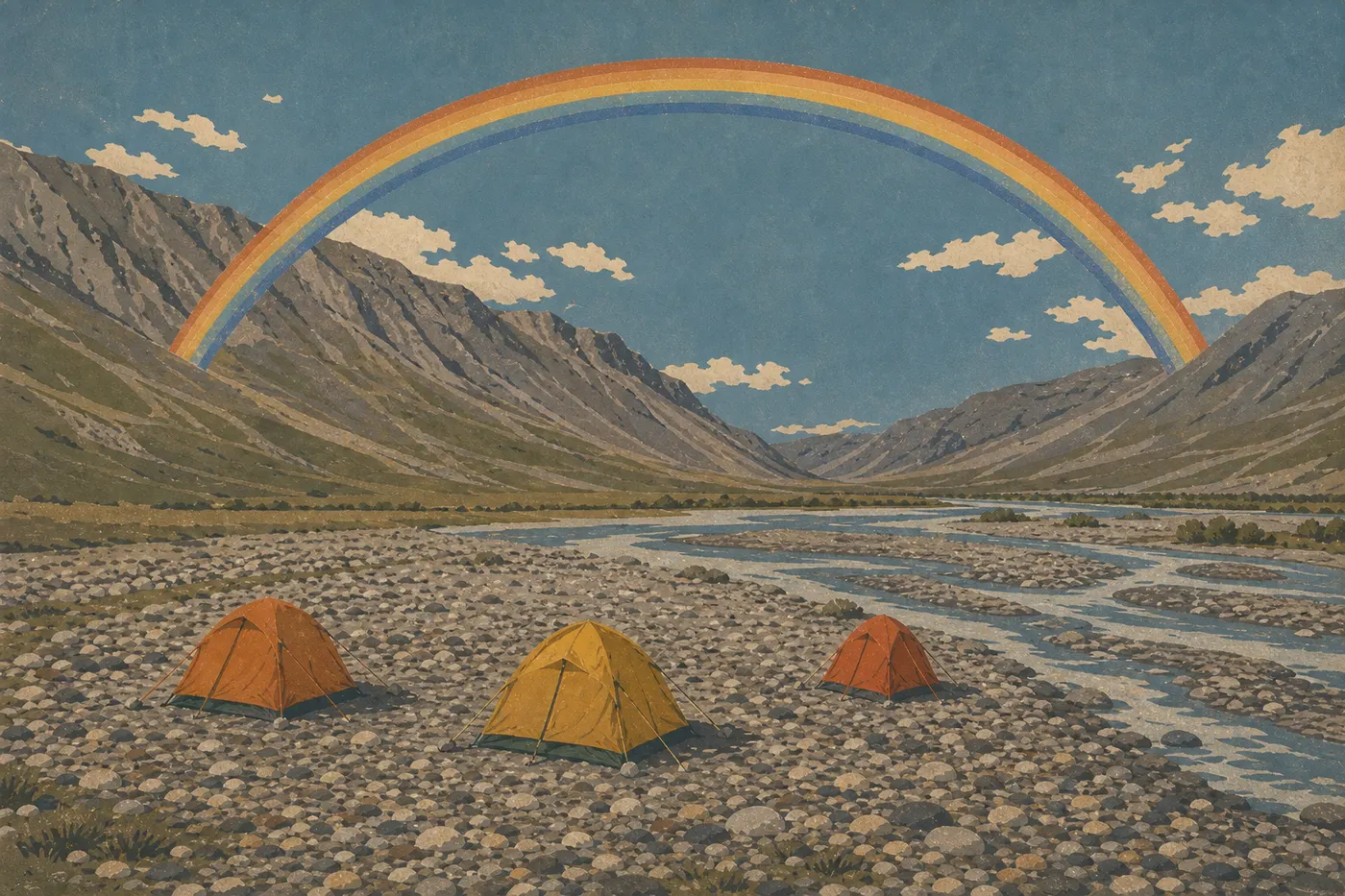
Camping in Gates of the Arctic: No NPS Campgrounds, Backcountry Camping and Nearby Bases
The short answer is that the NPS API lists no National Park Service campgrounds within the park's boundaries (as of September 10, 2026). The campgrounds shown in the table above are outside the park or operated by organizations other than the NPS. You don't reserve a site or pay a nightly fee. You simply pitch your tent wherever you want on the Arctic tundra, with no permit required. It's one of the rarest backcountry camping opportunities in the national park system, and one of the most demanding logistically.
Campgrounds in the park (0)
 Base map © OpenStreetMap · © CARTO
 Can you camp in Gates of the Arctic?
Yes, and it's the only way to spend the night in the park. The area is open year-round, with no seasonal closure. There are no designated sites, restrooms, or picnic tables. The park has no NPS-managed camping facilities. You can set up anywhere in the park as long as you stay at least 0.9 miles from visitor centers and villages and follow Leave No Trace principles.
Camping in the park: backcountry camping
Gates of the Arctic has no roads or maintained trails. To camp inside the park, you can fly in by charter from Fairbanks or hike in from the Dalton Highway. Choose your campsite on the ground based on the terrain and how close you are to a water source.
Follow these three rules without exception:
- Bear canister (an approved bear-resistant food container): required for all food and scented items.
- Campfires are allowed only on gravel banks or bare rock, never on vegetation.
- Pack out everything you bring, without exception.
For recommended campsites and off-trail approaches, the Gates of the Arctic hiking guide is the best reference.
Can you enter the park in an RV?
No. No road enters Gates of the Arctic, and RVs cannot enter the park. The Dalton Highway (Route 11) follows the park's eastern boundary for several dozen miles and has BLM parking areas where you can set out on foot into the park. The Gates of the Arctic RV guide covers this route, including stops and access points from the Dalton Highway.
Camping nearby: Coldfoot and Bettles
The campgrounds listed in this page's table are outside the park or operated by organizations other than the NPS. Coldfoot and Bettles are two practical bases for travelers who want a place to anchor before or after visiting the park.
Coldfoot Camp (about halfway along the Dalton Highway) offers a basic campground with access to water and restrooms. It's also the last gas station before Deadhorse.
Bettles is a village on the park's southern edge, accessible only by air from Fairbanks. You'll find lodges and charter flights into the park's interior. For all the lodging options in the area, the Gates of the Arctic hotels and lodges guide lists the available properties.
Permits and reservations: what you need to know
You don't need a permit to camp in the park, and there's nothing to reserve. Still, it's strongly recommended that you check in at the Coldfoot or Bettles visitor center before heading in. Leave your itinerary and get the latest weather conditions. With no cell service in the park, this is a basic safety precaution, not a bureaucratic requirement.
Charter flights from Fairbanks are different. Book them well ahead of time because small operators have limited capacity, especially from June through August.
Costs: how much does a night in Gates of the Arctic cost?
Park entry is free. Camping is free. There are no site fees, and you don't need an America the Beautiful pass. Your main expense will be the charter flight from Fairbanks. Getting to Gates of the Arctic by air lists the operators and typical price ranges.
Safety and best practices
Grizzly bears live throughout the park. Here are a few practical rules:
- Keep your locked bear canister at least 330 feet from your tent at night.
- Cook at least 200 feet from camp.
- If you encounter a bear, speak calmly, make yourself look large, and back away slowly. Never run.
Arctic weather can catch you off guard even in July. Temperatures can drop below 32°F, wind can pick up without warning, and rain can turn to snow within a few hours. The Gates of the Arctic weather guide provides seasonal monthly benchmarks. For complete safety guidance covering gear, check-in procedures, and handling emergencies in remote areas, see the Gates of the Arctic practical guide.
Which type of traveler is each kind of trip for?
Self-sufficient backcountry camping is the only option inside the park. Gates of the Arctic is for experienced travelers who are comfortable off-trail and can handle the unexpected in a remote area without cell service.
RV travel means approaching via the Dalton Highway to follow the park's edge, with hikes starting from the road.
Families can make it work if their children are used to backcountry camping and hiking. The Gates of the Arctic family guide offers advice tailored to this kind of trip.
Before you leave, the complete Gates of the Arctic guide is the place to start when planning your trip.
Frequently asked questions
Can you camp in Gates of the Arctic?
The park allows backcountry camping only. The NPS API lists no official campgrounds within the park's boundaries. Any site listed in the table above is outside the park or operated by another organization. You don't need a permit for backcountry camping.
Which campground should you choose near Gates of the Arctic?
There are no NPS campgrounds in the park. The options in the table are outside the park, in Coldfoot or Bettles, or are operated by third-party organizations. To camp inside the park, choose your own site anywhere across the park's backcountry.
When should you reserve a campground near Gates of the Arctic?
You don't need a reservation to camp in the park. Backcountry camping is free and open. Charter flights from Fairbanks should be booked in advance, especially during the peak season from June through August, when operators have limited capacity.
How do you camp in Gates of the Arctic?
Fly in by charter or hike in from the Dalton Highway, then choose your own campsite and carry in all your gear, food, and an approved bear canister. The park has no services inside its boundaries, including water, restrooms, or resupply.
How much does a night at the Gates of the Arctic campground cost?
Nothing. Park entry and camping are both free. You don't need an America the Beautiful pass. The main cost to plan for is the charter flight from Fairbanks.
Can you encounter bears while camping in Gates of the Arctic?
Yes. Grizzly bears live throughout the park. You must use an approved bear canister to store food, and you need to cook at least 200 feet from your tent.