
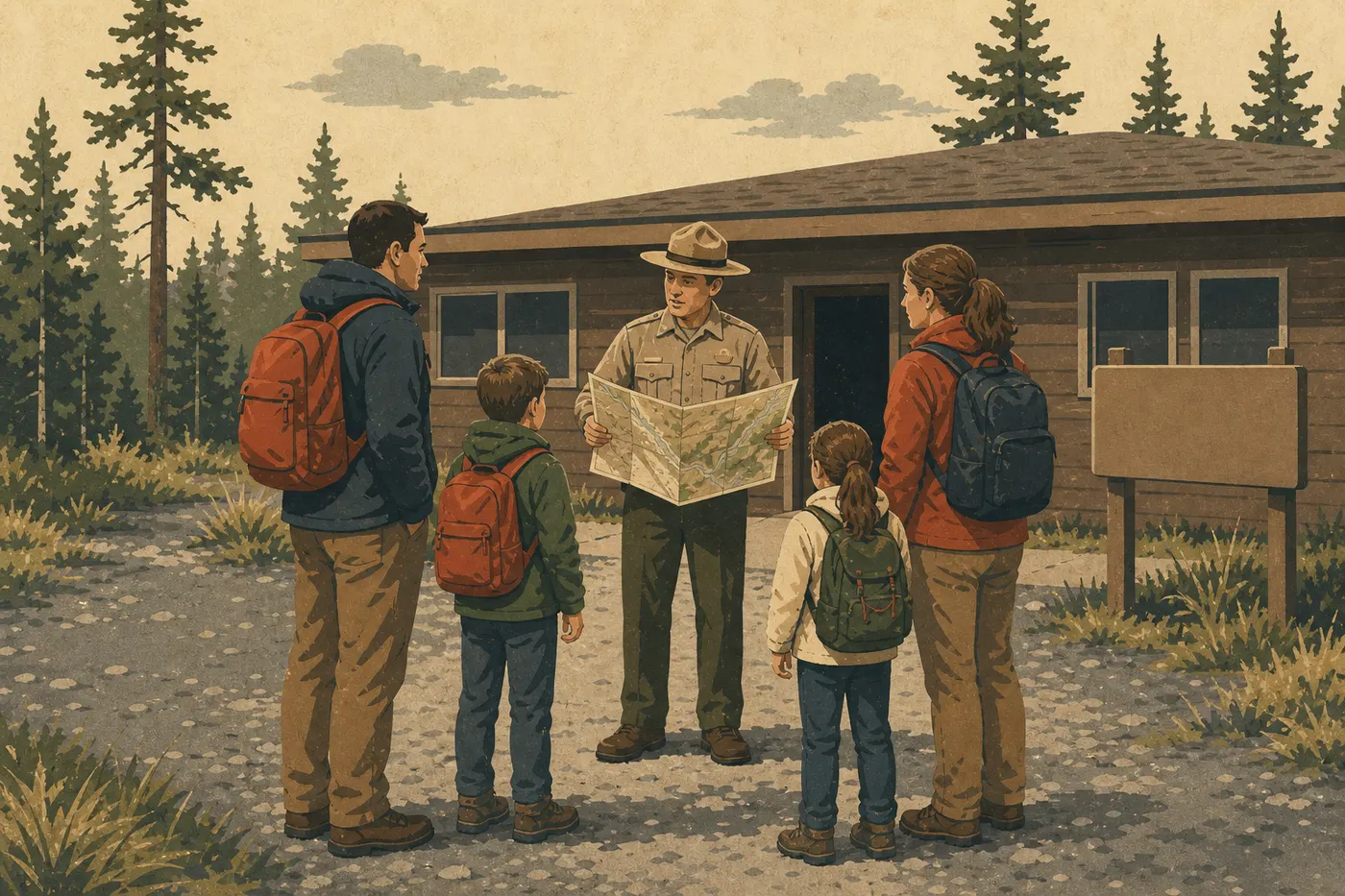
Gates of the Arctic with Kids: What to Do and How to Plan It
Gates of the Arctic isn't a park you visit with your family the way you'd visit Zion or the Smoky Mountains. There are no roads into the park, no marked trails, and no snack bar halfway through a hike. To set foot in this park, you'll need a bush plane or a pair of boots and a topographic map. In other words, this is the kind of place that naturally filters its visitors.
Is Gates of the Arctic a good fit for kids? Yes, as long as you're traveling with kids who can do their part on a wilderness expedition. We recommend it for kids 12 and older, or 10 and older for children already comfortable spending nights in a tent and hiking off-trail. Younger than that, the effort-to-reward ratio is frankly unfavorable. This is an expedition park, not a place for a casual stroll.
Why Visit Gates of the Arctic as a Family
This park isn't worth the logistical challenge because it's easy to reach. It's worth it for what it gives you in return.
Nature with nothing filtered out. There are no roads, no facilities, and no other group in sight on the horizon. Your kids will see the tundra as it has existed for thousands of years, not a landscaped version made for tourists.
Wildlife found nowhere else. Migrating caribou, grizzlies, wolves, Dall sheep, and bald eagles make the concentration of wildlife in the Brooks Range one of the most spectacular in North America. Watching a herd of caribou ford a river right in front of you teaches a geography lesson no textbook can match.
The midnight sun. In June and July, the sun barely sets. The effect is disorienting for adults and fascinating for kids. Bring a sleep mask for everyone.
Team pride. Gates of the Arctic turns a family into an expedition team. Planning each day, carrying packs, and reading the map together make the journey more than scenery. It's a shared experience your kids will remember for years.
Is Gates of the Arctic a Good Fit for Kids? What Age Is Best
Here's the candid answer: this park isn't designed for families in the usual sense. No ranger patrols the backcountry, no emergency services are immediately available, and no trail guides your progress.
Ages 12 and up: A realistic age for most routes. A fit teenager can carry a 18- to 22-pound pack, read a topographic map, and help with navigation. The experience can be deeply memorable at this age.
Ages 10 to 12: Possible for kids who've already spent several nights in a tent in the backcountry and hiked technical terrain. Before coming here, you should see how your child handles less demanding expeditions.
Under age 10: We don't recommend it. Arctic terrain can change quickly, distances are long, and even a minor medical problem such as a sprain or mild hypothermia requires an evacuation by air. This isn't a suitable setting for a young child.
Read how to get to Gates of the Arctic ahead of time. It's the first logistical filter, and it determines everything that follows.
When to Visit as a Family (The Easiest Season with Kids)
The ideal family window runs from mid-June to mid-August. Daytime temperatures range from 50°F to 68°F, sometimes reaching 77°F during high-pressure weather and sometimes dropping to 41°F in the wind. Daylight is abundant, and rivers have fallen after the spring snowmelt.
Before June, snow may still cover parts of the tundra and rivers run high, making fording more difficult. After mid-August, darkness returns quickly, temperatures drop, and family logistics become more complicated.
Mosquitoes and biting midges, including the dreaded no-see-ums, are intense from mid-June through late July. They're the main discomfort of the high season. Good head nets and clothing that covers your skin make them manageable.
Before booking a bush flight, check the best times to visit Gates of the Arctic and the park's weather basics. Seats are limited, and cancellations are common.
How Many Days to Plan for a Family Trip
You can't visit Gates of the Arctic in a day. The bush flight from Fairbanks or Bettles takes half a day on its own, and sometimes longer if weather delays your departure.
The realistic minimum for a family is 4 nights in the park, or 5 days when you count travel days. A first successful trip is more comfortable with 6 to 8 nights. The first two days often go toward getting oriented, learning the terrain, and letting the kids settle into a rhythm.
For sample plans with realistic distances for different family experience levels, see Gates of the Arctic itineraries.
What to Do at Gates of the Arctic with Kids: Our Picks
There are no interactive museums or ranger-led walks here. The activities are wilderness in its purest form.
Watch caribou migrations. In summer, herds cross the park in sometimes impressive columns. Bush-plane landing sites are often chosen to maximize the chance of seeing them. For a child, watching several hundred caribou cross a river a few hundred yards away can be a formative memory.
Go fly-fishing. The park's rivers, including the North Fork Koyukuk River, the Alatna River, and the John River, are among Alaska's richest fishing waters. A 10-year-old can catch a first Arctic grayling or rainbow trout in an otherworldly setting.
Go packrafting. Some specialized outfitters offer family-friendly packraft trips for families with teenagers 12 and older. It's an efficient way to cover distance without exhausting younger kids with pack carrying.
Watch the Northern Lights. In late summer, starting in late August, and in fall, the aurora appears as soon as the sky grows dark again. For kids who've never seen it, this is a moment that stays with them.
For a full list of activities and local outfitters who guide families on expeditions, see the Gates of the Arctic activities guide.
Family Hiking (Off-Trail, Unmarked Terrain)
Gates of the Arctic has no maintained trails. Hiking takes place in open country: tundra, rocky ridges, riverbanks, and moraines. This isn't hiking in the usual sense, and that's exactly what makes it exceptional.
Open tundra near rivers. The terrain is flat and open, with little dense vegetation. Kids can run, look around, and collect rocks. It's ideal for the first few hours after landing, while everyone gets oriented.
Low ridges in the Brooks Range. For families with fit teenagers, ridges between 2,600 and 3,900 feet offer striking views. Expect reasonable elevation gain on stable ground, with a 3- to 5-hour round trip depending on the starting point.
Riverbanks. The banks of the North Fork Koyukuk River and the Alatna River form natural corridors that are often easier to travel than brushy tundra. Expect gravel walking, fords, and plenty of wildlife.
One nonnegotiable family rule is to keep kids within the adults' line of sight at all times. Open tundra provides excellent visibility, but a child who heads toward a steep bank or into dense brush can disappear from view within seconds.
Off-trail hiking in Gates of the Arctic has its own detailed guide, including all the specifics of Arctic terrain.
The Junior Ranger Program
The Junior Ranger program is available for Gates of the Arctic, which is good news for families. Booklets are available at NPS visitor centers:
- Fairbanks Arctic Interagency Visitor Center (the logical starting point for any trip to the park).
- Coldfoot Camp (on the Dalton Highway, another gateway to the park).
- Bettles Ranger Station (for families passing through Bettles before their bush flight).
Your child can complete the booklet before, during, or after the trip. Some activities can be completed from Fairbanks. When they turn it in, they receive the official Gates of the Arctic badge and take the Junior Ranger pledge.
For families who can't physically reach the park, the NPS offers a downloadable version of the booklet. It's a symbolic but real doorway into this extraordinary park.
Safety with Kids
This is the most important section on the page. Gates of the Arctic is unsupported wilderness. There are no emergency services on site, no hospital within an hour's flight, and no ranger regularly patrolling the backcountry.
Grizzlies and black bears. They're always present. The basic rule is to travel in a tight group, make noise as you walk by talking or tapping sticks, and keep bear spray immediately accessible rather than buried in your pack. Store all food in an approved bear-resistant canister at least 200 feet from camp. Teach kids never to run from a bear and to stay together.
Rivers and fords. Arctic rivers stay icy even in summer, often below 50°F, with strong currents and slippery gravel beds. Always assess depth and current before crossing. Loosen your pack straps so you can ditch the pack if you fall. Kids should always cross while holding an adult's hand.
Weather. It can turn in two hours: sunshine and 64°F in the morning, then thick fog and 41°F with wind in the afternoon. Everyone should carry a waterproof layer and an insulating layer in their daypack, even when the sun is shining at the start.
Insects. Mosquitoes and no-see-ums can be intense from mid-June through late July. Choose clothing that covers the skin over excessive use of chemicals, especially for kids. A head net is essential.
Communication. There is no cell service in the park. Carrying a satellite messenger such as a SPOT, Garmin inReach, or equivalent is a moral obligation when you're traveling with family. In an emergency, it's your only link to the outside world.
The official Gates of the Arctic regulations cover all the rules you need to follow.
Where to Stay with Your Family (In and Around the Park)
In the park: Only backcountry camping. There are no reservable sites and no facilities, including toilets or developed drinking-water sources. You'll need to filter river water and follow Leave No Trace principles carefully. A four-season tent is recommended even in summer.
In Bettles: Bettles Lodge offers rooms and meals and serves as a logistical base before your bush flight. It's the comfortable option for the night before departure.
In Coldfoot: Coldfoot Camp offers cabins along the Dalton Highway, about a 6-hour drive from Fairbanks. It's convenient for families who prefer road access.
In Fairbanks: You'll find a wide choice of hotels and family-friendly lodging for travel nights, preparation, and post-expedition recovery.
Our Where to Stay page compares all the options, including seasonal price ranges. Our Camping page explains the specific challenges of backcountry camping in Arctic Alaska.
Meals and Breaks with Kids
There are no restaurants, snack bars, or vending machines in the park. Everything you eat has to come with you.
Plan on about 2,500 to 3,500 calories per adult per day, more with heavy pack carrying, and 1,800 to 2,500 calories per child. Cold and exertion at altitude increase those needs. Kids don't always recognize hunger reliably in the wilderness, so plan a snack break every 2 hours instead of waiting for hunger cues.
What works well for families: freeze-dried meals that are light, nutritious, and easy to prepare; nuts; dried fruit; energy bars; hard cheese; and single-serve peanut butter. A small stash of chocolate or candy as a trail reward is part of the psychological logistics, so don't forget it.
Water: You must filter river water with a pump filter, iodine tablets, or a UV SteriPEN. Never drink untreated water, even from a stream that looks perfectly clear, because Giardia may be present.
For meals before or after the expedition, Coldfoot Camp on the Dalton Highway has a restaurant open to travelers. Take advantage of it. It'll be your last hot, sit-down meal before the expedition.
Family Budget
Gates of the Arctic is free. There is no entrance fee. It's one of the few things on this trip that costs nothing, because everything else adds up quickly.
Bush flight from Fairbanks or Bettles: $400 to $800 per person round-trip, depending on the landing distance and the outfitter. For a family of four, this is the dominant expense.
The America the Beautiful pass ($80 per year, valid in all U.S. national parks and free for children under 16) won't reduce your costs here because there's no entrance fee, but it can pay off if your itinerary includes other Alaska or U.S. parks.
Gear and rentals: If you don't own expedition gear, renting in Fairbanks, including tents, sleeping bags, water filters, bear spray, and a satellite messenger, can cost $100 to $200 per day for a family.
Estimated total budget for a family of four for 5 days in the park: $4,000 to $8,000, excluding international flights to Fairbanks. Our Rates and Passes page provides guidance on entrance fees and passes for Alaska parks.
What to Combine with Gates of the Arctic for a Family Trip
The cost of traveling to Alaska often justifies a longer itinerary. Here are a few combinations that work well for families:
Denali National Park. About 4 hours south of Fairbanks. Park Road, which you can access by an NPS shuttle bus, offers views of the Alaska Range and abundant wildlife, with much easier logistics for families with mixed ages. It's an excellent starting point if some family members aren't ready for the full wilderness experience of Gates of the Arctic.
The Dalton Highway. If you're passing through Coldfoot, the road to Prudhoe Bay crosses spectacular Arctic landscapes. Our RV page covers this kind of itinerary for families driving north.
Wrangell-St. Elias. A good option for families who want to stay in the realm of vast wilderness while still having a few marked trails. It's the largest U.S. national park, with glaciers and icy peaks that kids remember for years.
Our Alaska Region page and Road Trip page offer guidance for building a longer itinerary in the state.
Gates of the Arctic with Kids: Is It Worth It?
Yes, as long as you know what you're taking on. This park requires preparation, a serious budget, and kids who can do their part on an expedition. In return, it offers something rare: absolute wilderness, undisturbed wildlife, and the shared pride of meeting a challenge most families wouldn't dare attempt.
If your family is ready for that, Gates of the Arctic is the expedition of a lifetime. If you're looking for an accessible park with marked trails and a guided Junior Ranger activity on Wednesday morning, start with Denali or the Smoky Mountains and save Gates of the Arctic for later, when the kids are older.
Our complete Gates of the Arctic guide brings together everything you need to plan your expedition from start to finish.
Frequently Asked Questions
Why is Gates of the Arctic National Park the least visited?
Gates of the Arctic is the least visited national park in the United States because no road leads into it. You have to take a bush plane from Fairbanks or Bettles, or enter on foot from the Dalton Highway. The cost, logistics, and required level of self-reliance naturally limit the number of visitors.
How do you explore Gates of the Arctic National Park?
You can explore Gates of the Arctic by bush plane, landing in the backcountry, on foot while hiking off-trail across tundra and ridges, or by packraft on its rivers. There are no marked trails or roads in the park. Nearly all visitors come through one of three gateways: Fairbanks, Bettles, or Coldfoot.
What is the most beautiful national park in Alaska?
Beauty is subjective, but Gates of the Arctic, Denali, and Wrangell-St. Elias are frequent choices. Gates of the Arctic stands out for its completely wild, undeveloped character; Denali for its summit's elevation of 20,310 feet; and Wrangell-St. Elias for its size, larger than Switzerland.
What are the largest national parks in Alaska?
Wrangell-St. Elias is the largest U.S. national park, at about 13.1 million acres. Gates of the Arctic ranks second, at about 8.4 million acres for the park and preserve combined, followed by Denali at about 5.9 million acres.
Is Gates of the Arctic suitable for families with young children?
We don't recommend it for families with children under 10. The complete lack of infrastructure, the need to fly in, the entirely unmarked terrain, and the constant presence of large predators make this a destination for families with solid backcountry experience.