
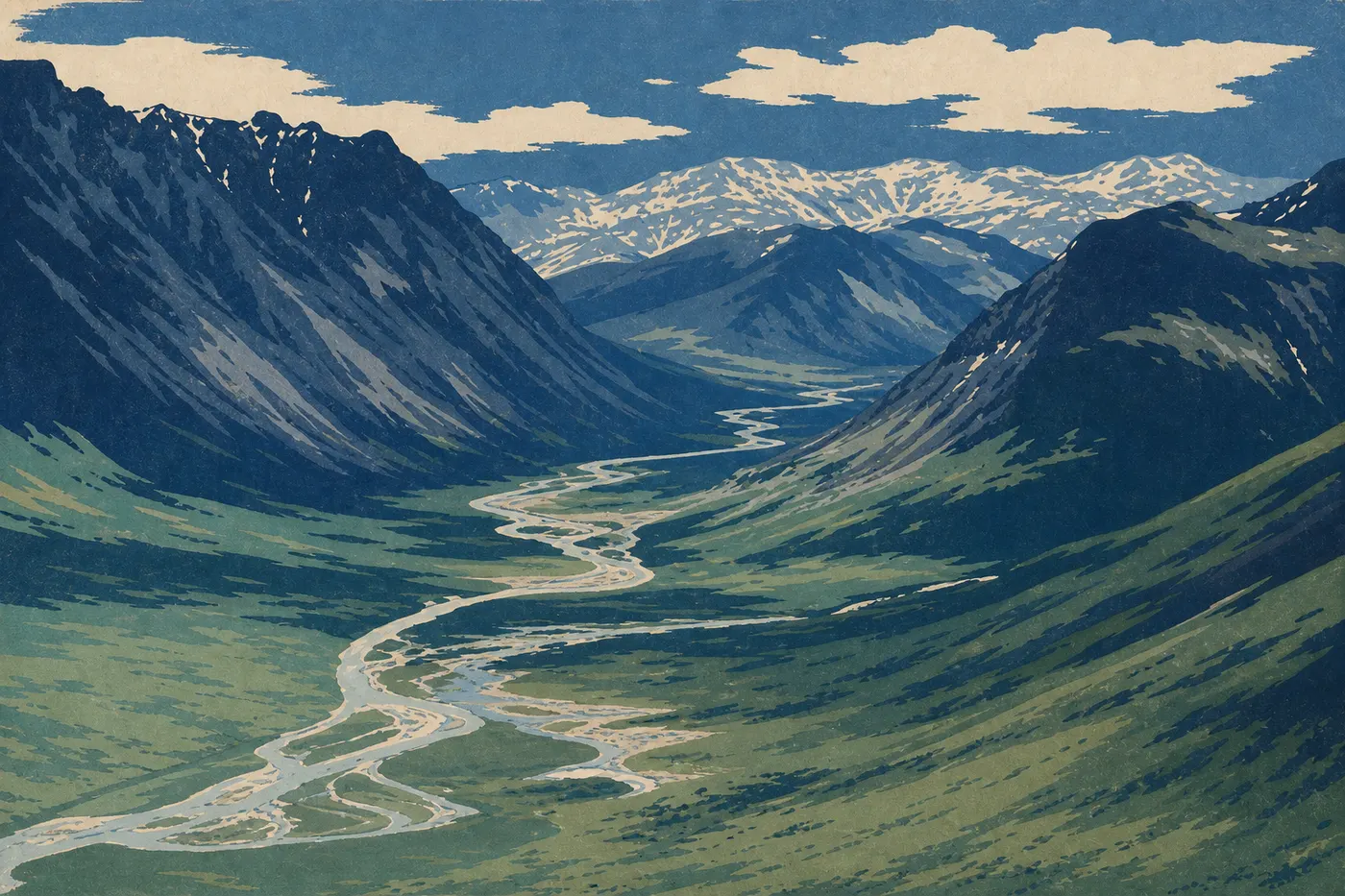
Getting Around Gates of the Arctic: Access, Bush Planes, and Wilderness Travel
The short answer: Gates of the Arctic has no roads, marked trails, or official entrance station. The road ends at the park's edge. To enter the park, you'll need a bush plane or you'll have to hike in from the Dalton Highway.
How to Get to Gates of the Arctic
Fairbanks is the essential logistics hub. From Fairbanks International Airport (FAI), you have two options.
By charter plane: Several bush plane operators offer daily or on-demand flights to the park's gateway communities: Bettles, about a one-hour flight and 196 miles north; Coldfoot; and Anaktuvuk Pass. This is how the vast majority of visitors get there.
By Dalton Highway: The Dalton Highway follows the park's eastern boundary for hundreds of miles. Fairbanks is about 250 miles south of Coldfoot, the last place to refuel before the vast emptiness begins. The road becomes entirely gravel beyond Livengood. You'll need a 4WD vehicle or a sturdy SUV, reinforced tires, and extra fuel cans. Once you're in Coldfoot, you're at the park's edge, not inside it.
For the practical details on domestic flights from Anchorage and vehicle rentals suitable for the Dalton, see the Gates of the Arctic Access Guide. To combine Gates of the Arctic with other Alaskan wilderness areas, the Alaska Road Trip Guide offers some ideas.
Park Access Points and Which One to Choose
Gates of the Arctic has no gate, ticket booth, or barrier. You don't enter the park the way you would a developed site. You land on a lake or gravel bar, or cross the boundary on foot from the road. Three access points account for most visitors.
Bettles / Evansville: This village south of the park is the most frequently used access point. The ranger station provides backcountry briefings and current conditions. Stop here before any trip, even if you only have a few minutes.
Coldfoot: A visitor contact station operates here in summer along the Dalton Highway. From Coldfoot, you'll still need to cross the park boundary on foot, hiking several miles across the tundra, or take a bush plane.
Anaktuvuk Pass: This isolated Nunamiut village in the center of the park is accessible only by air. A seasonal ranger station operates there. It's the right choice for exploring the central areas without another flight to reposition.
None of these access points requires an entrance fee. The park is free. Charter costs and any camping fees vary by operator and area, so check directly with the bush plane operators and the NPS.
Getting Around the Park
On Foot: Hiking and Bushwhacking
Once you've been dropped off by plane, walking is the only way to travel overland. There are no trails. You'll navigate with a compass or GPS while reading the terrain. Ridges, rivers, and valleys serve as natural landmarks. Off-trail navigation in Arctic terrain isn't a matter of comfort. It's an essential skill.
Travel is slow. Between tussock bogs, those unstable clumps of grass that trip you at every step, marshy areas, and the rugged terrain of the Brooks Range, expect to cover 1.2 to 2.5 miles per hour depending on the area. The Gates of the Arctic Hiking Guide explains the areas and skill levels involved. The Itinerary Guide suggests practical trip segments based on the length of your stay.
By Canoe and Kayak
The park's rivers, including the Alatna River, John River, Tinayguk River, and North Fork Koyukuk River, provide fast travel corridors for hundreds of miles. A canoe or inflatable kayak lets you cover in a week what would take three times as long on foot. There are no local outfitters. Bring all your gear from Fairbanks in the airplane's cargo hold.
By Bush Plane Between Areas
To move from one valley to another, contact your air operator again and arrange a date and location in advance. Many groups plan two or three drop-off and pickup points during the same expedition so they can connect different watersheds.
Where to Park: Parking and Air-Drop Locations
There is no parking inside the park. The concept itself doesn't really apply here.
Parking in Coldfoot: An unattended parking area is available near the visitor contact station. This is the most convenient option if you're hiking in from the Dalton Highway.
Parking in Fairbanks: If you're taking a charter, your car stays in Fairbanks. Several air operators offer vehicle storage for the length of your trip. Check directly with them.
Air-drop locations: Frozen lakes serve as landing strips in winter, while gravel bars serve the same purpose in summer. Your pilot will scout and approve the site from the air before landing. No drop-off area is official. The pilot makes the call based on current conditions.
Distances and Travel Times Between Areas
The park stretches about 217 miles from north to south and 124 miles from east to west. Here are a few useful reference points:
- From Bettles to Anaktuvuk Pass: about 100 miles as the crow flies, or 30 to 40 minutes by bush plane.
- From Coldfoot to the John River Valley: 25 to 50 miles depending on your destination, or 20 to 40 minutes by plane or several days on foot.
- From one camp to another on foot: three to eight days depending on the terrain, weather, and your pace.
Always build in two or three extra days. Winds can keep a plane on the ground for several days in a row. The Itinerary Guide offers loops and traverses suited to different trip lengths.
Special Cases: RVs, Accessibility, and Pets
RVs and vans: These vehicles aren't useful for visiting the park itself. You can drive the Dalton Highway to Coldfoot in an RV, but the road is rough and services disappear north of Coldfoot. Inside the park, no infrastructure can accommodate them. The Gates of the Arctic RV Guide covers conditions on the Dalton for anyone who wants to drive an RV to the boundary.
Accessibility: Gates of the Arctic isn't accessible to people with limited mobility. The terrain is entirely wild. Contact the Bettles ranger station before planning a visit. Rangers assess options case by case and can direct you toward the least rugged areas.
Pets: Dogs are allowed in the park, but they must remain under strict control at all times. The year-round presence of grizzlies and wolves makes an off-leash dog dangerous to itself and the group. The Gates of the Arctic Wildlife Guide explains how to respond to predators.
Practical Transportation Information: Fuel, Cell Service, and Apps
Fuel: There are no refueling points in the park. If you're driving the Dalton Highway, fill up in Fairbanks and carry extra fuel cans. The Coldfoot station, about 250 miles north, is the only possible stop in that direction.
Cell service: There is no cell coverage in the park and almost none in the surrounding area. Even in Coldfoot and Bettles, the signal is unreliable. A satellite phone or PLB (Personal Locator Beacon) isn't a luxury. It's a safety requirement. The Gates of the Arctic Practical Guide covers the gear recommended for a wilderness trip.
Navigation and apps: Offline GPS apps such as Gaia GPS and CalTopo are useful for planning routes. Also bring a waterproof paper topographic map. Cold quickly drains batteries, and there are no charging options in the wilderness.
Weather: The park's Arctic and subarctic climate can turn clear skies into a snowstorm within hours, whatever the season. Always add two or three days of extra food to your resupply plan. The Gates of the Arctic Weather Guide explains seasonal travel windows and the conditions to expect.
Frequently Asked Questions
Why is Gates of the Arctic the least visited national park in the United States?
Gates of the Arctic is the least visited park in the United States because it has no access road, marked trails, or infrastructure within its boundaries. Every visit requires a bush plane charter or an independent off-trail hike, limiting access to experienced, well-equipped visitors.
Are there grizzly bears in Gates of the Arctic National Park?
Yes, grizzlies, also called brown bears, live throughout the park. Keep bear spray readily accessible, store your food in an approved bear canister, and get a backcountry briefing at the ranger station before choosing a campsite.
Are there polar bears in Gates of the Arctic National Park?
No. Polar bears live on Arctic coastal sea ice and don't travel inland. In Gates of the Arctic, bear encounters involve grizzlies and, in the southern areas, black bears.
What are the largest national parks in Alaska?
Gates of the Arctic is the second-largest U.S. national park by area, behind Wrangell-St. Elias, which is also in Alaska. Alaska alone contains several of the country's largest protected areas. Katmai, Lake Clark, Denali, and Kenai Fjords also rank among them.