Gates Of The Arctic National Park: The Complete Visitor Guide
Gates of the Arctic isn't a park you "visit" in the usual sense. There are no roads, maintained trails, or visitor centers within its boundaries. You enter on foot or by small plane, entirely north of the Arctic Circle, in the Brooks Range. It's the least visited national park in the United States, and that's no accident. Complete self-sufficiency isn't optional here; it's the rule. Plan on at least 4 to 7 days in the field for the trip to be worthwhile, once you factor in the travel time from Fairbanks. This guide gives you the big picture. Each question then has its own detailed guide, linked throughout the page.
Let's be frank. If you're looking for a park to check off between two stops, keep going. If you want wilderness in its purest form, without marked routes or cell service, you've come to the right place.
Gates of the Arctic at a glance: Where the park is and how to get there
The park stretches across northern Alaska (AK), entirely beyond the Arctic Circle, around the Brooks Range, which runs east to west across the state. Its name comes from explorer Bob Marshall, who in the 1930s named two peaks framing a natural passage, Frigid Crags and Boreal Mountain, the "Gates of the Arctic."
Here's the key logistical point: no road enters the park, and no trail leads to it. There are two ways to reach the area.
- By plane. Access starts in Fairbanks. Several small airlines run daily flights to the communities that serve as gateways, mainly Bettles, Coldfoot, and Anaktuvuk Pass. From these bases, bush planes equipped with floats or tundra tires drop you inside the park, on a lake or gravel bar.
- On foot. The Dalton Highway follows the park's eastern edge. From certain points along the highway, experienced hikers can reach the park boundary, but they'll have to cross tundra, rivers, and dense vegetation with no established trail.
In practice, most visitors combine the two: a flight in, followed by hiking or a river trip once they're in the park. To map it all out before you leave, keep the park map handy, along with the full details on getting there and transportation.
Entrance fees, passes, and reservations
The good news is that Gates of the Arctic doesn't charge an entrance fee. There are no ticket booths, gates, or passes to show, simply because there is no road access where the park could collect a fee.
Don't let that fool you. This "free" park is one of the most expensive in the system to visit. The real cost is flying. The trip from Fairbanks to Bettles or Coldfoot, followed by the bush flight that drops you in the backcountry, is the main expense. Add expedition gear, food, and, very often, the services of a licensed guide. For information on entrance fees and annual passes for the national park system, see our Fees & passes page. If you're collecting stamps, note that you can get the cancellation at the gateway visitor center. See our Passport & stamps page.
You don't need an entrance reservation for the park itself. However, bush flights and guides should be booked well in advance because the usable season is short.
Reservations, permits, and rules to follow
Permits and registration
You don't need an entrance permit to visit the park, but some activities are regulated:
- Register ahead of time: No wilderness permit is formally required, but the NPS strongly encourages you to register with the Bettles or Coldfoot ranger station before any expedition. This helps organize a search if you don't return when expected.
- Commercial groups: Guides and outfitters must hold a valid NPS authorization. Make sure your provider is in compliance before you sign up.
- Fishing: An Alaska fishing license is required inside the park. Alaska Fish & Game regulations apply everywhere.
- Hunting: Allowed in the adjacent Preserve areas under Alaska state rules. It is prohibited in the National Park area proper.
Rules to follow
- Bear canisters required: Store all food, cosmetics, and scented waste in an approved hard-sided bear-resistant container. Grizzlies are active throughout the park.
- Campfires: Prohibited above tree line, including open tundra and alpine areas. In low boreal forest, fires are allowed subject to the seasonal restrictions in effect on your visit date.
- Human waste: Bury it more than 200 feet from water, or pack it out in WAG bags. Leave No Trace principles are mandatory, not simply recommended.
- Drones: Not allowed without a specific permit issued by the NPS.
- Collecting: Collecting plants, minerals, or artifacts is prohibited.
How to get around Gates of the Arctic
Here's the straightforward answer to a common question: no, you can't see Gates of the Arctic by car. There are no roads through the park, no parking lots, and no shuttles. The same goes for RV travel. At best, your vehicle stays parked in Coldfoot or farther up the Dalton Highway, never inside the park.
Once you're there, you get around under your own power.
- On foot, hiking cross-country through tundra and valleys.
- By packraft or canoe, traveling down one of the wild rivers draining the Brooks Range. It's one of the preferred ways to explore this country.
- By bush plane, for day-to-day flights between drop-off and pickup points, planned closely with the pilot.
You navigate with a map and compass, and possibly GPS. There are no marked routes to follow because none exist. Our guide to getting around the park covers the techniques and transportation options in detail.
How long do you need to visit Gates of the Arctic?
How long do you need to visit Gates of the Arctic? Plan on at least 4 to 5 days in the field, and preferably 7 to 10 for a true expedition. Logistics require extra flexibility. Flights from Fairbanks, a possible wait for a weather window before your bush plane can take off, and the slow pace of cross-country travel mean you can't compress this trip.
One simple rule applies: the weather is in charge. A low cloud ceiling can keep your plane on the ground for a day or two, both on the way in and on the way out. Always build buffer days into your schedule, or you may miss your connecting flight in Fairbanks. Use our day-by-day itineraries to build a realistic plan.
Plan your visit
What to see and do in Gates of the Arctic
The heart of the park isn't a list of accessible "spots." It's a collection of geographic areas that you reach according to your gateway and your level of commitment. The landscape breaks down into a few major regions.
Road trip journal · 5 areas
The Arrigetch Peaks
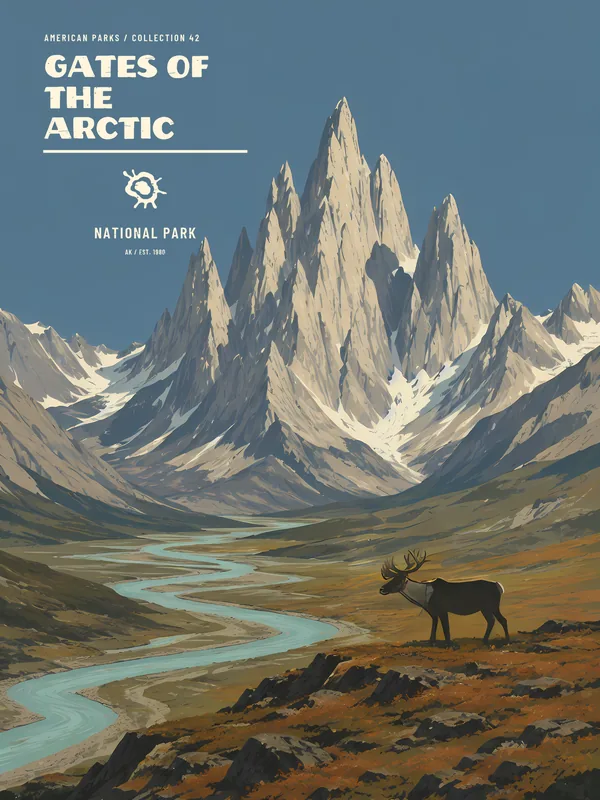
These sharp granite spires in the park's central west are the visual signature of Gates of the Arctic. Their name, which comes from Inupiat, evokes outstretched fingers. You reach them from Bettles by bush plane to a nearby lake, then on foot. This is steep, demanding country for mountaineers and experienced hikers.
Mount Igikpak and the western high country
The highest point in the western Brooks Range, Mount Igikpak dominates a remote area reserved for long, self-sufficient expeditions. People come here for total isolation, not easy access.
Wild rivers
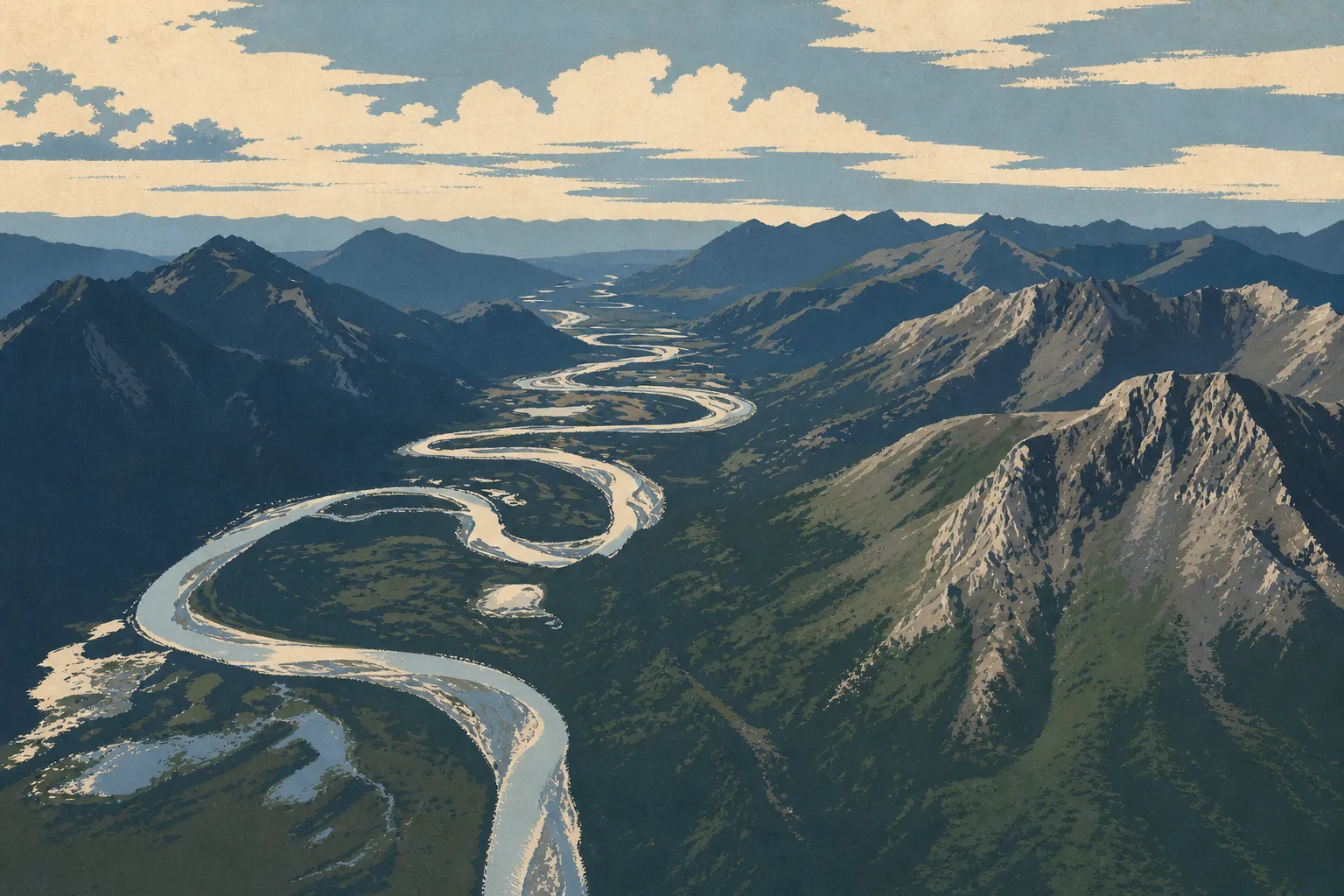
Several rivers in the park have protected wild river status. Traveling down them by packraft or canoe, through valleys where you won't see another person, is one of the smoothest ways to cross the park. Each river has its own character and difficulty level, so choose carefully.
Anaktuvuk Pass and Nunamiut country
This village tucked into a pass is home to the Nunamiut, an Inupiat people traditionally connected to caribou hunting. It's the only community within the park boundaries, and planes serve it. Here you encounter the living human and cultural side of the area.
The historic "Gates of the Arctic"
The passage named by Bob Marshall, between Frigid Crags and Boreal Mountain above the North Fork Koyukuk River, remains a symbolic goal for anyone who wants to stand in the place that gave the park its name.
For a complete inventory of activities and ways to approach these areas, see our guide to things to do in the park.
Explore the park
The best hikes in Gates of the Arctic
Here, "hiking" doesn't mean following a route. The park has no developed trails. Every itinerary is a personal navigation across tundra and moraines, with river crossings along the way. The classic trips include approaches to the Arrigetch Peaks, the valleys of the North Fork Koyukuk, and crossings of Brooks Range passes. The terrain, dense vegetation, and fords demand real technical skill. Our selection of Gates of the Arctic hikes explains the routes, logistics, and difficulty. Read it before you commit to a plan.
The detailed guide Hiking in Gates of the Arctic: The Best Wilderness Routes for Every Experience Level Gates of the Arctic has no marked trails Read the guide →Wildlife and plants to look for
Gates of the Arctic is home to iconic Arctic wildlife. Caribou come first. Herds cross the Brooks Range with the seasons, a spectacle that has shaped Nunamiut culture. You'll also find grizzlies and black bears, wolves, moose, Dall sheep in the high country, foxes, and many migratory birds in summer. Plants are a different story. Tundra rules here, with lichens, mosses, dwarf shrubs, and, in the more sheltered valleys, scattered spruce at the northern edge of their range.
Two realities deserve attention. Bears require strict food management in mandatory bear-resistant containers. And in summer, mosquitoes are fierce. That's not folklore. They are a major comfort factor. Our Wildlife page has details on species and the best seasons for viewing them.
The detailed guide Gates of the Arctic Wildlife: What to See and Where to Look A practical guide to caribou, grizzlies, Dall sheep, gray wolves, and… Read the guide →When to visit Gates of the Arctic
The climate is Arctic and subarctic, with extremely cold winters, relatively mild summers, low annual precipitation, and frequent strong winds. Weather changes quickly and depends on multiple systems.
In practice, the visiting window centers on summer, roughly from mid-June to mid-September, when rivers are free of ice, the tundra is passable, and flights run regularly. The rest of the year is winter expedition territory, with extreme cold and very short days, beyond the reach of nonspecialist travelers. Deep winter does offer the northern lights to those prepared to face it. Our When to visit page breaks things down month by month, while our Weather page covers conditions in detail.
The detailed guide When to Visit Gates of the Arctic: Best Time, Seasons, and Months The best time to visit Gates of the Arctic is June and July for midnight sun… Read the guide →Where to sleep in Gates of the Arctic
There are no permanent accommodations in the park. No lodge, shelter, or developed campground. Sleeping in Gates of the Arctic means pitching your tent independently wherever you choose, while following low-impact principles. No overnight permit is required for backcountry camping, but a bear canister is.
For comfort before and after an expedition, use the gateway communities. Bettles and Coldfoot offer lodge-style accommodations or base camps, and you should book early. We compare these options in our Where to stay guide, with Hotels & lodges on one side and Camping on the other.
Stay in the park
Around Gates of the Arctic: Things to do nearby
Gates of the Arctic is never a stand-alone destination. Its logistics naturally make it the centerpiece of a broader trip through Arctic Alaska. Coldfoot, on the Dalton Highway, is a rough-edged trucker stop and a resupply point between Fairbanks and Prudhoe Bay. Nearby historic Wiseman tells the story of Alaska's gold-rush years. Fairbanks remains the essential logistics base, with attractions of its own. To build a coherent itinerary, see our road trip guides and our regional guides to Alaska.
Our take: Is Gates of the Arctic worth the effort?
Let's be clear about who should come. Gates of the Arctic isn't worth the effort for travelers discovering Alaska. There are no roadside viewpoints, easy trails, or facilities. The effort and cost are out of proportion to a passive visit.
For independent hikers, packrafters, and people who truly love wilderness, though, it offers an experience unlike anything else in the national park system: total immersion in an Arctic landscape where you can spend a week without seeing another person. During our scouting trips, what stood out was the silence and the scale of the landscape, that feeling of being tiny that so few places still offer. If you have the experience for independent backcountry travel and the budget for the flights, then yes, it's well worth the effort. If not, prepare first or choose a more accessible Alaskan park.
Before you leave, make one last check. Read our full Practical information, rules & safety page, because here you must be able to manage bears, cold, river crossings, and the lack of rapid emergency help. If you're traveling with kids, our Family page will tell you frankly what's realistic and what isn't.
All the pages you need to plan your visit
Below you'll find all our guides for planning your visit to Gates of the Arctic.
Prepare and plan
- When to visit: the best time, month by month.
- Weather: Arctic climate, temperatures, winds, and daylight.
- Itinerary & length: how many days you need and how to structure the trip.
Getting there and getting around
- Access & transportation: flights from Fairbanks, bush planes, and the Dalton Highway.
- Getting around: cross-country travel, packrafts, and navigation.
- Map: geographic landmarks and park areas.
Once you're there: things to see and do
- Things to do: activities and areas in detail.
- Hiking: unmarked routes and difficulty.
- Wildlife: caribou, bears, wolves, Dall sheep, and the best seasons for viewing them.
Sleeping, eating, and experiencing the park
- Where to stay: accommodation comparisons.
- Hotels & lodges and Camping: details by type.
- Where to eat: resupply and food logistics.
- Practical information, rules & safety and Family travel: concrete rules and what traveling with kids involves.
Frequently asked questions
Why is Gates of the Arctic National Park the least visited?
Gates of the Arctic is the least visited because it has no roads, trails, or visitor facilities, and lies entirely north of the Arctic Circle. You can enter only on foot or by small plane, with substantial and expensive logistics. That keeps mass tourism away and attracts only self-sufficient visitors.
How do you explore Gates of the Arctic National Park?
You explore Gates of the Arctic by first flying from Fairbanks to a gateway such as Bettles or Coldfoot, then taking a bush plane into the park. Once there, you travel cross-country on foot or descend a river by packraft, fully self-sufficient and with the right equipment.
What is the most beautiful place in Alaska?
The most beautiful place in Alaska depends on what you're looking for. For raw wilderness, the Arrigetch Peaks in Gates of the Arctic rank among the state's most spectacular landscapes, with granite spires at the heart of the Brooks Range. Alaska has other, more accessible gems, which we cover in our regional guides.
Do you need a permit to camp in the park?
You don't need a permit for backcountry camping in Gates of the Arctic, and the park doesn't charge an entrance fee. However, food must be stored in a bear-resistant container, and low-impact principles apply everywhere because there are no developed campsites.
The American Parks shop
Bring Gates Of The Arctic home
Our park-inspired creations, made to order and shipped to your door.