
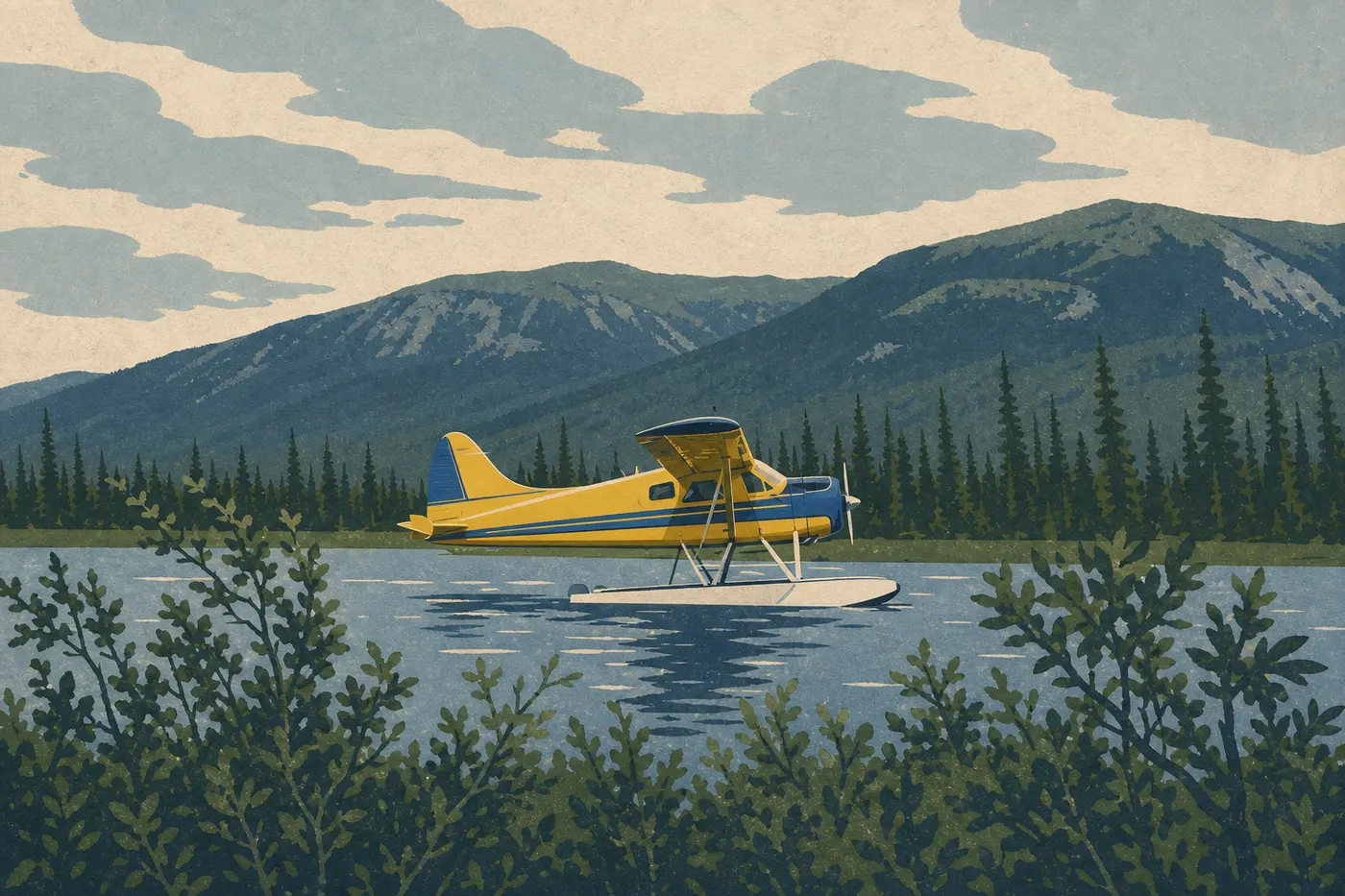
Gates of the Arctic Itinerary: What to See in 3, 7, or 14 Days
Gates of the Arctic isn't a park you visit from the driver's seat of a family sedan. No road enters it, no trail marks the way, and no gate tells you that you've crossed a boundary. What you'll find instead is Arctic tundra stretching to the horizon, the Brooks Range cutting across it, and rivers waiting for your packraft or canoe. For a first expedition, plan on at least 5 to 7 days including travel from Fairbanks. The itinerary below will help you shape your trip around your experience, budget, and appetite for polar solitude.
How Long Do You Need to Visit Gates of the Arctic?
The park is open year-round, with no seasonal closure. In practice, the most comfortable window runs from mid-June to mid-September. That's when air taxis fly regularly, rivers are navigable, and temperatures allow for camping without full winter-expedition gear.
Within that window, three trip lengths make the most sense:
- 3 to 5 days (micro-expedition): enough to set foot in the park and get a feel for it, but not enough to take in its full depth. An ideal first taste of the Alaska wilderness.
- 7 to 10 days (classic expedition): the standard format. You have enough time for a river run or a multi-day hike, with some room for changing weather.
- 14 days or more (long traverse): for experienced expedition travelers who want to cross a pass in the Brooks Range or link several river sections.
Trip length is also a budget question. A round-trip air-taxi flight from Fairbanks costs several hundred dollars per person. Each day in the field helps spread out that access cost. The logistics are covered in the guide to getting to Gates of the Arctic.
September is the best month for the northern lights, while June is the month for the midnight sun. To choose your window based on your priorities, the Gates of the Arctic seasons guide compares the months in detail.
Getting There and Getting Around the Park
Gates of the Arctic has neither an access road nor trails inside the park. You can fly in by air taxi from Fairbanks or walk in from the Dalton Highway, then travel on foot cross-country or by boat.
Regions of Gates of the Arctic
With no roads, the park naturally revolves around its river corridors and air-access points. These are the three areas visitors use most often.
Bettles and the Alatna River Valley
Bettles is the logistical hub for nearly every expedition. The community has an NPS visitor center that is open in season, where you can refine your plan, have your gear checked, and get current field conditions. A lodge with meals and several air-taxi operators round out the local services.
From Bettles, the standard route follows the Alatna River downstream. Expect relatively calm water, boreal forest and mountain scenery, and abundant wildlife. The river is suitable for intermediate paddlers. Allow 5 to 8 days for a partial section.
Anaktuvuk Pass and the Central Plateau
Anaktuvuk Pass is a Nunamiut community, home to an Indigenous people whose ancestors had traveled through the Brooks Range for millennia. The village is home to the Simon Paneak Memorial Museum, dedicated to this culture. The pass itself is a natural gap in the range, historically used by caribou herds during their seasonal migrations. A stay here combines a cultural encounter with cross-country hiking across alpine tundra.
The Eastern Corridor and the Dalton Highway
For travelers driving from Fairbanks, the Dalton Highway provides access to the park without the cost of a flight. The Coldfoot visitor center, open in summer, provides maps, a safety briefing, and current conditions. The areas along the road are less dramatic than the heart of the park, but they still make an excellent first introduction to the Arctic tundra. Caribou and Dall sheep are regularly spotted from the road shoulder, with no effort required.
Day-by-Day Itinerary
“Micro-Expedition” Itinerary (3 to 5 Days)
This format uses a fixed base camp reached by bush plane, with daytime explorations radiating out from camp. You won't move camp or spend the entire trip traveling downriver.
Day 1: Morning flight from Fairbanks to Bettles, about an hour, followed by a briefing at the NPS visitor center. In the afternoon, take a second bush-plane flight to the drop-off point. Set up camp. In June and July, the sun barely sets, so you'll have time to pitch your tents and explore the immediate surroundings before dinner.
Day 2: Your first day of cross-country exploration. Hike across the tundra and watch for wildlife. Safety procedures start as soon as you leave the tent: carry bear spray across your chest, store food in an airtight bear canister, and travel with at least one other person. The Gates of the Arctic guide covers the protocols recommended by the NPS.
Days 3–4: Continue exploring, or take a short river trip if you've brought the right equipment. Build in a weather day. Fog or strong winds can keep bush planes grounded for 24 to 48 hours. That's not an incident. It's normal in an Arctic park.
Day 5: Take a bush plane back to Bettles, then return to Fairbanks.
“Classic River Run” Itinerary (7 to 10 Days)
This is the standard itinerary for a first true self-supported expedition in Gates of the Arctic.
Day 1: Fly from Fairbanks to Bettles. Prepare your gear, then meet with the air-taxi operator to confirm the weather and the put-in location. Spend the night in Bettles.
Day 2: Take a bush plane to the headwaters of a river, either the Alatna River or the North Fork Koyukuk River, depending on the season and water level. Paddle your first miles and set up your first camp on a gravel bar.
Days 3 to 7: Travel 9 to 16 miles downstream each day, depending on the current. You'll settle into a rhythm quickly: paddle in the morning, stop for lunch on the riverbank, hike out from camp in the afternoon, and cook on the stove in the evening. Some mornings, grizzlies inspect the banks from less than 330 feet away. Store food in a bear canister at every camp, no exceptions. The Gates of the Arctic wildlife guide explains how to respond to Alaska's brown bears.
Days 8–9: Reach the extraction point you've arranged with the pilot. If weather delays the flight, wait at camp. That's why you built in the extra time.
Day 10: Return from Bettles to Fairbanks.
“Long Traverse” Itinerary (14 Days or More)
This format is for travelers who already have several Arctic expeditions under their belts. It can combine multiple river sections linked by portages across passes in the Brooks Range. Plan the logistics months in advance with the air-taxi operators, including put-in locations, possible intermediate air drops, and the extraction point. Specialized outfitters offer guided trips built around this model. It's a serious option if you lack Arctic paddling experience but want a longer trip.
Options Based on Your Trip Length
For a quick trip (3 to 5 days): Set up a fixed base camp from Bettles. You'll see the tundra, hear the silence, and understand why this park is considered one of North America's most pristine wilderness areas. Still, you'll leave feeling as if you knocked on the door without really stepping inside.
For a classic trip (7 to 10 days): A river run offers the best balance of experience and logistics for a first self-supported expedition. This is what we recommend.
For an Alaska road trip (2 to 3 weeks): Gates of the Arctic fits naturally into a Fairbanks-Dalton Highway-Bettles circuit. Most travelers who come here also add Denali to the south or Kobuk Valley to the west. Our Alaska Road Trips guide suggests combinations between parks, with timing and air-taxi coordination points.
Itinerary Map
There is no road map of Gates of the Arctic, for the simple reason that there are no roads. The NPS publishes Unigrid-format topographic maps as downloadable PDFs on the park's official website, covering the main areas. These maps are the basic navigation tool for every expedition, and we recommend carrying several copies in waterproof sleeves. Offline GPS apps such as Gaia GPS and CalTopo are essential backups, but they don't replace knowing how to read a paper map when the battery dies at 14°F. All available mapping resources are listed in the Gates of the Arctic maps guide.
Where to Sleep Along the Route
Inside the park, camping is strictly backcountry. There are no facilities, drinking-water stations, or restrooms. Outside the park, Bettles has a lodge with guest rooms. Fairbanks, the starting point for nearly every expedition, offers the full range of accommodations, including hotels, hostels, and rentals. Find more details in the guide to where to stay in Gates of the Arctic, from Fairbanks lodges to Arctic tundra camping rules.
Extend Your Trip: What to See Around Gates of the Arctic
The park is bordered by the Gates of the Arctic National Preserve, which is contiguous with the park and has the same type of access, with slightly different hunting regulations. To the west, Kobuk Valley shares the Brooks Range and can be combined with it on a three- to four-week expedition, with air-taxi coordination between the two parks. To the south, Denali is a day's drive from Fairbanks. Gates of the Arctic and Denali together make the classic Alaska wilderness circuit. Our Alaska Regions guide suggests combined itineraries with budgets and timing.
The Ideal Itinerary for Your Available Time
| Trip length | Format | Best for |
|---|---|---|
| 3 to 5 days | Fixed base camp | First Alaska expedition, guided trip possible |
| 7 to 10 days | River run | Intermediate paddler, fully self-supported |
| 14 days or more | Brooks Range traverse | Experienced expedition traveler, multiple rivers |
One rule applies to every format without exception: never travel alone, and never leave without giving a complete trip plan to someone who can be reached. Weather can delay extraction for several days. Arctic rescues take time, sometimes a lot of it. Our complete Gates of the Arctic guide covers the procedures recommended by the NPS for this kind of environment.
Frequently Asked Questions
How do you explore Gates of the Arctic National Park?
Exploring Gates of the Arctic means flying in by air taxi from Fairbanks or walking in from the Dalton Highway. There are no roads inside the park. Once you're there, travel cross-country on foot or by boat on the rivers. Any self-supported expedition requires experience navigating without marked trails, solid bear-safety skills, and an emergency plan shared with someone back home before you leave.
Why is Gates of the Arctic National Park the least visited?
Gates of the Arctic is among the least visited U.S. national parks because it has no access roads, no marked trails, and no visitor infrastructure within its boundaries. Getting there requires an air-taxi flight at significant cost, a complete expedition plan, and real backcountry skills. That inaccessibility is exactly what draws people who seek it out.