
Bryce Canyon Wildlife: Prairie Dogs, Condors & Where to Look
Bryce Canyon is more than a landscape of rust-colored hoodoos. The park is home to more than 59 mammal species, around 200 bird species, and reptiles adapted to the harsh winters of Utah's high plateaus, where elevations top 7,900 feet. Five animals account for most wildlife encounters: the Utah prairie dog, California condor, mule deer, coyote, and mountain lion. The Utah prairie dog is by far the easiest to spot. Its colonies occupy the large meadows along the rim and are almost impossible to miss between May and October. For everything else related to planning your visit, our complete Bryce Canyon guide covers the basics.
Bryce Canyon's Iconic Animals
Utah Prairie Dog (Cynomys parvidens)
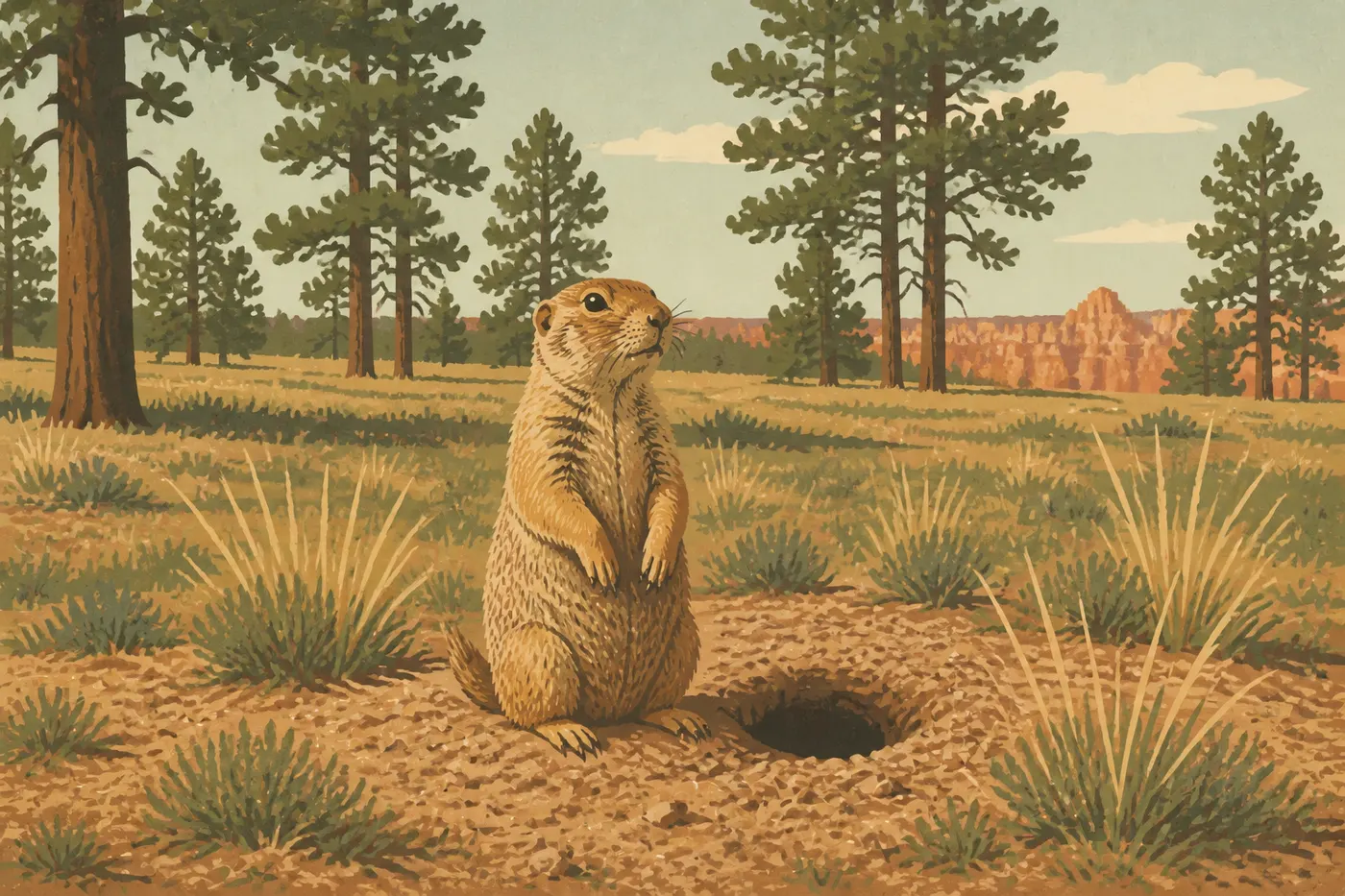
This is the park's mascot, and one of the best surprises for anyone who wasn't expecting it. The Utah prairie dog is an endangered species, and Bryce Canyon protects one of the largest colonies in the world. Its name can be misleading. It isn't a dog, but a stocky rodent in the ground squirrel family, with brown-and-tan fur and a short tail tipped in black. Standing height: about 8 inches. Its alarm call is a sharp, repeated bark that echoes throughout the morning.
It lives in colonies known as "towns," sometimes numbering several hundred individuals. It hibernates from November through March. From May through September, it's active from sunrise onward.
Where to see it: The meadow between Sunrise Point and Sunset Point is its home base. Groups gather at dawn and are easy to see from the Rim Trail.
California Condor (Gymnogyps californianus)
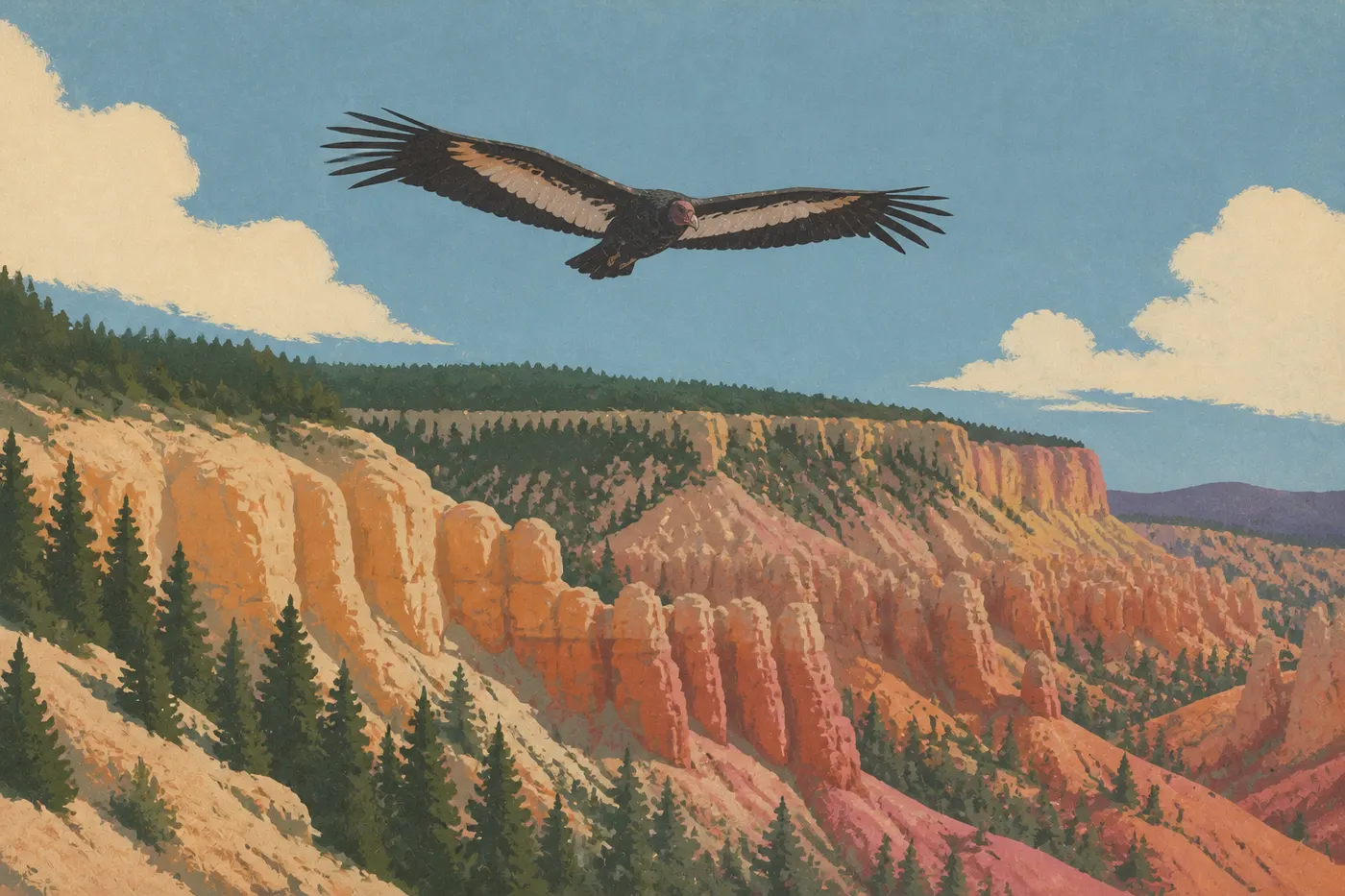
One of North America's rarest and largest birds, the California condor has a wingspan of 8.9 feet and weighs up to 24 pounds. The species came close to extinction in the 1980s, with only 22 individuals left in 1987. Since reintroduction programs began in southern Utah, tagged birds have regularly flown over the canyon rims. Adults are recognizable by their all-black plumage, broad white wing patches, and bright orange heads.
How to tell it from a hawk: In a glide, the condor holds its wings perfectly level. A hawk raises them slightly into a "V." Its unusual size and white underwings are decisive at a distance.
Where to see it: Bryce Point and Inspiration Point offer the best views of rising thermals. Condors mainly soar between 10 a.m. and 3 p.m. in fair weather. An encounter is an event, not a guarantee.
Mule Deer (Odocoileus hemionus)
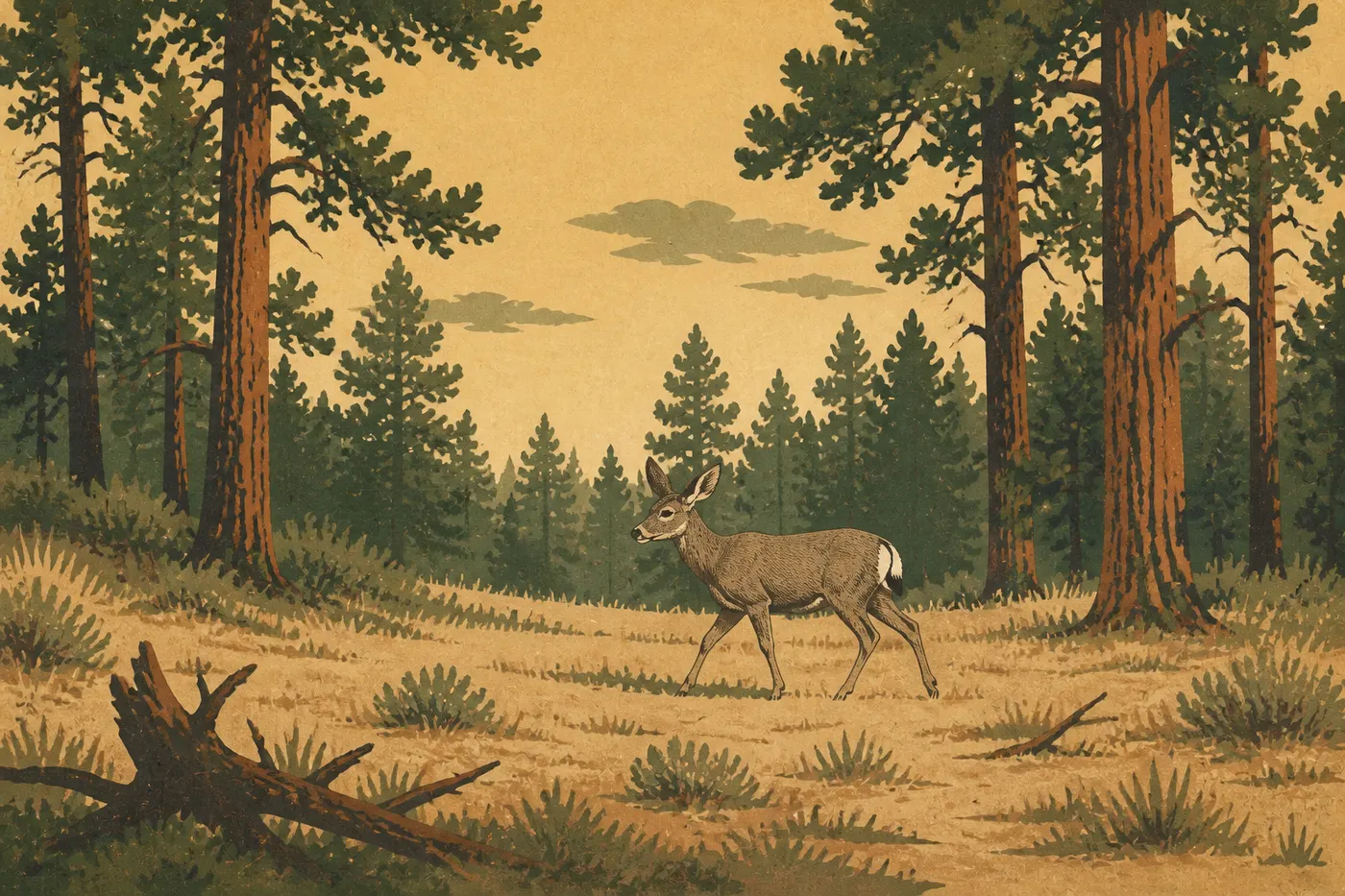
More discreet than the Utah prairie dog, the mule deer is the most frequently seen large mammal in the park. Its large, mule-like ears gave it its name. Bucks grow branching antlers from July through January, then shed them. Its coat ranges from gray-tan to gray-brown, and its short tail has a black tip.
During a visit to Sunset Campground at dawn, I came across a group of three less than 66 feet away. They were completely indifferent to the hikers, which doesn't mean you should approach them.
Don't confuse it with an elk: Elk live in the park too, but they're uncommon and much larger, standing 4.6 feet at the shoulder compared with about 3.3 feet for a mule deer. Their overall profile is far more imposing.
Where to see it: Look along forest edges bordering meadows, around campgrounds, and on UT-63 near the park entrance at sunrise and sunset.
Coyote (Canis latrans)
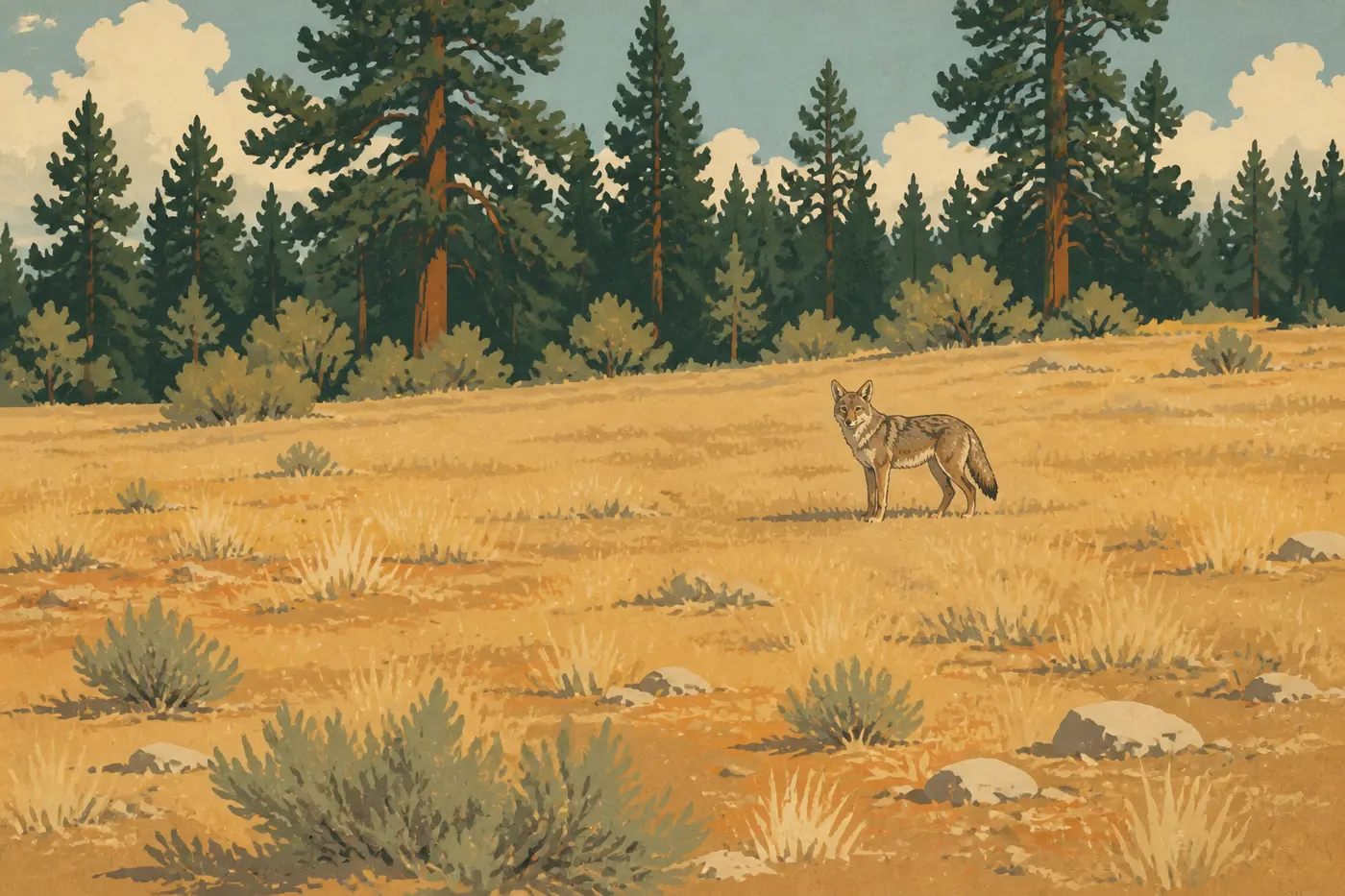
Common throughout the American West, the coyote is the park's generalist predator. It hunts prairie dogs, rodents, and jackrabbits, then rounds out its diet with berries and carrion. You rarely see one in broad daylight, but its distinctive howl punctuates Bryce Canyon's nights with reassuring regularity.
Are there wolves in Bryce Canyon? No. Wolves haven't reestablished a population in southern Utah, unlike at Yellowstone, where reintroduction began in 1995. If you spot a large gray canid in the park, it's a coyote. Its slimmer build than a German shepherd, drooping tail, and agile gait set it apart from a stray dog. A wolf carries its tail horizontally.
Mountain Lion (Puma concolor)
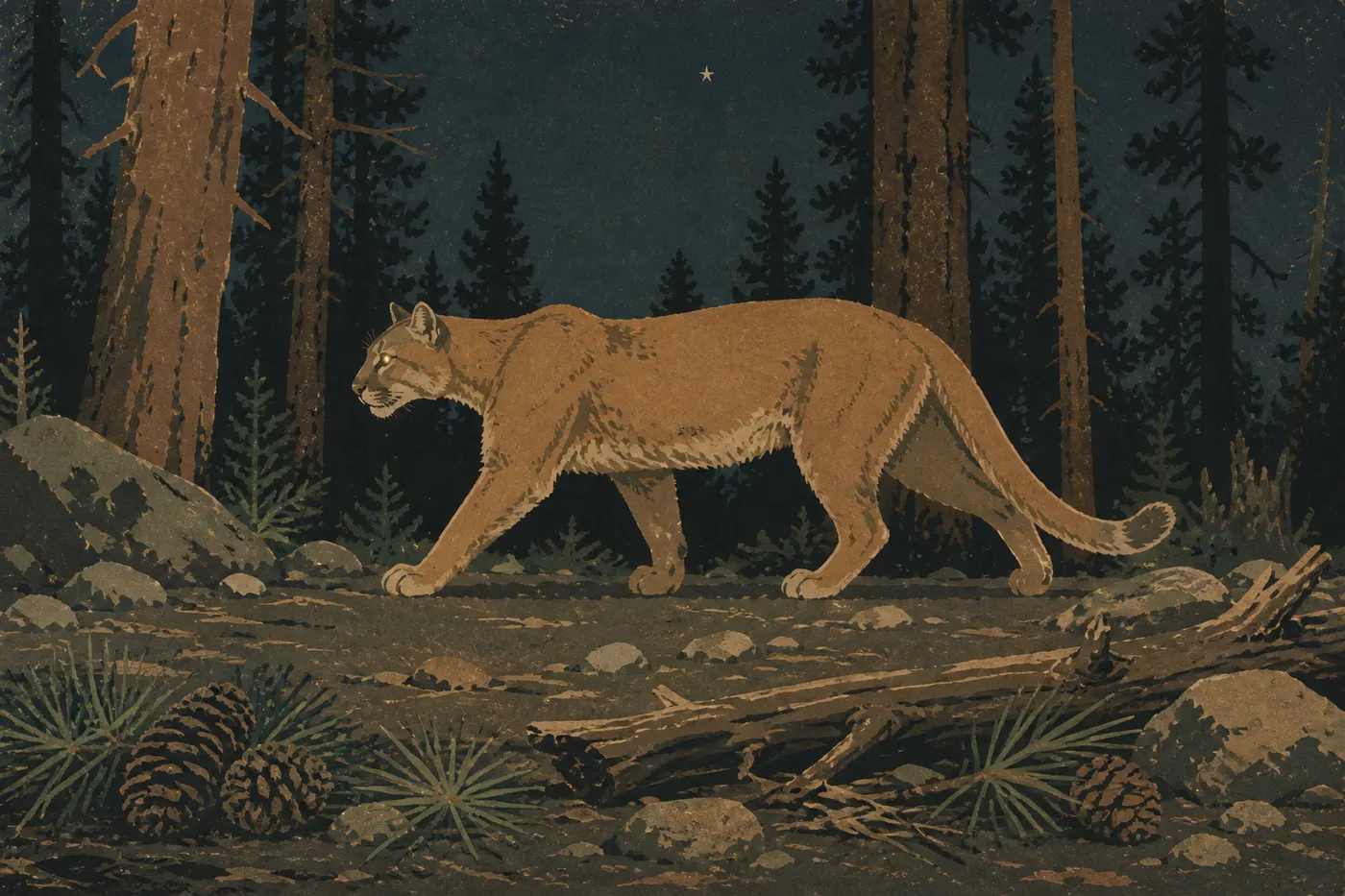
Mountain lions live here, but they're elusive and rarely seen. Solitary and mainly nocturnal, they follow mule deer populations across large territories. An adult's uniform tawny coat, long tail, and round head with short ears make it unmistakable, if you're lucky enough to see one. Tracks with four toes and no claw marks sometimes turn up on snowy trails in spring.
A daytime encounter is extremely unusual and often means the animal is under stress. See the safety section for what to do.
Where to See Wildlife in Bryce Canyon
The park's geography concentrates wildlife in a few well-defined areas.
Rim Trail (between Sunrise Point and Sunset Point): The meadow along this trail is Utah prairie dog country. It's the best place for a first sighting.
Bryce Point and Inspiration Point: These two overlooks get the most exposure to thermals, making them ideal for watching condors in flight. Arrive before 10 a.m. to catch the first takeoffs.
Fairyland Area (northern park): This less-visited area is good for mule deer and forest birds among the ponderosa pines. The Fairyland Loop Trail passes through quiet areas that hurried tourists never reach.
Swamp Canyon: This wet area at the bottom of the canyon, accessible via the Swamp Canyon Connecting Trail, attracts nesting birds and mammals that come down to drink.
UT-63 and campground areas: Mule deer sightings are common from the car around dawn. Drive under 28 mph between the entrance and the Visitor Center.
The Bryce Canyon hiking guide covers the trails that provide the best access to wildlife areas, along with their difficulty ratings.
When to Watch Wildlife
Golden hour: One hour before and after sunrise or sunset. Most mammals are active during these two windows. In the middle of the day, look for them in the shade of the pine forests.
Spring (April-May): Utah prairie dogs emerge from hibernation, and migratory birds arrive. Damp ground makes tracks easier to read.
Summer (June-August): This is peak season for daytime wildlife. Utah prairie dogs are at their most active. Frequent afternoon thunderstorms, common in July and August, drive animals into cover before 2 p.m.
Fall (September-October): Deer are in the rut, making bucks more active and visible. Overwintering bald eagles and hawks begin arriving in late October.
Winter (November-March): Utah prairie dogs hibernate. Snow makes mountain lion and coyote tracks easier to spot. Wintering raptors partly make up for the decline in mammal activity.
For a month-by-month look at conditions, the Bryce Canyon seasonal calendar identifies the best times to visit.
Predators and Large Animals in Bryce Canyon
The mountain lion is the park's only established large predator. Black bears (Ursus americanus) are present but uncommon. The plateau's elevation and low density of fruit-bearing vegetation make them rarer here than at Zion, which sits at a lower elevation. Sightings are reported mostly in fall, when bears are building up fat reserves before hibernation.
Black bear or grizzly? There are no grizzlies in Bryce Canyon. Grizzlies were eradicated from Utah in the 20th century and haven't been reintroduced. If you hear someone mention a "brown bear" in the area, they're referring to a black bear with brown coloring. Black bear fur can range from black to tawny blond, so color alone isn't enough to identify the species.
The park's largest animal is the elk (Cervus canadensis), which is occasionally seen in high-elevation wooded areas. It stands 4.6 feet at the shoulder, and males have imposing antlers. It's hard to mistake for anything else.
How to Watch Wildlife Safely
The following rules come from the NPS and Leave No Trace. These aren't just suggestions. Violations can result in a fine, and feeding a wild animal can lead to its euthanasia.
Required minimum distances:
- 75 feet from any wild animal, including prairie dogs, even the ones that seem the most "tame."
- 100 yards from bears and mountain lions if you encounter one.
Never feed an animal. A prairie dog that eats from your hand is a doomed prairie dog. It loses its instinct to flee, becomes aggressive toward visitors, and eventually has to be euthanized.
If you encounter a mountain lion: Don't run, because that triggers its hunting instinct. Make yourself look large, keep eye contact, and speak in a firm voice. Back away slowly without turning your back. If it attacks, fight back vigorously.
If you encounter a black bear: The same basic rule applies. Don't run. Speak calmly, wave your arms, and back away without running. Black bears rarely seek conflict.
At the campground: Store all food and scented products, including toothpaste and sunscreen, in the bear boxes provided at every site. Don't leave anything visible in a vehicle.
For other park rules covering travel, camping, and access, see the relevant guides.
In Short: Wildlife You Shouldn't Miss and Where to Find It
The Utah prairie dog is the closest thing to a guaranteed wildlife encounter. Head to the meadow between Sunrise Point and Sunset Point any morning from May through October. For the California condor, try Bryce Point between 10 a.m. and 3 p.m. in fair weather, and be patient. Look for mule deer along forest edges at dusk, especially around the campgrounds. Coyotes are mostly heard at night. The mountain lion remains the lucky, or unlucky, exception, depending on how you look at it.
Frequently Asked Questions
Are there wild animals in Bryce Canyon?
Bryce Canyon is home to plenty of wildlife. More than 59 mammal species have been recorded in the park, including Utah prairie dogs, mule deer, coyotes, mountain lions, and black bears. Birds account for around 200 species, including the California condor.
Are there bears in Bryce Canyon?
Yes. Black bears (Ursus americanus) live in the park, but sightings are rare because of the plateau's high elevation. There are no grizzlies in the area. The species was eradicated from Utah in the last century and hasn't been reintroduced.
Are there wolves in Bryce Canyon?
No, wolves don't live in Bryce Canyon. Unlike Yellowstone, where reintroduction took place in 1995, southern Utah has no established wolf population. The large canid you may see in the park is a coyote.
What is the most common animal in Bryce Canyon?
The Utah prairie dog is the most frequently seen animal in the park. Its colonies occupy meadows along the rim and remain visible from May through October, practically all day long.
What is the largest animal in Bryce Canyon?
The elk (Cervus canadensis) is the park's largest mammal, with adult males standing more than 4.6 feet at the shoulder. It's less common than the mule deer, but it does live in high-elevation wooded areas.
What are the predators in Bryce Canyon?
The mountain lion is the park's main predator, followed by the coyote, which hunts smaller prey. Black bears are omnivores and rarely go after large animals. Raptors, led by golden eagles and peregrine falcons, round out the list.
What animals are out at night in Bryce Canyon?
Mountain lions, coyotes, bats, and several rodent species, including mice and rock rats, are mostly active after sunset. Great horned owls begin hunting at nightfall. Bryce Canyon's night is also worth experiencing for its sky. The park is certified as an International Dark-Sky Association Level 1 site, the highest darkness rating.