
When to Visit Bryce Canyon: The Best Time, Month by Month
The best times to visit Bryce Canyon are May-June and September-October, when the trails are open, skies are clear, and crowds are still manageable. The park is open 365 days a year, 24 hours a day, but winter brings well-below-freezing temperatures and heavy snowfall, while summer brings record crowds. The two shoulder seasons offer the best balance of weather, crowds, and cost.
Bryce Canyon Weather Month by Month
Bryce Canyon sits at high elevation on the Paunsaugunt Plateau in Utah, at roughly 7,900 to 8,900 feet. The result is much cooler weather than in the canyons below, along with sharp seasonal swings. From fall through spring, nighttime temperatures drop below freezing almost without exception.
| Month | High (°F) | Low (°F) | Precipitation | Conditions |
|---|---|---|---|---|
| January | 36 | 10 | Frequent snow | Bitterly cold |
| February | 39 | 14 | Frequent snow | Bitterly cold |
| March | 46 | 21 | Snow or rain | Variable |
| April | 55 | 28 | Rain, late snow | Variable |
| May | 64 | 36 | Light rain | Mild |
| June | 75 | 43 | Low | Excellent |
| July | 81 | 50 | Afternoon thunderstorms | Hot, crowded |
| August | 79 | 48 | Afternoon thunderstorms | Hot, crowded |
| September | 72 | 41 | Low | Excellent |
| October | 59 | 30 | Low | Cool, clear |
| November | 45 | 19 | Snow or rain | In transition |
| December | 36 | 12 | Frequent snow | Winter conditions |
For real-time forecasts and a month-by-month breakdown, check the Bryce Canyon weather forecast.
Bryce Canyon in January
January is the coldest month of the year, with nighttime temperatures around 10°F and highs that rarely climb above 34 to 36°F. Snow is common, and snow-covered hoodoos create a striking contrast with their orange rock. The main Rim Road usually stays open, but secondary roads may close after major snowstorms. Check conditions before heading out, and bring snow tires or chains. Visitation is minimal, and some overlooks may be completely empty at sunrise.
Bryce Canyon in February
Conditions remain deeply wintry, with nights around 14°F, daytime highs of about 37°F at best, and snow still likely. The days grow slightly longer, creating better late-afternoon windows for photography. Park access is similar to January: Rim Road is generally passable, while secondary roads depend on recent snowfall. Pack warm gear and waterproof, slip-resistant shoes. Crowds are very light.
Bryce Canyon in March
March can be deceptive. Daytime highs climb toward 46°F, but nights remain below freezing, around 19°F, and late snowstorms can dump 8 to 12 inches overnight. Downhill trails into the amphitheater may be icy in the morning, so check with rangers before setting out. It is still a good month for photographers, who may find snow-covered hoodoos with more manageable roads than in midwinter. Crowds are light.
Bryce Canyon in April
April alternates between sunshine and snow, with daytime highs around 55°F, nighttime lows near 28°F, and unpredictable precipitation. Trails gradually clear, but lower sections can remain muddy after a storm. The shuttle is not running yet. Visitation starts to pick up slowly. The first wildflowers appear on the plateau toward the end of the month.
Bryce Canyon in May
May is the first truly comfortable month for hiking, with daytime highs around 64°F and nighttime temperatures of 36 to 37°F. Occasional freezes are still possible early in the month. The main trails are open, and the amphitheater trails are clear. The free shuttle usually starts running toward the end of the month. Crowds rise noticeably around Memorial Day, the last Monday in May, so visit early or midmonth to avoid the first peak.
Bryce Canyon in June
June is often considered the best summer month. Afternoon temperatures reach 75°F, nights are mild at around 45°F, precipitation is limited, and days are long. The monsoon thunderstorms have not started yet, so you can hike all day without constantly watching the sky. The shuttle is running. Crowds are high but have not reached their peak yet, so arrive at the overlooks before 8 a.m. to find a parking spot.
Bryce Canyon in July
July is the busiest month of the year. Parking lots fill by 9 a.m., overlooks are packed, and lodging sells out. Daytime temperatures reach 81°F, while nights are mild at around 52°F. The main drawback is the monsoon thunderstorms, which develop almost daily between 1 and 4 p.m. and may bring lightning to the ridges and amphitheater. If you're on a trail when the sky darkens, turn around immediately. The strategy is simple: arrive before 7 a.m. and head back before noon.
Bryce Canyon in August
August is similar to July, with a slightly more active monsoon season, about 2 inches of precipitation on average, and frequent lightning at higher elevations. Temperatures remain high, around 77°F during the day and 50°F at night. Crowds remain very heavy. Take the same precautions with afternoon thunderstorms. Sunrises after a rainy night can sometimes offer spectacular conditions for photography.
Bryce Canyon in September
September, along with May and June, is one of the best months to visit the park. The monsoon season winds down, the light becomes warmer and lower, and crowds thin out sharply after Labor Day, the first Monday in September. Temperatures are ideal, around 70°F during the day and 41°F at night. The shuttle is still running. Trails are in excellent condition. Many returning visitors name September as their favorite month.
Bryce Canyon in October
October brings cool temperatures, around 57°F during the day and 30°F at night, along with the first overnight freezes. Aspen trees and plateau shrubs turn golden and orange. The shuttle usually stops running in mid-October. Crowds range from moderate at the start of the month to very light by the end. Trails remain in good shape until the first significant snowfall, making this an excellent month for hikers who enjoy some peace and quiet.
Bryce Canyon in November
November marks the start of winter, with nighttime lows around 19°F, daytime highs of about 43°F at best, and the first lasting snow on the plateau. Most services reduce their hours or close, including shops and the visitor center, which operates on reduced hours. Trails may be snow-covered, and winter gear becomes essential. Crowds are minimal, and the park takes on a peaceful atmosphere. This is the start of snowshoe season on marked trails.
Bryce Canyon in December
The park settles into winter, with nighttime lows around 12°F, daytime highs no higher than 34 to 36°F, frequent and sometimes heavy snow, and about 1.4 inches of precipitation on average. Snow-covered hoodoos create one of the park's most memorable sights. The main Rim Road usually stays open, but check conditions before heading out because secondary roads may close. Visitation is very light, with a small uptick over the holidays. Warm, waterproof gear is mandatory.
Bryce Canyon Season by Season
Winter (December to February)
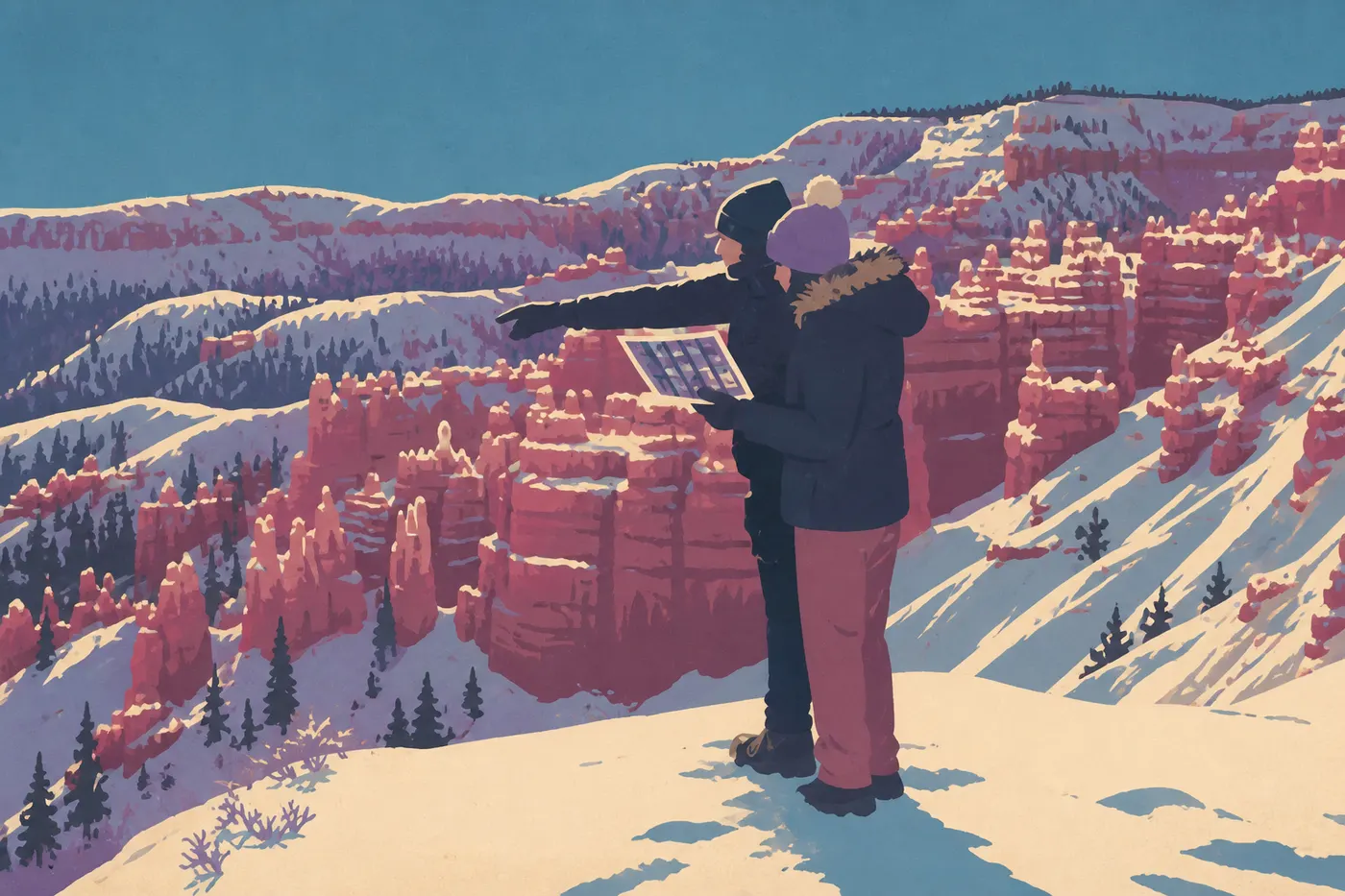
Winter transforms Bryce Canyon into a spectacle all its own. Snow-covered hoodoos, the park's orange and rust-colored rock formations, create color contrasts you won't find anywhere else.
Weather: Lows regularly fall to around 10 to 14°F. The heaviest snowfalls occur from December through February. Secondary roads such as Fairyland Road may close temporarily. The main Rim Road usually remains accessible, but chains or snow tires are essential. Check road conditions before heading out.
Wildlife: Mule deer move down to lower elevations, where you may see them along the park boundary. Wintering raptors, including peregrine falcons and golden eagles, soar over the cliffs on clear days.
Things to do: Snowshoe or cross-country ski on marked trails, with rentals available at Ruby's Inn near the park entrance. Air quality is exceptional in winter, and visibility can exceed 155 miles on a clear day. Bring serious insulating layers, warm gloves, and waterproof shoes.
Crowds: Minimal. You may have Bryce Point or Sunset Point all to yourself at sunrise.
Spring (March to May)
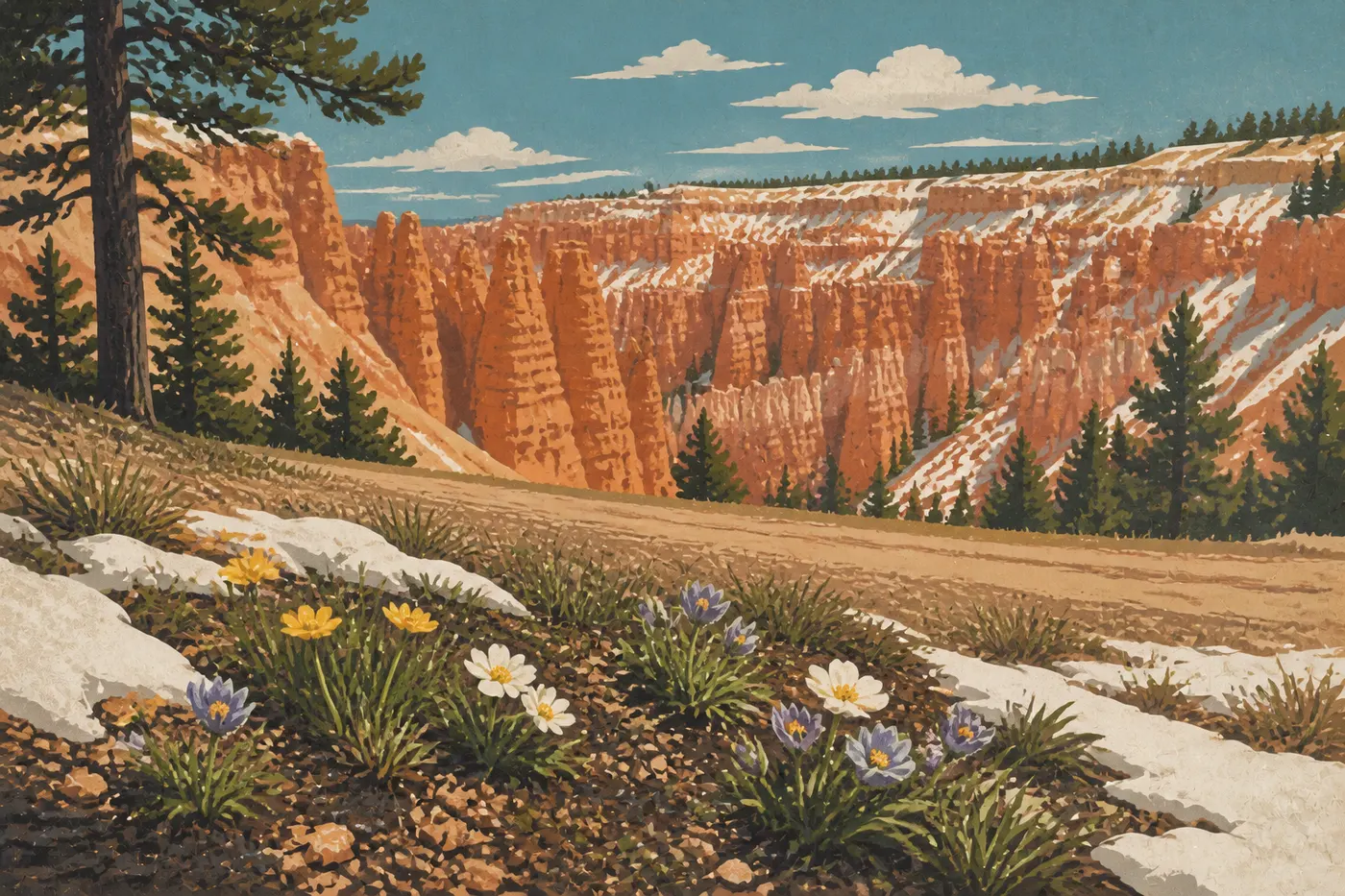
March and April can still be deceptive. Spring storms may drop 8 inches of fresh snow overnight, and temperatures remain below freezing until dawn. Downhill trails into the amphitheater may be icy in the morning. Check trail conditions with rangers before setting out.
From mid-May onward, the park shifts decisively. Trails clear, wildflowers appear on the plateau, and late-day light is ideal for photography.
Wildlife: Mule deer move back up toward the plateau. Nesting raptors settle onto the cliffs. Activity is intense early in the morning.
Things to do: Major hikes such as Navajo Loop and Queen's Garden are fully accessible starting in May. For detailed routes and difficulty levels, see our Bryce Canyon hiking page.
Crowds: Light in March and April, moderate in May. Visitation rises around Memorial Day in late May.
Summer (June to August)
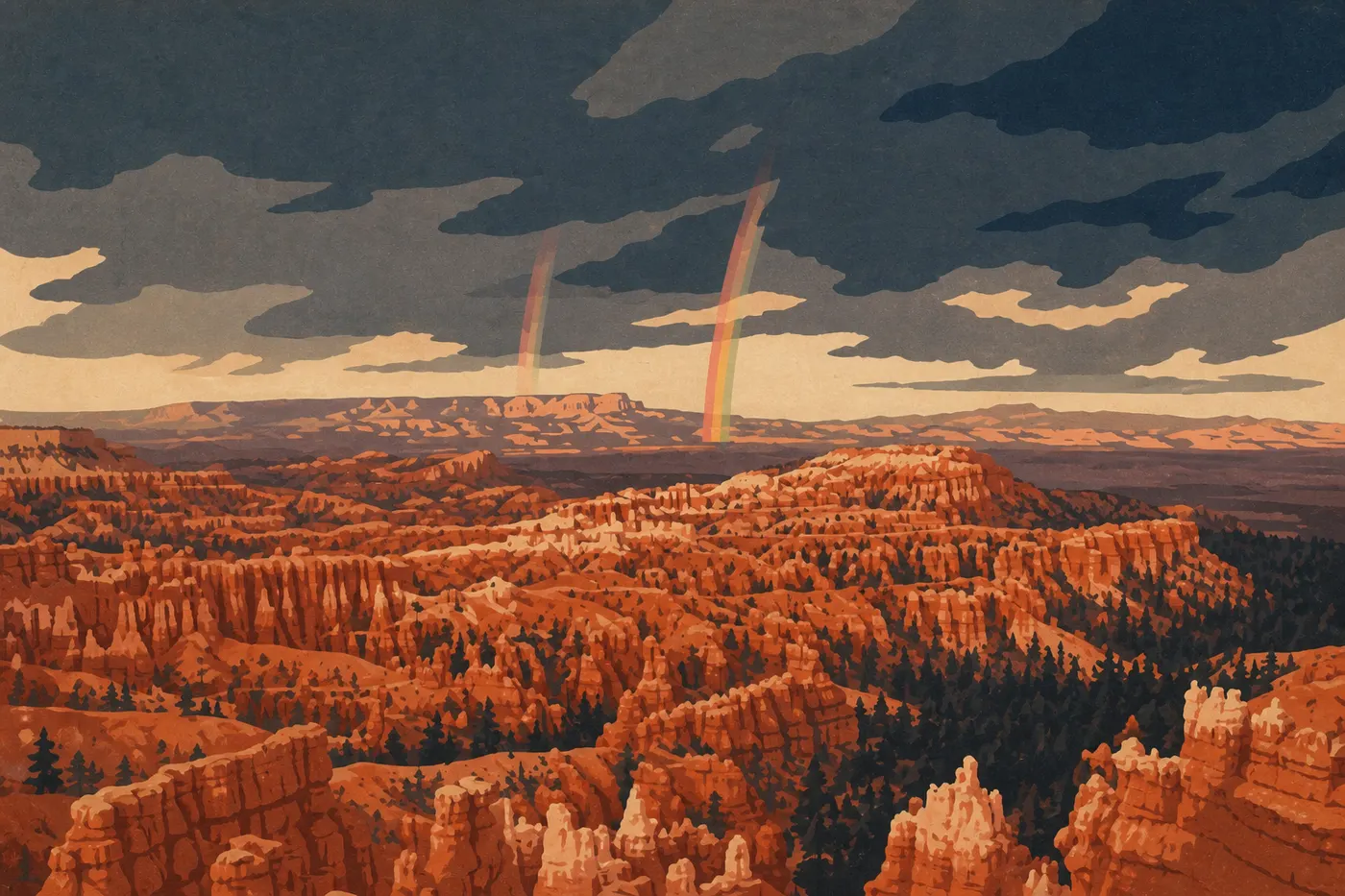
June is the most balanced summer month. Afternoon temperatures reach 72 to 75°F, trails are dry, days are long, and crowds have not yet reached their peak.
July and August bring two things to plan around. Monsoon thunderstorms in the Southwest develop almost daily between 1 and 4 p.m. They are brief but intense and may bring lightning to the overlooks. If you're in the amphitheater when the sky darkens, head back immediately. This is also the busiest time of year, and parking lots fill by 9 a.m.
Wildlife: Mule deer, Steller's jays, and ground squirrels are especially active at sunrise.
Things to do: Get up before dawn. Reach the overlooks before 8 a.m. for the light and to avoid the crowds. The park's free shuttle serves all major viewpoints from mid-May through mid-October. In summer, it's the most comfortable way to get around. For help planning your travel inside the park, the Getting Around Bryce Canyon guide covers shuttles, roads, and parking.
Crowds: Very heavy from July through mid-August. Book your lodging several months ahead. Our Where to Stay in Bryce Canyon page lists all the options inside and outside the park.
Fall (September to November)
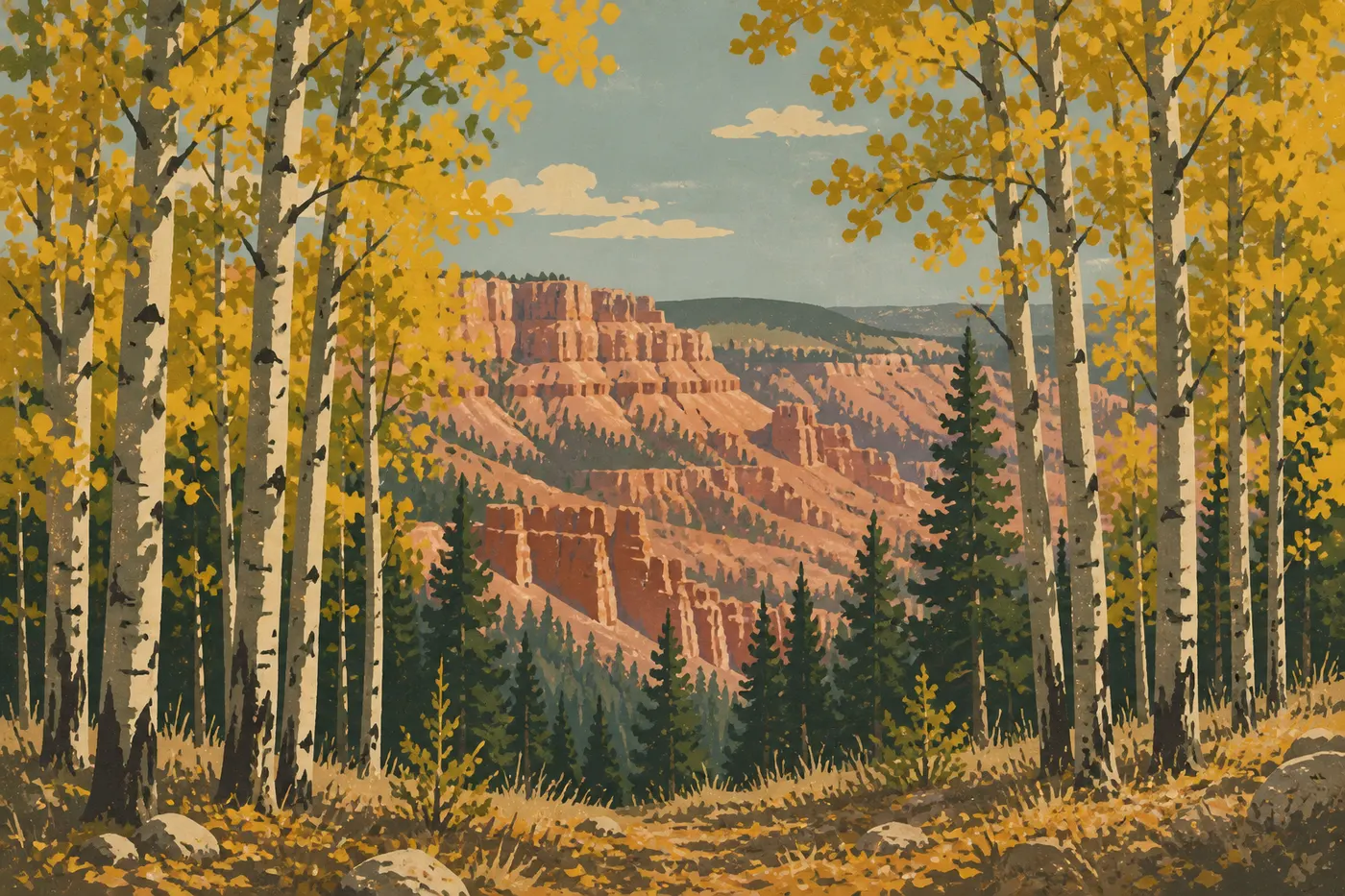
September and October are, according to many regular park visitors, the best weeks to visit Bryce Canyon. Low fall light brings out the orange colors of the hoodoos, the air is crisp, and crowds thin out sharply after Labor Day, the first Monday in September.
Weather: Mild during the day, from 59 to 72°F, with cool to cold nights starting in October. The first overnight freezes arrive in October, and snow is possible as early as November.
Wildlife: Mule deer enter the rut in October and are more active and visible at dawn along the plateau rim. Ravens and Steller's jays are everywhere around the overlooks. Our Bryce Canyon wildlife page explains which species to look for each season.
Things to do: All hikes remain accessible and in good condition through October. Sunrise from Bryce Point or Sunrise Point in fall produces remarkable photographs.
Crowds: Moderate in September, light starting in October.
Crowds: When to Avoid the Busiest Periods
| Period | Visitation |
|---|---|
| July-August | Very high |
| June, Labor Day weekend | High |
| May, mid-September | Moderate |
| October | Low to moderate |
| November-April | Low |
Crowds depend just as much on timing as on the month. In high summer, choosing a different overlook isn't enough because they're all busy. Shift your schedule instead. At sunrise, the light is at its best and the crowds are almost nonexistent. In the middle of the day, the opposite is true.
The park's free shuttle serves Fairyland, Sunrise, Sunset, Inspiration, and Bryce Point. It's especially useful from June through September, when it takes the stress out of parking. Don't hesitate to use it.
The Best Time for Your Budget
The entrance fee stays the same year-round: $35 per vehicle and $20 per person arriving on foot or by bicycle. The America the Beautiful Pass ($80) covers admission to all U.S. national parks for one year and pays for itself after two park visits. National Park Entrance Fees & Passes explains entrance fees and annual passes.
Most budget differences come down to lodging and flights.
Peak season (June-August): Lodges inside the park and properties in Bryce Canyon City, Panguitch, and Tropic charge their highest rates. Booking six months ahead is sensible for July and August.
Low season (November-April): Lodging prices drop significantly. Flights to Salt Lake City, the usual gateway about a four-hour drive away, are also more affordable outside summer.
Shoulder season (May, September-October): This is the best value. Lodging is available, rates are reasonable, and the weather is pleasant. Our Where to Stay in Bryce Canyon page, along with our dedicated Hotels & Lodges and Camping pages, covers the options for different budgets and preferences.
When to Go Based on Your Travel Style
Photography: Winter, for snow-covered hoodoos and cool, high-contrast light, or fall, for warm light and fewer crowds. Sunrise from Sunrise Point, a few minutes after dawn, produces low-angle light that sets the rock formations aglow. March often offers lingering snow with more manageable roads than January.
Hiking: May-June or September-October. Trails are clear and accessible, temperatures remain comfortable, and you can spend a full day hiking without dealing with extreme heat or afternoon thunderstorms.
Families: June or September. Moderate temperatures are easier on kids. Signature hikes such as Navajo Loop and Queen's Garden work for kids as young as 6 or 7 with proper supervision. Our Bryce Canyon with Kids page covers practical details and safety precautions.
Wildlife: Fall for the mule deer rut, or spring for raptors and hoofed animals returning to the plateau.
Tight budget: October-November or March-April. The weather is less predictable, but lodging is much cheaper and the park is nearly empty.
Utah road trip: May or September are the most versatile months for combining Bryce Canyon, Zion, Arches, and Canyonlands. Temperatures remain manageable across all the parks, including the lower, hotter canyons.
In Summary: The Best Time for Your Travel Style
The most versatile windows remain mid-May to mid-June and September. You get stable weather, manageable crowds, open trails, and a reasonable budget. These two windows offer the benefits without the major drawbacks of the other seasons.
Winter deserves special mention for photographers and anyone seeking solitude. Snow-covered hoodoos are a sight Bryce Canyon reliably offers every year, and trust us, it's worth braving the cold.
If you visit in July or August, plan your days around sunrise and sunset to avoid the crowds.
For complete trip planning, our complete Bryce Canyon guide brings together all the essential information.
The Worst Time to Visit Bryce Canyon
July and August combine the drawbacks that matter most to most visitors. Crowds hit their absolute peak, parking lots fill by 9 a.m., and overlooks stay packed all day. Monsoon thunderstorms develop almost every afternoon between 1 and 4 p.m., with a real risk of lightning on the ridges and in the amphitheater. When the sky darkens, leave exposed trails immediately. Add the year's highest lodging rates and the need to book several months ahead to find anything near the park.
Winter, from December through February, is the most demanding season physically, with nighttime temperatures around 12 to 10°F, secondary roads that may close after heavy snow, and icy trails. It's not off-limits to travelers with the right gear and a plan for the cold. But if you're not used to winter conditions, it's the most challenging season and the least suitable for a first visit.
Frequently Asked Questions
What's the best time to visit Bryce Canyon?
The best times to visit Bryce Canyon are May-June and September-October, when the weather is pleasant, trails are in good shape, and crowds are moderate. Winter is a strong alternative for photography and travelers who value peace and quiet.
Can you visit Bryce Canyon in winter?
Yes. The park is open year-round, including in winter. Snow-covered hoodoos are among the park's most memorable sights. Bring appropriate gear, including warm layers, waterproof and slip-resistant shoes, and snow tires or chains for your car, and check road conditions before leaving. Some services are reduced or closed from November through March.
When is peak season at Bryce Canyon?
Peak season runs from June through August, with the busiest period in July and August. Parking lots fill in the morning, nearby lodging books up months ahead, and rates are at their highest. If you visit during this period, reach the overlooks before 8 a.m. and use the park's free shuttle to avoid parking problems.
What is the least crowded month?
January and February are the quietest months of the year. Visitation generally remains low from November through April. If you want to visit without crowds, any winter month works as long as you're prepared for the weather and reduced services.
When is the best time to visit the American West?
For a road trip through the American West, including Utah, Arizona, Nevada, and California, May-June and September-October remain the most versatile windows. Expect manageable canyon temperatures, accessible trails, and available lodging.
When is the best time to visit Monument Valley?
Monument Valley, about 3.5 hours from Bryce Canyon, is best visited in fall, from September through October, or spring, from April through May. Avoid summer if you're sensitive to heat, as valley temperatures can easily climb above 104°F.
How long do you need to visit Bryce Canyon?
The Bryce Canyon Itinerary guide offers one-, two-, and three-day plans depending on how much time you have.
How much does a trip to Bryce Canyon cost?
Park admission costs $35 per vehicle and $20 per person arriving on foot or by bicycle. Lodging costs vary by season, and properties near the park are significantly more expensive in July and August than in spring or fall. Our Where to Stay in Bryce Canyon page lists options for every budget, from campgrounds to lodges.