
Bryce Canyon by RV: Campgrounds, Rules, and Tips
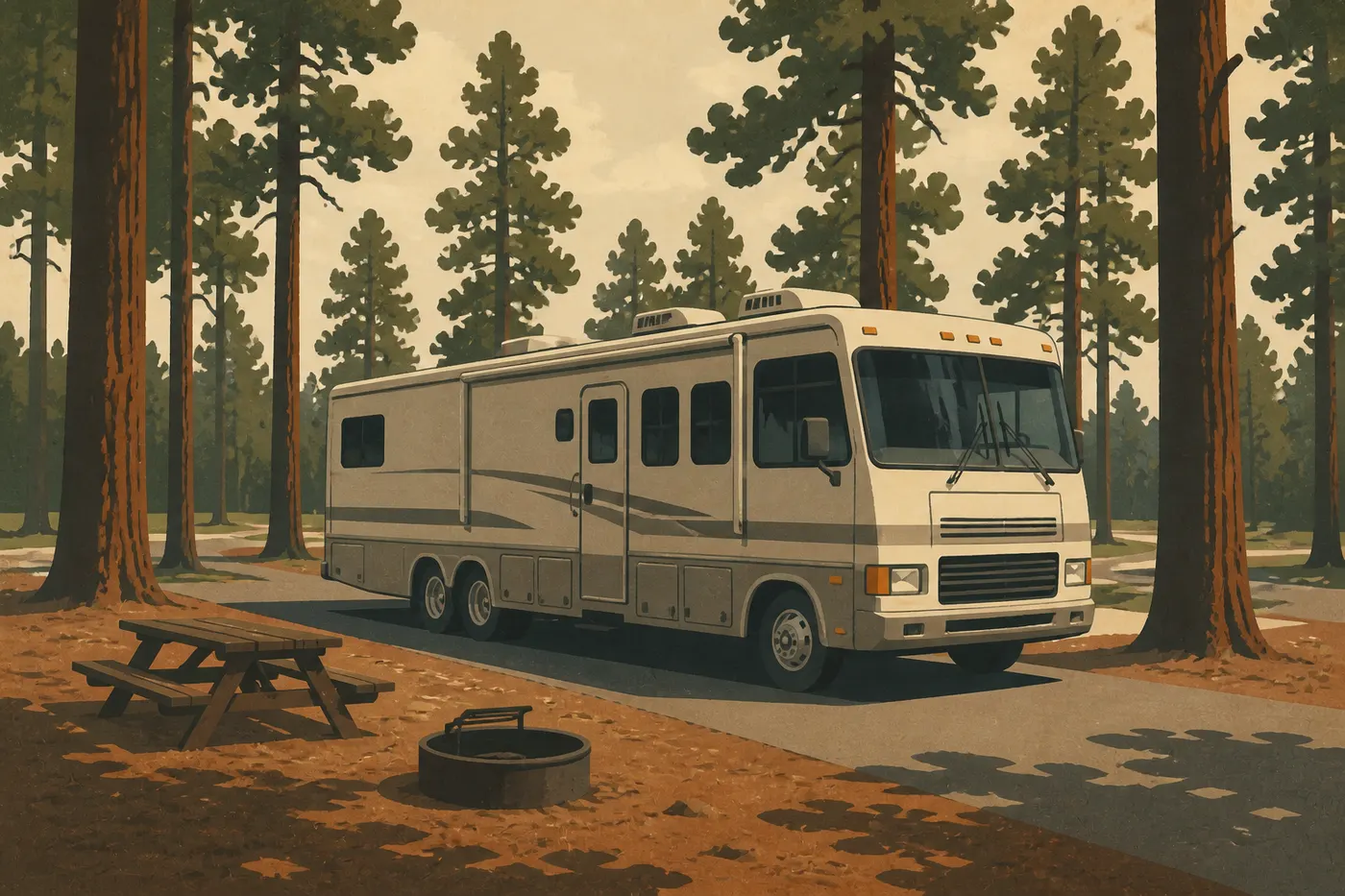
Bryce Canyon is easy to visit by RV, and it is one of the best ways to stay there. You can sleep at 7,900 feet, just a few hundred feet from the hoodoos, beneath one of the darkest starry skies in the United States. The biggest challenge is crowded parking lots from June through August, along with length limits on some sections of the Scenic Drive for very large vehicles. Here's what you need to know before you hit the road.
Can you drive and camp at Bryce Canyon in an RV?
Yes, with no special permit or escort. Unlike neighboring Zion, with its Zion-Mount Carmel Highway tunnel, Bryce Canyon has no dramatic access restrictions at the park entrance. UT-63, the main access road, is suitable for all vehicles. The Scenic Drive that runs through the park from north to south works for almost all standard RVs.
The park is open 24 hours a day, 365 days a year. The entrance fee is $35 per private vehicle, valid for 7 days. If your road trip includes several parks, the $80-a-year America the Beautiful pass quickly pays for itself. The Rates and Passes page explains entrance fees and passes.
RV restrictions and regulated roads
There is no permit-only tunnel, but a few real points to keep in mind.
Length limits. Beyond Bryce Point, toward the southern part of the Scenic Drive (Paria View, Yovimpa Point, and Rainbow Point), the curves tighten and turnaround areas get smaller. Vehicles with a combined length over 45 feet are officially not recommended on these sections. If you exceed that limit, stick to the northern part of the park. It has the most impressive viewpoints anyway.
Parking. During peak season (June through August), the overlook parking lots fill up before 9 a.m. The strategy that works is to park your RV at the campground as soon as you arrive, then use the park's free shuttle to get around. The shuttle routes and schedules are detailed in the transportation guide.
Generators. Their use is restricted to certain hours in the campgrounds. Signs at the loop entrances list the permitted times. Your tent-camping neighbors will appreciate it.
Speed. 35 mph on the Scenic Drive and 15 mph in the campgrounds.
For closures caused by snow, which are common from November through March, check Bryce Canyon access conditions.
The park's official campgrounds
Bryce Canyon has two NPS-managed campgrounds, and both accommodate RVs. Neither has electrical hookups. Reservations through Recreation.gov are essential starting in April.
North Campground
This is the park's central campground, just steps from the Visitor Center, Rim Trail, and the shuttle departure point. Several loops stay open year-round, including part of the campground in winter, while the others operate from fall through spring. RV sites in the dedicated loops generally accommodate vehicles up to about 30 feet. A few pull-through sites work for longer rigs. Potable water is available during the season. The typical rate is around $20 to $30 per night, depending on the loop.
Sunset Campground
Sunset Campground is open from around mid-April through October, depending on snowfall, and sits less than a mile's walk from Sunset Point. Its RV sites are slightly more spacious than those in some North Campground loops. The same basic setup applies: no electricity, water available on-site during the season, and similar rates. RV sites disappear within minutes when booking opens, six months before the date you want.
To explore all lodging options, including tents, lodges, and hotels, the Where to Stay in Bryce Canyon guide sums them up.
Boondocking and camping areas around Bryce Canyon
Wild camping is strictly prohibited inside the park. The BLM lands and Dixie National Forest surrounding Bryce Canyon, however, offer free dispersed camping spots, often less than a 30-minute drive away.
The area around Powell Point, accessed via UT-143, is well known among van lifers. It offers wide-open views of Utah's plateaus, complete quiet, and easy access for a standard RV. On a visit in early October, I had the plateau to myself at dawn, a luxury that is impossible to find inside the park during peak season.
Check with the Kanab BLM office before you leave. Some dirt-road access routes become challenging after heavy rain. These areas fit naturally into a longer circuit, and our Regions section brings together combined itineraries such as Bryce-Zion-Grand Staircase-Escalante.
Dump stations, water, and services
Both campgrounds in the park have dump stations for emptying black and gray water tanks. Potable water is available on-site during the season, while faucets are shut off in winter.
Outside the park, Bryce Canyon City, just inside the north entrance on UT-63, has the essential services. Ruby's Inn offers a dump station open to non-guests for a fee, along with a gas station, laundry, and a few stores. It is the most convenient place to fuel up before entering the park.
Stock up on groceries in Kanab, about an hour south, or Panguitch, about 30 minutes north. Prices in Bryce Canyon City are high, and the selection is limited.
Which campground is right for you?
For views and trail access. North Campground. Rim Trail starts on foot, the first viewpoint is 5 minutes away, and the shuttles leave just steps from the campground. It is the logical choice if you want to be on the rim at sunrise without fighting traffic.
For more space and quiet. Sunset Campground. It is a little less crowded and more open, with Sunset Point a 10-minute walk away. It is a good choice if you have a large rig and need room to maneuver.
For families. North Campground has the advantage of being right next to the Visitor Center, where Junior Ranger programs take place. Activities and programs for kids in Bryce Canyon are detailed there.
In the off-season (November through March). Only a few North Campground loops remain open. At 7,900 feet, temperatures regularly drop well below 32°F at night, so a reliable heating system is nonnegotiable. Bryce Canyon monthly temperatures and climate normals are available in the weather guide.
Renting an RV to visit Bryce Canyon
If you do not have your own vehicle, the two natural logistical bases are Las Vegas, about a 4-hour drive away, and Salt Lake City, about 3.5 hours away. Both cities have plenty of traditional rental companies, including Cruise America and El Monte, as well as peer-to-peer platforms such as Outdoorsy and RVshare.
For Bryce Canyon, a Class B camper van or a small Class C under 23 feet offers the best compromise. It fits into every campsite in the park's campgrounds, is allowed on the entire Scenic Drive, and remains nimble enough for boondocking on the surrounding BLM lands.
Book 3 to 4 months ahead for July and August, since fleets are often fully booked. To plan the legs of a multi-park Utah road trip, the Bryce Canyon Itinerary guide provides the key distances.
RVs, pets, budget, and reservations: what to know
Pets. Dogs are welcome in the campgrounds and on paved roads, but they are prohibited on unpaved trails and in the backcountry. Leaving an animal alone in a vehicle in hot weather is entirely your responsibility.
Campsite budget. Expect to pay $20 to $30 per night in NPS campgrounds, without electricity. Private campgrounds in Bryce Canyon City cost more but offer full hookups, including water, electricity, and sewer.
Reservations. Recreation.gov opens booking windows six months ahead. For RV sites in July and August, sites disappear within minutes when reservations open. Turn on availability alerts if you miss your target date.
Entrance fee. $35 per private vehicle, valid for 7 days. The America the Beautiful pass ($80 a year) covers admission to all federal national parks. It pays for itself after visiting two parks in a year.
In summary: our Bryce Canyon RV plan
Reserve your site at North or Sunset Campground on Recreation.gov as soon as booking opens, six months before your target date. Arrive on a Tuesday or Wednesday if possible to avoid the weekend rush. In the morning, head out early on Rim Trail from the campground, before the shuttles start running and the parking lots fill up. Leave the RV at the campground for the rest of the day and take the shuttle. Buy groceries in Kanab or Panguitch rather than Bryce Canyon City.
In fall or spring, boondocking on the BLM lands around Powell Point is a serious alternative. You get quiet and an unobstructed sunrise.
Our complete Bryce Canyon guide is the best place to start planning the rest of your trip.
Frequently asked questions
Can you camp at Bryce Canyon?
Yes, you can camp at Bryce Canyon in two NPS campgrounds: North Campground, with some loops open year-round, and Sunset Campground, open from around mid-April through October. Reservations through Recreation.gov are strongly recommended during peak season.
Can you visit Bryce Canyon by RV?
You can absolutely visit Bryce Canyon by RV, with no permit or escort. The park has no restriction equivalent to Zion's Zion-Mount Carmel Highway tunnel. Only combined vehicles over 45 feet should avoid certain sections of the Scenic Drive beyond Bryce Point.
Can you park an RV anywhere at Bryce Canyon?
No, unrestricted parking is prohibited in the park. During peak season, overlook parking lots are reserved for smaller vehicles and fill up before 9 a.m. The recommended solution is to park your vehicle at the campground and take the park's free shuttle.
Where are RVs prohibited at Bryce Canyon?
Long RVs, over 45 feet combined, are not recommended on the southern section of the Scenic Drive beyond Bryce Point. Wild camping is prohibited inside the park. Some short campsites in the campgrounds are also unsuitable for large rigs.
Which campground should you choose at Bryce Canyon?
The right campground at Bryce Canyon depends on your priorities. North Campground is the most central, within walking distance of Rim Trail and the shuttles. Sunset Campground is slightly more spacious and quieter, with Sunset Point a 10-minute walk away.
How much does an RV campsite cost at Bryce Canyon?
An NPS campground site costs $20 to $30 per night, without electricity. Private campgrounds in Bryce Canyon City offer sites with full hookups at higher rates. For entrance fees and annual passes, see the National Parks Rates and Passes page.
What is the best time to visit Bryce Canyon by RV?
The best time to visit Bryce Canyon by RV is May through June or September, when the weather is pleasant, crowds are moderate, and the campgrounds are open. July and August are the busiest months and often bring afternoon thunderstorms. From November through March, nighttime temperatures regularly fall below 32°F. Our When to Go page compares all the seasons in detail.