
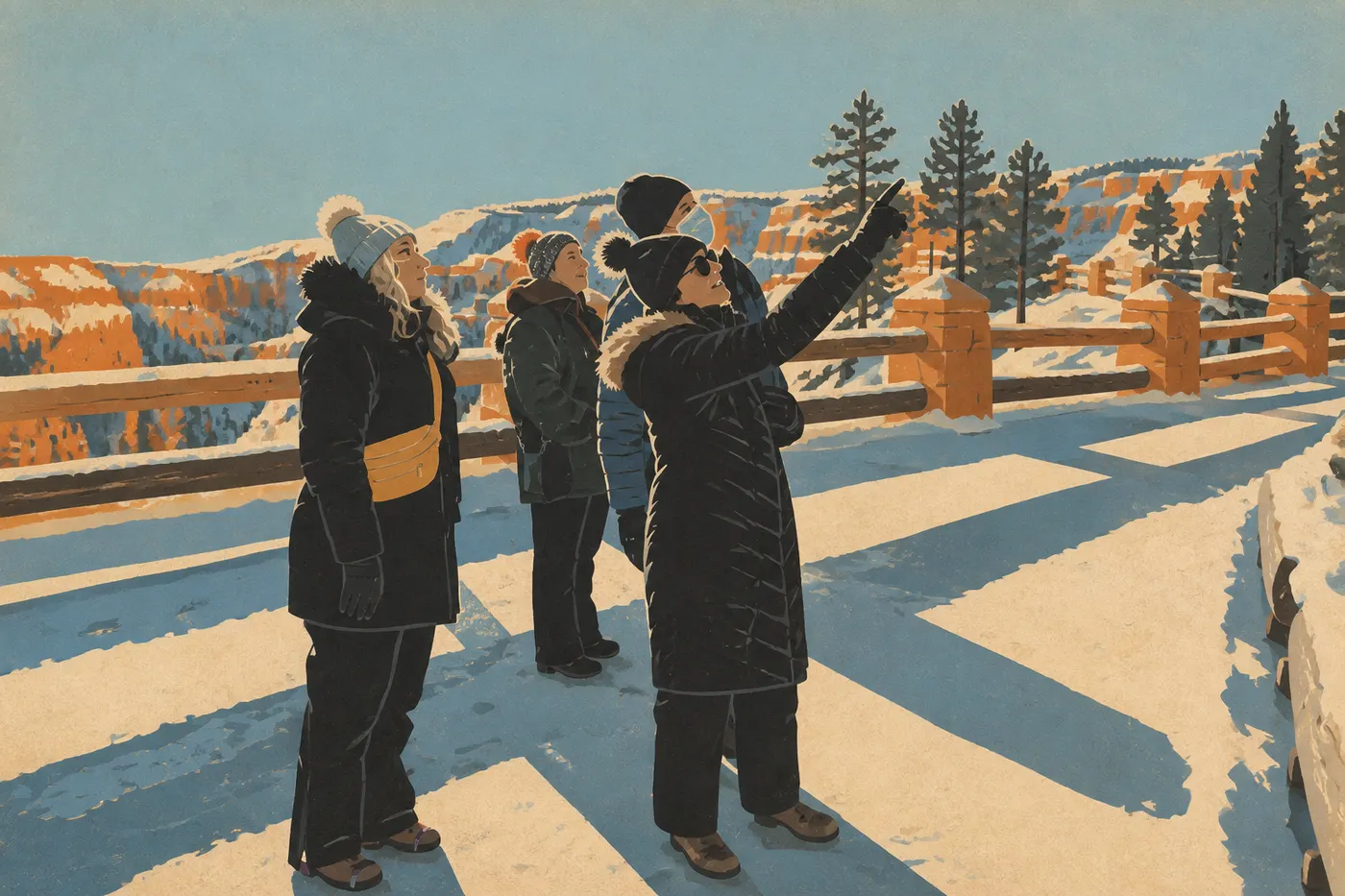
Bryce Canyon with Kids: What to Do and How to Plan Your Visit
Is Bryce Canyon a good fit for families? In a word, absolutely. This Utah national park wins kids over at first sight with its thousands of hoodoos, free shuttle, and trails that work for little legs. Families can bring kids as young as 5 or 6 for the easiest hikes, and some sections of the Rim Trail even work with an all-terrain stroller. There's one thing to keep in mind: the elevation tops 7,900 feet.
Why Visit Bryce Canyon with Kids
Bryce Canyon has something few national parks can claim: it's spectacular right away. You don't have to hike for two hours before you see something. From the Bryce Amphitheater overlooks, including Sunrise Point, Sunset Point, Inspiration Point, and Bryce Point, you can take in the hoodoos just steps from the parking lot. For a 4-year-old, that's an instant win.
The wildlife is another big draw. Utah prairie dogs are everywhere around the entrance area, and mule deer sometimes wander right into the campgrounds. Ravens glide low over the overlooks with surprising confidence. A child who loves nature will have plenty to fill an observation journal.
The park's size is a third advantage. Bryce Canyon is more compact than Zion or Grand Canyon. You won't spend a week figuring out where everything is, which cuts down considerably on the logistical fatigue of traveling with kids.
Is Bryce Canyon Good for Kids? What Age Is Best?
The park works well for families with kids ages 4 or 5 and up if you stick to overlooks and the shuttle. For descending into the amphitheater on the Navajo Loop and Queen's Garden, we recommend age 7 and up. The elevation change is short, at 425 to 550 feet, but the climb back follows a rocky trail with the sun in your face.
Here are a few Bryce Canyon-specific things to keep in mind:
- Elevation: the park sits between 7,900 and 8,900 feet. Altitude sickness is uncommon at these elevations for healthy adults, but very young children may feel tired or develop a headache on the first day. Plan a lighter first day.
- Strollers: the Rim Trail is accessible in sections. Ask at the Visitor Center when you arrive which sections are currently suitable for strollers.
- Accessibility: some overlooks are wheelchair accessible. The Visitor Center staff can point you in the right direction.
With a baby or toddler under 3, you can still enjoy the park from the overlooks, shuttle, and prairie dog areas, but the trails aren't designed for front carriers on steep descents.
When to Visit Bryce Canyon with Kids
The easiest times to visit with kids are May and June or September. Daytime temperatures range from 59 to 77°F, the trails are clear, and crowds remain manageable.
July and August bring beautiful days, with temperatures from 70 to 81°F. The shuttle runs at full capacity, but thunderstorms often roll in between 2 and 5 p.m. If you start hiking early and are back up by 1:30 p.m., you should be fine. Just stay off exposed ridges and amphitheater edges during lightning.
November through April can work for teenagers who enjoy snowy scenery, as long as you bring serious winter gear. Overnight temperatures often drop below freezing from March through May, and significant snowfall remains possible in March and April. With young children, we'd skip it.
Our Weather page and When to Visit guide cover conditions month by month.
How Many Days Do You Need for a Family Visit?
Two full days are enough for a family with kids. Spend one day at the amphitheater, visiting overlooks and taking one trail down, then use the other for the Scenic Drive south, including Natural Bridge, Paria View, and Yovimpa Point, plus Mossy Cave to the north.
Three days give you time for a horseback ride, an astronomy program, or another hike without rushing.
You can do it in one day if you stick to the highlights, such as the overlooks and Navajo Loop, but you'll leave feeling a little rushed. If you can only make one stop on a busy road trip, spending two nights here really makes a difference.
Our Itinerary and Length of Stay guide offers sample days based on the number of nights you have.
What to Do in Bryce Canyon with Kids: Our Picks
Here's what we'd prioritize for a family visit.
The Amphitheater Overlooks
Sunrise Point, Sunset Point, Inspiration Point, and Bryce Point form the heart of the park. Allow 15 to 20 minutes at each overlook, plus time to explain what a hoodoo is and how freeze-thaw cycles sculpt these formations. The NPS brochure available at the Visitor Center does a good job on this. Bryce Point is often the kids' favorite: you look out over the entire amphitheater, and the view feels dizzying without being dangerous.
The Free Shuttle
During the season, roughly May through October, a free shuttle serves all the main overlooks. With kids, it's a real relief: no parking stress, and you can hop on and off as much as you like. The bus ride itself becomes part of the fun.
The Prairie Dogs
Just before the park entrance, Utah prairie dogs dig their burrows in open fields on both sides of the road. Stop for a few minutes. Kids are invariably captivated by these social rodents as they whistle and stand on their hind legs. On a May visit, I remember seeing that year's young just emerging from their burrows and jostling around the adults. It was hard to pull the kids away.
Mossy Cave
This 1.0-mile round-trip trail, reached from UT-12 north of the park, is often overlooked. It follows a small stream, a rarity in the park, then leads to a moss-covered grotto and a modest trickle of water. It's concrete, varied, and a welcome change from all those stone panoramas.
The Visitor Center
Stop there when you arrive, not just for the restrooms. Bryce Canyon's Visitor Center has an introductory film and exhibits on geology and wildlife. It's also where kids pick up their Junior Ranger booklets. Allow 30 to 45 minutes.
Our Things to Do guide to Bryce Canyon covers all the activities available in the park.
Easy Family Hikes: Short, Little Elevation Gain, Stroller-Friendly
Rim Trail, Sunrise Point to Sunset Point: about 1.0 mile, nearly flat, and paved in places. The trail follows the edge of the amphitheater with constant views of the hoodoos. An all-terrain stroller works for most of the route.
Queen's Garden Trail: about 1.8 miles round-trip, with 300 feet of elevation gain. The trail descends gradually into the amphitheater to a formation that resembles Queen Victoria, depending on which account of the name you believe. The climb back is straightforward, but good shoes are essential. No problem for kids ages 6 or 7 and up.
Navajo Loop: 1.4 miles round-trip, with about 550 feet of elevation gain. The descent passes through the narrow Wall Street corridor, lined with century-old Douglas firs wedged between the walls. The climb back is steep over the final 1,000 feet. Best for confident walkers ages 7 and up.
Mossy Cave: 1.0 mile round-trip, with minimal elevation gain. It's ideal for families with 4- or 5-year-olds, or as a second outing late in the day.
Queen's Garden and Navajo Loop combined: 3.0-mile loop, the park's most popular combination. Descend through Queen's Garden, cross the floor of the amphitheater, and climb back up via Navajo Loop. Our recommendation for families with kids 8 and up who are in good physical shape.
Our Hiking guide breaks down each trail with elevation profiles and practical advice.
The Junior Ranger Program
The Junior Ranger program is an NPS institution that kids love. At the Visitor Center, pick up an activity booklet suited to your child's age, since there are several levels. Kids complete it during the visit with field observations, drawings, and geology or wildlife quizzes, then return to have it checked by a ranger. In exchange, they receive an official Bryce Canyon badge and take a pledge to protect the national parks.
For a child ages 5 to 12, it's often the number-one souvenir of the trip. The booklet gives the visit a direction and a concrete goal, and encourages kids to really observe their surroundings instead of staring at a screen. The badge is free, while the booklet costs a few dollars.
Bryce Canyon also offers evening programs at the campground, led by rangers and focused on astronomy or geology. The park's night sky, more than 7,900 feet above sea level and far from light pollution, is one of the area's great experiences. Check the schedule posted at the Visitor Center.
Safety with Kids at Bryce Canyon
Elevation and hydration: at 7,900 to 8,900 feet, the air is drier and dehydration sets in faster than at low elevation. Bring at least 1.5 liters of water per person for a half day of hiking, even when it's cool.
Sun and UV exposure: elevation increases ultraviolet exposure. SPF 50 sunscreen is essential, even in May. Wide-brimmed hats are a must for kids.
Thunderstorms in July and August: if you hear thunder, don't stay on exposed ridges or overlooks. Head immediately toward wooded areas or return to a building. Rangers repeat this safety rule constantly.
Cliff edges: guardrails protect the overlooks, but not every section along the Rim Trail has a barrier. With young children, stay on marked trails and keep a safe distance from the edges.
Wildlife: the park's animals, including deer, coyotes, ravens, and prairie dogs, are wild. Don't feed or approach them. Prairie dogs can bite and transmit disease. Admiring them from a distance is more than enough.
Changing temperatures: even in summer, mornings and evenings are cool, around 50 to 59°F. Pack an extra layer for each child.
Find all of the park's practical information in our Bryce Canyon guide.
Where to Stay with Kids, in and Around the Park
Inside the park: Bryce Canyon Lodge is the historic lodging option, with cabins and rooms that fill up months in advance. Reserve as soon as your road trip is set. The park campgrounds, Sunset Campground and North Campground, work well for families with tents or RVs, but cool nights call for the right gear even in summer.
Outside the park: the town of Bryce Canyon City, just outside the gates, has several hotels with family-friendly amenities such as a pool and on-site restaurant. It's often easier with kids: you get more space and don't have to deal with campground logistics every night.
Our Where to Stay guide, our Hotels and Lodges guide, and our Camping guide cover the options, rates, and booking advice.
Meals and Breaks with Kids
Food options in and around the park are limited, so it's worth knowing that before you arrive with hungry kids.
Inside the park: the Bryce Canyon Lodge restaurant serves meals in a welcoming setting. Reservations are strongly recommended during the season. The General Store sells snacks, drinks, and a simple menu that's perfect for a quick lunch.
Outside the park: Ruby's Inn, 0.9 miles from the entrance, has a restaurant and buffet that work well for families. A few grocery stores make it easy to put together a picnic. We recommend it: the picnic tables near Sunset Point are hard to beat.
Our advice: bring snacks and a full water bottle for each outing in the park. Water sources are scarce on the trails.
Family Budget for Bryce Canyon
Entrance: $35 per vehicle, the current NPS rate, valid for 7 days. The fee is $20 per person if you enter on foot or by bicycle. If you're visiting several national parks on this road trip, which is very likely around Bryce Canyon, the $80 America the Beautiful pass covers the entire federal recreation system for one year and pays for itself by the time you visit your second park.
Free admission for kids: children under 15 enter all U.S. national parks for free. That's a system-wide NPS rule.
Free NPS days: the NPS offers several free-admission days each year, including Martin Luther King Jr. Day, the NPS birthday in August, and Veterans Day. Check the official calendar before you leave.
Our Fees and Passes page explains entrance fees and passes.
Places to Combine with Bryce Canyon for a Family Trip
Bryce Canyon fits naturally into a Utah road trip with kids because it's surrounded by scenery that's easy to access.
Zion National Park: about 1.5 hours southwest. Red canyons, the Virgin River, which kids can enjoy, and the Emerald Pools Trail. It's the most common pairing with Bryce Canyon.
Capitol Reef National Park: 2 hours east via the beautiful UT-12, one of the most scenic roads in the United States. It's less crowded and has apple orchards open to visitors during the season.
Grand Staircase-Escalante National Monument: drive UT-12 between Bryce Canyon and Capitol Reef. There aren't many developed trails for young children, but the scenery from the road alone makes the stop worthwhile.
Horseshoe Bend, Arizona: farther away, but easy to include in a 10- to 14-day road trip. The dramatic overlook is a 15-minute walk from the parking lot, and it's a must-see for kids.
Our Road Trip guide offers itinerary ideas around Bryce Canyon, while our Regional guide covers the most common combinations.
Bryce Canyon with Kids: Is It Worth It?
The answer is yes, for practical reasons. The park offers instantly striking scenery without demanding hours of hiking. Kids quickly understand hoodoos and love playing a game of spotting formations that look like something else. The game can easily last two hours. The free shuttle, Junior Ranger program, short trails, and prairie dogs make Bryce Canyon a park that works for kids ages 5 to 15 without forcing the issue.
The only real constraint is the elevation. Plan a lighter first day while everyone adjusts, and the visit should go smoothly. For families, Bryce Canyon remains one of the most accessible and visually rewarding parks in the American West.
Frequently Asked Questions
Is Bryce Canyon a good fit for families?
Bryce Canyon works well for families with kids ages 4 or 5 and up if you stick to overlooks and the shuttle, and for kids 7 and up on trails in the amphitheater. The elevation, from 7,900 to 8,900 feet, deserves special attention on the first day, but the park remains one of the most family-friendly in the American West thanks to its compact size and immediately rewarding scenery.
How long does it take to visit Bryce Canyon?
Two full days are ideal for a family with kids. Spend one day at the amphitheater, visiting overlooks and taking one trail, and another on the Scenic Drive and at Mossy Cave. One day is possible if you stick to the highlights, but you'll leave feeling like you rushed through.
What's the best time to visit Bryce Canyon?
May and June or September are the best times for a family visit, with comfortable temperatures from 59 to 77°F, clear trails, and reasonable crowds. July and August are lively, but afternoon thunderstorms mean you should start hiking early and be back before 2 p.m.
What are the best things to do in Bryce Canyon with kids?
The amphitheater overlooks, including Sunrise Point, Sunset Point, and Bryce Point, the free shuttle, the Rim Trail and Navajo Loop, the Junior Ranger program at the Visitor Center, watching prairie dogs near the park entrance, and evening campground programs are the experiences best suited to families.