
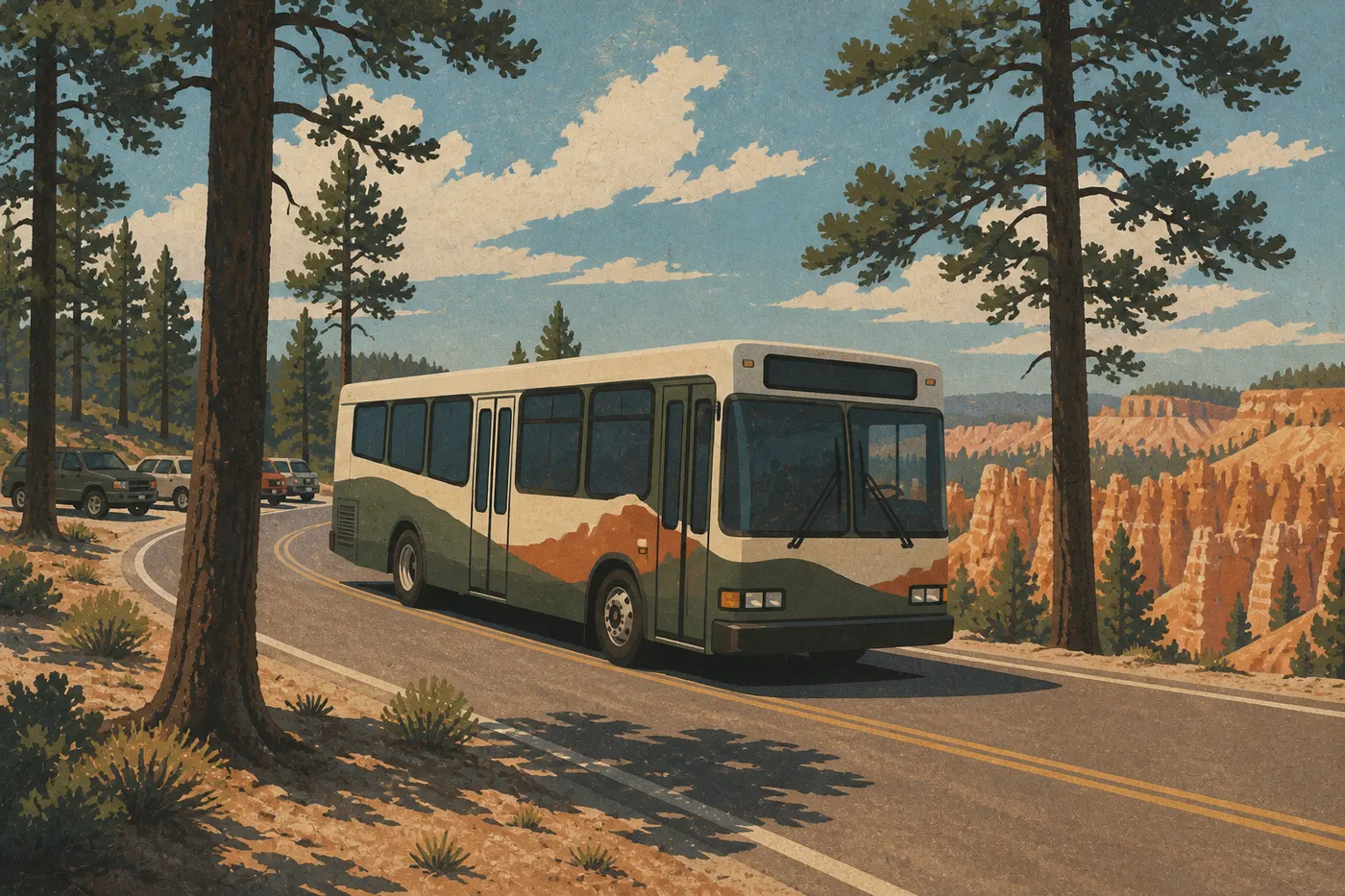
Getting Around Bryce Canyon: Shuttle, Parking, and Driving
Bryce Canyon is primarily a driving destination. In summer, a free shuttle serves the main viewpoints and saves you the headache of finding a parking spot. Parking lots near the most popular viewpoints fill up before 10 a.m. in July and August.
For getting to Bryce Canyon from Salt Lake City or Las Vegas, or as part of a Utah national parks road trip, transportation options and arrival information are covered in the Getting to Bryce Canyon guide.
Getting Around the Park
By Car
The Scenic Drive is fully paved and runs from the Visitor Center to Rainbow Point for about 18 miles. The speed limit is 35 mph on nearly the entire route. Follow it, because deer and mountain lions can cross without warning.
The road is two-way. The southern section beyond Bryce Point has a few sharp turns that require extra attention, especially in a long vehicle.
By Shuttle
The park's free shuttle is the best option during peak season. It generally runs from mid-April through late October, with buses arriving every 12 to 15 minutes during the busiest hours.
The main route connects the park-and-ride lot outside the park near Ruby's Inn with the Visitor Center, then continues to the Sunset Point, Sunrise Point, Inspiration Point, and Bryce Point stops. The shuttle runs in both directions. Hike down into the canyon from one viewpoint, then take the shuttle back from another.
When we visited in July, Sunset Point was full by 9:30 a.m. The shuttle saved us half an hour of circling the Scenic Drive looking for a spot.
By Bike and on Foot
Bikes are allowed on the Scenic Drive, but the elevation changes are substantial. Rainbow Point reaches about 9,100 feet. This is best left to cyclists who are used to exertion at high altitude. Mountain bikes aren't allowed on the canyon trails.
The Rim Trail follows the plateau for more than 5 miles between Fairyland Point and Bryce Point. It's the only section in the main area where bikes are allowed. For hikes into the canyon, see the Bryce Canyon hiking guide.
Where to Park: Parking Lots and Overnight Parking
Parking lots are spread along the Scenic Drive. The main ones are listed below.
- Visitor Center: the largest lot and the shuttle's starting point.
- Sunset Point: the busiest lot, often full before 9:30 a.m. in summer.
- Sunrise Point: similar capacity and the same peak-season crowding.
- Inspiration Point and Bryce Point: slightly less crowded, but subject to the same pattern.
- Southern section (Farview Point, Natural Bridge, Rainbow Point): much quieter, especially in the morning.
The rule of thumb is simple. Arrive before 9 a.m. in July and August, or use the park-and-ride lot outside the park and take the shuttle. You can't reserve parking in the park. Spots are available on a first-come, first-served basis.
Overnight parking is reserved for campers in designated areas. The Bryce Canyon camping guide explains the rules and lists the available sites.
Distances and Drive Times Between Areas
The Scenic Drive extends for 18 miles one way, and you'll return by the same route. Here are some useful reference points.
- Park entrance → Visitor Center: about 2 miles (5 minutes).
- Visitor Center → Bryce Point: about 4 miles (10 minutes).
- Bryce Point → Rainbow Point: about 14 miles (25 to 30 minutes, with winding roads and turns).
- Full drive from the entrance to Rainbow Point: about 18 miles. Allow 35 to 40 minutes without stops.
With stops at the viewpoints, plan on half a day to cover the entire road, or a full day if you hike down into the canyon. Our Itinerary and Timing guide lays out combinations based on how much time you have.
Special Cases: RVs, Vans, Accessibility, and Pets
RVs and camper vans. The Scenic Drive is accessible to the vast majority of vehicles. Beyond Bryce Point, the narrow turns make the road unsuitable for long trailer combinations. Vehicles with a combined length of more than about 45 feet are officially not allowed beyond this point. The Bryce Canyon RV guide has all the information specific to this type of trip.
Accessibility. Several viewpoints are wheelchair accessible (Sunrise, Sunset, Inspiration, and Bryce Point). The Rim Trail between Sunset and Sunrise Points is accessible with an all-terrain wheelchair. The Visitor Center and shuttles are equipped for visitors with mobility needs.
Pets. Dogs are allowed on a leash in parking lots, on roads, and on the Rim Trail between Sunset and Sunrise Points. They're not allowed on any of the park's other trails. Never leave a pet alone in a vehicle. At this elevation, temperature swings can be severe, with winter nights well below freezing and the inside of a vehicle heating up quickly in summer.
Practical Transportation Information
Gas. There are no gas stations inside the park. The closest fuel stop is Ruby's Inn, just outside the north entrance. The town of Tropic, about 11 miles east on UT-12, also has a gas station. Fill up before entering if you plan to reach Rainbow Point during the day.
Cell service. It's almost nonexistent in the park. Don't count on real-time Google Maps once you're inside. Download offline maps through the free NPS app or AllTrails before leaving town.
Road conditions. In winter (December through February) and spring (March through April), snow can temporarily close the southern section of the Scenic Drive. Check real-time alerts on the official NPS website before you leave. In July and August, thunderstorms often develop in the afternoon, so adjust your schedule if you're on an exposed trail. The Bryce Canyon weather guide explains seasonal changes and the best times to visit.
Frequently Asked Questions
Where should I park at Bryce Canyon?
The main parking lots are at the Visitor Center, Sunset Point, Sunrise Point, Inspiration Point, Bryce Point, and in the southern section (Farview Point, Natural Bridge, and Rainbow Point). During peak season, the lots in the northern section fill up before 10 a.m.
Where's the best place to park at Bryce Canyon?
In summer, your best option is to use the park-and-ride lot outside the park near Ruby's Inn and take the free shuttle. If you're driving, the lots in the southern section (Rainbow Point and Ponderosa Canyon) are much quieter in the morning.
Can you drive through Bryce Canyon?
Yes. The 18-mile Scenic Drive is open to passenger vehicles and most RVs. Trailer combinations longer than about 45 feet aren't allowed beyond Bryce Point.
How long does it take to visit Bryce Canyon?
Half a day is enough to see the main viewpoints by car or shuttle. A full day gives you time to add one or two hikes into the canyon. Our Itinerary and Timing guide offers sample plans based on how much time you have.