
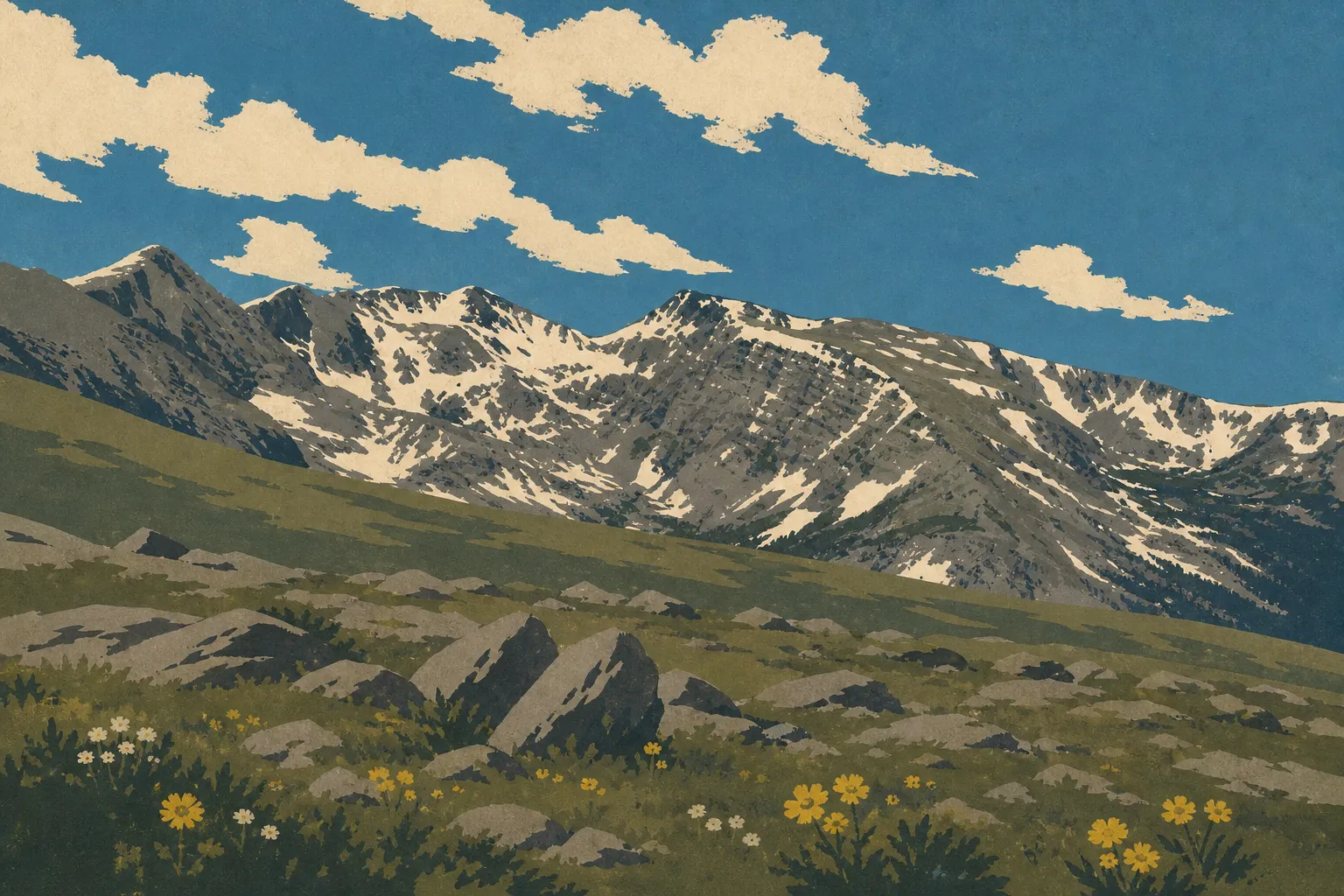
Rocky Mountain National Park: The Complete Visitor Guide
Rocky Mountain National Park is Colorado's high country packed into one main road, more or less: peaks rising above 13,800 feet, glacier-carved lakes tucked beneath sheer walls, and herds of elk grazing in high meadows. You come here to drive above treeline, hike to a mountain lake, and spot wildlife that does not always keep its distance. Plan on two days for a good overview, and more if you want to do some serious hiking. The park is easy to explore by car, as long as you plan ahead for the summer timed entry reservation and the altitude, which can catch up with you quickly.
Here's how to plan your visit: where the park is, how to get there, what it costs, how much time to allow, and, most importantly, what to see in each area.
Rocky Mountain at a Glance: Location and Access
The park is in northern Colorado, about a 1.5-hour drive northwest of Denver. Two distinct sides are separated by the Continental Divide, with two very different gateway towns.
The east side, the busier of the two, begins near Estes Park, a small mountain town packed with restaurants and places to stay. From Denver, take Interstate 25, then U.S. Highways 34 or 36 west to Estes Park. This is where you'll find the main entrances, visitor centers, and the Bear Lake area.
The quieter, more heavily forested west side is reached through Grand Lake. Get there via Interstate 70 and U.S. Highway 40 toward Granby. The two sides connect during the warmer months via the high-elevation road through the park, but it closes in winter. You cannot cross from one side to the other through the park then.
The park is open 24 hours a day, 365 days a year. Several roads and facilities close during the winter season, however, so do not plan a cross-park route between November and May without checking road conditions.
Entrance Fees, Passes, and Reservations
You pay the entrance fee per vehicle, and the ticket remains valid for several consecutive days, which is ideal if you're staying nearby. Expect to pay around $30 to $35 per private vehicle, $25 to $30 per motorcycle, and $15 to $20 per person if you arrive on foot or by bike, depending on the season.
If you plan to spend several days in the park or make multiple entries, the $70 annual park pass quickly pays for itself. And if your road trip includes several U.S. national parks, an interagency pass will be an even better deal. Our Fees & Passes page explains entrance fees and annual passes.
The one thing you cannot overlook is the timed entry reservation required during peak season, especially for the Bear Lake Road area. Without one booked in advance, you may have to turn around at the entrance during busy hours. The dates and rules change from year to year, so check them before you leave. We keep them updated on our Practical Information, Rules & Safety page. Also, park stamps are part of the fun. See our Passport & Stamps page.
Reservations, Permits, and Rules
Timed Entry Permit
From late May through mid-October, with exact dates varying from year to year, you'll need a timed entry reservation at recreation.gov to enter the park. There are two entry windows: before 9 a.m. and between 9 a.m. and 2 p.m. Without a reservation for one of these windows, you cannot enter during those hours.
Reservations open several weeks before the season, and July and August weekends sell out within minutes. Reserve your time slot as soon as your dates are set.
The timed entry reservation is an additional fee. It does not replace the entrance fee.
To enter without a reservation, arrive before the first time window or after 2 p.m. during the timed-entry season. The exact rules may change from year to year, so check nps.gov/romo before your visit.
Backcountry Permits
Overnight trips outside developed campgrounds, including backpacking and high-elevation camping, require a wilderness permit, also available at recreation.gov. The alpine season is in high demand, so submit your application as early as possible.
Essential Rules
Wildlife: Never feed animals, and stay at least 75 feet away. A bull elk or a cow elk with calves can be dangerous, even when it seems calm.
Dogs: Dogs are allowed on roads and in parking lots, but must be kept on a leash no longer than 6 feet. They are not allowed on trails or in wilderness areas.
Drones: Drones are prohibited throughout the park.
Fires: Fires are prohibited outside designated areas. During drought conditions, a total fire ban may be issued. Check the alerts at nps.gov before you leave.
Getting Around Rocky Mountain
You explore the park by car, and driving is one of its great pleasures. Two main roads shape most visits.
Trail Ridge Road crosses the park from east to west and climbs above 11,800 feet, well above treeline. You drive through alpine tundra, passing overlooks every few miles and, often, marmots along the road. It is an experience in its own right, not just a way to get from one place to another. It is open only seasonally, generally from late May through October depending on snowfall.
The other major route serves the Bear Lake area, home to the most accessible hikes. Parking lots fill by midmorning, so the park runs free shuttles from a large park-and-ride lot during the season. Our advice is simple: park early and let the shuttle do the rest. You will avoid circling for an hour looking for a space.
For shuttle details, schedules, and parking tips, head to our Getting Around page.
How Long Should You Spend in Rocky Mountain?
One day is enough for a first taste: take Trail Ridge Road in the morning, go for a short walk around a lake in the afternoon, and leave with some great memories. But you will want more.
Two days is the right balance. Spend one day on Trail Ridge Road and the west side, and another in the Bear Lake area with a hike. Three days or more make perfect sense if you enjoy hiking, since the best lakes require a walk and the altitude calls for a slower pace than you may be used to.
We offer detailed, hour-by-hour itineraries on our Itinerary & Length of Stay page.
Plan your visit
What to See and Do in Rocky Mountain
The park breaks down into a few major areas. Here's how to approach them. Our Things to Do page covers the activities in detail.
Road trip journal · 3 areas
The High-Elevation Road and Alpine Tundra
This is the park's signature stretch. Over about 19 miles, you go from conifer forest to alpine tundra, a stark, low-growing landscape usually found much farther north. Overlooks come one after another, the Alpine Visitor Center marks the high point, and short trails let you walk across the tundra without wearing yourself out. Watch the weather. Afternoon thunderstorms are common in summer, and there is no shelter up there.
The Bear Lake Area
Reached from the east side of the park, this area has the most photogenic glacier-carved lakes and the best family-friendly hikes. Bear Lake itself is just a few minutes' walk from the parking lot. Other lakes higher up require a real climb. This is the park's busiest area, hence the shuttle and timed entry reservation.
The West Side and Grand Lake
Quieter and wetter, this side is home to the headwaters of the Colorado River and broad meadows where elk put on a show in the fall. You will see fewer people, and the pace is more contemplative. Grand Lake, just outside the park, makes a pleasant base for staying away from the crowds in Estes Park.
Explore the park
The Best Hikes in Rocky Mountain
Hiking is the best way to experience the park. Routes range from a flat loop around a lake that works for the whole family to a demanding climb of a 13,100-foot peak for experienced, well-acclimatized hikers.
The Bear Lake area offers the best effort-to-scenery ratio. Several lakes follow one uphill trail, so you can choose when to turn around based on how you're feeling. Elsewhere, waterfalls, glacier-carved valleys, and passes above treeline await the most motivated hikers.
One note about altitude: at 9,800 feet and above, you will get out of breath quickly, and altitude sickness can affect anyone. Drink plenty of water, start early to avoid afternoon thunderstorms, and bring a warm layer even in July. We describe every trail, including elevation gain and duration, on our Hiking page.
The detailed guide Rocky Mountain Hiking: The Best Trails for Every Ability The best hikes in Rocky Mountain National Park, organized by area, difficulty,… Read the guide →Wildlife and Plants to Look For
Rocky Mountain is a park where wildlife shows itself. Elk are the stars. You will see them grazing in the meadows morning and evening, and their September and October rut draws plenty of onlookers. Also watch for bighorn sheep on rocky slopes, marmots and pikas in the tundra, and, if you're lucky, a black bear or moose on the west side.
Keep your distance. Park rules require you to stay well away from wildlife, at least several dozen yards from elk and farther from bears. Do not feed anything, and do not block the road for a photo. Our Wildlife page explains where and when to look for each species.
The detailed guide Rocky Mountain Wildlife: What Animals to See and Where to Find Them Elk, black bears, bighorn sheep, moose, and pikas Read the guide →When to Visit Rocky Mountain
Summer, especially July and August, is the prime season. All roads are open and trails are clear, but this is also when crowds peak and reservations are required. September offers an appealing compromise, with elk bugling and aspens turning gold. Winter transforms the park into snowshoeing country, but closes the high-elevation road and some facilities.
Keep one thing in mind from the start: mountain weather changes quickly, and a bright morning can turn into a thunderstorm in the early afternoon. Temperatures drop sharply with elevation, whatever the season. Our When to Visit page summarizes the ideal months, while our Weather page details conditions by season.
The detailed guide When to Visit Rocky Mountain: Best Time, Weather, and Seasons September is the best month to visit Rocky Mountain Read the guide →Where to Stay in Rocky Mountain
There are no hotels inside the park. Stay in the gateway towns or at one of the park campgrounds.
On the east side, Estes Park has hotels, lodges, and vacation rentals at every price point, just five minutes from the entrances. On the west side, Grand Lake is the quieter option. If you want to camp in the heart of the park, reserve one of the campgrounds well in advance for summer.
One last practical section to help finish your planning:
Stay in the park
Around Rocky Mountain: Things to Do Nearby
The park sits in a mountainous part of Colorado that is worth exploring. Estes Park is worth an evening, and the road to Denver passes through foothill scenery. To the west, the Grand Lake area opens onto the vast forests of central Colorado. Rocky Mountain fits easily into a larger road trip. Our Region and Road Trip pages suggest combinations.
Our Take: Is Rocky Mountain Worth Visiting?
Yes, without a doubt, as long as you come for what it is: a high-elevation park where you drive and hike above the clouds, not a park of geysers or spectacular canyons. Its strength is how easily you can reach high country, along with abundant wildlife. Its downside is the summer crowds and required reservations, which call for advance planning. Prepare for your visit, arrive early, respect the altitude, and you will leave won over. Our detailed, page-by-page guides are here to make planning easier.
Frequently Asked Questions
What is there to do in Rocky Mountain National Park?
In Rocky Mountain National Park, you can drive Trail Ridge Road above treeline, hike to the glacier-carved lakes in the Bear Lake area, and watch wildlife, especially elk, in the meadows. Find all the details on our Things to Do page.
What are the must-see places in Colorado?
Rocky Mountain National Park ranks high among Colorado's must-see destinations, along with Denver, the Rocky Mountain resort towns, and the state's great mountain roads. The park fits easily into a regional itinerary. See our Region and Road Trip pages.
How high is Rocky Mountain National Park?
The park ranges from about 7,800 feet in the valleys to more than 13,800 feet at the highest peaks. Trail Ridge Road climbs above 11,800 feet, making it one of the highest roads in the United States. Plan for altitude sickness. Our advice is on the Practical Information, Rules & Safety page.
Where are the Rocky Mountains?
Rocky Mountain National Park is in northern Colorado, about a 1.5-hour drive northwest of Denver, between the gateway towns of Estes Park to the east and Grand Lake to the west. Find detailed access information on our Getting There & Transportation page.
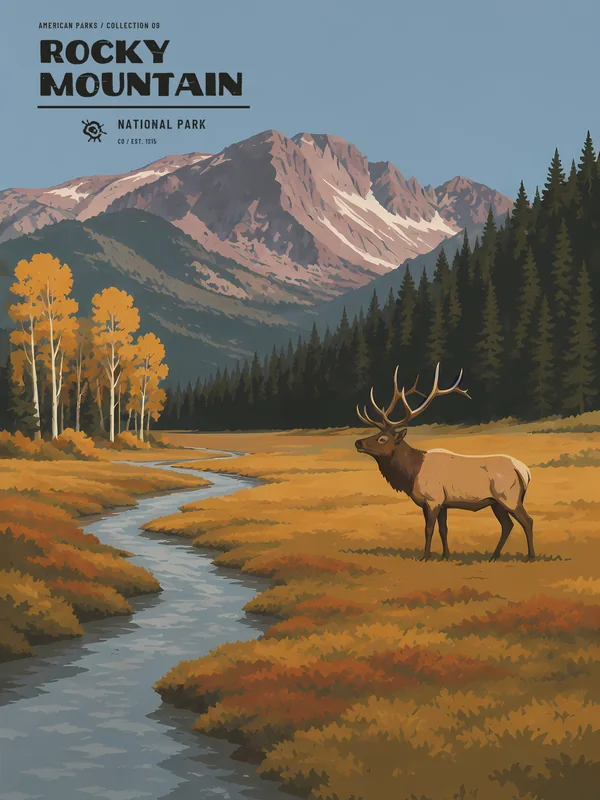
The American Parks shop
Bring Rocky Mountain home
Our park-inspired creations, made to order and shipped to your door.
Latest park news
- Rocky Mountain's Old Fall River Road Closes to Cars October 6, 2026The mountain road switches to its winter schedule, closed to vehicles in early October with two maintenance windows when no one can get through.
- Rocky Mountain: Glacier Gorge closed late September then early October, reroute via Bear LakeGlacier Gorge closes September 28-October 1 and October 5-8 for erosion work. Alberta Falls, Mills Lake, and Loch Vale stay accessible from the Bear Lake Trailhead.
- Rocky Mountain National Park Bans All Fires. Here's What Campers Need to KnowRocky Mountain National Park is under Stage 2 fire restrictions: all fires are banned, including charcoal. Here's what it means for your trip.