
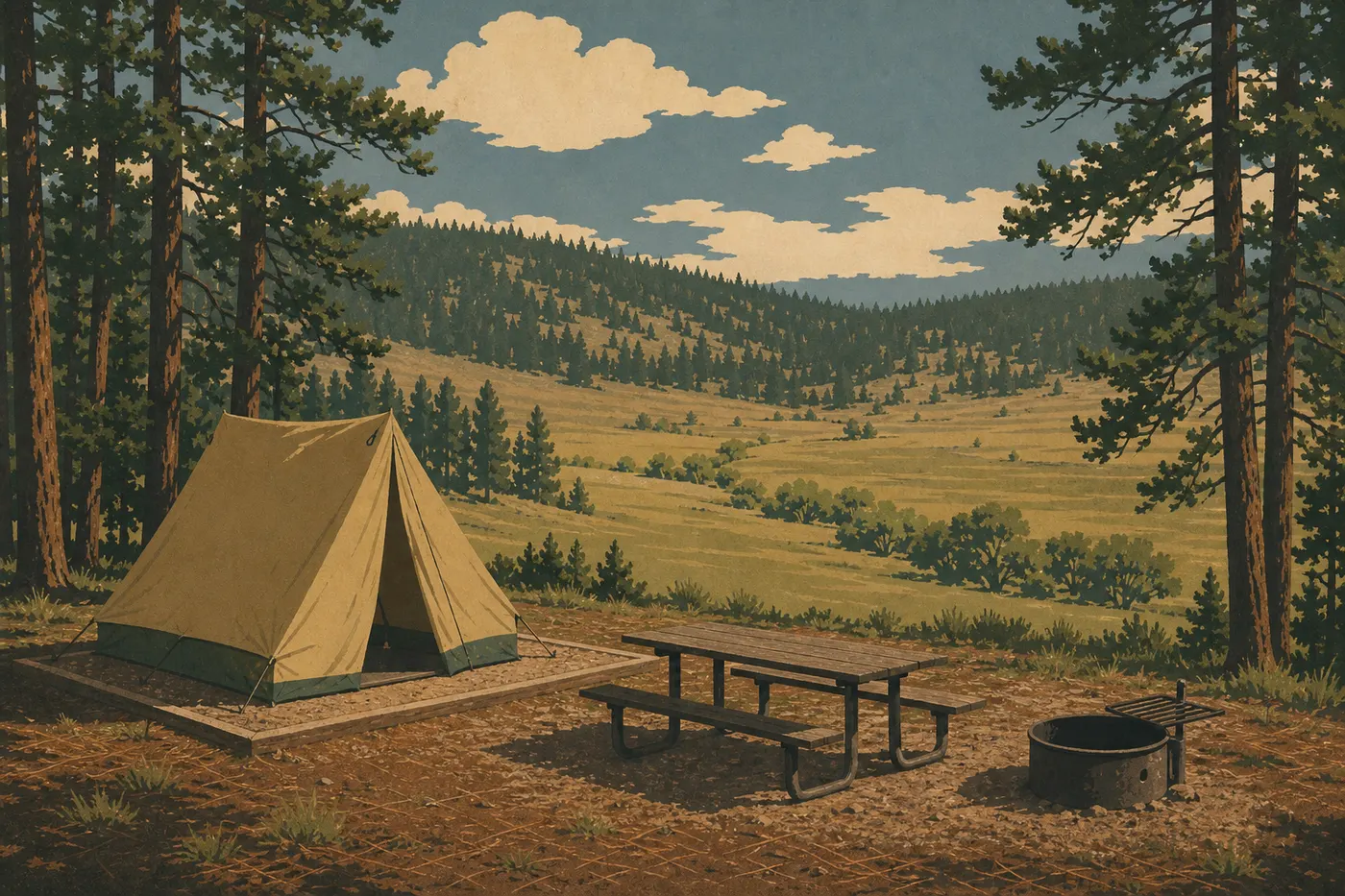
Camping in Rocky Mountain National Park: 5 NPS Campgrounds, Reservations, and 2026 Rates
Rocky Mountain National Park has five official campgrounds with a total of 570 sites. The short answer is yes, you can camp inside the park, but without an advance reservation, don't count on finding a site between May and September. Sites disappear within minutes on Recreation.gov as soon as the reservation window opens. In 2026, Glacier Basin and Longs Peak are closed for the entire season, so check availability before planning your trip.
Campgrounds in the park (5)
- Campground Aspenglen Campground recreation.gov · 52 sites Directions ↗
- Campground Glacier Basin Campground recreation.gov · 150 sites Directions ↗
- Campground Timber Creek Campground recreation.gov · 98 sites Directions ↗
- Campground Moraine Park Campground recreation.gov · 244 sites Directions ↗
- Campground Longs Peak Campground recreation.gov · 26 sites Directions ↗
 Base map © OpenStreetMap · © CARTO
 Rocky Mountain campgrounds by the numbers
5 official campgrounds inside the park, 570 campsites in total, 544 of them reservable.
| Campground | Sites | Booking | Fee / night | Open | Amenities |
|---|---|---|---|---|---|
| Moraine Park Campground | 244 (155 tent only, 88 RV only, 49 electric hookups) | Reservation | from $35 | Closed Oct 19 to May 25 | toilets*, potable water, dump station*, firewood*, bear lockers, cell service |
| Glacier Basin Campground | 150 (73 tent only, 13 group) | Reservation | from $35 | Seasonal | toilets*, potable water*, dump station*, bear lockers* |
| Timber Creek Campground | 98 (30 tent only) | Reservation | from $35 | Closed Oct 5 to May 25 | toilets*, potable water*, dump station*, firewood*, bear lockers* |
| Aspenglen Campground | 52 (13 tent only) | Reservation | from $35 | Closed Sep 28 to May 25 | toilets*, potable water*, firewood*, bear lockers |
| Longs Peak Campground | 26 (26 tent only) | First come, first served | from $30 | Seasonal | toilets, bear lockers* |
Source: National Park Service (NPS API), retrieved October 6, 2026. Fees and dates change: check the campground page before you go.
Can you camp inside Rocky Mountain National Park?
Yes, and that's a real advantage. Many major U.S. national parks have fully privatized their lodging options. Here, all five NPS-managed campgrounds remain open to everyone without requiring a resort or lodge stay. Dispersed camping is prohibited outside designated sites unless you have a specific backcountry permit (see below). Campfires are allowed only in the fire rings provided at each site.
Campgrounds inside the park
Moraine Park Campground
The park's largest campground has 244 sites: 155 tent-only sites and 88 RV sites, including 49 with electric hookups. It's also the best equipped, with drinking water, a dump station, firewood sales, bear boxes, and cell service. The maximum RV length is 39 feet. Open for summer 2026, it closes for maintenance from September 28 through October 20. Rate: $35 per night. Reservations on Recreation.gov are required.
Glacier Basin Campground
This campground has 150 sites, including 73 tent-only sites and 13 group sites, with water, a dump station, and bear boxes. RVs up to 36 feet are normally accepted. Glacier Basin is closed for the entire 2026 season. For reservations during this period, the NPS directs visitors to Aspenglen, Timber Creek, or Moraine Park. Usual rate: $35 per night.
Aspenglen Campground
Aspenglen has 52 sites, including 13 tent-only sites, with drinking water, firewood sales, and bear boxes. RVs up to 30 feet are accepted. Closed during winter 2025-2026, Aspenglen is open for summer 2026, and reservations are available on Recreation.gov. Its small size makes it popular and quick to fill, so book even earlier than you would elsewhere. Rate: $35 per night.
Longs Peak Campground
This campground has 26 tent-only sites, with restrooms and bear boxes. It's designed for hikers who want to start their Longs Peak ascent (14,259 feet, the park's highest point) at dawn. Longs Peak is closed for the entire 2026 season. Usual rate: $30 per night, with no reservations. Sites are first come, first served.
Timber Creek Campground
Timber Creek has 98 sites, including 30 tent-only sites, with water, a dump station, firewood sales, and bear boxes. RVs up to 30 feet are accepted. The only campground on the park's west side, it's about 9 miles from the Grand Lake entrance. It's the obvious choice if you're crossing the park on Trail Ridge Road from Granby or Grand Lake. Open for summer 2026, reservations are required. Rate: $35 per night.
RV vs. tent camping: which site should you choose?
RV campers have several solid options. Moraine Park is still the top choice, with 88 RV sites, 49 of them with electric hookups, and the park's most generous maximum length at 39 feet. Timber Creek also works well for RVs on the west side, with vehicles up to 30 feet but no hookups. Aspenglen allows smaller vehicles up to 30 feet, and Glacier Basin up to 36 feet, so check availability on Recreation.gov before confirming your reservation. Longs Peak is strictly for tents.
For RV-friendly routes, facilities, and services, see our Rocky Mountain RV camping guide.
Camping nearby: campgrounds outside the park
When the park is full, which is common from June through August, several private campgrounds and National Forest sites are available around Estes Park to the east and Grand Lake to the west. Staying outside the park doesn't exempt you from the Timed Entry Permit required at certain times to enter the park. Check the NPS website for entry conditions. For lodging alternatives beyond camping, see Rocky Mountain lodging options.
Wilderness and backcountry camping (permit required)
Backcountry camping is allowed with a specific permit, available on Recreation.gov up to six months in advance. More than 260 backcountry sites are spread throughout the park along a range of routes at high elevations. Permit fees are charged when you make the reservation. Spending the night outside a designated site without a permit is a violation punishable by a fine.
We recommend reserving your backcountry permit at the same time you book your flights. The booking windows open at 8 a.m. local time, and the most popular areas, including Bear Lake and Flattop Mountain, fill quickly. For route details, difficulty levels, and trail logistics, see our hiking guide.
How and when to reserve a campsite in Rocky Mountain National Park
All reservations go through Recreation.gov, with a six-month window, or 180 days, before your stay. For a July trip, open your browser in early January at the exact opening time. Aspenglen can fill in less than ten minutes. Moraine Park is usually a little easier to book thanks to its 244 sites.
Longs Peak normally operates on a first-come, first-served basis, but it's closed for the entire 2026 season. When it reopens, plan to arrive before 9 a.m. to give yourself the best chance of getting a site.
Rates: how much does a night of camping cost in Rocky Mountain National Park?
Four of the five campgrounds charge $35 per night: Moraine Park, with or without electric hookups, Glacier Basin, Aspenglen, and Timber Creek. Longs Peak is the only one priced at $30, reflecting its lack of services: no running water, dump station, or firewood sales. This $5 difference is the only pricing gap in the park. Electric hookups at Moraine Park don't cost more than the other sites.
Park admission is added to these rates, starting at $30 per vehicle per visit, or $70 for the annual Rocky Mountain pass. To compare all access passes for U.S. national parks, our National Park Passes and Fees page explains entrance fees and pass options.
Camping safety and best practices
Black bears. Rocky Mountain is home to an active black bear population. Storing food in the metal bear boxes provided at every site is a legal requirement, not a suggestion. Never leave food, cosmetics, or scented products such as toothpaste and sunscreen in your tent or in a vehicle's visible passenger compartment.
Altitude. The campgrounds sit between 7,900 and 10,500 feet. If you're arriving from Denver or lower elevations, allow 24 to 48 hours to acclimatize before strenuous activity. Persistent headaches, nausea, or shortness of breath while resting are warning signs to take seriously, not symptoms to push through.
Afternoon thunderstorms. From June through August, lightning storms often develop in the early afternoon. Leave ridges and exposed areas before noon. A perfectly blue morning sky can turn to hail by 2 p.m. That's mountain weather, not the coast. Our weather page provides day-by-day forecasts.
Cold nights. Even in July, temperatures at elevation can drop below 41°F. Bring a sleeping bag rated for at least 32°F in summer, along with insulating layers for nighttime.
Which campground is right for you?
Families with children: Moraine Park. It's the largest, with 244 sites, the best equipped, with electric hookups available, and elk meadows as a bonus.
Hikers focused on trails: Glacier Basin for the east side and Longs Peak for the namesake climb, but both are closed for the 2026 season. Aspenglen and Timber Creek are the available alternatives this summer.
RV camping: Moraine Park, with electric hookups and lengths up to 39 feet, or Timber Creek on the west side, without hookups and with lengths up to 30 feet.
Nature and solitude: Aspenglen for its smaller size and forest setting, or the backcountry with a permit if you really want to get away from it all.
Off-season: Moraine Park is the campground most likely to have availability outside peak season. It closes for maintenance from September 28 through October 20, 2026.
To plan everything, return to our complete Rocky Mountain guide and narrow down your travel window with our guide to the seasons in Rocky Mountain.
Frequently asked questions
Can you camp inside Rocky Mountain National Park?
Yes. Five official campgrounds welcome visitors inside the park, with a total of 570 sites. Reservations on Recreation.gov are essential from May through September. In 2026, Glacier Basin and Longs Peak are closed for the entire season, leaving three campgrounds open: Moraine Park, Timber Creek, and Aspenglen.
Which campground should you choose in Rocky Mountain?
Moraine Park, with 244 sites and electric hookups available, works well for families and RVs. Timber Creek serves visitors on the west side. Aspenglen offers a more intimate setting for smaller groups. In 2026, Glacier Basin and Longs Peak are closed.
When should you reserve a campsite in Rocky Mountain?
The reservation window opens six months, or 180 days, in advance on Recreation.gov. For summer, log in as soon as reservations open. Aspenglen's 52 sites, in particular, can disappear within minutes. Moraine Park, with 244 sites, remains the safest bet.
How do you camp in Rocky Mountain National Park?
Reserve through Recreation.gov, store your food in the bear boxes, which are legally required at all five campgrounds, and bring gear suited to the elevation. The campgrounds sit between 7,900 and 10,500 feet.
How much does a night of camping cost in Rocky Mountain National Park?
The rate is $35 per night for a standard site, with or without electric hookups, at four of the five campgrounds. Longs Peak costs $30 per night on a first-come, first-served basis, but it's closed in 2026. Park admission is added to that amount.
Can you encounter bears while camping in Rocky Mountain?
Yes, black bears live in the park. Using the bear boxes is mandatory at every site, and storing food in a tent or vehicle is strictly prohibited.