
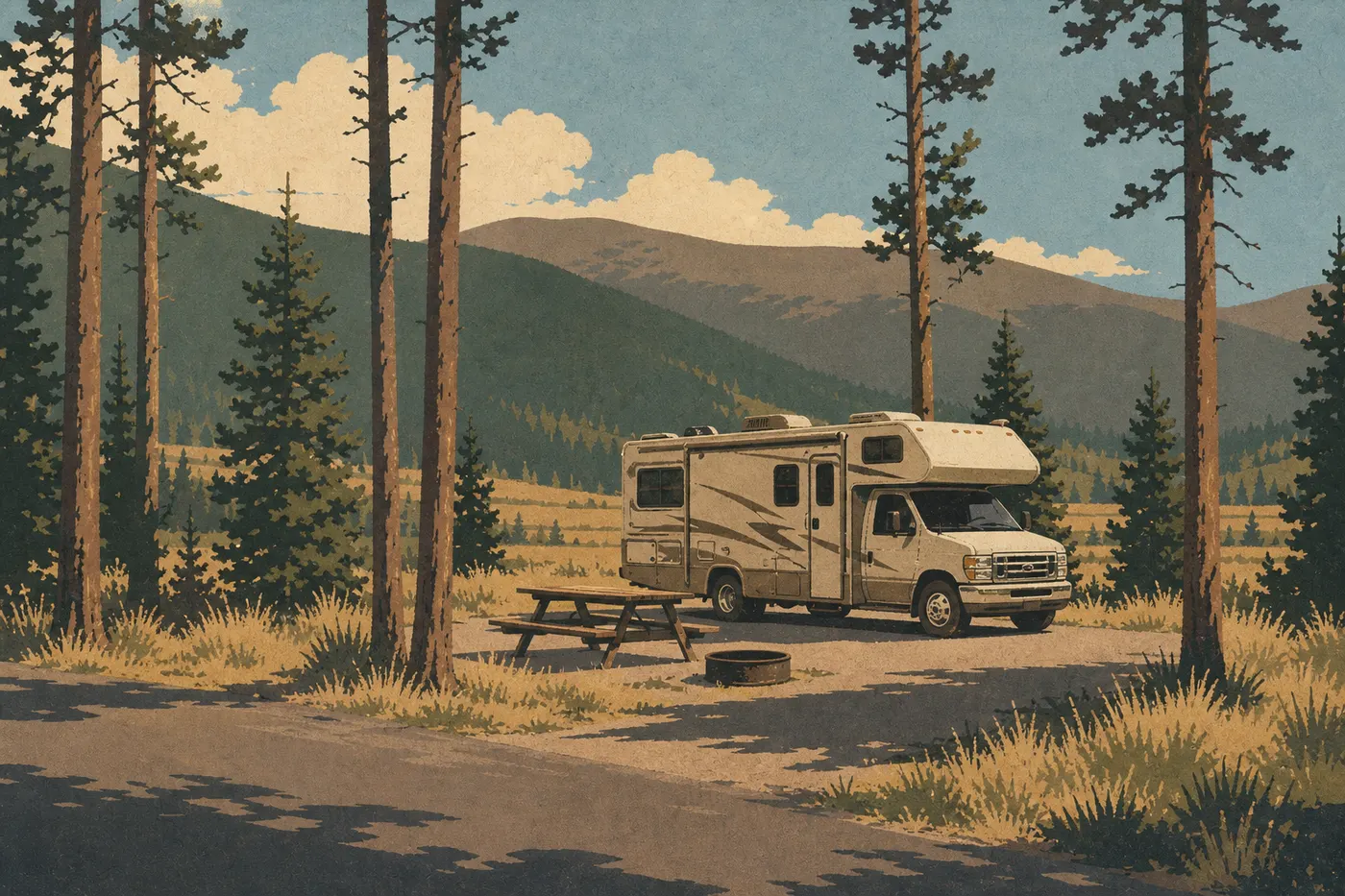
Exploring Rocky Mountain National Park by RV: Campgrounds, Rules, and Tips
Rocky Mountain National Park stretches across northern Colorado, from 7,900 to 14,000 feet in elevation. Yes, you can visit the park by RV. Four official campgrounds accommodate RVs, mostly from spring through fall. Here's the key restriction to know from the start: none of the sites offer electrical or water hookups. Your RV must be fully self-contained. For every lodging option in the park, our complete Rocky Mountain guide covers all the choices.
Can You Drive and Camp in an RV at Rocky Mountain National Park?
Trail Ridge Road (U.S. Highway 34), the park's main route, is suitable for standard RVs. It crosses the Continental Divide at 12,200 feet and runs through 10.6 miles of alpine tundra above treeline. The road itself has no size restrictions, but wind gusts at this elevation can make tall or towed vehicles unstable. Check the weather forecast on the NPS website before every crossing.
The park is open 365 days a year. Trail Ridge Road closes every winter, usually from October through May depending on snowfall. Outside that period, the valley roads remain accessible from the east via Beaver Meadows Entrance, from Estes Park, and from the west via Grand Lake Entrance.
The entrance fee is $35 per vehicle and is valid for 7 days. The annual Rocky Mountain pass costs $70. If you're visiting other parks that year, the $80-per-year America the Beautiful pass covers more than 2,000 federal sites. The National Parks entrance fees and passes page explains the different fees and passes.
RV Restrictions and Regulated Roads
Trail Ridge Road doesn't require a special permit, but several pullouts are too short for vehicles longer than 30 to 33 feet. Use the larger, developed parking areas for scenic stops.
Old Fall River Road is a narrow, one-way unpaved road that climbs through tight hairpin turns. The NPS strongly advises against taking it in an RV or with a trailer. A vehicle longer than 25 feet can't turn around if something goes wrong. This road is limited to cars and small SUVs.
Each campground loop has its own length limit, ranging from 30 to 35 feet depending on the section. Before confirming a reservation on recreation.gov, check the maximum length for your chosen loop and measure your vehicle, including the hitch.
During peak season, from June through mid-September, the park may require a timed entry reservation for certain corridors, including Bear Lake Road. Check the official NPS website a few weeks before you arrive. To reach the park and travel between its entrances, the Rocky Mountain access guide has all the essential information.
The Park's Official Campgrounds
Four campgrounds accommodate RVs, spread across both sides of the Continental Divide.
Moraine Park Campground
The park's largest campground is divided into several separate loops. Some loops accept RVs up to 35 feet, while others are tent-only, so check the loop when you make your reservation. It's open year-round, with reduced operations in winter, including fewer open sites and shut-off water. No hookups. Generators are allowed during set hours, generally from 8 a.m. to 8 p.m. The rate is about $30 per night. Reservations through recreation.gov are required from May through October.
Glacier Basin Campground
On the east side, open only in summer. RV sites are available in some loops. The maximum length varies by section, so check when you reserve. No hookups. Demand is extremely high. July and August weekend sites sell out within minutes of becoming available six months ahead. The rate is about $30 per night.
Aspenglen Campground
Near Fall River Entrance, in a more intimate stand of pines than Moraine Park. The length limit is stricter, at about 30 feet. It's a good fit for Class B RVs and camper vans. Reservations are required during the season. No hookups.
Timber Creek Campground
The only campground on the west side, 1.2 miles from Grand Lake in Kawuneeche Valley. The maximum length is around 30 feet. It's open year-round, with first-come, first-served sites outside the summer season. No hookups. The rate is about $30 per night.
Dispersed Camping and Areas Around Rocky Mountain National Park (Boondocking)
Vehicle boondocking is prohibited inside the park. Backcountry camping is allowed only on foot, with a wilderness permit issued by the NPS.
Outside the park, Roosevelt National Forest and Arapaho National Forest surround Rocky Mountain on all sides. Free dispersed camping is allowed in most forest areas, with no reservation required. Follow these rules: no fires during periods of high fire danger, a maximum stay of 14 consecutive days at the same site, and a minimum distance of 100 feet from water. These forests are less than 30 minutes from the park entrances.
RV parks in Estes Park and Grand Lake offer full hookups for a comfortable night during your trip. For campgrounds outside the park, the Rocky Mountain camping guide also covers nearby BLM sites and national forests.
Dump Stations, Water, and Services
None of the park's campgrounds has direct hookups. For dumping gray and black water:
Moraine Park Campground has a seasonal dump station. Opening dates vary from year to year, so check the service status on the NPS website before you leave.
Estes Park, a few miles east of Beaver Meadows Entrance, has most of the essential services in one place, including paid dump stations, fresh-water stations, and several RV parks with full hookups. It's a convenient stop midway through a weeklong trip or longer.
Grand Lake, on the west side, offers the same services 1.2 miles from Timber Creek.
Fill your fresh-water tank before entering the park. At more than 7,900 feet in the valley, you'll use more water. If you're staying more than three nights without hookups, plan to dump your tanks midway through the trip rather than waiting until the end.
Which Campground Is Right for You?
Mountain views and evening wildlife: Moraine Park. Elk regularly come down into the meadows late in the day. Several loops have open views of the ridgelines.
Families with kids: Glacier Basin. It offers direct access to accessible trails, ranger programs on some summer evenings, and a lively, well-organized atmosphere.
Small vehicles, including vans and Class B RVs, and a quieter setting: Aspenglen, the most intimate campground on the east side, among ponderosa pines.
West side, Grand Lake, and Kawuneeche Valley: Timber Creek, the only official campground west of the Continental Divide and considerably less busy than the campgrounds on the east side.
For each campground's opening dates and the best times to visit, the best time to visit Rocky Mountain explains conditions month by month.
Renting an RV to Visit Rocky Mountain National Park
Denver International Airport (DIA) is the natural gateway, about 68 miles southeast of the park, or a 1.5- to 2-hour drive depending on traffic. Several rental agencies, including Cruise America, Outdoorsy, and RVshare, operate in Denver or at the airport.
The best-suited RV types for the park are:
The Class C, at 23 to 30 feet, is the most versatile. It fits in most loops, remains manageable on Trail Ridge Road, and works equally well for couples and families of four.
The Class B, a camper van under 20 feet, gives you more freedom in narrow pullouts and campgrounds with shorter length limits, such as Aspenglen and some Moraine Park loops.
The Class A, over 30 feet, is possible but runs into restrictions on several campground loops. Check each one before finalizing your reservation.
For every rental, check the policy on generators in national parks, the mileage included, since a Denver round trip added to the internal loops can easily total 250 to 310 miles in a week, and the vehicle height if you'll spend a night in a covered city parking garage.
RVs and Pets, Budget, and Reservations: What to Know
Pets. Dogs are allowed in campgrounds and on the park's paved roads. They aren't allowed on trails, in backcountry areas, or in any buildings. Keep them leashed at all times, with a maximum leash length of 6 feet. For hikes, most trails in Rocky Mountain National Park aren't open to dogs.
Budget. Plan on $35 for the vehicle entrance fee, valid for 7 days, plus about $30 per night for a campsite. A full week in the park comes to about $245 in park and campsite fees, excluding fuel, food, and the RV rental. For entrance fees and annual passes, see the National Parks entrance fees and passes page.
Reservations. Rocky Mountain National Park is among the most heavily reserved parks in the United States in July and August. On recreation.gov, weekend sites disappear within minutes when booking opens six months ahead. Have your dates ready before opening the reservation page, and be logged in at the exact time.
Elevation. At more than 7,900 feet in the valley, altitude sickness, including headaches and fatigue, can affect visitors arriving from low elevations. Spend a night at a lower elevation in Estes Park or Denver before sleeping in the park, drink more water than usual, and gain elevation gradually. For lodging outside the park, the Rocky Mountain lodging guide covers every budget category.
In Summary: Our RV Plan for Rocky Mountain National Park
- Book on recreation.gov six months ahead, at the exact time reservations open.
- Measure your vehicle's total length, including the hitch, and compare it with the limit for your chosen loop.
- Plan for complete water and battery self-sufficiency. There are no hookups in the park.
- Avoid Old Fall River Road with any vehicle longer than 25 feet.
- Check the status of Trail Ridge Road the day before every crossing.
- Plan to dump your tanks in Estes Park or Grand Lake midway through trips longer than three nights.
Frequently Asked Questions
Can you camp anywhere in Rocky Mountain National Park?
No. You can't camp freely in a vehicle in Rocky Mountain National Park. Only official campgrounds and wilderness-permit backcountry sites reached on foot allow overnight stays in the park.
Can you visit or drive across Rocky Mountain National Park in an RV?
Yes. You can drive across Rocky Mountain National Park in an RV via Trail Ridge Road (U.S. Highway 34). Old Fall River Road, an unpaved and very narrow route, is not recommended for vehicles longer than 25 feet.
Can you park an RV anywhere in Rocky Mountain National Park?
No. Overnight parking outside a campground is prohibited. During the day, pullouts and overlooks allow short stops, but several are too narrow for large vehicles.
Which is the most scenic campground in Rocky Mountain National Park?
Moraine Park is often preferred for its direct views of the ridges and evening elk watching in the meadows. Glacier Basin offers a similar setting at the foot of the glacial moraines, with direct access to hiking trails.