
Rocky Mountain National Park with Kids: What to Do and How to Plan Your Trip
Rocky Mountain National Park works well for families with kids as young as 3 or 4, as long as you plan for the altitude. The park has stroller-friendly trails, a full Junior Ranger program, and scenic viewpoints you can reach from the road. Whether you're traveling with toddlers or teens looking for fresh mountain air, you've got plenty of options.
Why Visit Rocky Mountain National Park with Kids
Rocky Mountain National Park has everything kids love without requiring you to force the fun: wildlife visible from the car window, turquoise lakes less than a 10-minute walk from the parking lots, and a scenic road that climbs above 12,100 feet without leaving your seat.
Wildlife is the biggest draw. Elk cross the park's meadows in groups, sometimes reaching the outskirts of Estes Park. Marmots settle on rocks beside the high-elevation trails and won't move an inch when you pass. Kids get an eyeful without having to search.
The second big draw is accessibility. Most of the park's iconic spots are within 1.2 miles of the parking lots, or visible right from the road. You don't have to be athletic to enjoy Rocky Mountain National Park to the fullest.
Is Rocky Mountain National Park Good for Kids? What Age Is Best?
Rocky Mountain National Park is a good fit for families with children as young as 3 or 4 for a comfortable first trip. Kids 8 and older can fully enjoy longer hikes and the Junior Ranger program.
The key variable is altitude. The park stretches from about 7,800 feet at the entrance near Estes Park to more than 13,800 feet on the highest ridges. Even perfectly healthy kids can experience unusual headaches and fatigue when they arrive. The basic rule is to spend one light day acclimating before any strenuous hike, stay hydrated, and gain elevation gradually. Don't fly in and drive Trail Ridge Road on the same day.
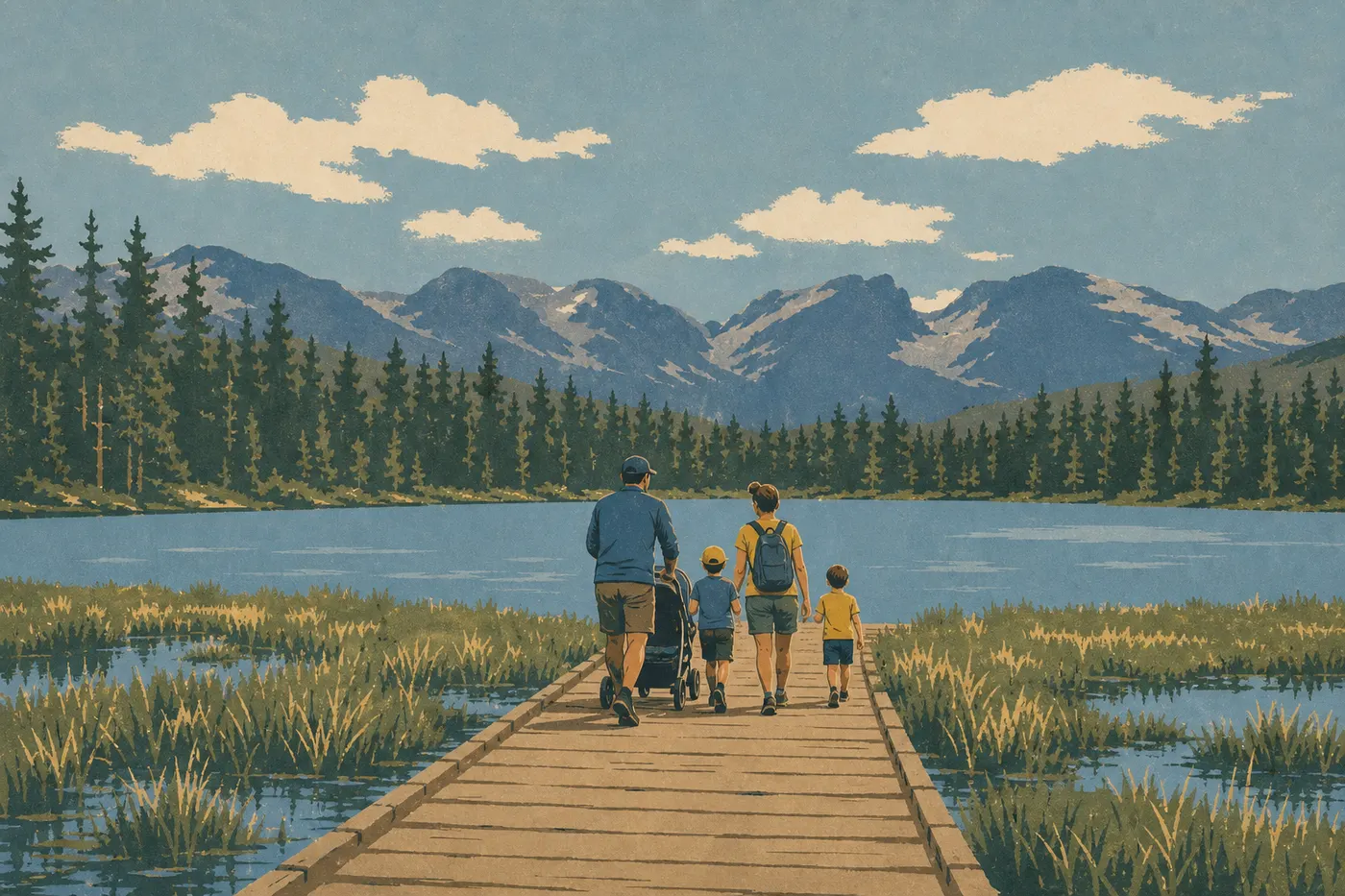
For babies and very young children, a few trails work with an all-terrain stroller, especially Sprague Lake. On other trails, a hiking backpack carrier is the most practical option.
For details on accessible facilities, see our Rocky Mountain National Park accessibility guide.
When to Visit with Kids: The Easiest Season for Families
The ideal window for a family trip is mid-June through mid-August. Trail Ridge Road is open, nearly all trails are accessible, and the weather is the most stable of the year. One important detail is that summer afternoons often bring brief but intense thunderstorms, a Rocky Mountain classic. The park's rule is simple: be back below exposed areas by 2 p.m.
July and August are also peak season. Bear Lake parking lots fill up by 8 a.m. You'll need to take the shuttle from the off-site parking areas, which requires careful planning with young children.
September offers a good compromise. The park is less crowded, the aspens turn gold, and the elk enter the rutting season. The males bugle, which is a guaranteed show for kids. Nights get seriously cold, but the days remain pleasant.
Our Rocky Mountain National Park seasonal calendar breaks down conditions month by month and the seasonal closures to plan for.
How Many Days to Plan for a Family Trip
Three days is an honest minimum for covering the essentials without rushing. Here's a schedule that works well in practice:
- Day 1: Arrive, settle in at Estes Park, and take an easy walk around Sprague Lake to acclimate to the altitude.
- Day 2: Drive Trail Ridge Road early in the morning, leaving before 9 a.m. to avoid thunderstorms and crowds. Have a picnic at Alpine Visitor Center, then return via Bear Lake in the afternoon.
- Day 3: Do the Junior Ranger program at the visitor center in the morning, then watch elk at Moraine Park in the late afternoon.
Four or five days give you time to add a longer hike, explore the park's west side, and take a break between activities. Kawuneeche Valley is often overlooked and much less crowded.
Our guide to planning a family trip to Rocky Mountain National Park offers itineraries for different types of families.
What to Do in Rocky Mountain National Park with Kids: Our Picks
Drive Trail Ridge Road
This is the must-do activity for every age, no exceptions. The road crosses the park from east to west for about 31 miles and rises above 12,100 feet at its highest point. From the car, kids may spot marmots, pikas, and, if you're lucky, bighorn sheep on the rocky slopes. Pullouts let you get out, breathe the high-altitude air, and take in a striking, almost lunar landscape.
Watch Wildlife at Moraine Park and Horseshoe Park
In the late afternoon, elk come down into the wet meadows of Moraine Park and Horseshoe Park. Wildlife viewing is free, predictable, and close enough to the road that you won't need to hike. Bring binoculars.
Walk Around Bear Lake
Less than a 10-minute drive from Estes Park, or a shuttle ride away, Bear Lake offers a quick immersion in a postcard landscape. The full loop is less than 0.6 miles on relatively flat ground. It's ideal for little ones who are just starting to walk.
Our guide to activities in Rocky Mountain National Park covers everything you can do in the park.
Easy Family Hikes: Short, Little Elevation Gain, and Stroller-Friendly
Altitude changes everything at Rocky Mountain National Park. A trail rated easy can wear out kids who aren't used to the mountains. These are the trails we recommend first for families.
Sprague Lake (0.5 miles, loop)
The paved trail around Sprague Lake is accessible to all-terrain strollers and wheelchairs. It's flat and partly shaded, with reflections of snowcapped peaks in the lake. This is our go-to trail for toddlers and for the first few hours after you arrive.
Bear Lake Loop (about 0.6 miles, loop)
Very easy, with almost no elevation gain and clear trail markers. Allow 30 to 45 minutes for a family that likes to take its time. There are plenty of views of the lake and rocky walls.
Alberta Falls (1.6 miles round-trip)
A little more strenuous, with about 330 feet of elevation gain, but the reward is a beautiful waterfall. It works well for kids 7 and older. The ground can be rocky, so hiking shoes are recommended.
Coyote Valley Trail (about 2.5 miles round-trip)
On the park's west side, this trail follows the first few miles of the Colorado River. The flat terrain is ideal for spotting beavers and birds. It's much less crowded than the east side.
Our selection of trails in Rocky Mountain National Park covers all the hikes, including difficulty and elevation-gain information.
The Junior Ranger Program
The Rocky Mountain National Park Junior Ranger program is free and available at the park entrance or in the visitor centers, including Beaver Meadows on the east side, Kawuneeche on the west side, and Fall River. Kids receive an age-appropriate activity booklet with field observations, wildlife and plant quizzes, and small missions to complete during their visit.
Once the booklet is complete, your child takes an oath in front of a ranger and receives the official “Junior Ranger Rocky Mountain” badge. The program has several levels based on age.
Practical tip: pick up the booklet as soon as you enter the park, not when you're leaving, so you have time to complete the activities during the day.
Safety with Kids
Rocky Mountain National Park has specific risks to plan for when you're traveling as a family.
Altitude and acclimatization. From 7,800 feet at the entrance to more than 13,800 feet on the ridges, altitude sickness can affect anyone, including healthy kids. Watch for persistent headaches, nausea, and unusual fatigue. The answer is to gain elevation gradually, avoid strenuous activity on the first day, and drink water regularly rather than sugary drinks.
High-elevation thunderstorms. In summer, storms form quickly around midday. On Trail Ridge Road or any exposed trail, start early and get back down before 2 p.m. Leave open rocky areas and avoid isolated trees as clouds approach.
Wildlife. Elk may look placid, but they can charge if you get too close. The NPS recommends a minimum distance of 75 feet from elk and other ungulates. Black bears also live in the park. Never run, speak calmly, and back away slowly. Never leave food in your car overnight.
Sun and UV exposure. Altitude greatly intensifies UV radiation. Even on cloudy days, protect your kids with SPF 50+ sunscreen, a hat, and sunglasses. You can get a sunburn at altitude in less than an hour.
Trails and falls. Some trails run along cliffs or cross unstable rocky ground. Stay on marked trails and hold young children's hands in exposed sections.
The NPS's official guidance is posted in the visitor centers and available at the park entrance.
Where to Stay with Kids, in and Around the Park
Rocky Mountain National Park has several campgrounds inside the park, including Moraine Park and Glacier Basin, but reservations sell out months ahead during peak season. These campgrounds work well for families with tents and RVs, though amenities are basic.
For more amenities, Estes Park on the east side, by the main entrance, offers accommodations for every budget, including family motels, rental cabins, and lodges. The town is lively in the evening, with restaurants and shops within walking distance. Grand Lake on the west side is smaller, but it offers a pleasant mountain-village atmosphere for a few quiet nights.
Our guide Where to Stay in Rocky Mountain National Park and the Hotels & Lodges and Camping pages cover the options and the booking windows to keep in mind.
Meals and Breaks with Kids
There isn't a fast-food restaurant inside the park. You'll need to plan ahead.
Picnics. Tables are available at Sprague Lake, Glacier Basin, and several other areas of the park. Prepare sandwiches and snacks at your hotel or in Estes Park before entering. Always bring more water than you think you'll need. High altitude dehydrates you without making it obvious.
Alpine Visitor Center. On Trail Ridge Road, it has a cafeteria serving hot meals, snacks, and hot drinks. It's the only food service available at high elevation. Hours are seasonal, so check before you go.
Estes Park. The town at the park's east entrance has plenty of family-friendly restaurants, along with grocery stores and supermarkets for stocking up. This is where we shop for the day's picnic supplies.
Grand Lake on the west side is smaller, but a few restaurants and a grocery store cover the essentials.
Family Budget
The entrance fee is $35 per vehicle, valid for seven consecutive days. Children under 15 enter all U.S. national parks for free.
If your itinerary includes several national parks, the America the Beautiful pass covers admission to all U.S. federal recreation sites with one purchase. For a road trip with multiple parks, it quickly pays for itself. For a single visit to Rocky Mountain National Park, paying the individual entrance fee is still cheaper.
The National Parks Fees & Passes page explains entrance fees and pass options for different types of visitors.
Places to Combine with Rocky Mountain National Park on a Family Trip
Rocky Mountain National Park fits naturally into a Colorado road trip.
Denver, about 2 hours east of Estes Park: the Denver Museum of Nature & Science and the Denver Zoo work well at the beginning or end of a trip, especially for getting over jet lag before tackling the altitude.
Colorado National Monument, about 4 hours southwest: spectacular rock formations, much smaller crowds than Rocky Mountain National Park, and several short trails that are very accessible for families.
Mesa Verde National Park, about 5 hours southwest: the cliff dwellings captivate kids as young as 8 to 10. It's a striking change of scenery after the Rockies.
To extend the adventure, the Regions and Road Trips sections offer ideas for combining Rocky Mountain National Park with other Colorado parks.
Rocky Mountain National Park with Kids: Is It Worth It?
Yes, absolutely. Rocky Mountain National Park is one of the most accessible parks in the Rockies for families. Wildlife is everywhere and easy to see, short and flat trails are available, and Trail Ridge Road delivers a striking high-altitude experience without requiring a hike. Altitude remains the main challenge, especially for children under 3 and families who aren't used to the mountains. Plan for it, make your first day an easy one at Sprague Lake, and you'll come home with a trip your kids will still talk about years later.
Frequently Asked Questions
Is Rocky Mountain National Park good for kids?
Rocky Mountain National Park works well for kids as young as 3 or 4. Roadside wildlife, short trails, and the Junior Ranger program make it an accessible family destination, as long as you manage the altitude with an acclimatization day when you arrive.
Where's a good mountain destination for kids?
Rocky Mountain National Park in Colorado is an excellent option, with trails suitable for young children, abundant wildlife including elk, marmots, and bighorn sheep, and a scenic road you can enjoy from the car. Estes Park, at the park entrance, offers family-friendly accommodations and services.
What should we do in Rocky Mountain National Park?
The highlights are driving Trail Ridge Road, hiking around Bear Lake and Sprague Lake, watching elk at Moraine Park in the late afternoon, and doing the Junior Ranger program with the kids. Our What to Do guide covers all the available activities.
What's the best time to visit Rocky Mountain National Park with kids?
The best time for a family trip is mid-June through mid-August, when Trail Ridge Road is open and the weather is most stable. September is also recommended if you want to avoid the crowds. Our When to Visit page breaks down conditions month by month.