
When to Visit Death Valley: Best Season, Weather, and Crowds
The best time to visit Death Valley runs from mid-October through April. Spring, especially March and April, offers the best combination of mild temperatures, clear skies, open trails, and, in some years, a superbloom that carpets the valley floor with wildflowers. Winter is ideal if you're looking for quiet and low-angle photographic light. From June through September, temperatures in the valley regularly climb above 115°F. We strongly advise against visiting during this period unless you know how to follow extreme-desert safety protocols (see the Death Valley practical guide).
Death Valley Weather Month by Month
Death Valley is one of the driest places on the planet. Annual rainfall averages about 2 inches, concentrated in a few short, intense episodes in winter or summer. The world record for measured air temperature, 134.1°F on July 10, 1913, at Furnace Creek, was set here and remains a global benchmark.
Winters are mild in the valley, with daytime temperatures of 63 to 73°F and nighttime temperatures of 39 to 45°F. Spring warms to 82 to 93°F in March and April, summer reaches 113 to 117°F from June through August, and fall becomes comfortable again starting in mid-October. For real-time forecasts and complete climate data, check Death Valley weather.
Death Valley in January
Temperatures range from 39 to 64°F in the valley, perfect for long hikes without heat stress. Crowds are moderate, and Furnace Creek campgrounds are available without advance reservations on weekdays. Low-angle light creates exceptional scenes at sunrise over Zabriskie Point. All major roads are open, although high-elevation roads may close temporarily after snowfall.
Death Valley in February
Highs rise slightly to around 73°F. This is the start of the watch window for a possible superbloom: the first flowers appear in years with good winter rainfall. Crowds remain moderate, and parking at the main sites is usually easy without arriving at dawn. Days get longer, and conditions remain close to January's, with slightly higher light.
Death Valley in March
Peak season is getting underway, with highs around 82°F, cool nights near 54°F, and clear skies. Trails such as Mosaic Canyon, Golden Canyon, and Zabriskie Point are manageable all day. Parking lots at the main sites fill up on weekends, so arrive before 8 a.m. for a quieter visit. A superbloom may be underway in some years; check NPS announcements before planning a trip solely for that.
Death Valley in April
This is the park's most popular month. Daytime temperatures climb to around 93°F, so start hikes in the morning, before 10 a.m., once the sun gets high. Desert vegetation reaches its peak in years with generous rainfall. Reserve Furnace Creek Campground several weeks ahead for weekends and the Easter period.
Death Valley in May
Heat settles in, with highs reaching 104°F. Hike only at dawn or in the late afternoon, and avoid being on the trail between 10 a.m. and 4 p.m. The park is still busy early in the month, then gradually empties as temperatures rise. All services remain open.
Death Valley in June
This is the start of the season to avoid. Highs top 113°F, making hikes in direct sun dangerous. For a short visit, stick to sites you can reach in an air-conditioned car, such as Badwater Basin early in the morning and Artists Drive with the windows closed. Crowds drop sharply by mid-June. If you're passing through, the Furnace Creek Visitor Center is air-conditioned and open.
Death Valley in July
This is the hottest month of the year. Highs regularly exceed 117°F, and nights in the valley stay around 90°F. Monsoon thunderstorms may develop in the late afternoon and trigger flash floods in canyons. Cell service is almost nonexistent across most of the park, so a breakdown in a remote area can quickly become critical. Avoid this month unless absolutely necessary.
Death Valley in August
Temperatures are similar to July, with daytime highs around 113°F and nighttime lows around 88°F in the valley. Summer thunderstorms remain common in the late afternoon, bringing a risk of flash floods in narrow canyons. At about 4,300 feet in elevation, Wildrose Campground offers nighttime temperatures around 68 to 77°F for visitors who can't avoid this season. Services are open, but conditions remain demanding.
Death Valley in September
Temperatures begin to drop, but highs remain near 104°F early in the month. Crowds are still very light, services are open, and campgrounds have plenty of availability. Starting in mid-September, mornings become suitable again for short outings. Heat gradually fades toward the end of the month.
Death Valley in October
The worst heat eases. Highs fall below 91°F early in the month, then below 86°F around mid-October. Trails become comfortable all day starting in the third week. Crowds remain moderate, making this an excellent time for visitors who want to avoid the March-April rush. Campgrounds are available without advance reservations on weekdays.
Death Valley in November
One of the best months to visit the park, and often overlooked. Weather is similar to March, with highs around 75°F and lows around 48°F, but crowds are noticeably smaller and lodging costs 20 to 40% less than in spring. Wintering birds begin to arrive. Late-day light on the badlands and the Mesquite Flat Sand Dunes is remarkable.
Death Valley in December
Days are short but pleasant, with afternoon temperatures of 63 to 64°F. Peaks such as Telescope Peak are often snow-covered, creating a dramatic contrast with the Badwater Basin salt flat, 282 feet below sea level. Nights fall to around 39°F, so bring appropriate camping gear. December light is especially photogenic at sunrise over Zabriskie Point.
Death Valley Season by Season
Spring (March to May): Peak Season
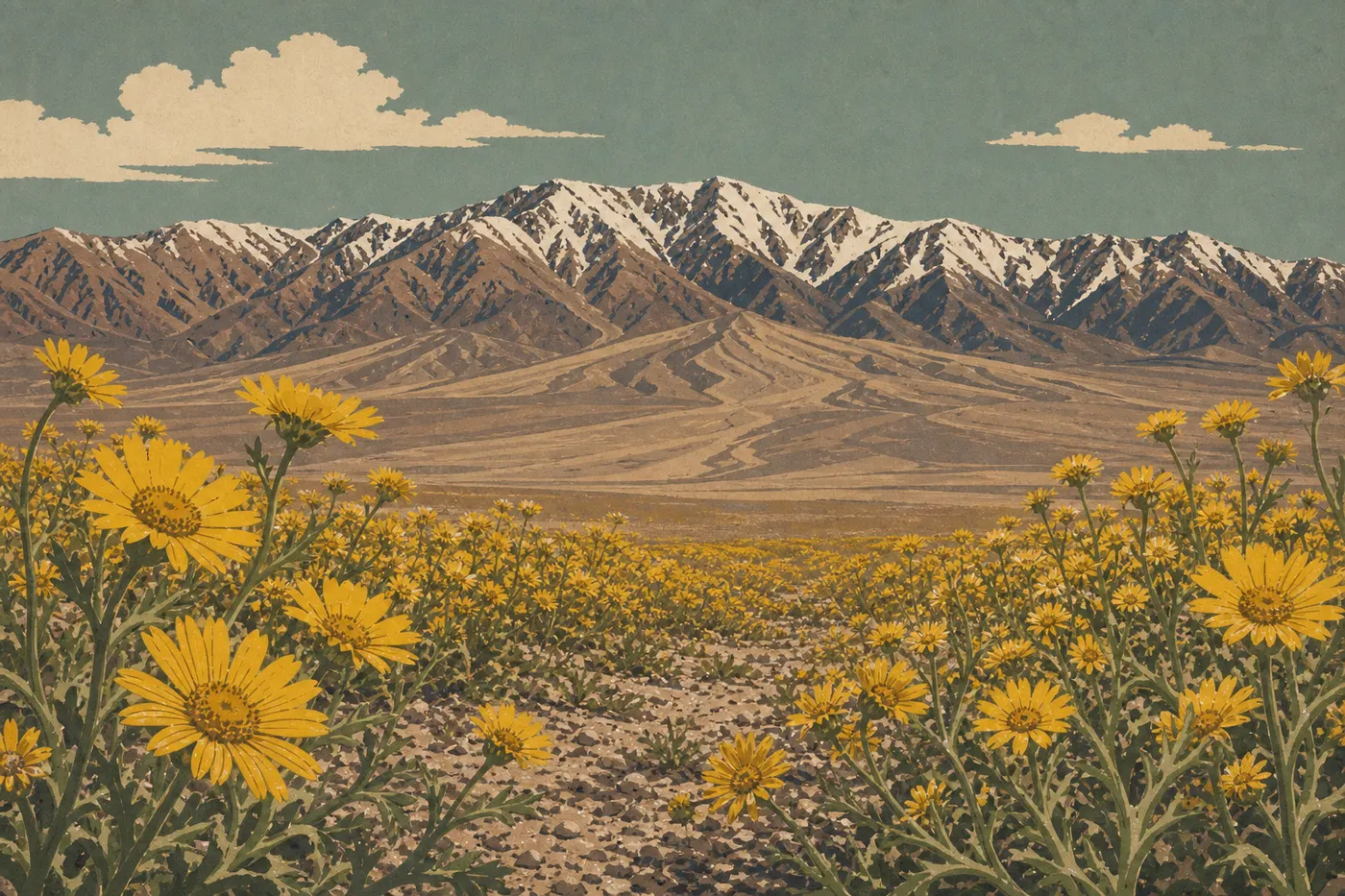
The NPS confirms it: spring is Death Valley's busiest season. In March and April, daytime temperatures range from 68 to 93°F, nights remain cool, and skies are clear. Trails such as Mosaic Canyon, Golden Canyon, and Zabriskie Point are manageable from dawn to sunset without major heat concerns.
The superbloom is spring's most spectacular event. It happens in years when winter precipitation is sufficient, generally between mid-February and mid-April. Some years bring an exceptional display; in others, it doesn't happen at all. Check NPS announcements before planning a trip solely for it.
By May, temperatures rise quickly. Once the thermometer passes 104°F, avoid any hike in direct sun between 10 a.m. and 4 p.m. Start at dawn and be back before 11 a.m.
Roads: All major roads are open. Secondary roads such as Titus Canyon Road and Echo Canyon Road may require a four-wheel-drive vehicle, so check nps.gov before heading out.
Wildlife: Coyotes are active at dawn, kit foxes can be spotted at night, and migratory birds pass through in March and April. The Death Valley wildlife guide covers the species found in each season.
Campgrounds: Furnace Creek Campground opens reservations through recreation.gov several months ahead for March and April weekends. Book early.
Summer (June to September): The Season to Avoid
Let's be clear: summer in Death Valley is dangerous. Not uncomfortable, not merely challenging, but dangerous. Dozens of people are hospitalized for heat illness between June and September every year.
In July, highs regularly exceed 117°F. Pavement can melt on exposed roads. If your vehicle breaks down in a remote area, the park's almost total lack of cell service can turn a mechanical problem into a life-threatening emergency. The park covers more than 5,000 square miles.
If you absolutely can't avoid this season, stick to sites accessible by air-conditioned car: Furnace Creek Visitor Center, Badwater Basin before 7 a.m., and Artists Drive with the windows closed. Carry at least 4 liters of water per person per day, never hike alone, and tell the visitor center where you're going before every outing.
Camping on the valley floor is not recommended. Wildrose Campground, at about 4,300 feet, offers more manageable nights around 68 to 77°F.
Roads: Open, but climbs put heavy demands on engines. Turn off the air conditioning on uphill grades to prevent overheating, and check your coolant level before each departure on a hot day.
Fall (October to November): An Easy Return
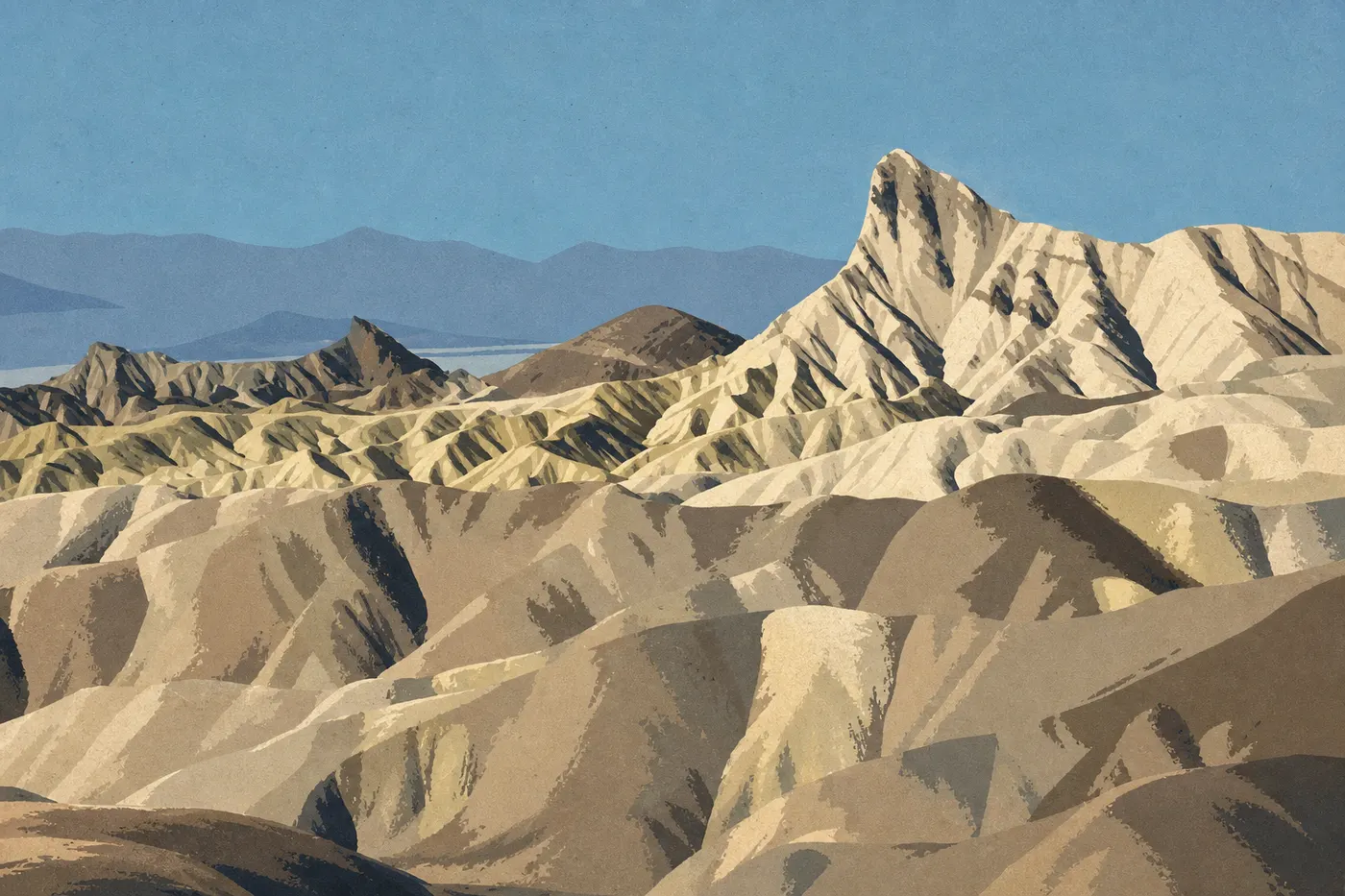
The NPS describes fall as a season of warm but pleasant temperatures, with generally clear skies. Starting in mid-October, highs drop below 90°F, and nights cool off without ever becoming cold on the valley floor.
November is an underrated season. The park is much less crowded than in spring, lodging rates fall, and weather conditions remain nearly identical to March. When we visited in November, the Mesquite Flat Sand Dunes at golden hour were among the best photographic moments of our American Southwest road trip.
Wildlife: Wintering birds begin to arrive, while coyotes remain active outside the hottest hours.
Winter (December to February): The Secret Season
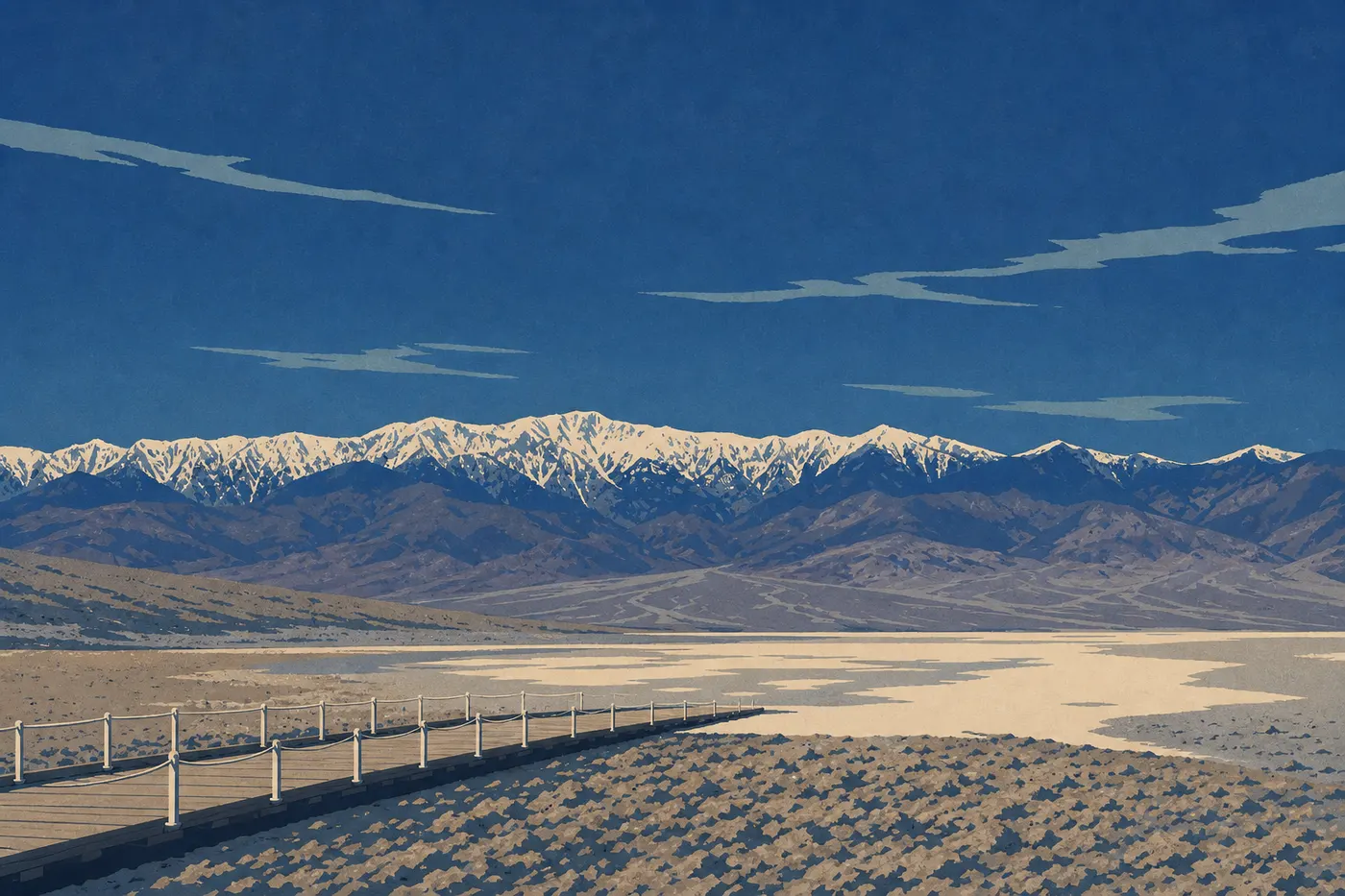
Winter is Death Valley's least-known season and probably its most photogenic. The surrounding peaks, including Telescope Peak at 11,050 feet, receive intermittent snowfall, creating a striking contrast with the Badwater Basin salt flat, 282 feet below sea level. Low-angle light in December and January creates exceptional scenes at sunrise over Zabriskie Point.
In the valley, daytime temperatures hover around 63 to 73°F, ideal for long hikes. Nights fall to 39 to 45°F, so bring a suitable sleeping bag if you're camping.
One thing to watch for: rare but intense rainstorms can trigger flash floods in narrow canyons. These events are unpredictable. If clouds build over the mountains, stay out of canyon bottoms. High-elevation roads such as Dantes View Road and Wildrose Canyon Road may close temporarily after snowfall.
Roads: Nearly all major roads remain open year-round. Check road conditions on nps.gov the morning of each day you plan to spend at elevation.
Crowds: When to Avoid the Crowds in Death Valley
Death Valley welcomes about 1.7 million visitors a year, with visitation heavily concentrated around two peaks.
Spring peak (March-April): The busiest period of the year. March weekends fill the parking lots at Badwater Basin, Zabriskie Point, and Mesquite Flat Sand Dunes. Arriving before 8 a.m. gives you the best chance of finding a spot and a quiet site. Plan well ahead for Easter weekend.
Winter season (November-February): Crowds are more moderate, but campgrounds around Furnace Creek are often full on Friday and Saturday nights, especially in December and January.
June through September: Visitation drops sharply. The park is nearly empty, but there's a reason for that.
| Month | Crowds | What to know |
|---|---|---|
| Jan.-Feb. | Moderate | No reservations needed, peaceful atmosphere |
| March-April | Very high | Arrive early, reserve a campsite |
| May | High | Morning hikes only |
| June-Sept. | Low | Dangerous heat, avoid |
| Oct.-Nov. | Moderate to low | Excellent balance of quiet and conditions |
| December | Moderate | Ideal for photography, cool nights |
Best Time to Visit on a Budget
Lodging prices in and around the park closely follow the visitation curve. November and January-February offer the best balance: weather is good, crowds are moderate, and rates, from Furnace Creek Inn to motels in Pahrump or Beatty, are often 20 to 40% lower than in March and April. The lowest prices of the year are in summer, but that's obviously not a good enough reason to go then.
Flights to Las Vegas, the most common gateway to Death Valley, vary little by season. The drive takes about 2.5 hours, and lodging is where you'll see the real budget difference.
Park admission is $30 per vehicle, valid for 7 days, or $15 per person entering on foot or by bicycle. If you're visiting several national parks, the $80 America the Beautiful pass pays for itself after two vehicle entries. The National Parks Fees & Passes page explains entrance fees and passes.
For lodging in and around the park, the Death Valley lodging guide and park hotels and lodges cover the options by season, from camping under the stars to a historic lodge.
When to Go Based on Your Travel Style
Hiking and trails: March and April are the benchmark months for hiking in Death Valley. November offers nearly identical conditions with noticeably fewer people. The Death Valley hiking guide lists routes by difficulty and the seasons when they're practical.
Landscape photography: December and January offer low-angle light and snow on the peaks. For badland colors at Zabriskie Point and Artists Palette, aim for late afternoon in April.
Families with children: Choose March or October-November, with shorter days and plenty of water. Avoid any summer visit with young children, no matter how well prepared you are. The Death Valley family guide explains seasonal precautions.
Wildlife viewing: Spring concentrates the most activity, including bird migration, flowers that attract insects, and small mammals active at dawn. Our Wildlife page introduces the species you can see each month.
RV road trip: Winter is the favorite season for RV travelers. Campgrounds with electrical hookups are more available, and cool nights are easy to handle with a good heating system. Our RV page covers sites and seasonal restrictions.
Budget travel: November or January-February offers a good combination of comfortable weather and affordable lodging.
As part of a larger itinerary: Death Valley fits naturally into a Southwest loop with Zion, Bryce Canyon, or Joshua Tree. The Road Trips section and Regions pages bring together the resources you need to plan a multi-park itinerary.
In Summary: The Best Time for Your Travel Style
| Travel style | Recommended period |
|---|---|
| Hiking and trails | March-April, November |
| Landscape photography | December-January, April |
| Families | March, October-November |
| Wildlife and nature | March-April |
| RV and road trip | November, January-February |
| Tight budget | November, January-February |
| Absolutely avoid | June through September |
Our complete Death Valley guide brings together all the practical resources you need: itineraries, must-see sites, logistics, and safety tips for every month of the year.
The Worst Time to Visit Death Valley
From June through September, Death Valley becomes a hostile environment for any unprepared visitor. Temperatures in the valley regularly exceed 115 to 117°F, pavement can melt on exposed roads, and the risk of heat illness is real even on short trips outside an air-conditioned vehicle. Dozens of people are hospitalized for heatstroke every summer.
July combines all the drawbacks: peak heat, monsoon thunderstorms with a risk of flash floods in canyons, and almost no cell service across most of the park. If your vehicle breaks down in a remote area, the wait can quickly become critical. If you can't avoid summer, limit your visit to sites accessible by air-conditioned car, go out only before 7 a.m. or after 7 p.m., carry at least 4 liters of water per person per day, and tell the Visitor Center your itinerary before every outing.
Frequently Asked Questions
What's the best time to visit Death Valley?
The best time to visit Death Valley runs from mid-October through April. Spring, especially March and April, is the most popular time, with temperatures from 68 to 93°F, trails accessible all day, and the possibility of a floral superbloom in some years.
When should you avoid Death Valley?
Avoid Death Valley from June through September. Temperatures in the valley regularly exceed 115°F, heat illness is a real risk, and a vehicle breakdown in an area without cell service can quickly become life-threatening.
What are the best months to visit Death Valley?
The best months are March and April, when peak-season conditions come together, and November or January for a quieter, often less expensive alternative with similarly good weather.
Can you visit Death Valley in winter?
Yes. Winter, from December through February, is an excellent time to visit. Valley temperatures range from 39 to 73°F during the day, ideal for long hikes. The surrounding peaks receive intermittent snow, creating a striking visual contrast with the desert landscape. Only high-elevation roads may close temporarily after snowfall.
What is the least crowded month?
July and August are the least crowded months of the year, but there's no mystery why: the heat is dangerous. Among the months with pleasant conditions, November and January-February are the quietest. November offers the best balance, with springlike conditions, far fewer people, and lodging often 20 to 40% cheaper than in March and April.
Is the park open year-round?
Yes. Death Valley National Park is open 365 days a year, 24 hours a day. Admission is $30 per vehicle, valid for 7 days. Some secondary roads and backcountry routes may close temporarily after heavy rain or high-elevation snowfall, so check road conditions on nps.gov each morning before heading out.
What's the best time to visit the American West?
For a versatile trip through the American West, spring, from March through May, or fall, from September through November, offers the best conditions. The Road Trips section and Regions pages bring together multi-park resources by season.
What's the best time to visit California and Nevada?
For a trip combining Death Valley, which straddles California and Nevada, with other destinations, spring, from March through April, or fall, from October through November, offers the best conditions across the region.