
Badlands Wildlife: What to See and Where to Find It
The Badlands are often reduced to their rock formations, but their mixed-grass prairie supports a surprisingly rich variety of wildlife. Five animals shape the park's wildlife experience. Plains bison rule the seemingly endless grasslands. Black-tailed prairie dogs build underground towns populated by thousands of animals. Pronghorn cross the plains at 55 mph. Bighorn sheep climb the clay walls with ease. And the rarest star of all, the black-footed ferret, stalks its prey at night in the rodent colonies after being rescued from extinction.
Iconic Wildlife in Badlands
Plains Bison
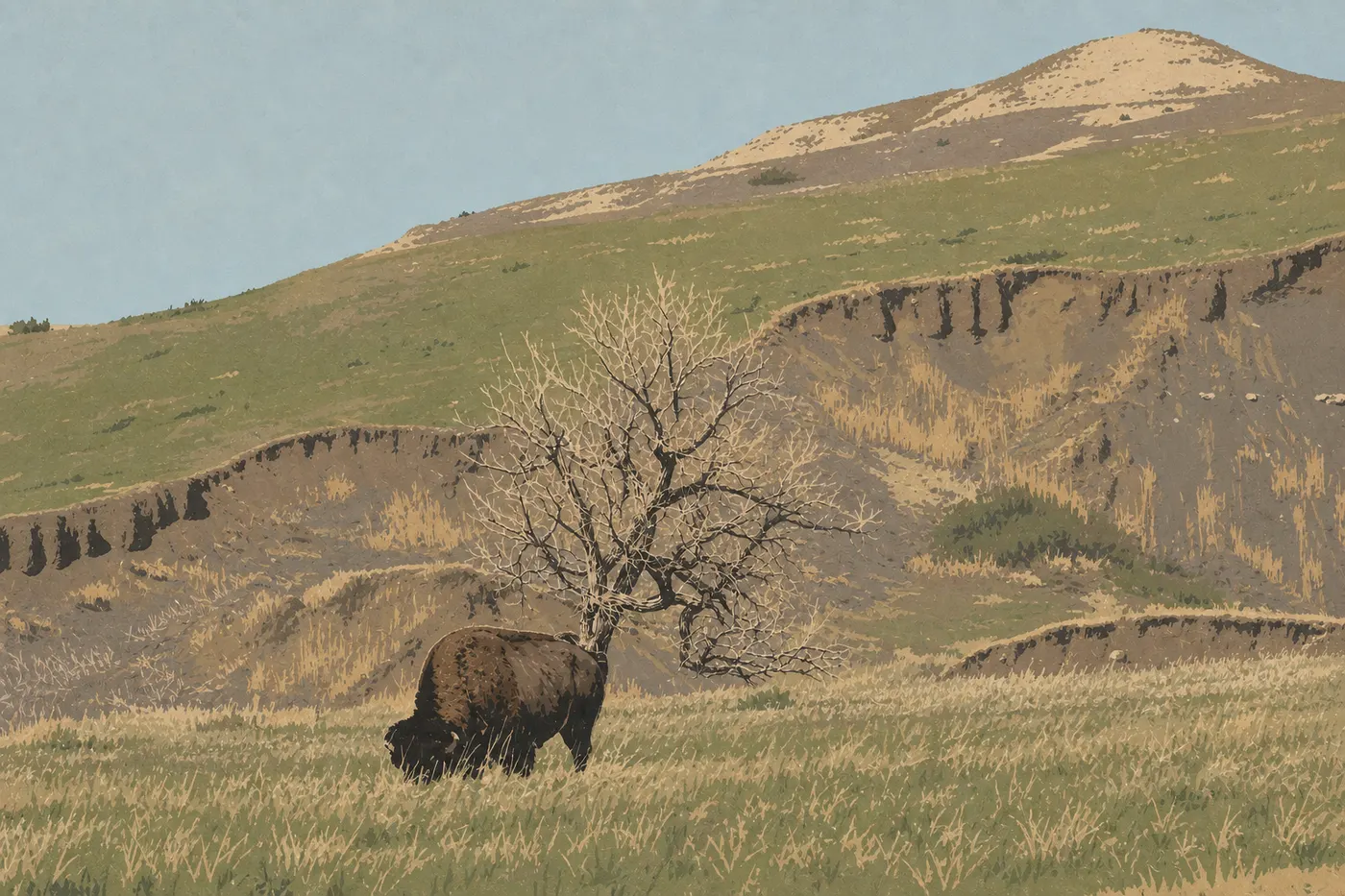
The American bison (Bison bison) is the symbol of the Great Plains, and the park is home to a herd of more than 1,200 animals. An adult male can weigh over 1,985 pounds and stand nearly 6.5 feet tall at the shoulder. Do not let their placid appearance fool you. They can charge at 30 mph with no visible warning.
Bison graze in the prairie year-round, with large concentrations along Sage Creek Rim Road, on the west side of the park. During a visit in September, we watched a herd of several hundred animals cross the road for more than thirty minutes, seemingly indifferent to the vehicles pulled over nearby. The July and August rut is especially dramatic, with vocalizations, dust baths, and clashes between males.
Black-Tailed Prairie Dogs
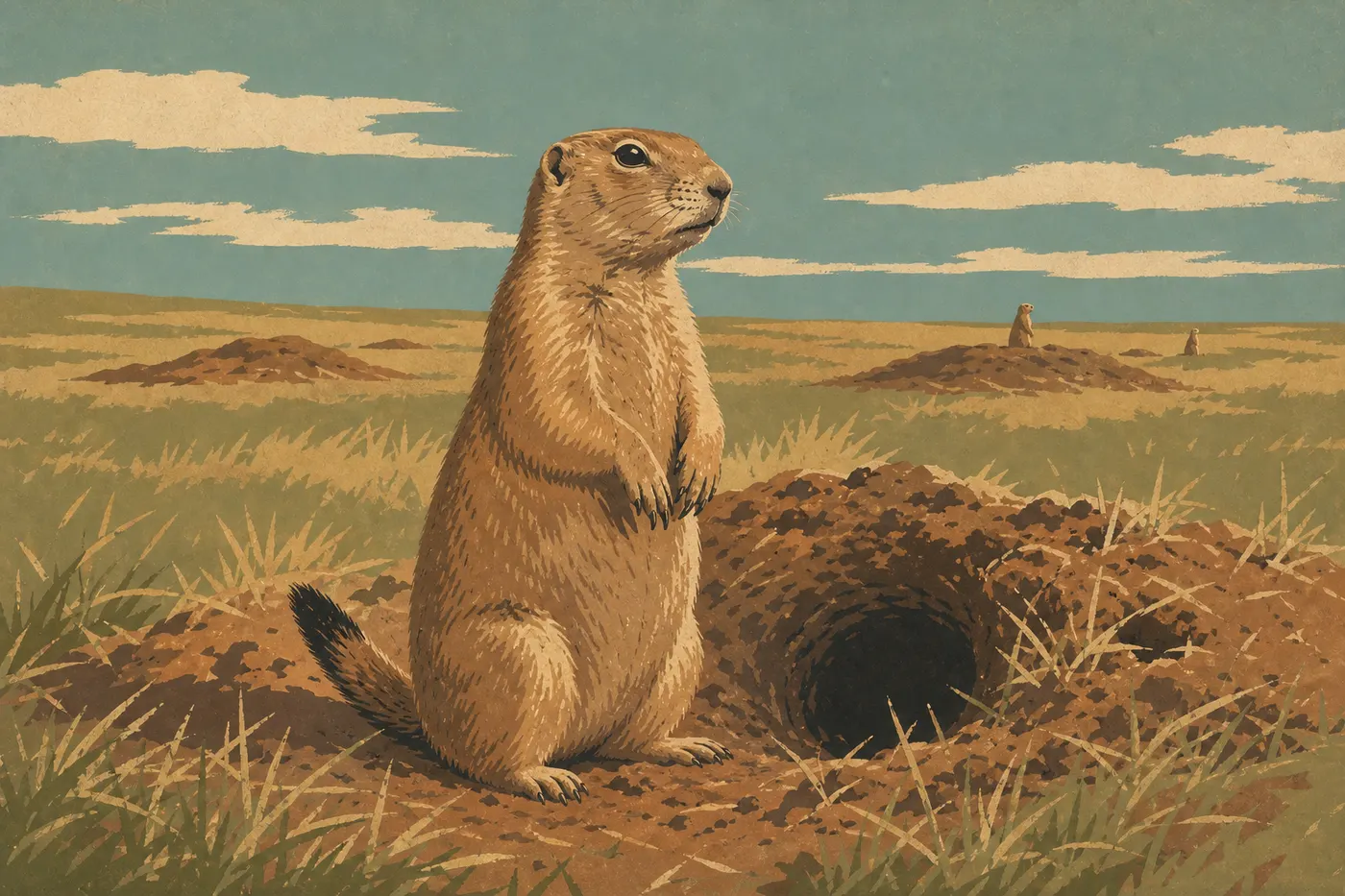
Often overlooked, the prairie dog (Cynomys ludovicianus) is probably the most fascinating animal to watch in Badlands. This small social rodent lives in “towns” that can hold thousands of animals connected by a dense network of burrows. Conata Basin is home to one of the park's largest colonies.
The routine is well established. One sentinel gives an alarm call, the entire town dives underground in two seconds, and then heads cautiously reappear one by one. Ecologically, these rodents are a cornerstone of the prairie. At least 150 species depend directly on their colonies.
Pronghorn
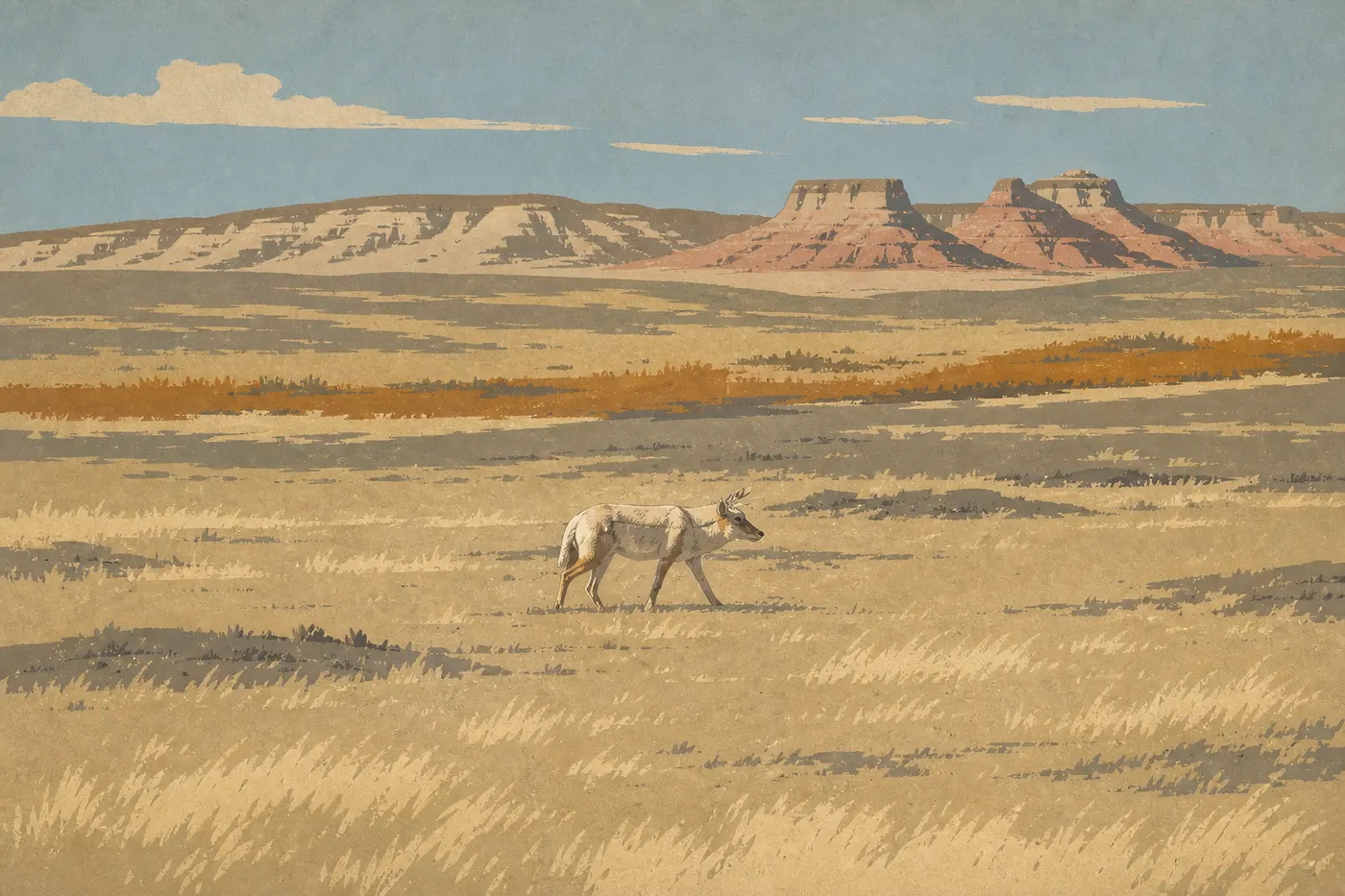
The pronghorn (Antilocapra americana) is North America's fastest land mammal. It can reach 55 mph at top speed and hold 40 mph for several miles. That puts it second in the world behind the cheetah, but with vastly greater endurance.
In Badlands, pronghorn are nearly everywhere in the open prairie. Their tawny bodies, white bellies, and white rumps stand out easily from the road. Males have curved horns that fork near the base. Females have a smaller version.
Black-Footed Ferret
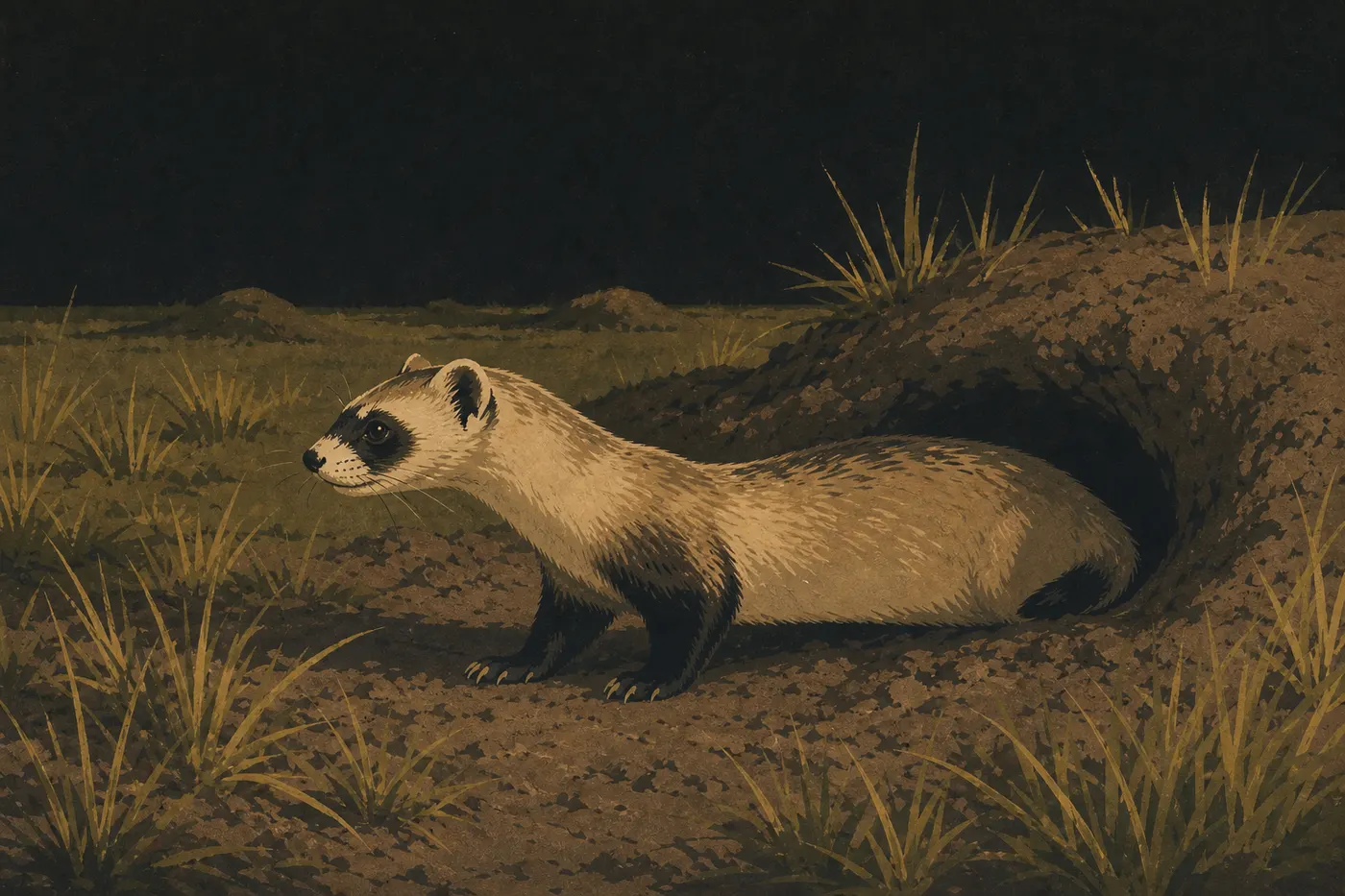
This is the park's most remarkable conservation story. The black-footed ferret (Mustela nigripes) was considered extinct in 1979. A reintroduction program launched in Badlands in 1994 brought a wild population back. It remains one of North America's most endangered mammals.
Nocturnal and elusive, it hunts prairie dogs in their own burrows. To look for one, you need a nighttime outing in the Conata Basin area, a headlamp, and plenty of patience. Scan for eyes reflecting the light close to the ground.
Bighorn Sheep
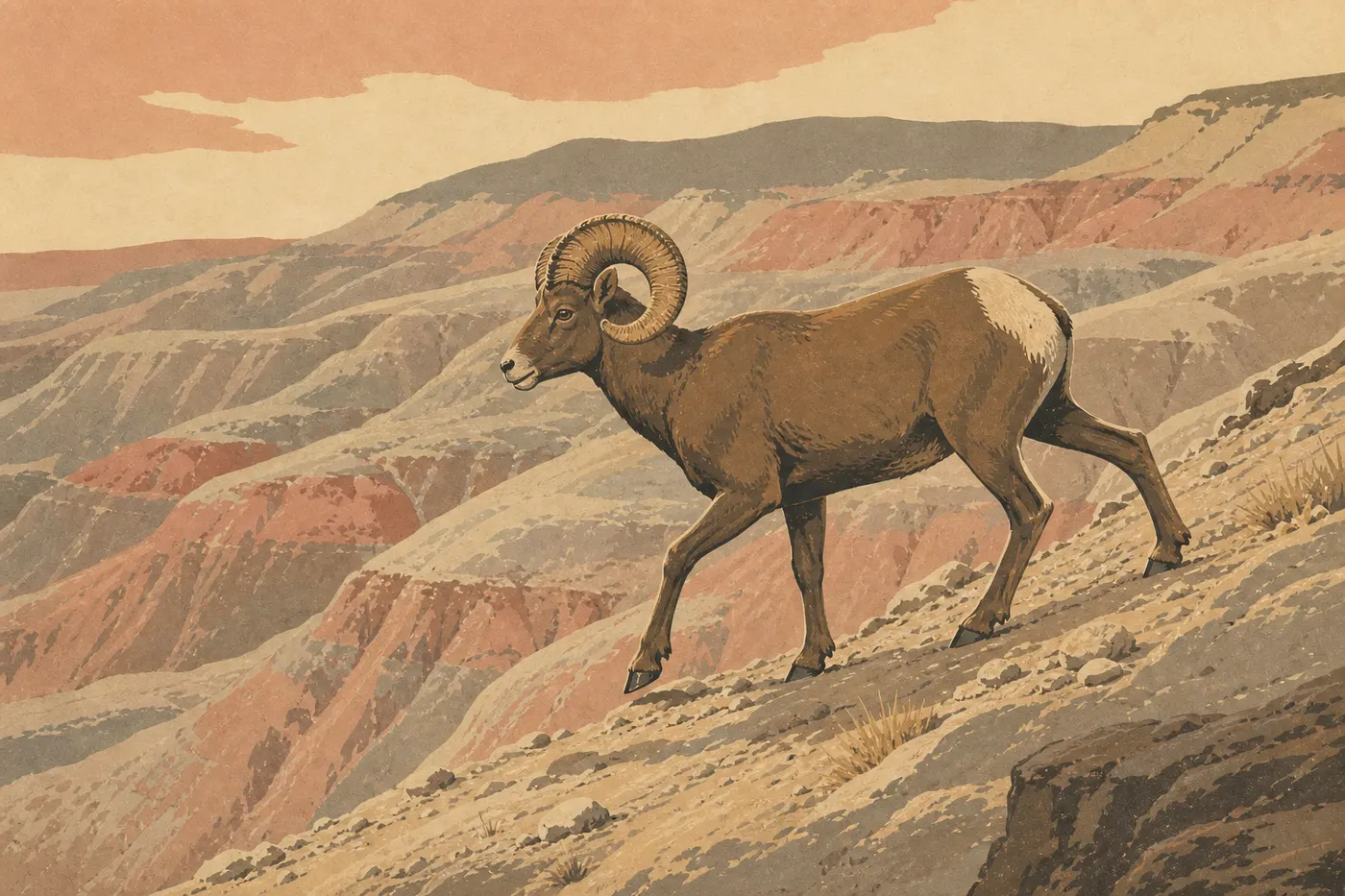
Bighorn sheep (Ovis canadensis) are right at home here. They frequent the steep slopes of the clay formations, where few predators can follow. Males carry their distinctive spiral horns. Females and young sheep often appear along the sides of the cliffs, a sight that reliably takes first-time visitors by surprise.
The area around the Ben Reifel Visitor Center and the overlooks along Badlands Loop Road are good places to start, especially early in the morning.
Telling Apart the Park's Two Canids: Coyote and Swift Fox
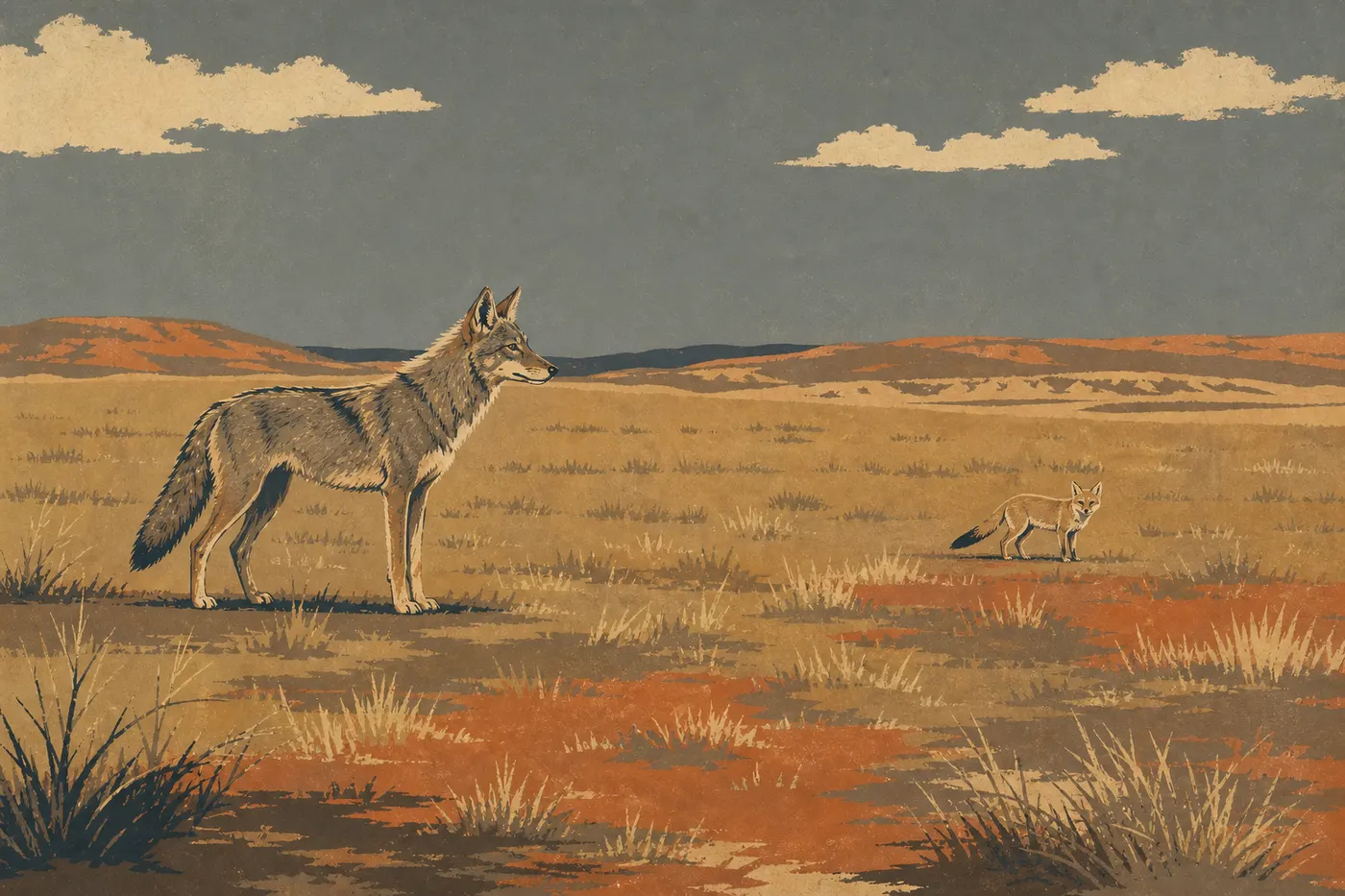
Two canids live side by side in Badlands. The coyote (Canis latrans) is more common. It is about the size of a German shepherd to a Labrador, with a grayish-tan coat and a bushy tail tipped in black. The swift fox (Vulpes velox) is much more elusive and noticeably smaller, with large ears and a black-tipped tail. It is one of the prairie species directly linked to prairie dog colonies.
Where to See Wildlife in Badlands
The park has two very different areas. In the east, Badlands Loop Road (SD-240) crosses the most photographed formations. This is where bighorn sheep on the cliffs and bison in the open prairie are easiest to see. The Door, Window, and Pinnacles overlooks let you scan broad stretches of landscape from a raised viewpoint without leaving your vehicle.
In the west, Sage Creek Rim Road is a gravel road suitable for light vehicles in dry weather. It crosses Sage Creek Wilderness, an undeveloped area where bison gather in larger herds and pronghorn run freely. This is our favorite area for wildlife density.
The Conata Basin area, between SD Highway 44 and the heart of the park, is the center of prairie dog activity by day and black-footed ferret activity at night.
As for birds, golden eagles and northern harriers regularly fly over the prairie, while turkey vultures circle above carcasses. Keep an eye on the sky.
When to Watch Wildlife: Seasons and Daily Rhythms
Dawn and dusk are the golden windows. Large species are active then, the light is soft, and temperatures are manageable. In midsummer, heat reaching 115°F on the hottest days keeps animals out of sight between 11 a.m. and 5 p.m.
Spring (April through June): bison and pronghorn calving, peak activity in prairie dog colonies, and the best chance to see young animals.
Summer (July and August): the bison rut is dramatic but scorching. Plan to head out very early.
Fall (September and October): milder weather, well-fed animals, and low-angle light across the badlands. This is our favorite time of year.
Winter: bison remain active in temperatures that can drop to -40°F. The landscape is stripped down, but roads sometimes close.
For a season-by-season breakdown of weather, precipitation, and crowds, see our When to Visit Badlands guide.
Predators and Large Animals in Badlands
The coyote is the most visible predator. It hunts alone or in pairs, mostly at dawn and dusk, and its presence shapes the entire prairie.
The mountain lion (Puma concolor) lives in the park, but sightings are extremely rare. It avoids people and mainly hunts at night in remote areas.
The prairie rattlesnake (Crotalus viridis) is the species to know for your safety. This venomous snake is active from April through October. It does not seek contact, but it may lie still and blend into a rock or the edge of a trail. Always watch where you put your feet, especially off-trail.
The golden eagle (Aquila chrysaetos), with a wingspan of about 6.5 feet, is the park's largest diurnal raptor. It hunts prairie dogs and jackrabbits.
Watching Wildlife Safely
Badlands is not a zoo. The NPS safety distances apply without exception.
Bison and bighorn sheep: at least 75 feet. If a bison stares at you, snorts, or paws the ground, you are too close. Back away slowly. Do not run or yell.
Mountain lions and coyotes: 300 feet. If a mountain lion faces you, make yourself look bigger by raising your arms, speak loudly, and back away without turning your back.
Rattlesnakes: never approach or touch one. If you are bitten, call 911 or the visitor center immediately, immobilize the affected limb, and stay calm.
The universal rule: never feed a wild animal, including a prairie dog. Human food changes their behavior and most often leads to an early death.
Before putting your hand or foot on a rock, check that no reptile is there, especially in rocky terrain and hot weather. For general park safety rules, the Badlands visitor guide summarizes the park's rules, including what to do if you encounter wildlife.
In Brief: Wildlife You Shouldn't Miss and Where to Find It
Plains bison: Sage Creek Rim Road and open prairie, year-round. Prairie dogs: Conata Basin and areas around Loop Road, March through November. Pronghorn: open prairie throughout the park, year-round. Bighorn sheep: cliffs and overlooks along Loop Road, preferably early in the morning. Black-footed ferret: nighttime in Conata Basin, with a headlamp and patience. Coyote: everywhere, at dawn and dusk. Golden eagle: in the sky above the prairie.
To find the trails that cross the best wildlife habitats, see our Badlands Hiking guide.
Frequently Asked Questions
What animals live in Badlands?
Animals living in Badlands include plains bison, black-tailed prairie dogs, pronghorn, bighorn sheep, black-footed ferrets (reintroduced in 1994), coyotes, swift foxes, mountain lions, and prairie rattlesnakes, along with many raptors including golden eagles and turkey vultures.
What prehistoric animals lived in Badlands?
Prehistoric animals that lived in Badlands roughly 23 to 35 million years ago included the hornless rhinoceros (Subhyracodon), the titanotheres (ancestors of modern rhinos), Archaeotherium (a giant pig), Hoplophoneus (an early saber-toothed cat relative), and a giant turtle. Their fossils make Badlands one of the richest paleontological sites in the world.
What is the most common animal in Badlands?
The most common animal in Badlands is the black-tailed prairie dog. Millions live in the “towns” scattered across the prairie, outnumbering bison and pronghorn.
What is the largest animal in Badlands?
The largest animal in Badlands is the plains bison. Adult males weigh more than 1,985 pounds and stand nearly 6.5 feet tall at the shoulder.
What predators live in Badlands?
Badlands predators mainly include coyotes, which are the most visible and active; mountain lions, which are present but very elusive; golden eagles in the air; and prairie rattlesnakes among the reptiles.
What animals come out at night in Badlands?
Nocturnal animals in Badlands include black-footed ferrets, which are strictly nocturnal, coyotes, swift foxes, and several owl species. A nighttime outing in Conata Basin with a headlamp aimed at the ground gives you the best chance of spotting a black-footed ferret, one of North America's rarest mammals.