
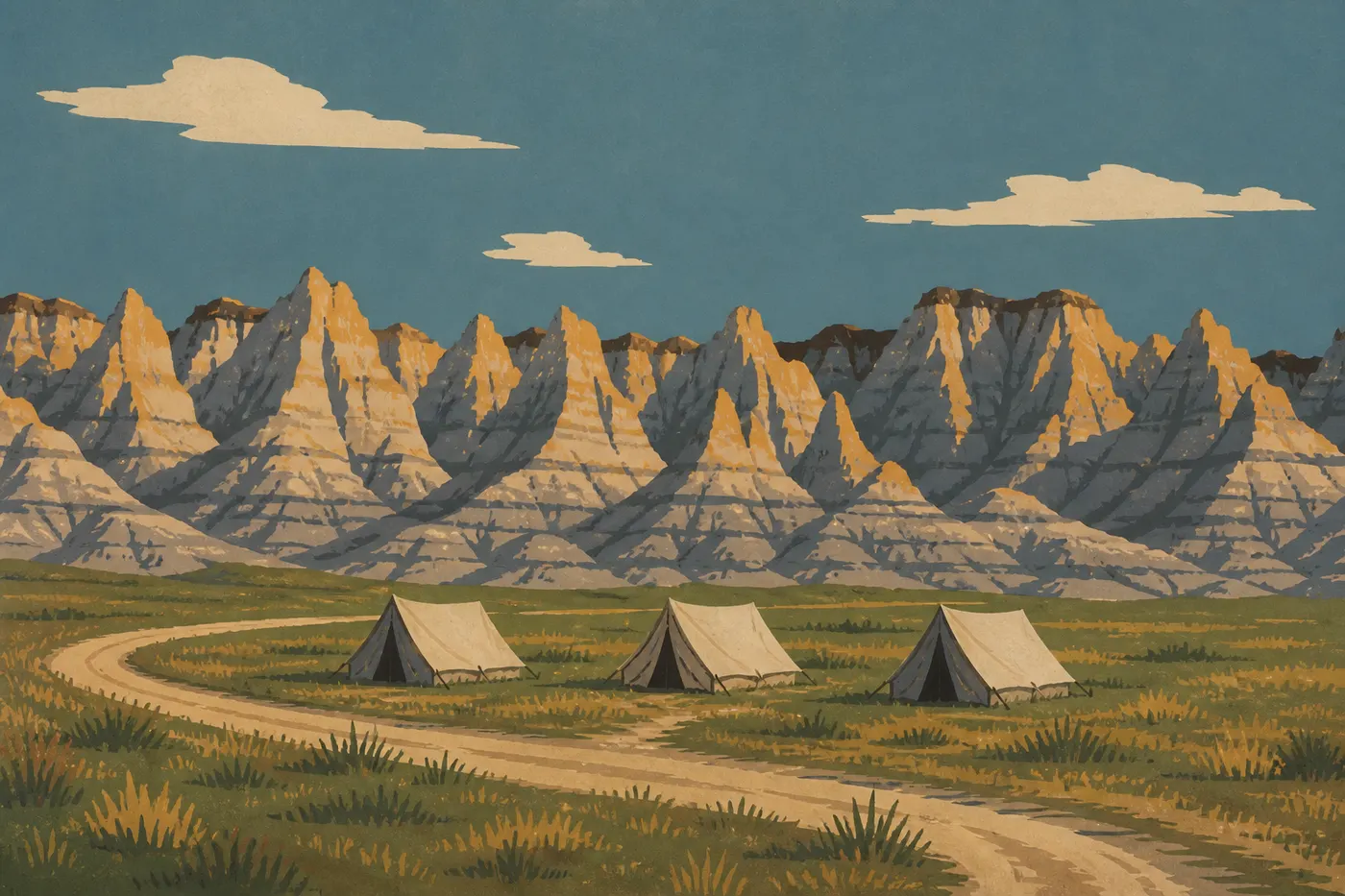
Camping at Badlands National Park: Cedar Pass, Sage Creek, Reservations, and Rates
Badlands National Park has two NPS campgrounds with 118 sites total, and two very different camping options. That makes the choice fairly simple. Cedar Pass takes reservations on recreation.gov for $37 a night and offers full services. Sage Creek is primitive, free, and first come, first served. Here's what to expect at each campground.
Campgrounds in the park (2)
- Campground Sage Creek Campground first come, first served · 22 sites Directions ↗
- Campground Cedar Pass Campground see NPS · 96 sites Directions ↗
 Base map © OpenStreetMap · © CARTO
 Badlands campgrounds by the numbers
2 official campgrounds inside the park, 118 campsites in total, 96 of them reservable.
| Campground | Sites | Booking | Fee / night | Open | Amenities |
|---|---|---|---|---|---|
| Cedar Pass Campground | 96 (82 tent only, 14 RV only, 10 electric hookups, 4 group) | Reservation | from $37 | Closed Oct 15 to Apr 1 | toilets, showers*, potable water, dump station |
| Sage Creek Campground | 22 | Free | Year round | toilets |
Source: National Park Service (NPS API), retrieved October 6, 2026. Fees and dates change: check the campground page before you go.
Can you camp inside Badlands National Park?
Yes. Badlands National Park has two NPS campgrounds with 118 sites total. Cedar Pass closes from mid-October to early April, although a limited section may stay open in winter depending on conditions. Sage Creek remains accessible year-round, except for temporary closures of the access road after winter storms. Dispersed camping isn't allowed in the park's usual visitor areas. The Stronghold District is the only area open to backcountry camping, and you'll need a free permit.
Campgrounds inside the park
Cedar Pass Campground
Cedar Pass is the park's main campground, in the eastern section just a few minutes' walk from Ben Reifel Visitor Center. With 96 sites, it's the best choice for a first visit or a family trip.
- Sites: 96 total (82 tent-only, 14 RV-only, 10 with electric hookups, and 4 group sites for organized stays)
- Services: flush toilets, showers, drinking water, and a dump station
- Season: roughly April through mid-October; a limited section may remain open in winter depending on weather conditions
- Rate: $37 a night
- Reservations: required through recreation.gov
Cedar Pass has a practical advantage: trailheads for the easiest hikes are within walking distance, and covered picnic tables make it possible to settle in even during summer showers.
Sage Creek Campground
Sage Creek is a primitive campground tucked into the park's western prairie, right in bison country.
- Sites: 22 sites
- Services: vault toilets only, with no drinking water or showers
- Hookups: none
- RVs: maximum length of 18 feet
- Season: open year-round (the unpaved Sage Creek Rim Road may close temporarily after winter storms)
- Rate: free
- Reservations: none; first come, first served
Sage Creek is for self-sufficient travelers who want to unplug. Bison regularly pass through the campground, sometimes in herds at dawn. It's an unforgettable sight, but you need to stay alert at all times. Bring all the water you'll need. There are no water sources or supplies available on-site.
RVs and trailers: what you need to know
Cedar Pass is the only campground fully suited to large motorized vehicles. Its 14 RV sites and 10 sites with electric hookups cover most needs. Check the length limits for individual sites on recreation.gov before booking, since they vary by site. The dump station is available on-site.
Compact vehicles can technically reach Sage Creek via the unpaved Sage Creek Rim Road, but the maximum allowed length is 18 feet. That rules out large RVs and long trailer combinations. Our Badlands RV camping guide covers road and equipment restrictions in detail.
Camping nearby: private campgrounds outside the park
When Cedar Pass is full, which is common on July and August weekends, private campgrounds in Wall and Interior provide another option. Badlands Hotel & Campground offers tent and RV sites with hookups a few miles from the main entrance, at similar rates. Our Badlands lodging guide lists all lodging options in and around the park.
Backcountry camping
Backcountry camping is allowed in the Stronghold District. The rules are strict and nonnegotiable:
- A free permit is required. Pick it up at Ben Reifel Visitor Center before setting out.
- Camp at least 0.5 miles from any road and away from marked trails.
- Fires are prohibited. Gas stoves are allowed.
- Water: bring everything you need. There are no potable water sources in the backcountry.
This is the option for self-sufficient hikers who want to immerse themselves in the Badlands landscape without seeing another person. Our selection of Badlands hikes details the routes that work for backcountry camping.
How and when should you reserve a Badlands campsite?
For Cedar Pass, go to recreation.gov. The reservation window opens six months before your arrival date. Mid-June through late August weekends often fill within the first few hours. A practical tip: turn on availability alerts on the site and book as soon as the window opens, preferably in the morning.
May, September, and the first half of October offer much better availability, along with more comfortable camping temperatures. Keep in mind that Cedar Pass closes from mid-October to early April, and plan accordingly. Our guide to the best times to visit Badlands National Park covers the seasons based on your tolerance for heat and crowds.
Sage Creek doesn't take reservations. Arrive in the early afternoon to get your choice of sites.
Rates: how much does a night of camping cost at Badlands National Park?
| Campground | Nightly rate | Hookups |
|---|---|---|
| Cedar Pass | $37 | Electricity available (10 sites) |
| Sage Creek | Free | None |
You'll also pay the park entrance fee: $30 per private vehicle, $25 per motorcycle, or $15 per person entering on foot or by bicycle. If you visit several national parks in a year, the America the Beautiful pass ($80, valid at all federal recreation sites) quickly pays for itself. Our National Park Entrance Fees and Passes page explains the available fees and passes.
Camping safety and good practices
Badlands National Park has no bears, but it has its own safety rules.
Bison: herds roam freely throughout the park, including around the campgrounds. Stay at least 82 feet away at all times. A bison can charge without warning and run 30 mph. Never feed them or approach them for a photo. Our Badlands wildlife guide explains how to behave around the park's large animals.
Rattlesnakes: they live in rocky areas and clay formations. Look before placing your hands on a rock, and don't put your fingers into crevices.
Extreme heat: summer temperatures regularly reach 104 to 117°F. Plan on at least 3 to 4 liters of water per person per day, avoid outings between 11 a.m. and 4 p.m., and hit the trails early in the morning.
Thunderstorms and tornadoes: severe storms are common from June through August, with a risk of hail and, less often, tornadoes. If there's a weather warning, get to your vehicle or a sturdy building immediately. Stay off ridges and away from exposed areas during lightning. Our Badlands weather guide covers the risks month by month.
Cool nights: even in summer, nighttime temperatures can drop in Badlands National Park. A three-season sleeping bag is still recommended.
Which campground is right for you?
Families with children: choose Cedar Pass for the showers, flush toilets, and proximity to the Visitor Center. Our Badlands family travel guide adds more information.
RVers: choose Cedar Pass and reserve a site with an electric hookup on recreation.gov. Keep Sage Creek's 18-foot maximum length in mind if you're thinking about staying there.
For a deeper connection with nature: choose Sage Creek (free, bison-filled prairie, and starry skies without light pollution) or backcountry camping in the Stronghold District (permit required).
Without a reservation during peak season: plan to arrive at Sage Creek in the early afternoon, or use a private campground in Wall as a backup.
Find the full park overview in our complete Badlands guide.
Frequently asked questions
Where can you camp in Badlands National Park?
You can camp at Cedar Pass Campground (96 sites, full services, reservations required through recreation.gov) and Sage Creek Campground (22 primitive sites, free, first come, first served). Backcountry camping is allowed in the Stronghold District with a free permit.
Which campground should you choose at Badlands National Park?
Cedar Pass (96 sites, $37 a night) is the most versatile choice, with showers, flush toilets, drinking water, and a dump station within walking distance of the Visitor Center. Sage Creek (22 sites, free) is better for self-sufficient travelers who want a wilder experience, without running water or electricity.
When should you reserve a campsite at Badlands National Park?
For Cedar Pass, open recreation.gov as soon as the six-month reservation window begins, especially for July and August weekends, which fill very quickly. Keep in mind that Cedar Pass closes from mid-October to early April. Sage Creek doesn't accept reservations, so arrive in the early afternoon to get your choice of sites.
How do you camp in Badlands National Park?
Choose Cedar Pass (reserve through recreation.gov, $37 a night) or Sage Creek (walk-in camping, free), then pay the park entrance fee ($30 per vehicle). For backcountry camping in the Stronghold District, get a free permit at Ben Reifel Visitor Center before setting out.
How much does a night at a Badlands campground cost?
A night at Cedar Pass Campground costs $37. Sage Creek is completely free. These rates don't include the park entrance fee ($30 per vehicle). For entrance fees and annual passes, see the National Park Entrance Fees and Passes page.
Where is Badlands National Park?
Badlands National Park is in South Dakota, about 75 miles east of Rapid City. The northeast entrance is accessible from I-90 at Exit 131.