
Badlands Weather: Forecasts, Climate, and Current Conditions
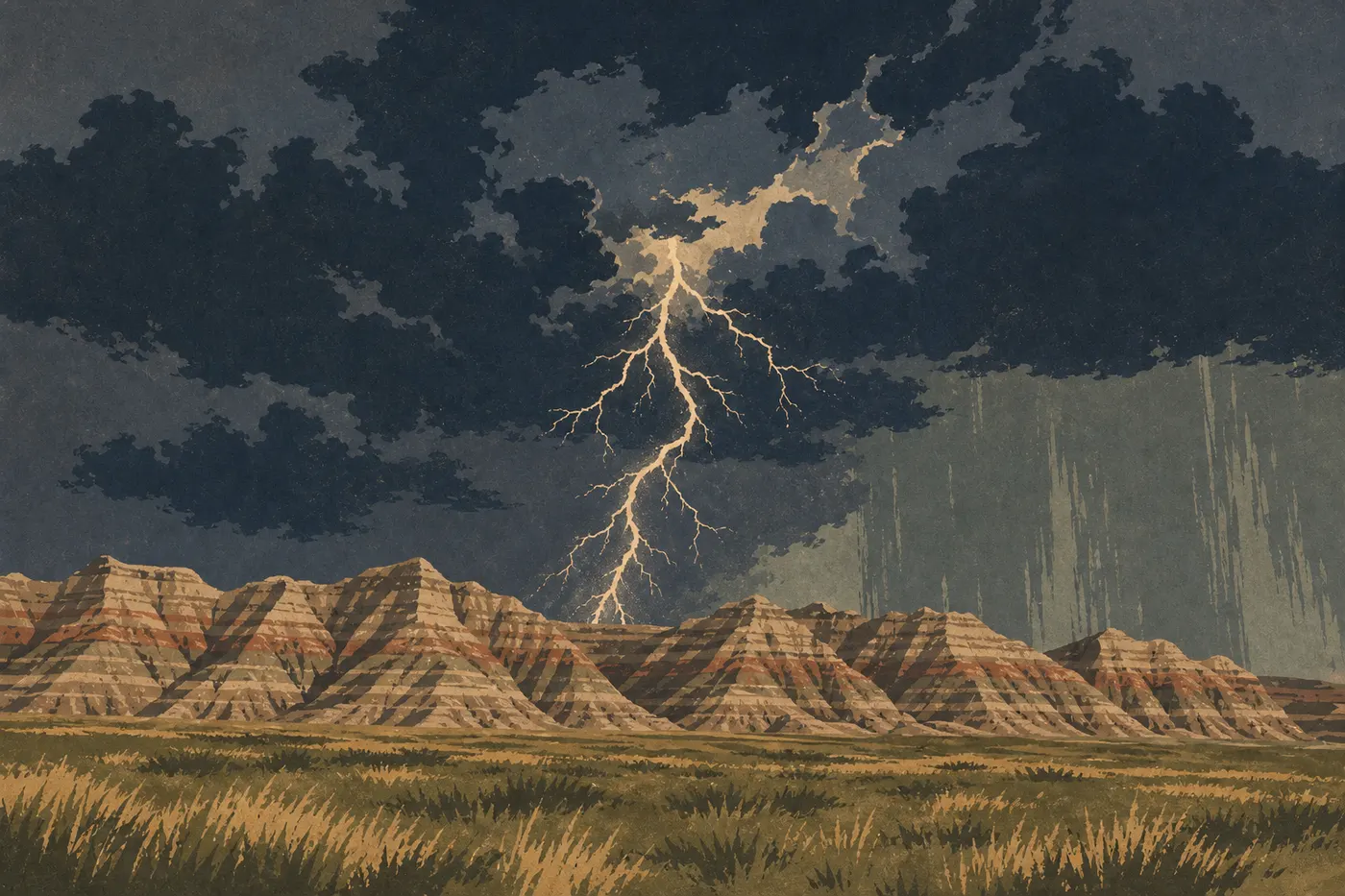
Badlands National Park has a semi-arid continental climate with dizzying extremes. The thermometer has come close to 117 °F in summer and reached -40 °F in winter. In between, conditions can change constantly, with thunderstorms that appear in as little as 20 minutes. In short, you can visit the park year-round, but it offers a very different experience depending on when you go.
Current readings are unavailable. See the seasonal averages farther down this page.
Open-Meteo readings · updating… · park time zone
Badlands National Park Climate, Month by Month
| Month | Low (°F) | High (°F) | Precip. (in.) |
|---|---|---|---|
| January | 7 | 30 | 0.43 |
| February | 10 | 36 | 0.43 |
| March | 21 | 48 | 0.71 |
| April | 34 | 61 | 1.18 |
| May | 45 | 73 | 2.28 |
| June | 55 | 84 | 2.56 |
| July | 64 | 95 | 1.81 |
| August | 61 | 91 | 1.65 |
| September | 48 | 79 | 1.18 |
| October | 36 | 63 | 0.98 |
| November | 23 | 45 | 0.55 |
| December | 10 | 32 | 0.43 |
Approximate climate normals based on historical averages.
The park receives about 15 inches of precipitation each year, mostly from May through August. That may not sound like much, but the rain arrives in bursts of thunderstorms, turning the clay soil as slippery as wet soap within minutes.
Is It Cold or Hot in Badlands National Park? Records and Extremes
Both, with an intensity few parks can match. According to the NPS, recorded temperatures in Badlands National Park range from a historic low of -40 °F to a high of 117 °F. That's an 87-degree spread in one place. In practice, here's what that means on the ground:
- In July, the ground surface commonly rises above 140 °F in direct sun. That's hot enough to burn a dog's paws or the thin soles of city shoes.
- In January, wind makes the cold feel worse. A temperature of 5 °F can feel like -13 °F or colder in a strong gust.
- Sudden changes over a single day, with a difference of more than 36 °F between morning and afternoon, are common in spring and fall, especially when a front moves through.
What to Wear by Season
Winter: three required layers, including a thermal base layer, a fleece midlayer, and a waterproof, windproof shell. Wear a hat that covers your ears, warm gloves, and sturdy shoes with slip-resistant soles. A blanket in the trunk takes up little space and may come in handy.
Spring: versatility is key. Mornings can be cool at 50 °F, afternoons warm at 72 °F, and evenings rainy. A compact rain jacket in your daypack is essential. Choose closed-toe trail shoes. The clay trails become treacherous after even a light shower.
Summer: protect yourself from the sun as much as from the heat. Wear a wide-brimmed hat, lightweight long sleeves in breathable fabric, and sunscreen rated SPF 50 or higher. Bring at least 3 liters of water per person for a half-day visit. Outside the Ben Reifel Visitor Center, there are no places to refill water in the park.
Fall: this is the easiest season to manage. A lightweight layering system works well from September through mid-October. Starting in late October, treat the weather like spring and add a warm layer for the evening.
Alerts and Conditions to Watch
Supercell thunderstorms (June to August): storms can form in less than 30 minutes. If the western horizon darkens, get down from exposed buttes and overlooks immediately, then head to your vehicle or a sturdy building. Don't shelter beneath an isolated tree.
Hail: hailstones the size of golf balls have been recorded in the park. During a hailstorm, stay in your vehicle, park away from trees and utility poles, and wait until the storm ends before getting out.
Tornadoes: South Dakota lies along the edge of the American Tornado Alley. Tornadoes remain rare in the park, but they're not unheard of. If there's a warning, whether from a park siren or an NWS alert on your phone, find a concrete or stone shelter. A vehicle isn't a safe shelter during a tornado.
Roads and closures: roads outside the Badlands Loop Road quickly become impassable after rain, even in a 4WD vehicle. The NPS closes some sections in real time. Before leaving the pavement, check conditions at the Ben Reifel Visitor Center or on the park's official website.
Blizzards (December to March): SD Highway 240 can close for several hours during blowing snow. Check SD 511, South Dakota's road information service, before setting out in winter.
Frequently Asked Questions
Is it cold in Badlands National Park?
Yes, Badlands National Park can get very cold. The historic low is -40 °F, and January nights regularly fall to 7 °F or lower. Dakota's wind makes winter feel even colder, with wind chills often around -13 °F.
What should I wear to visit Badlands National Park?
What you wear depends entirely on the season. In summer, wear a wide-brimmed hat and lightweight long sleeves, and bring at least 3 liters of water per person for the day. In winter, wear three layers with a waterproof shell and shoes with slip-resistant soles. In spring and fall, use versatile layers and carry a compact rain jacket in your daypack.
What is the climate like in Badlands National Park?
Badlands National Park has a semi-arid continental climate: scorching summers with temperatures up to 117 °F, cold and dry winters reaching -40 °F, stormy springs, and mild, bright falls. Annual precipitation is modest at about 15 inches, but it comes in intense thunderstorms from May through August.
Are there tornadoes in Badlands National Park?
Tornadoes are possible in the park because South Dakota lies along the edge of the American Tornado Alley. They remain rare, but if there's a warning from a siren or NWS alert, find a sturdy shelter immediately and don't stay in your vehicle.