
Badlands National Park: The Complete Visitor Guide
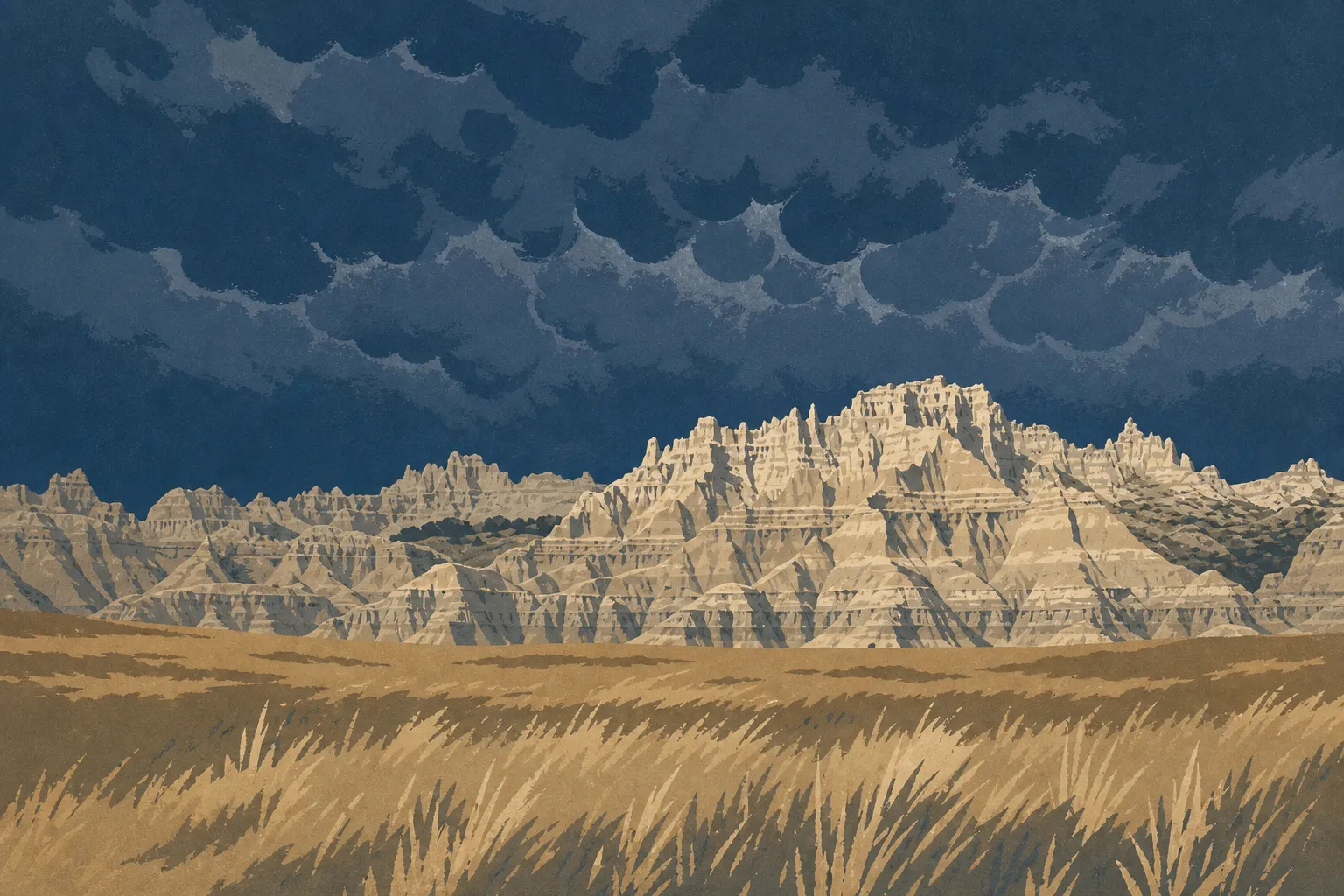
An ocean of ocher, ridged spires rising without warning from the South Dakota prairie. That's Badlands National Park. The park stays in the shadow of its Black Hills neighbors, which works in your favor because you'll find almost no traffic or crowds on its roads and trails. We've explored it several times, at sunrise and sunset, and gathered everything you need here to plan your visit without wasting time.
At a glance: Badlands National Park lies in southwestern South Dakota, about 75 miles east of Rapid City. Visitors come for its dramatic eroded formations, bison prairie, and some of the richest fossil beds in North America. Allow half a day for the highlights and a full day to experience the park properly. You can drive the scenic road without a shuttle.
Badlands National Park at a Glance: Location and Access
The park stretches across southwestern South Dakota, spanning the prairie and the Pine Ridge Reservation. Park headquarters and the Ben Reifel Visitor Center are in Interior, on Ben Reifel Road.
The easiest approach is from I-90. Two exits bracket the park: Exit 131, the busier northeast entrance on SD Highway 240, and Exit 110 on the west side, via the town of Wall. Between them, the famous Badlands Loop Road connects the entrances through the heart of the park. From Rapid City and its airport, the drive east takes a little over an hour.
The park is open year-round, 24 hours a day, except for occasional closures caused by winter weather. For complete driving directions, mileage, and parking information, see how to get to Badlands National Park and find your way around the park map.
Entrance Fees, Passes, and Reservations
Badlands National Park charges admission per vehicle, and your entry is valid for 7 days. Current fees are:
- Private vehicle: $30
- Motorcycle: $25
- Pedestrian or bicyclist (per person): $15
- Park annual pass: $55
You don't need a reservation to enter. There is no timed entry reservation system here, unlike at some Utah parks. Pay at the northeast entrance or visitor center.
If your road trip includes several national parks, the America the Beautiful pass, valid for one year at all federal recreation sites, quickly pays for itself. Our National Park Fees and Passes page explains entrance fees and annual passes. And if you collect stamps, the visitor center has a passport stamp too. See our NPS Passport and Stamps page.
Reservations, Permits, and Rules to Follow
Reservations
No entrance reservation is required at Badlands National Park. However, reserve the Cedar Pass Campground in advance through Recreation.gov if you plan to stay in the park. Sites fill up several weeks ahead in July and August.
Permits
You don't need a day hike permit for marked trails. Backcountry camping outside official campgrounds is allowed without a permit in most undesignated areas, as long as you camp more than 0.5 miles from roads and facilities. Check current restrictions at the visitor center when you arrive.
Main Rules
- Speed: 45 mph maximum on the main roads, and lower in residential areas and campgrounds.
- Distance from wildlife: Stay at least 100 feet away from bison, bighorn sheep, pronghorns, and all other wildlife. A 2,000-pound bison can charge without warning.
- Collecting: Rocks, fossils, and minerals are protected, so collecting them is strictly prohibited. Badlands National Park is an active paleontological area under federal protection.
- Drones: Prohibited without a permit issued by the park.
- Campfires: Allowed only in the designated fire grates at authorized campgrounds.
Getting Around Badlands National Park
You'll explore the park in your own vehicle because there is no shuttle. The backbone of any visit is Badlands Loop Road (Highway 240), a roughly 30-mile paved scenic road connecting Exit 131 with the town of Wall. It passes about 15 developed overlooks with parking areas and interpretive signs. Stop, get out, take in the view, and move on at your own pace.
Two detours extend the experience. Sage Creek Rim Road, a gravel road suitable in dry weather, heads west toward the bison-filled wilderness area. Farther south, the South Unit, also known as the Stronghold District, is managed with the Oglala Lakota Tribe and remains remote and undeveloped. It is best suited to self-sufficient visitors. Our guide to getting around the park explains which vehicles can go where and what to expect from the roads.
How Much Time Do You Need in Badlands National Park?
Allow half a day for a solid first look. Drive the Loop Road, stop at the main overlooks, and take one or two short walks to get a feel for the scale of the landscape. This is the most common option, fitting neatly between two stops on a western road trip.
For a more relaxed visit, plan on a full day. You'll have time for several trails, early-morning wildlife watching in the Sage Creek area, and sunset, when the low light sets the rock layers aglow. If you want to continue to the South Unit or stay overnight to experience sunrise, plan on two days. Our day-by-day Badlands itineraries offer ready-made plans based on the time you have.
Plan your visit
What to See and Do in Badlands National Park
The park divides into three distinct areas. Here's an overview to help you structure your visit.
Road trip journal · 3 areas
The North Unit and Badlands Loop Road, the Heart of the Visit
This is where you'll find most of the park's highlights. Along the Loop Road, you'll pass overlooks with names that fit the scenery: Big Badlands Overlook at the entrance, Panorama Point, Yellow Mounds, a landscape of yellow and mauve ridges straight from a postcard, and Pinnacles Overlook on the west side. The Ben Reifel Visitor Center has exhibits, a film, and rangers who can help you plan your route.
Don't miss the Fossil Preparation Lab. Badlands National Park holds mammal fossils tens of millions of years old, and you can watch paleontologists at work during the season. The ranger program, including guided walks and astronomy programs, is a good addition to a day here. See our guide to things to do in the park for the full activity list.
Sage Creek and the Open Prairie, the Wildlife Area
To the west, Sage Creek Rim Road opens onto open prairie inhabited by bison, prairie dogs, and bighorn sheep. This is the best area for wildlife viewing, especially at dawn and dusk. Roberts Prairie Dog Town, a large prairie dog colony visible from the road, is a hit with kids. Our guide to watching wildlife in Badlands National Park tells you what to look for and how far back to stay.
The South Unit, the Stronghold District, Off the Beaten Path
This remote area tells the story of the Lakota and is home to the White River Visitor Center, which is open seasonally. With few facilities and few visitors, it suits travelers looking for quiet and historical depth. Bring water, a full tank of gas, and an offline map.
Explore the park
The Best Hikes in Badlands National Park
One unusual feature of the park is that it allows off-trail travel. You can climb most formations freely, as long as you stay alert on the soft, crumbly ground. That said, a handful of marked trails cover the main landscapes:
- Notch Trail: The most playful hike, with a log ladder to climb and a sweeping view over the White River Valley.
- Door Trail and Window Trail: Two very short, easy walks leading to natural openings in the rock, perfect for families.
- Castle Trail: The longest trail, on level ground, for walking among the spires.
- Fossil Exhibit Trail: An accessible boardwalk with fossil panels and no real difficulty.
Our selection of Badlands hikes brings together distances, elevation gain, difficulty levels, and practical tips.
The detailed guide Badlands Hiking: The Best Trails for Every Skill Level The best Badlands hikes by area, including Notch Trail, Door Trail, and Castle… Read the guide →Wildlife and Plants to Watch For
Badlands National Park brings together two worlds: mixed-grass prairie, one of the largest protected prairie areas in the United States, and a maze of rock formations. You may see bison, the continent's largest land mammals; pronghorns; bighorn sheep; coyotes; and the elusive black-footed ferret, one of North America's most endangered mammals, which has been reintroduced here.
One practical safety note: prairie rattlesnakes live in the park. Watch where you place your hands and feet, stay in open areas, and never put your fingers into a crevice. Keep your distance from bison too. They're fast and unpredictable. Our Wildlife page covers the species, seasons, and how to respond.
The detailed guide Badlands Wildlife: What to See and Where to Find It Plains bison, prairie dogs, pronghorn, black-footed ferrets Read the guide →When to Visit Badlands National Park
The climate is extreme and changeable, with temperatures ranging from 117°F in summer to -40°F in winter. Summers are hot and dry, with occasional severe thunderstorms, hail, and even tornadoes. Winters are cold, with 12 to 24 inches of snow over the season.
In practice, spring (May and June) and fall (September and October) offer the most comfortable conditions, with soft light, manageable temperatures, and active wildlife. Summer remains the busiest season despite the heat. Our When to Visit guide covers each month in detail, while our Weather page has precise climate data.
The detailed guide When to Visit Badlands National Park: Best Seasons and Month-by-Month Guide The best times to visit Badlands National Park are May and September Read the guide →Where to Stay in Badlands National Park: Hotels and Campgrounds
Staying overnight transforms the experience, especially for sunrise. There are three main options:
- Cedar Pass Lodge is the park's only lodging, with log cabins near the visitor center.
- Cedar Pass Campground has water and restrooms and works well for RVs.
- Sage Creek Campground is primitive and free, with no water, in the middle of bison country.
Outside the park, the small town of Wall, famous for Wall Drug, along with Interior, Kadoka, and Rapid City, offers a wider choice of hotels and motels. We compare them all in our Where to Stay guide, with separate pages for Hotels and Lodges, Camping, and RV Camping based on how you travel.
Stay in the park
Around Badlands National Park: Things to Do Nearby
Badlands National Park fits beautifully into a Black Hills road trip. Nearby, you'll find Minuteman Missile National Historic Site, with its striking Cold War missile silo, and the must-see Wall Drug. An hour west, you can reach Mount Rushmore, Custer State Park and its bison, Wind Cave National Park, and the Crazy Horse Memorial. Pine Ridge Reservation extends south, with the historic site at Wounded Knee.
To build a coherent multi-day route, use our road trips and regional guides, which place Badlands National Park in the wider context of South Dakota and the American West.
Where to Eat and Practical Information
Food options are limited inside the park. Cedar Pass Lodge has a restaurant, but it's best to bring water and a picnic, especially in hot weather. Our recommendations in and around the park are collected on our Where to Eat page.
For everything else, including park rules, safety, cell service, accessibility, and prohibited drones, see our Practical Information, Rules, and Safety page. If you're traveling with kids, our With Kids page sorts the short trails, Junior Ranger activities, and easy-to-reach overlooks.
Our Take: Is Badlands National Park Worth the Detour?
Absolutely. Badlands National Park offers a one-of-a-kind landscape, easy wildlife viewing, and manageable crowds, all less than half a day's drive from the major Black Hills sites. When we visited one June morning, we saw more bison than cars. This isn't a park where you'll spend a week, but it's a stop we wholeheartedly recommend on any South Dakota itinerary. Spend a full day, stay for sunset, and you'll leave with a lasting impression.
Frequently Asked Questions
What should you do in Badlands National Park?
Drive Badlands Loop Road and stop at its overlooks, hike short trails such as Notch Trail and Door Trail, watch bison and prairie dogs in the Sage Creek area, and see fossils at the visitor center. Our Things to Do page has the full activity list.
How many days should you plan for Badlands National Park?
Plan on half a day for the highlights and a full day for hiking, wildlife, and sunset. Two days make sense if you add the South Unit or an overnight stay. Our detailed plans are on the Itineraries and Time page.
What is the most scenic route through Badlands National Park?
The most scenic route is Badlands Loop Road (Highway 240), which connects I-90 Exit 131 with the town of Wall through the heart of the park. Continue along Sage Creek Rim Road for wildlife. See our Getting Around page for more details.
What is the best entrance to Badlands National Park?
The best entrance is the northeast entrance at I-90 Exit 131, closest to the visitor center and scenic road. The western access via Wall, Exit 110, works well if you're coming from that direction. Find all access information on our Access and Transportation page.
The American Parks shop
Bring Badlands home
Our park-inspired creations, made to order and shipped to your door.
Latest park news
- Badlands: Notch Trail Closed for Ladder RepairsThe Notch Trail and the area right around it are closed while crews repair the trail's ladder, which has become unsafe for hikers.
- Badlands: the Notch Trail Is Closed to Repair Its LadderThe Notch Trail has been closed since August 31, 2026 while crews repair a ladder that had become dangerous for hikers.