
What to Do in Badlands: Top Sights and Activities
Badlands hits you all at once. Driving in on I-90, nothing prepares you for the Great Plains opening suddenly onto a maze of ochre, pink, and lavender spires and eroded ridges that shift with the light. Badlands National Park in South Dakota covers about 942 square miles of unusual geologic formations, bison grasslands, and fossils buried for millions of years.
If you've only got one day, focus on three things. Drive Badlands Loop Road (Hwy 240), stopping at the overlooks; walk at least one short trail to get out among these unusual formations, with Door Trail or Notch Trail at the top of the list; then stay through dusk as the colors turn blood red and then purple. If you're spending the night, add some stargazing. The low light pollution makes this one of the country's most accessible spots for astrophotography.
Badlands at a Glance: Districts, Access, and Getting Around
The park is divided into two main districts with very different characters.
The North Unit is the classic tourist area. It contains Ben Reifel Visitor Center at the east entrance, Cedar Pass Lodge, the main campgrounds, and all of Badlands Loop Road with its marked overlooks. This is where you'll find the hiking trails, ranger programs, and visitor services. The northeast entrance is reached from Exit 131 off I-90, about 75 miles east of Rapid City.
The Stronghold District (South Unit) is jointly managed with the Oglala Sioux Tribe. Far less visited, with no services and little signage, it's for visitors looking for solitude and a deeper connection with Lakota history. A high-clearance vehicle is recommended for its dirt roads, which become impassable in rainy weather.
For getting around the park, a car is still the most practical option. Loop Road runs about 40 miles end to end, and there is no internal shuttle. The speed limit is 45 mph outside pullout areas, and bison can cross the road at any time. Stay in your vehicle if a herd blocks the road, with the engine off if possible.
For entrance fees, hours, and transportation options from Rapid City, see the Badlands access guide.
How Long Does It Take to Visit Badlands?
One day is enough to cover the highlights of the North Unit if you arrive at dawn. Two days let you take your time, fit in several hikes, catch a proper sunset, and spend a night stargazing. Three days or more become useful if you want to explore the Stronghold District or tackle longer trails such as Castle Trail, which is 15 miles round-trip.
Our Badlands itinerary guide offers detailed plans for different amounts of time, including combinations with nearby parks and sites in the Black Hills.
Top Sights by District
North Unit: Badlands Loop Road and Its Overlooks
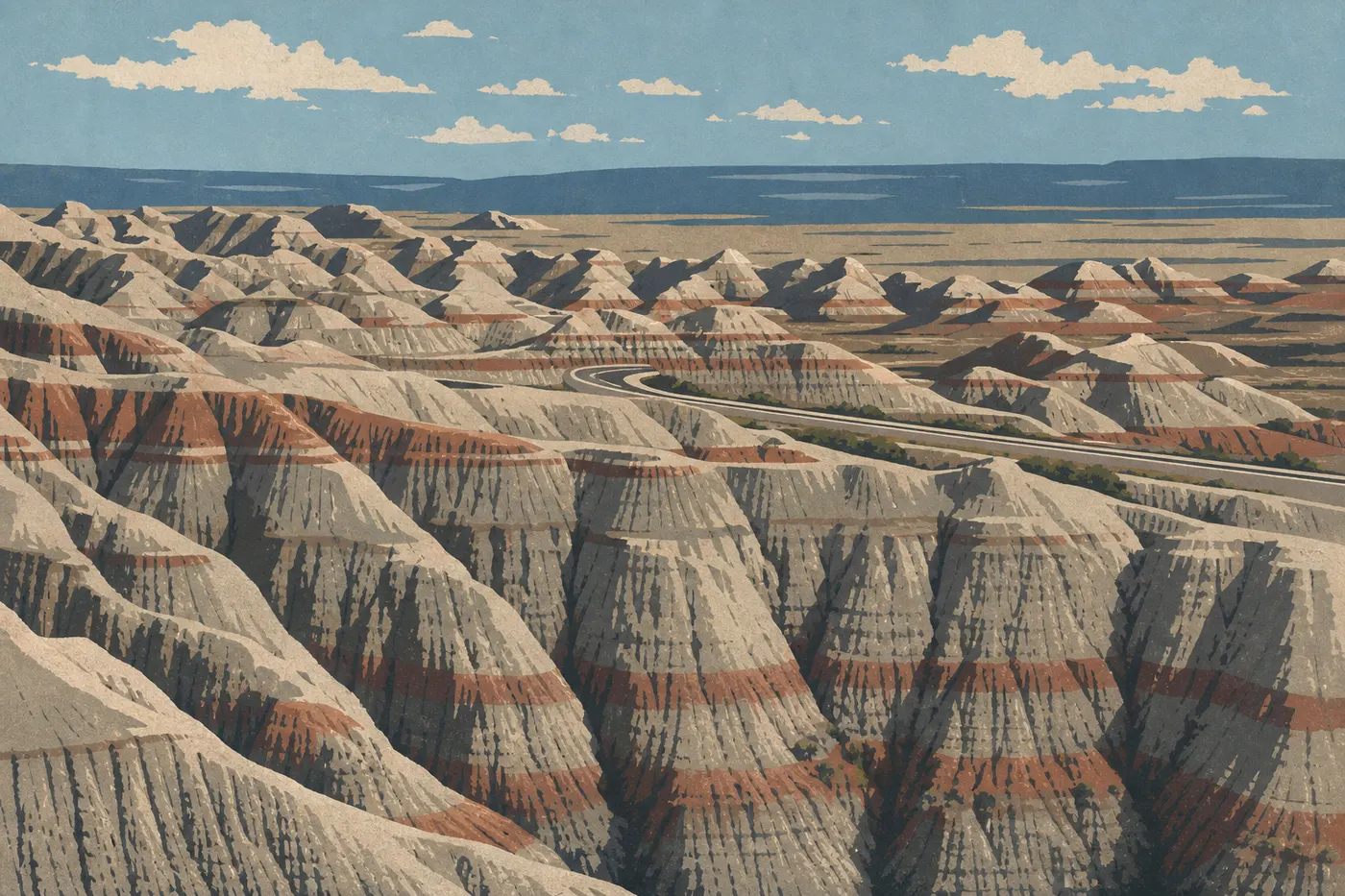
Badlands Loop Road (State Highway 240) is the backbone of any visit. It connects the northeast and west entrances for about 40 miles, with roughly 15 marked overlooks along the way. Heading west to east, entering from Exit 110, works best late in the day. The light will be behind you and illuminate the formations ahead.
Allow 1.5 to 2 hours if you never leave the car, and twice that once you start making real stops.
Big Badlands Overlook is the first viewpoint after the northeast entrance. It offers the classic view of the Badlands "wall," along with a large parking lot and easy access. This is where most visitors take their opening shot.
Yellow Mounds Overlook is where the sedimentary layers shift from bright yellow to pale green, remnants of ancient fossilized savanna soils. The contrast with the gray formations around it is striking and noticeably different from the rest of the park.
Pinnacles Overlook sits at the western end of Loop Road and looks out over the Sage Creek Wilderness Area. It's one of the best places to watch bison in the grasslands below, especially early in the morning. The evening light is remarkable here.
Conata Basin Overlook is less well known and offers an open view of the badlands without weekday crowds. When we stopped here in September, we spotted pronghorns within binocular range and not another visitor in sight.
Fossil Exhibit Trail is a fully wheelchair-accessible, 0.25-mile boardwalk with replicas of fossils in their original setting, including prehistoric rhinos, primitive horses, and giant turtles. It's an ideal introduction to the park's paleontological history before you go farther.
Sage Creek Rim Road branches off from Pinnacles Overlook on an unpaved road and takes you into the wilderness area. The park's bison herd, numbering about 1,200, grazes here regularly. Slow down to 15 mph and stay at least 75 feet from the animals.
Cedar Pass District: The Park's Operational Hub
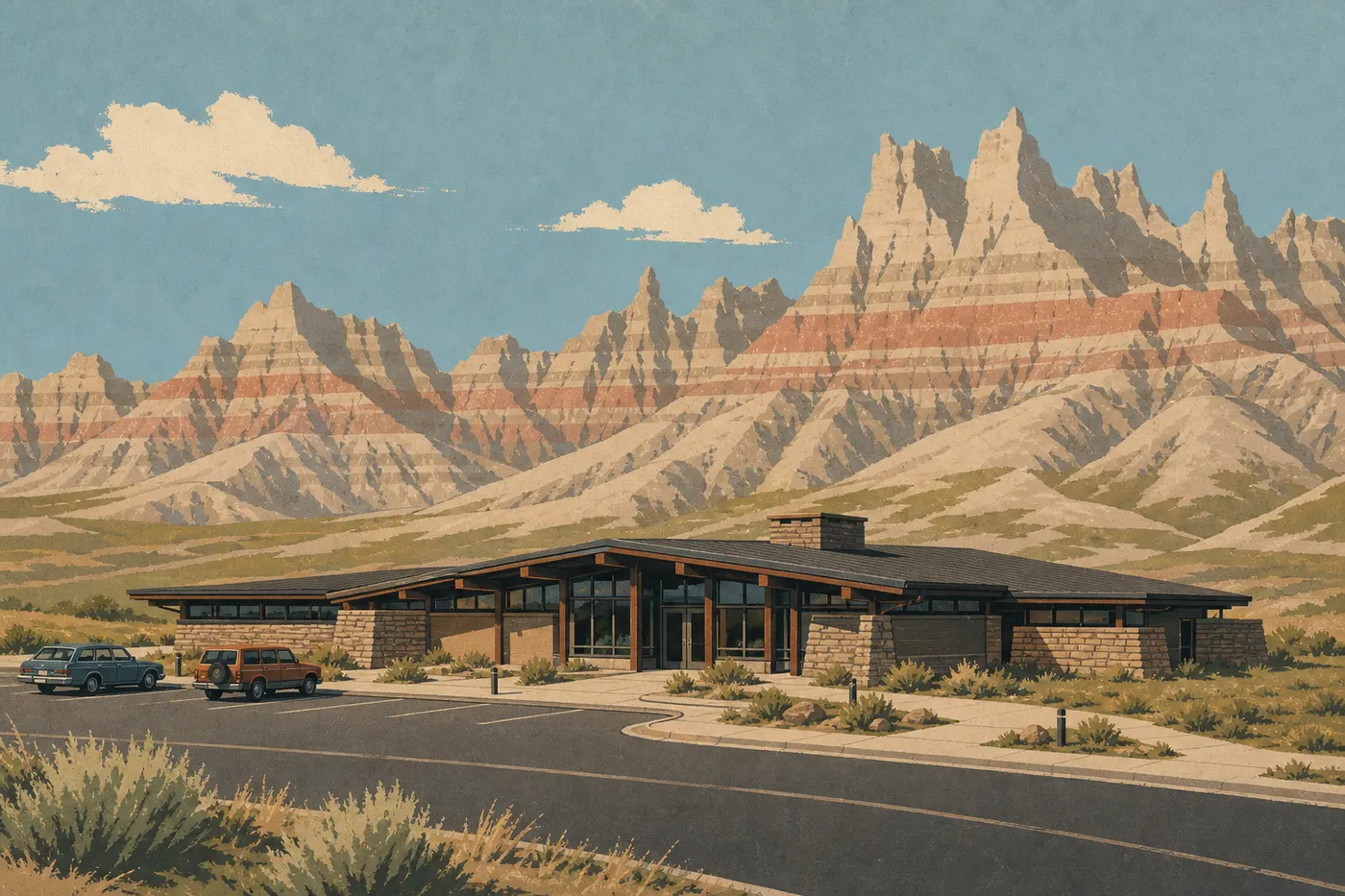
Cedar Pass, in the middle of the North Unit, brings together Ben Reifel Visitor Center, Cedar Pass Campground, and Cedar Pass Lodge. The visitor center is essential at the start of your visit, with paleontology exhibits, rangers available for questions, and the week's program schedule posted at the entrance.
Fossil Preparation Lab is inside the visitor center, where you can watch technicians prepare fossils under a binocular microscope. It's a rare look at real scientific work, not a tourist re-creation. The lab is open according to a seasonal schedule, so check the hours when you arrive.
Stronghold District: Lakota Wilderness
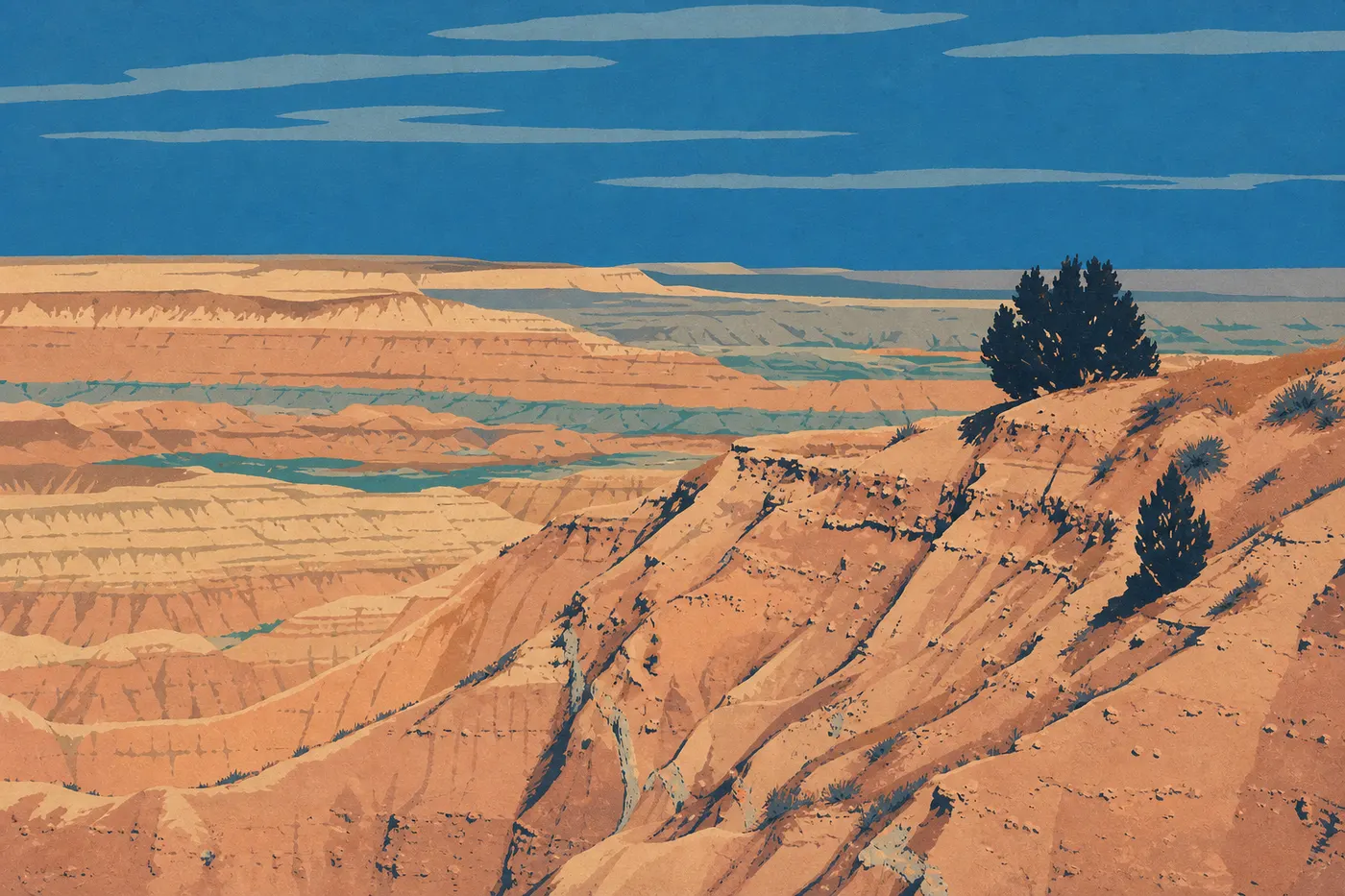
Reached via Route 27 and dirt roads, the Stronghold District requires serious preparation. There are no services, little signage, and no drinking water on site. In return, it offers complete solitude, badlands formations every bit as dramatic as those in the North Unit, and a strong historical connection to Lakota resistance.
Sheep Mountain Table and Red Shirt Table are two mesas accessible by road in dry weather. From their flat tops, the 360-degree view of the surrounding formations is dizzying and completely different from the overlooks along Loop Road. These excursions are for high-clearance vehicles only and only in dry weather, since the clay becomes extremely slippery after rain.
The Best Hikes in Badlands
Badlands isn't a big-trail park in the sense of multi-day backpacking trips. It's mainly suited to short and moderate hikes ranging from 0.6 to 3.1 miles, accessible from Loop Road. These are the key trails to remember:
Door Trail (0.8 miles round-trip) starts on an accessible boardwalk, then crosses highly photogenic formations to a natural "door" opening onto the plains. It's short, rewarding, and very popular.
Window Trail (0.25 miles round-trip) is tiny, but the natural frame forming a "window" onto the prairie below is worth the stop.
Notch Trail (1.5 miles round-trip) is the most demanding of the short hikes. It includes a fixed wooden ladder on a cliff face, so it's not recommended if you're afraid of heights or in high winds. The payoff at the top is a view of Lakota Canyon that few other trails offer.
Cliff Shelf Nature Trail (0.75 miles, loop) passes through a rare pocket of dense vegetation in this otherwise bare-rock park. Deer and birds are common here, and the area's relative coolness makes this a pleasant midday loop.
Saddle Pass Trail (0.25 miles, steep) is a short, abrupt climb connecting the valley floor to the plateau. It's a useful junction for continuing onto Castle Trail or Medicine Root Trail.
Castle Trail (15 miles round-trip) is the park's longest marked trail. The terrain is open and exposed, with no shade. Save it for the cooler season, such as May or September, and carry at least 3 liters of water per person. Start from the Saddle Pass overlook or the Door/Window Trailhead.
For full descriptions with elevation gain, trailhead coordinates, and seasonal advice, the Badlands hiking guide lists every trail in the park and its actual difficulty.
Other Activities for Different Interests
Wildlife Watching
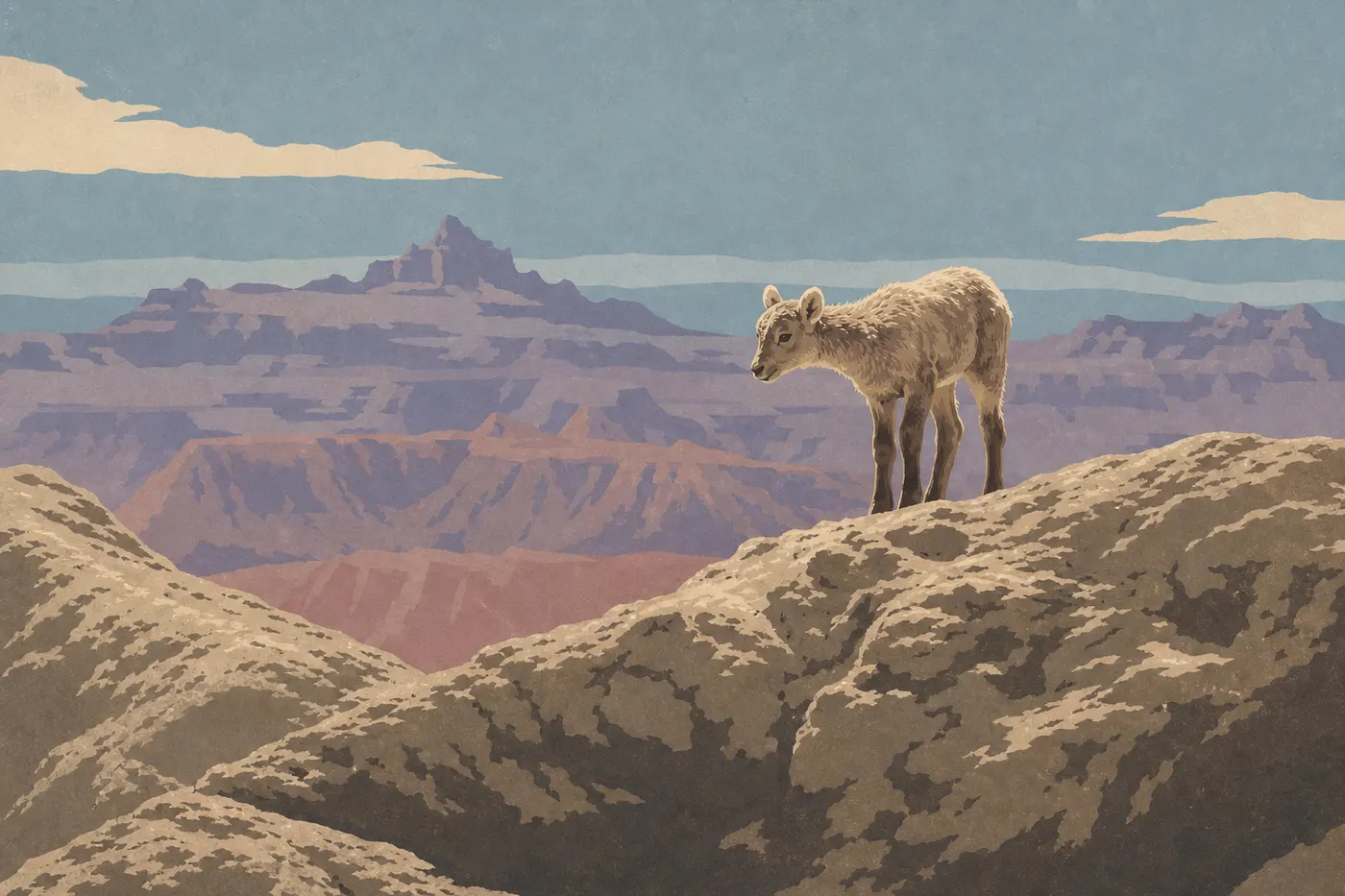
Badlands is home to a bison herd of about 1,200 animals. You'll regularly see them along Sage Creek Rim Road and in the wilderness area. Follow these safety rules without exception: stay at least 75 feet from every bison, never leave your vehicle if animals block the road, and never feed them.
Prairie dogs are an attraction in their own right. You can spot their towns along the road by the dirt mounds and distinctive alarm calls. They play a central ecological role throughout the Badlands system.
For more elusive species, look for bighorn sheep on the rocky cliffs and pronghorn in the grasslands. Much rarer is the black-footed ferret, one of the continent's most endangered mammals, which has been reintroduced to the park since the 1990s. The Badlands wildlife guide details the best viewing areas for each species and the most favorable times to see them.
Photography and Stargazing
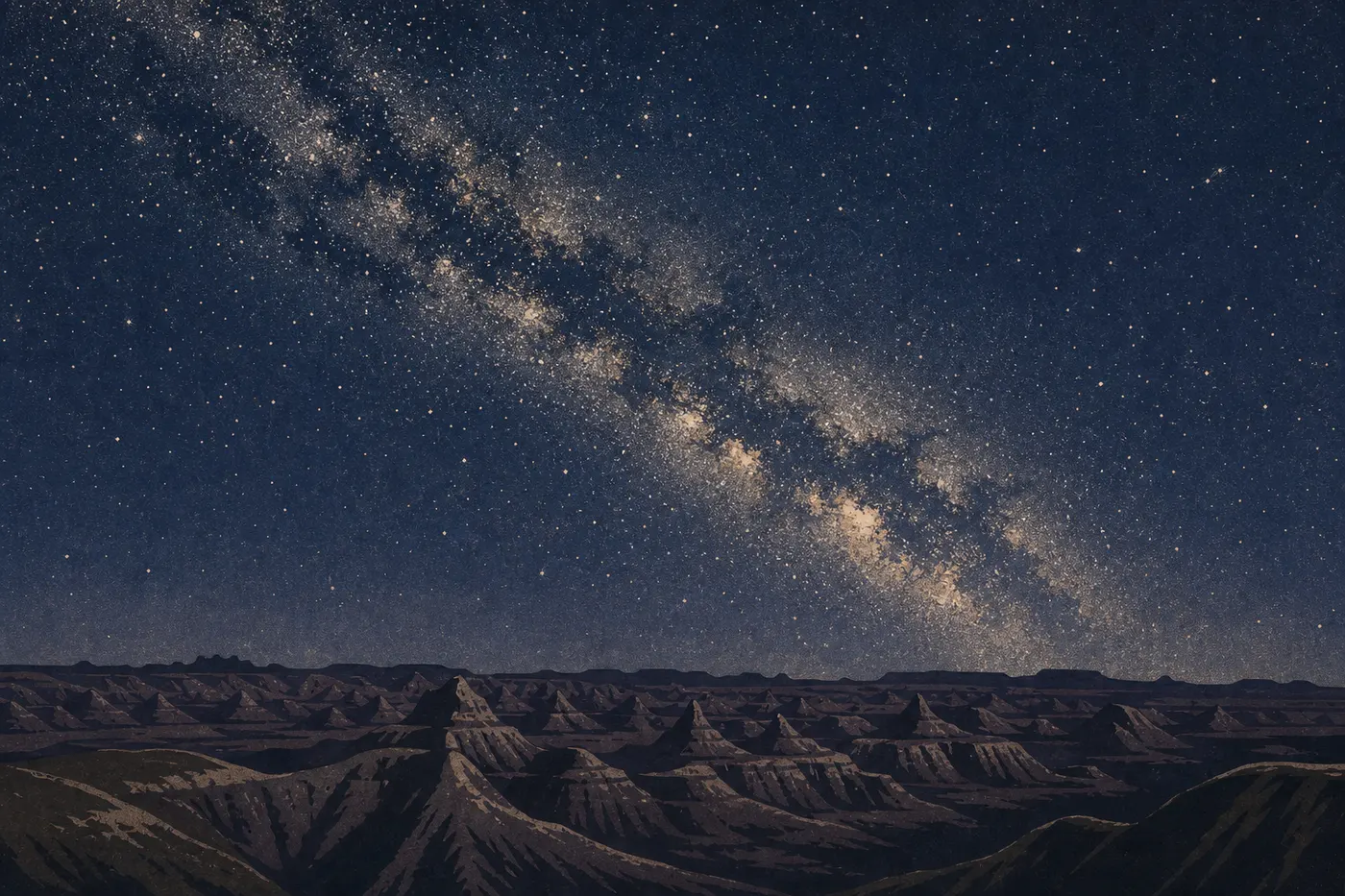
Badlands ranks among the most interesting parks for landscape photography. The low morning light, 30 to 45 minutes after sunrise, and the golden hour before sunset turn the ochre formations into sculptures of fire. Pinnacles Overlook in the west and Big Badlands Overlook in the east are the two most popular locations.
At night, the lack of light pollution opens up an unusually clear sky for the Milky Way and astrophotography. NPS runs ranger-led stargazing sessions during the summer season. Check the schedule at Ben Reifel Visitor Center when you arrive.
Ranger Programs and Family Activities
NPS offers guided walks, Evening Programs around a campfire, and Junior Ranger activities for kids. These activities are free and vary by season. The weekly schedule is posted every morning at the visitor center.
To plan a visit with kids, our Badlands with Kids guide brings together practical advice on suitable gear, accessible trails, and the Junior Ranger program.
Biking
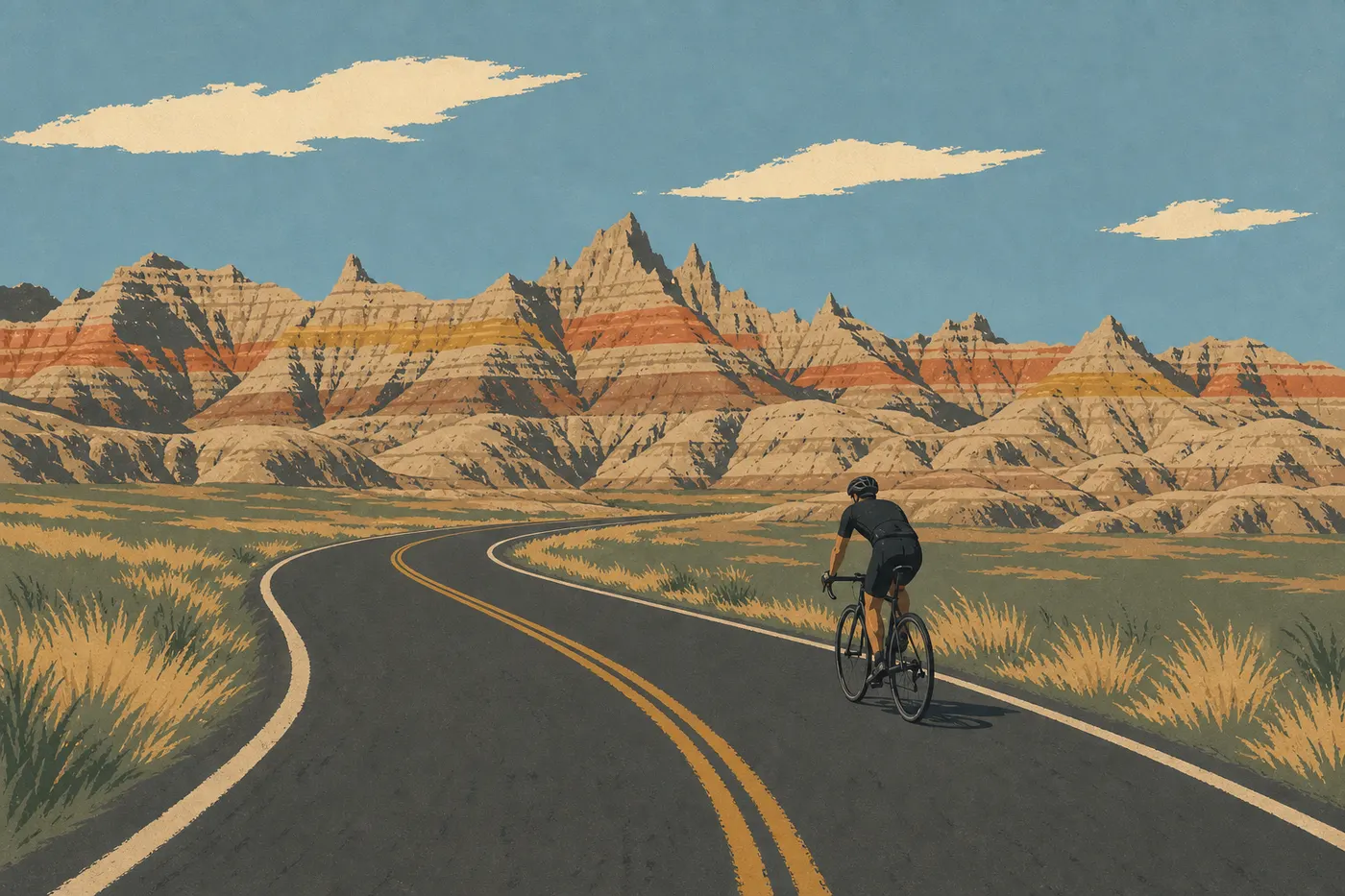
Loop Road is open to bicycles, but it's busy in summer and exposed to the wind. Sage Creek Rim Road, an unpaved road running 20 miles from Pinnacles Overlook, offers a quieter alternative with a strong chance of seeing bison. There are no mountain biking trails outside the open roads.
Things to Do Around Badlands
Wall Drug (Wall, SD) is 5.6 miles from the northeast entrance. This pharmacy-turned-roadside institution of Americana, dating back to the 1930s, deserves a quick stop, especially if you're traveling with kids or friends who appreciate unapologetic American kitsch.
Wounded Knee Historic Site is about 50 miles south on the Pine Ridge Reservation. The site of the 1890 massacre includes a Lakota memorial. It's an essential stop for anyone who wants to understand the territory's historical and human context. Respect the site's sacred nature.
Wind Cave National Park is about 100 miles southwest. It protects one of the world's most complex cave systems in terms of passage density. It pairs perfectly with Badlands on a 3- to 4-day trip focused on the Central Plains.
Mount Rushmore and the Black Hills are about 75 miles west. The presidential memorial remains a popular stop for visitors coming from Badlands. Our Road Trips and Regions sections offer itineraries for combining the two destinations without wasting time.
Custer State Park, adjacent to the Black Hills, has a bison herd of about 1,500 animals and a Wildlife Loop Road that can rival Sage Creek Rim Road for wildlife encounters.
The Essentials: What to See First in Badlands
If you only remember one itinerary, this is the sequence that works best in a single day.
- Arrive at the northeast entrance at sunrise. The low light on the "wall" is impossible to beat.
- Drive Badlands Loop Road, stopping at Big Badlands Overlook, Yellow Mounds, Fossil Exhibit Trail, and Pinnacles Overlook.
- Hike Door Trail or Notch Trail to walk among the formations. Allow at least 1 hour on site.
- Take Sage Creek Rim Road in midmorning for bison and prairie dogs.
- Visit Ben Reifel Visitor Center and Fossil Preparation Lab to understand the park's geology and paleontology.
- Watch the sunset from Pinnacles Overlook or from an open pullout along Loop Road.
- Go stargazing if you're spending the night, at Cedar Pass Campground or a designated backcountry campsite.
Badlands is worth the trip even on a quick visit. The concentration of scenery and wildlife per mile is hard to match anywhere in the country. You can see the park in a day, but you'll leave wishing you'd stayed one night longer.
For complete trip logistics, our Badlands guide brings together everything you need to plan your visit.
Frequently Asked Questions
What is there to do in Badlands?
The main things to do in Badlands National Park are drive Badlands Loop Road and visit its overlooks, including Big Badlands, Yellow Mounds, and Pinnacles; hike the short trails near Cedar Pass, including Door Trail, Notch Trail, and Window Trail; watch wildlife, including bison, prairie dogs, and bighorn sheep, along Sage Creek Rim Road; and enjoy the exceptional night sky for stargazing.
Is there anything in the Badlands?
Yes. The Badlands are much more than a barren rocky desert. The park is home to a bison herd of more than 1,200 animals, prairie dog towns, geologic formations dating back 23 to 34 million years, fossils of prehistoric rhinos and horses, varied hiking trails, and ranger programs throughout the season. The North Unit contains most of the activities, while the Stronghold District offers complete solitude for experienced visitors.
How many days do you need to visit Badlands National Park?
One day is enough for the North Unit essentials, including Loop Road, two or three trails, and wildlife. Two days give you a more comfortable pace, with a night in the park for sunset and stargazing. Three days or more let you include the Stronghold District and explore longer trails such as Castle Trail. Our Itinerary and Timing page offers detailed plans for different amounts of time.
What is a badland?
The term "badlands" describes a type of eroded terrain in which soft rock formations have been sculpted by water and wind into spires, ridges, ravines, and mesas. The name comes from the English translation of the Lakota term "mako sica," meaning bad land, which Indigenous peoples used to describe the terrain's inhospitable nature. The Badlands of South Dakota formed as marine and river sedimentary deposits eroded over a period of 23 to 34 million years.
What hikes should you do in Badlands National Park?
For a first visit, Door Trail, at 0.8 miles, and Window Trail, at 0.25 miles, are accessible to everyone. Notch Trail, at 1.5 miles, is the most demanding of the short hikes and includes a fixed ladder on a cliff face. Cliff Shelf Nature Trail, at 0.75 miles, is ideal for wildlife and vegetation. Castle Trail, at 15 miles round-trip, is for experienced hikers and is best outside the summer season. You'll find all the details on our Hiking page.
Is Badlands worth visiting?
Badlands is clearly worth visiting, even for a single day. The park offers an unusually high concentration of scenery and wildlife for a place this accessible, just 75 miles from Rapid City. It combines well with the Black Hills and Mount Rushmore on a 3- to 4-day South Dakota road trip.