

Renting an RV in the USA: types, prices, rental companies, and requirements
Van, Class C, or Class A: choose the right vehicle, compare rental companies, understand the true costs, and learn where overnight parking is legal.
By Erika Müller · · 11 min read
An RV gives you the freedom to sleep at the entrance to national parks, change your route based on the morning weather, and avoid looking for a restaurant at 10 p.m. in a remote corner of Nevada. Before signing an RV rental contract in the USA, a few points deserve clarification: which vehicle suits your group, which rental company to choose, what your real budget will be once every fee is added, and where you can legally park overnight. For ready-made itineraries, our RV road trip guide covers route planning.
RV or camper van: which type should you choose?
American terminology can be confusing at first. Motorhome, RV (recreational vehicle), and camper van all refer to a motorized vehicle with an integrated living space. American rental companies distinguish three official classes, plus the truck camper (a removable camper mounted on a pickup), which is less common in the rental market.
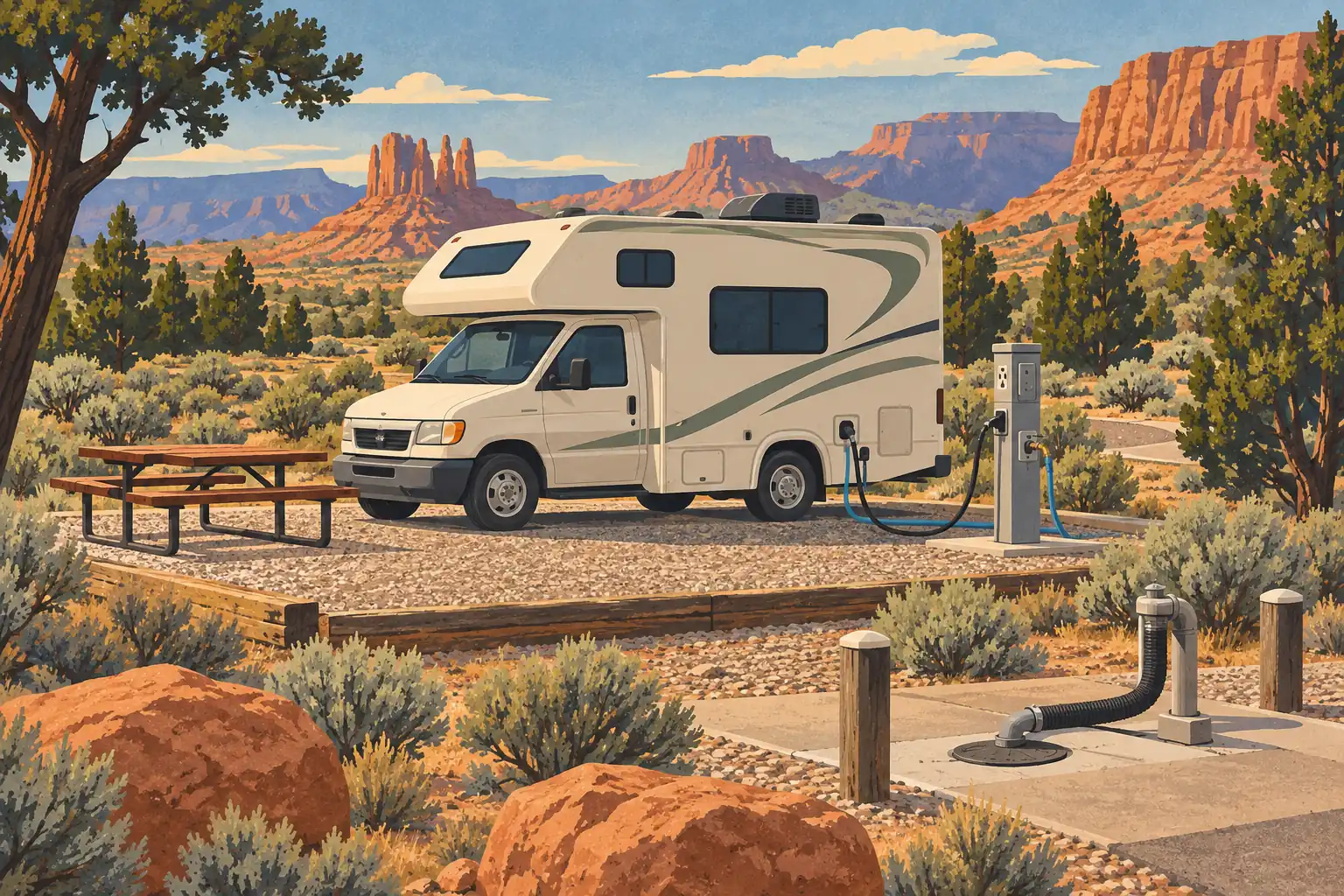
Camper van (Class B): 20 to 23 feet long, sleeping two to four people, and the easiest format to handle. It can travel along Highway 1 and in nearly all NPS campgrounds without restrictions. Van specialists often offer unlimited mileage or a high daily mileage allowance. Ideal for a couple or two travelers who want maximum flexibility.
Compact Class C (C19): about 19 feet long, with sleeping space for three, offering a good balance of equipment and maneuverability. It fits in most campgrounds without size restrictions.
Large Class C (23 to 31 ft): sleeps four to eight people and includes a full kitchen and bathroom. This is the classic family format, but some NPS areas limit vehicles to 27 ft.
Class A (34 ft / 34 to 35 ft): sleeps six and offers maximum comfort. Campgrounds in Yosemite Valley (Upper Pines, Lower Pines, and North Pines) accept vehicles up to 35 to 40 ft; secondary campgrounds such as White Wolf are limited to 27 ft. At Zion, since June 7, 2026, vehicles without trailers longer than 35 ft 9 in cannot use the Zion-Mt. Carmel Highway section.
Length limits vary by park and campground. The following table summarizes the documented restrictions for the most popular destinations in the West:
| Park | Campground / section | Maximum length |
|---|---|---|
| Yosemite | Valley (Upper/Lower/North Pines) | 35 to 40 ft |
| Yosemite | White Wolf | 27 ft |
| Yosemite | Porcupine Flat (4 sites) | 24 ft |
| Bryce Canyon | Bryce Amphitheater parking area (May to October) | 23 ft |
| Zion | Zion-Mt. Carmel Highway (since June 7, 2026) | 35 ft 9 in |
An oversized vehicle may be turned away at the campground entrance, with no refund for the night. Check the campground page on nps.gov before booking.
Which size for which trip: for a couple or two travelers looking for maximum flexibility, a Class B van is the most practical choice. For a family of four, a 23- to 27-ft Class C offers a good compromise between equipment and campground access. For a group of six or more prioritizing comfort, a Class A works well, provided you check the length limits for your chosen park before booking.
Major rental companies and departure cities
General rental companies cover the country with Class C and Class A fleets:
- Cruise America: the largest network in North America, with locations in most major cities and a standard fleet with mileage packages. It is often the first company to compare.
- Road Bear RV: newer vehicles, a premium position, locations concentrated around Western hubs, and a minimum age of 21.
- El Monte RV: a varied fleet, often offering a more affordable option in the Class C segment.
- Apollo: locations in Western cities and a mid-range fleet.
Van specialists stand out with vehicles designed for long road trips:
- Escape Campervans: distinctive camper vans, 150 miles per day included, with an unlimited option available for $20 per day, and departures from around 15 U.S. cities.
- Indie Campers: modern vans, pets accepted (one pet, 66 lb maximum), and unlimited mileage.
- roadsurfer: newer vans and a growing presence in the USA.
The four major departure cities in the West each open up a different group of parks:
| Departure city | Parks within easy reach |
|---|---|
| Los Angeles | Joshua Tree, Death Valley, Sequoia, Grand Canyon South |
| San Francisco | Yosemite, Sequoia, Lassen, Redwood |
| Las Vegas | Zion, Bryce Canyon, Grand Canyon North, Arches |
| Denver | Rocky Mountain, Mesa Verde, Black Canyon |
To choose the best city for your planned itinerary, our article on which airport to fly into for the American West breaks down flight options and transfer times to the parks.
What an RV rental really costs
The rate shown on booking websites does not reflect the true cost. Several additional charges are added and only become visible at the final contract review stage.
Indicative base rates for 2026, varying by season and rental company:
- Van / Class B: about $100 to $165 per day in the low season, $165 to $240 in the high season (July and August).
- Compact Class C: about $130 to $200 per day in the low season, $200 to $275 in the high season.
- Class A: about $200 to $310 per day in the high season.
The low season (September to November, January to March) can save up to 30%, depending on the rental company.
Additional fees add up quickly:
| Item | Indicative range (2026) |
|---|---|
| Kitchen kit (dishes and equipment) | $55 to $130 per rental |
| Preparation / cleaning fee | $55 to $165 |
| Additional mileage (if the package is limited) | $0.20 to $0.35 per mile |
| Young-driver surcharge (ages 21 to 25) | $11 to $28 per day |
| One-way fee | $165 to $550, depending on distance |
Mileage policies are clear-cut: general rental companies such as Cruise America and El Monte use a daily allowance and charge for extra miles. Among van specialists, policies vary: Escape Campervans includes 150 miles per day, with an unlimited option for $20 per day; Indie Campers and roadsurfer generally include unlimited mileage. Check the contract before signing.
One useful reminder when planning your overall budget: an RV replaces both a hotel and meals. The relevant comparison with a traditional trip is the total travel budget, not the rental line item alone.
License, minimum age, and practical requirements
The French category B driver's license is valid in the United States for driving an RV, regardless of class (Class B, Class C, or Class A). An International Driving Permit (IDP) is recommended, and some rental companies require one in their contracts. It is better to check when booking than upon arrival at the rental location.
The minimum age is 21 with most rental companies (Cruise America, Road Bear, Escape Campervans, and Indie Campers). A young-driver surcharge applies between ages 21 and 25 (see the table of additional fees).
Night in the United States before pickup: several rental companies require customers to spend at least one night on U.S. soil before handing over the vehicle keys. This is an insurance requirement, not just a formality. Plan for it when booking your flights so you do not end up unable to pick up the RV on the scheduled date.
French citizens can enter the United States for stays of less than 90 days with an ESTA. The exact requirements and application process are detailed in our ESTA guide.
Driving rules (Interstate speed limits, legal blood alcohol limits, and electronic toll systems) are covered in detail in our article on renting a car in the United States, so there is no need to repeat them here.
Where to stay overnight in an RV in the United States
Three main options cover nearly every itinerary in the West.
NPS campgrounds: sites in national parks are reserved through recreation.gov. The most popular ones (Yosemite Valley, Zion, and Grand Canyon South Rim) fill up several months in advance. Yosemite Valley opens its sites five months before arrival, on the 15th of each month: for a night in early July, reservations open on February 15. Some sites only accept vehicles up to 27 ft, so check the campground page before choosing your vehicle class.
Private RV parks: full hookups (electricity, water, and sewage), costing between $28 and $77 per night depending on the chain and season. KOA, Good Sam, and Thousand Trails cover most Western itineraries. They offer more availability and last-minute flexibility than NPS campgrounds.
BLM land and National Forests: free dispersed camping in designated areas, with a maximum stay of 14 consecutive nights in the same spot. This works well for vans and compact Class C vehicles. This type of overnight stay is illegal on NPS land. The authorized areas can be found on the official BLM website.
Dump stations: dumping gray and black water is mandatory. NPS campgrounds and RV parks have dump stations. Independent stations are also available outside campgrounds; locating them before setting out prevents unpleasant surprises in remote areas.
Our recommendation: a van or a Class C no larger than 27 ft, on a loop
After comparing vehicle classes, rental companies, and fees, our position is clear: for your first road trip through the parks of the West, do not go over 27 ft. Beyond that size, you pay more for a vehicle that closes doors: White Wolf in Yosemite, the Bryce Amphitheater parking area from May through October, and some secondary campgrounds will be off-limits.
As a couple, choose a van. It is the format that fits almost everywhere, and van specialists often include unlimited mileage, eliminating the unpleasant surprise of extra per-mile charges. For a family of four, choose a 23- to 27-ft Class C: you get a full kitchen and bathroom without losing access to the parks. We do not recommend a Class A for a first trip: about $200 to $310 per day in the high season, for a vehicle over 34 ft that you must check campground by campground.
Travel in a loop and outside the summer season. A one-way rental adds $165 to $550; from Las Vegas, a loop puts Zion, Bryce Canyon, and Arches within reach. The low season (September to November) can reduce the rental cost by up to 30%.
Two simple habits prevent most problems: spend one night in a hotel before pickup, and reserve nights in the most popular parks as soon as reservations open (five months ahead for Yosemite Valley), then fill in the gaps with more flexible RV parks.
Frequently asked questions
Do you need a special license to drive an RV in the USA?
You do not need a special license to drive an RV in the USA: a French category B license is sufficient in every U.S. state, regardless of the vehicle's size. An International Driving Permit (IDP) is recommended, and some rental companies require one in their contracts. Check when booking, not upon arrival.
What is the minimum age to rent an RV in the United States?
The minimum age to rent an RV in the United States is 21 with most rental companies, with a daily surcharge applying through age 25. The exact minimum age is listed in each company's terms and conditions.
Is mileage always unlimited?
No, mileage is not always unlimited. General rental companies such as Cruise America and El Monte use a daily allowance and charge for extra miles. Among van specialists, policies differ: Escape Campervans includes 150 miles per day, with an unlimited option for $20 per day; Indie Campers and roadsurfer generally include unlimited mileage. Check before signing.
Can you return the RV in a different city from the pickup location?
Yes, most rental companies allow you to return the RV in a different city, for an additional one-way fee of $165 to $550 depending on the distance. Some companies occasionally offer reduced rates to reposition their fleet (relocation deals), an option worth watching if your dates are flexible.
What size RV can enter national parks?
The maximum permitted RV size varies by park and campground. The documented restrictions for Yosemite, Bryce Canyon, and Zion are listed in the table in the vehicle-class section. Check the campground page on nps.gov before booking: an oversized vehicle may be turned away at the entrance, with no refund for the night.