
USA RV Road Trip: A Western Loop from Los Angeles
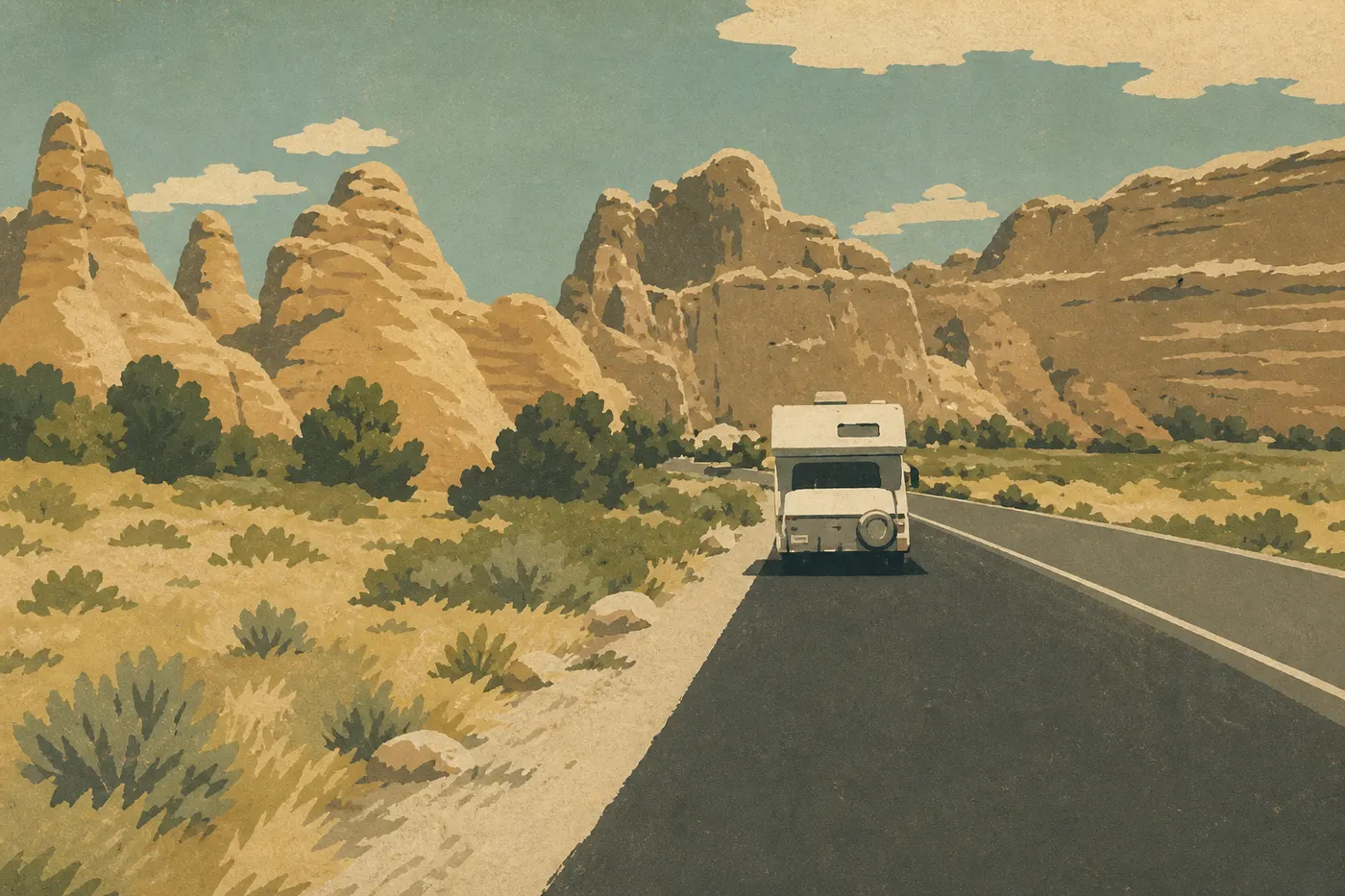
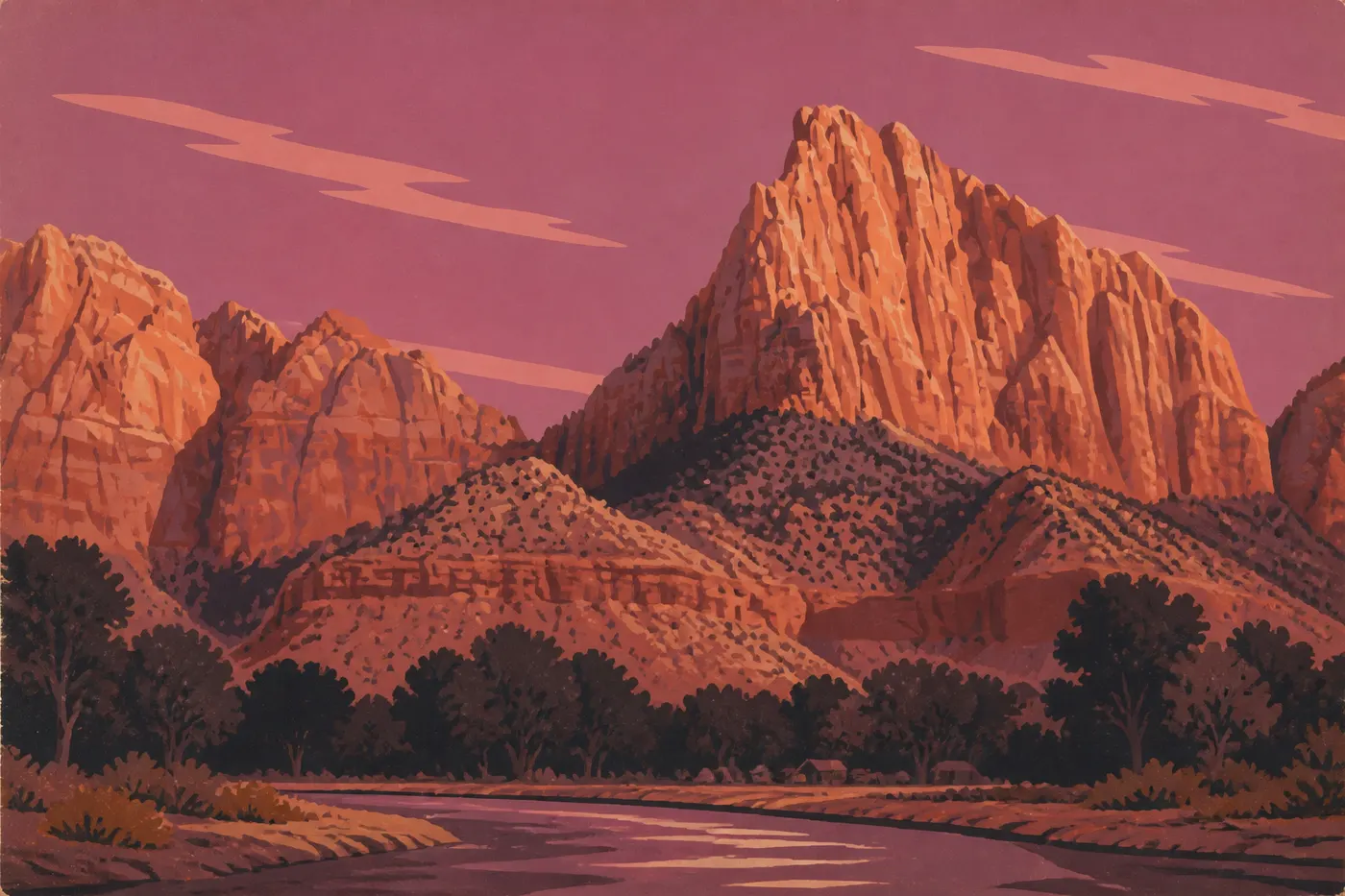
Five in the morning at Watchman Campground. The sky shifts from black to gentian blue above Zion's cliffs, and nothing is moving yet except the Virgin River and the click of a coffee maker. We push open the RV door, barefoot on the cool concrete pad, with a 2,000-foot sandstone wall stretching across the horizon and turning pink as the day rises. The night before, we'd parked our home here, hooked up the electricity, and set out two chairs. This morning, we have nothing to do but watch the wall light up.
That's what this trip is: the same scene repeated for fifteen mornings, each time in a different setting. The spiky yuccas of Joshua Tree, the Mojave's muted red, Bryce's amphitheater at dawn, the turquoise waters of Lake Powell set in the middle of the desert, and the Grand Canyon's immense void as the grand finale. We leave Los Angeles, get used to the RV on easy roads, gain altitude and solitude at every stop, reach the floor of the world's most famous canyon, then make an easy descent along Route 66. Fifteen days, one loop, one home on wheels. The American West's deserts are easy to explore with the ignition key in one hand and the water hose in the other.
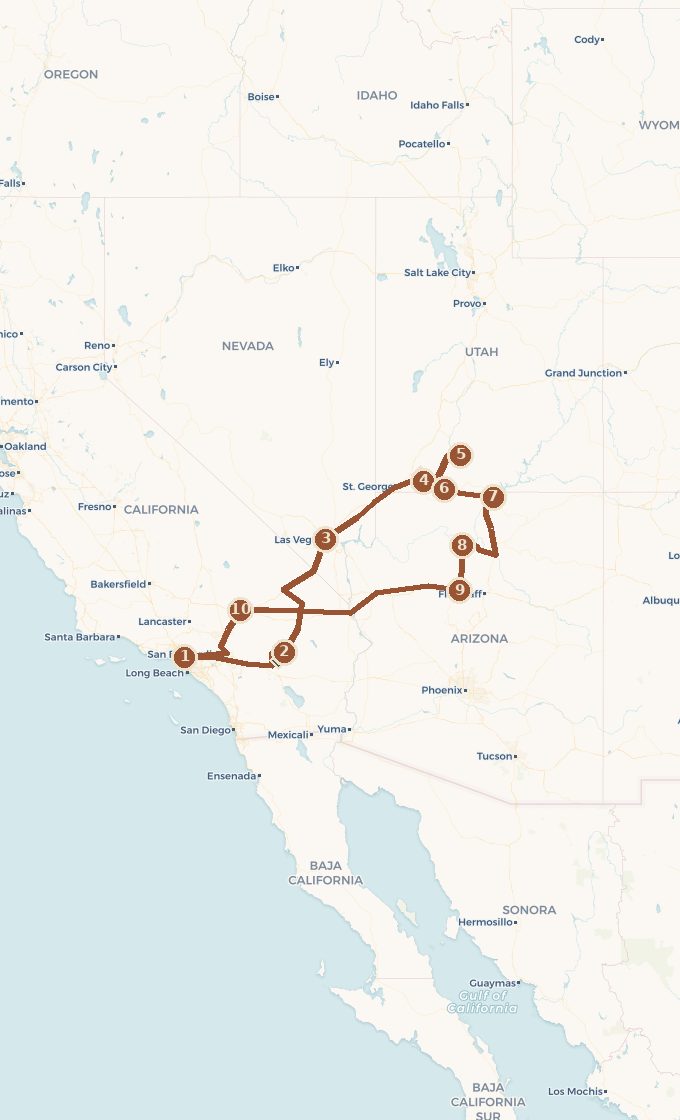 Base map © OpenStreetMap · © CARTO
 - 1. Los Angeles, prise du camping-car
- 2. Joshua Tree, camp sous les yuccas
- 3. Las Vegas
- 4. Zion, campground Watchman
- 5. Bryce Canyon
- 6. Kanab
- 7. Page, campground de Wahweap
- 8. Grand Canyon, Trailer Village
- 9. Williams et la Route 66
- 10. Barstow et Calico, la route du retour
1 stop national park on the route detour
Which Way to Drive the Loop and How Long to Spend
This is the first decision, and it matters. We drive clockwise: Los Angeles, Joshua Tree, the Mojave, Las Vegas, Zion, Bryce, Page, the Grand Canyon, then back along Route 66. This direction makes sense both as a story and on the ground.
From a storytelling perspective, the intensity keeps building. We get comfortable with the rig on the desert's broad roads before tackling the parks, link Zion and Bryce in the middle of the trip, save the Grand Canyon for the climax, and finish with a long, nostalgic stretch of Route 66. Driving the loop in reverse would put the Grand Canyon on day two, then end with traffic jams in Las Vegas and Los Angeles. The narrative would fall apart. On the road, this direction also lets us gain altitude in stages, from Joshua Tree, nearly at sea level, to Bryce at 7,900 feet, before heading back down. We acclimate gradually.
Plan on fifteen full days. That's the right pace for an RV trip. You drive less than you would in a car, set up and break camp at every stop, and slow down. Beginners often make the mistake of counting miles. In an RV, we count stops, and whenever a park deserves it, we stay two nights in one place so we don't spend the trip connecting and disconnecting hoses.
Los Angeles and Picking Up the RV
It all starts in an agency parking lot in the Los Angeles suburbs, often somewhere around the San Fernando Valley. We pick up a vehicle larger than anything we've driven before, and the first hour is for getting acquainted: the backup camera, clearance under bridges, width in traffic, and the engine's rumble as it labors uphill. We don't leave until we've done a full walk-through with the agent: tanks, valves, propane tank, and generator.
The first useful chore is the first water fill. We fill the fresh-water tank, make sure the gray and black tanks are empty, stock the fridge at a supermarket on the way out of town, and leave Los Angeles without lingering. The city isn't the subject of this trip. It's the gateway. Two to three hours east, and the suburbs give way to the first cacti.
Joshua Tree and Our First Night Beneath the Yuccas
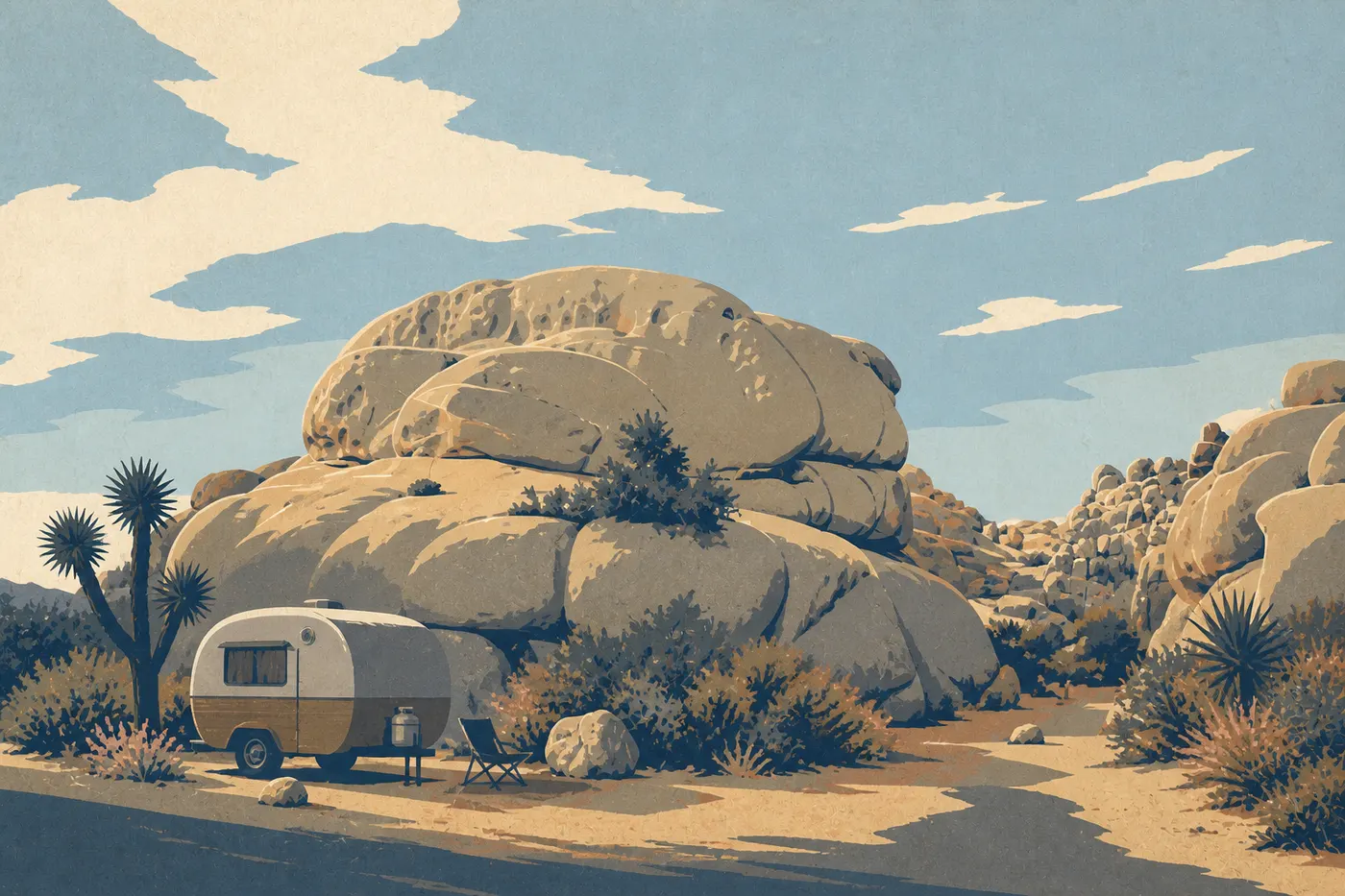
Two and a half to three hours after leaving Los Angeles, the road climbs gently and opens onto a spiky plateau: Joshua Tree, where the Mojave Desert meets the Colorado Desert. Joshua trees, those giant yuccas with twisted arms, grow among rounded granite boulders the size of giant pebbles. We set up at Jumbo Rocks, among the rocks, with no electricity or water on site. It's our first real night off the grid, the one that teaches us how to manage our tanks and battery.
The reward comes at sunset. Low light stretches the yuccas' shadows, the rock turns orange, and then the sky fills with stars in a way few places can match. Joshua Tree is known for its dark skies. We eat outside with headlamps on our foreheads, and suddenly understand why we rented this home on wheels.
Crossing the Mojave and Las Vegas
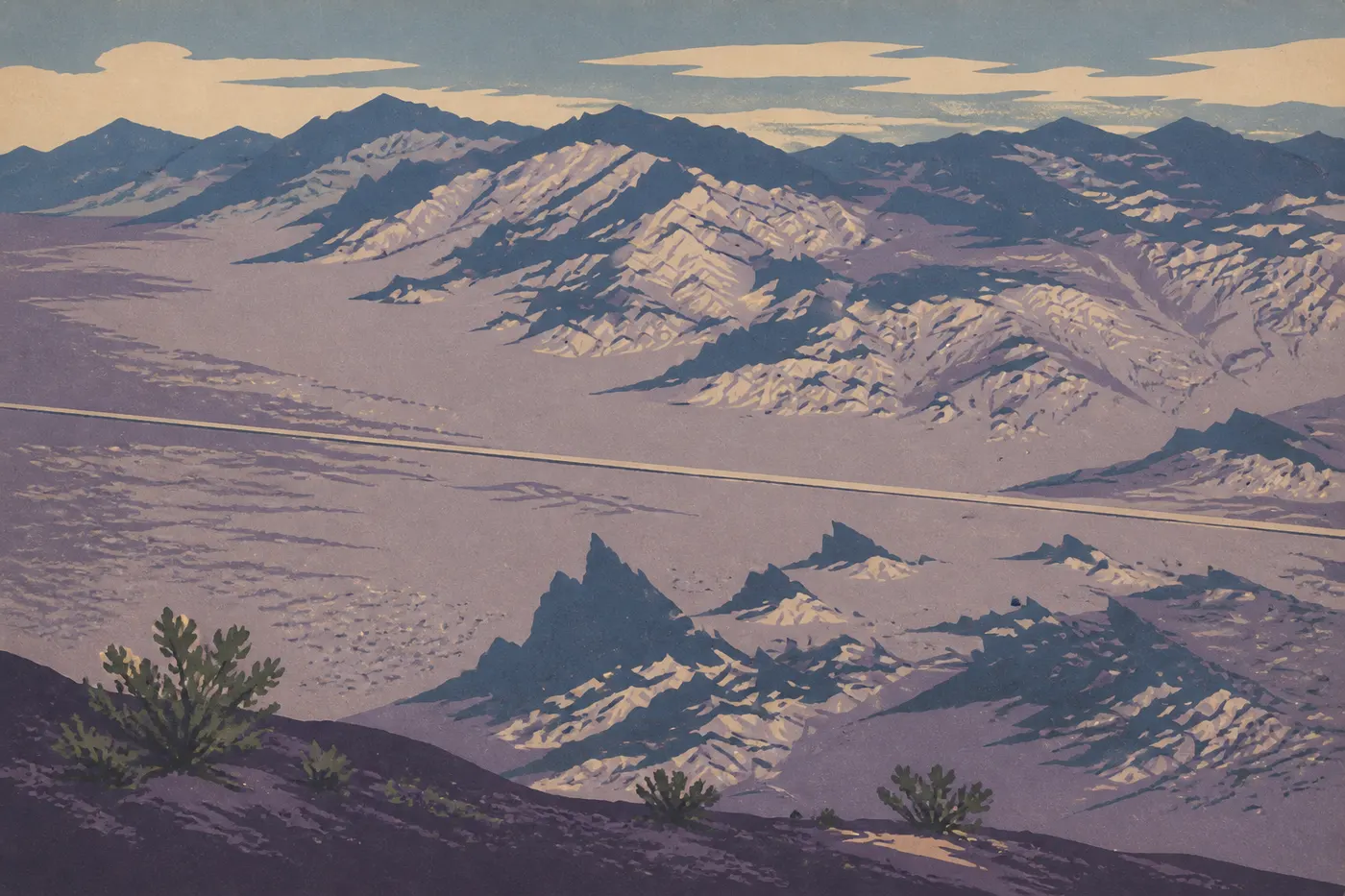
We leave Joshua Tree heading north and enter the Mojave's wide-open spaces. For hours, the road runs straight between creosote flats, distant dunes, and barren mountains shimmering in the heat. It's a transition stage, and it's also when the RV shows its personality. We drive at an easy pace, the air conditioning works the engine hard, and we watch the fuel gauge like a hawk. Fill up whenever you see a station. Out here, the distances between pumps are measured in dozens of miles.
Then, at the far end of the desert, a line of towers rises out of nowhere: Las Vegas. After two nights off the grid, the city is perfectly timed for life's practical chores. We find an RV park on the outskirts with full hookups, empty the waste tanks at a dump station, refill the fresh water, run a load of laundry, and recharge everything. One evening on the Strip for contrast, a good burger, and we're back on the road in the morning toward canyon country, our home freshly reset.
Zion and Bryce, Classic Campgrounds
From Las Vegas, two hours and forty-five minutes of steady climbing brings us to Springdale, at the gates of Zion. We aim for Watchman Campground, inside the park, along the Virgin River and below the sandstone tower that gives it its name. It's one of the West's most sought-after campgrounds, and one of the best located. From our site, we can walk to the free shuttle that heads up the canyon. Good news for oversized vehicles: Zion Canyon Scenic Drive is closed to private cars during the busy season, so everyone takes the shuttle while the RV stays quietly hooked up at camp and we go hiking.
One point deserves a clear explanation because it catches RV drivers off guard. The road connecting Zion to the east, the Zion-Mount Carmel Highway, passes through a narrow tunnel built in 1930. Above a certain size, roughly 8 feet wide or 11.5 feet high, vehicles need an escort. Rangers stop traffic in the opposite direction so the vehicle can drive down the middle, for a fee paid at the entrance. Most rental Class C RVs exceed these dimensions. It's not an obstacle, just a formality to know about and budget for. Check the escort hours before setting out.
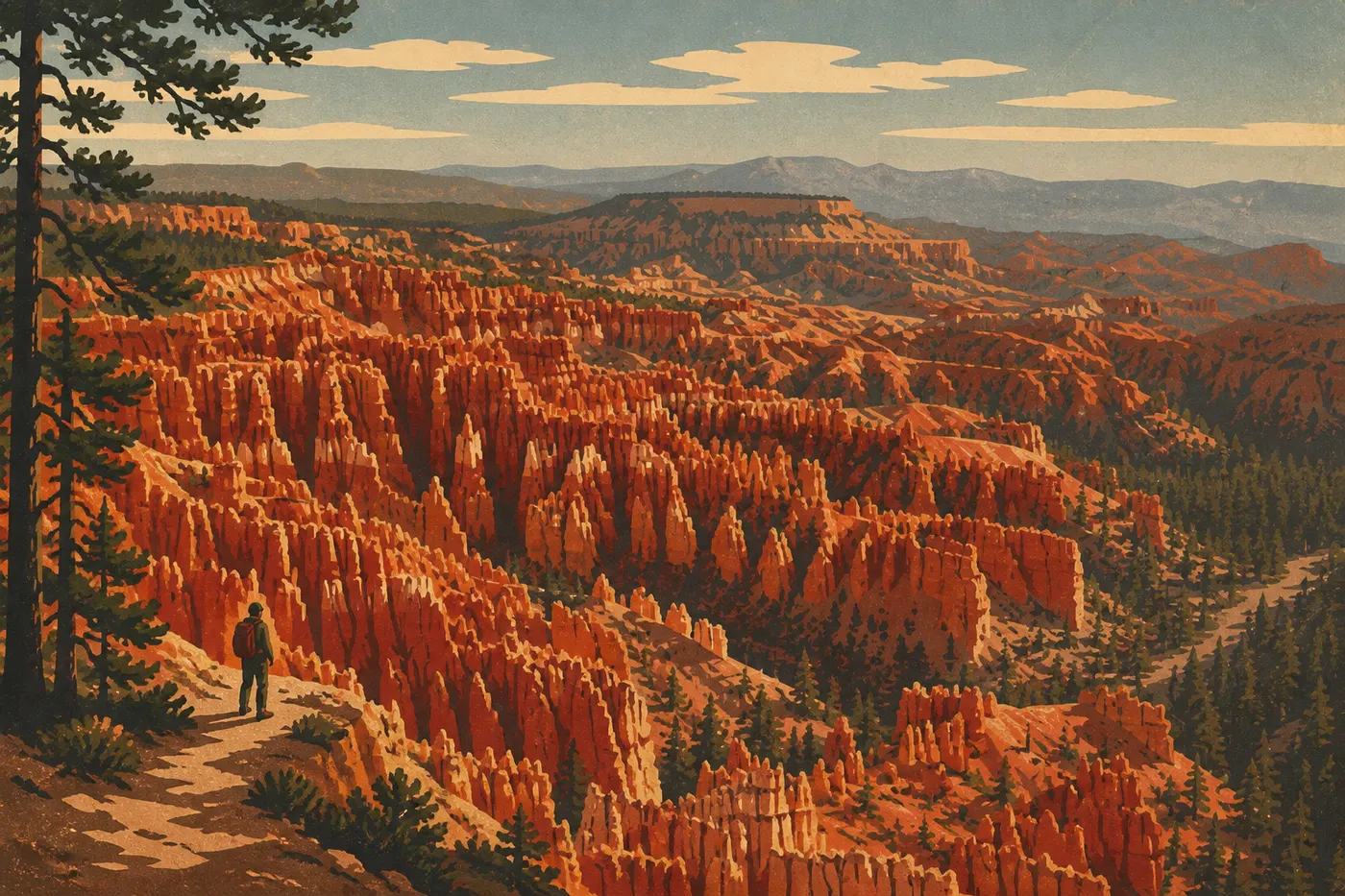
From Zion, another hour and a half to two hours of climbing takes us to Bryce Canyon, perched at 7,900 feet. Here, pine forest replaces the desert, nights are cool even in summer, and we set up at Sunset or North Campground beneath the trees, a few minutes' walk from the rim. The view is worth getting up early for. At sunrise, the amphitheater fills with thousands of hoodoos, orange fairy chimneys that the first light sets ablaze one by one. We return to camp for breakfast, chilled and delighted.
Kanab, Page, and Lake Powell
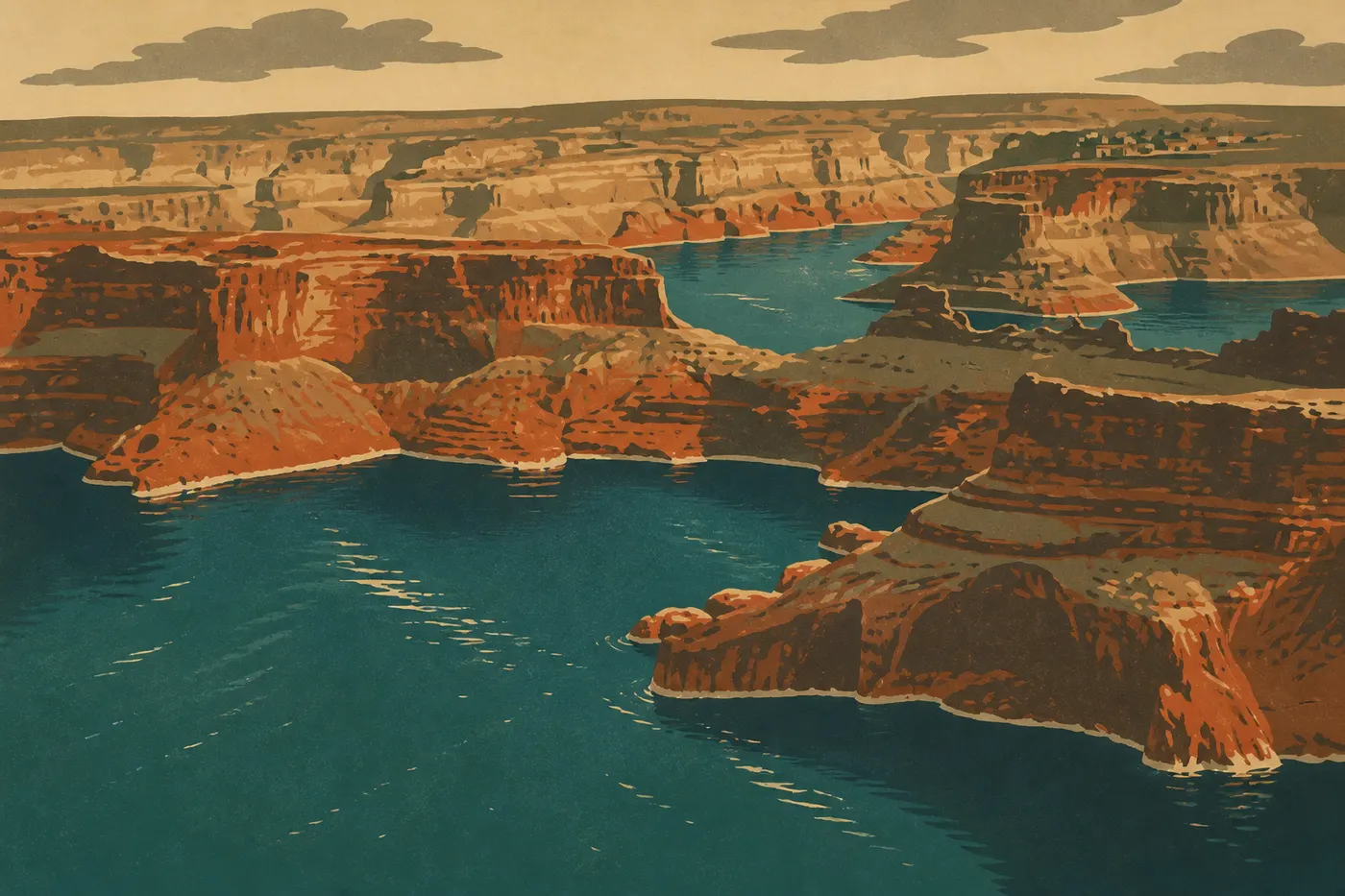
We head south from Bryce, cross Kanab, a small movie town tucked between Utah and Arizona, and stop there to restock groceries and fuel. Then the road reaches Page and Lake Powell, and the scenery shifts. In the middle of this red desert, turquoise water stretches between the drowned canyons of the Colorado River. We set up at Wahweap Campground, high above the marina, with a view of the water.
This is the relaxing leg of the trip. We swim in surprisingly warm water, perhaps rent a boat to see Antelope Canyon from the water or the immense Rainbow Bridge, and enjoy life by the lake: a hot shower, a patio, and sunset on the red cliffs. After Bryce's high elevation, the low desert's warmth feels good. We recharge the batteries, literally and figuratively, before the main event.
The Grand Canyon and Back Along Route 66
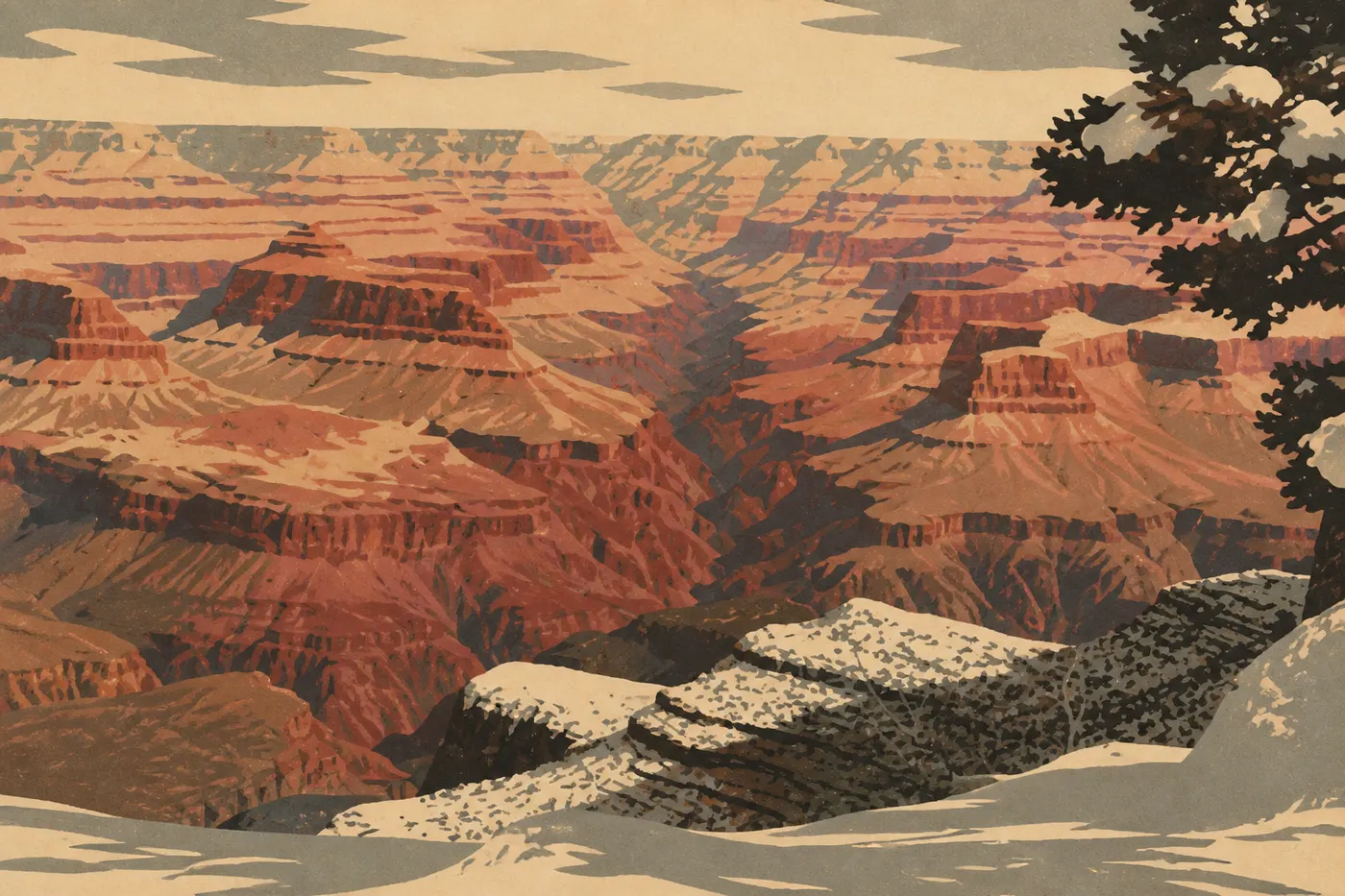
From Page, a two-and-a-half-hour drive finally brings us to the South Rim of the Grand Canyon and Trailer Village, the only campground in the park with full hookups for RVs. We park, plug in, and walk five minutes to the rim. Without warning, the ground opens into a canyon more than 11 miles wide and over 3,300 feet deep, striped with red, ocher, and gray layers that the Colorado took millions of years to carve. No photograph can prepare you for that first look. This is the trip's climax, and it lives up to its promise.
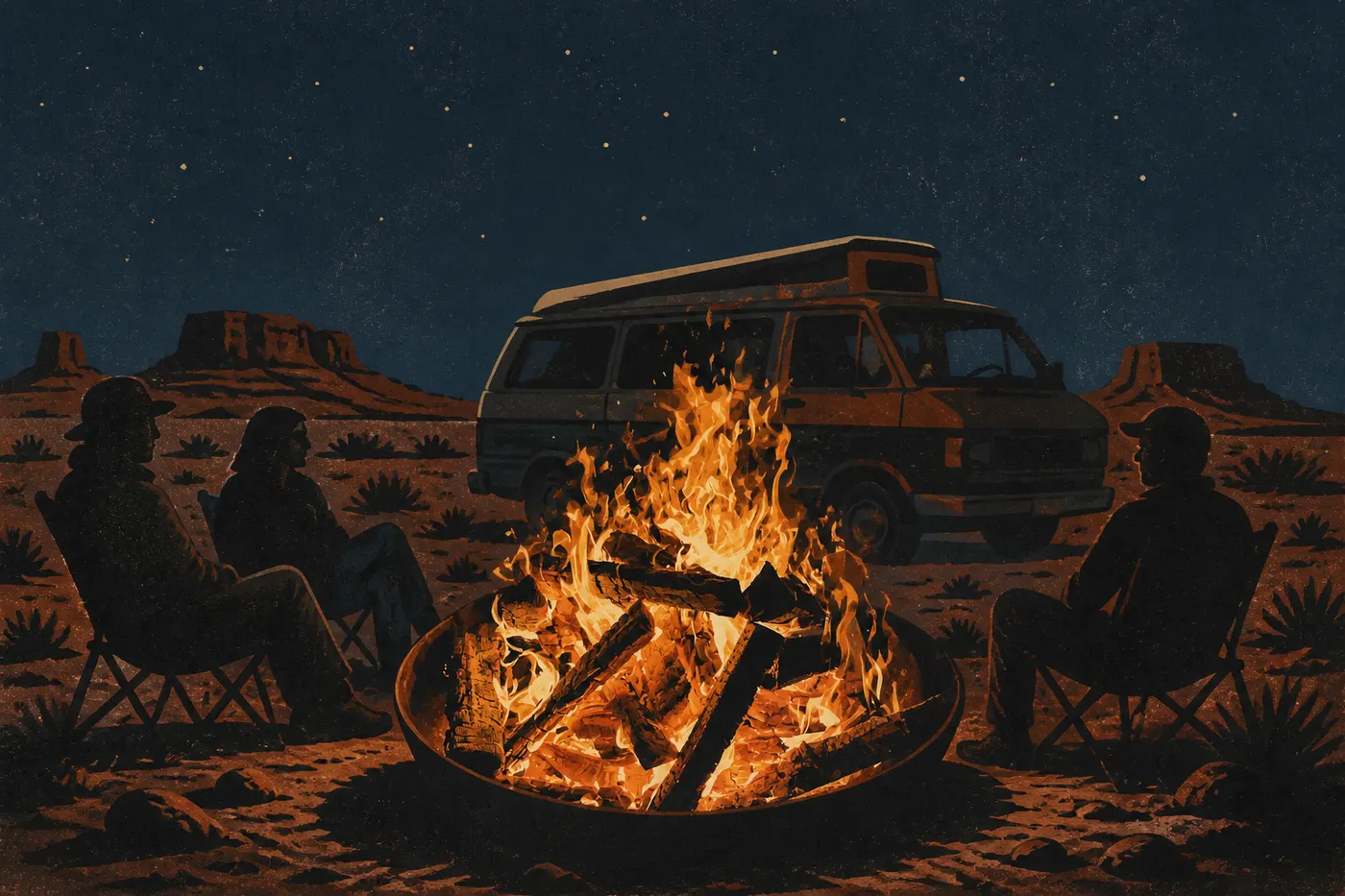
We spend the rest of the day following the rim on the free shuttle, moving from one overlook to the next until sunset sets the walls ablaze. Then comes the final act. We leave the canyon heading south, reach Williams, a small town that has made Route 66 its business, with neon, chrome diners, and vintage signs. We continue west along stretches of the old road, stopping in Barstow and at the ghost town of Calico, a former silver-mining camp given back to the dust. One last evening around the campfire beneath the desert stars, and the loop closes in Los Angeles the next day. We return our home on wheels with sand in our shoes and an urge to leave again already taking hold.
Renting the Right Size RV
The vehicle you choose determines everything else about the trip, and you choose it before leaving home. Two broad categories compete. A camper van is compact, drives like a large car, parks almost anywhere, and passes through the Zion tunnel without an escort. But two people fit tightly inside, and it has limited off-grid capacity. A Class C RV, including the popular C25, which is about 25 feet long, offers a real bed over the cab, a shower, a kitchen, and room for four. That's the family choice, at the cost of a bulkier drive and Zion's famous escorted tunnel crossing.
The paperwork brings a pleasant surprise. In the United States, a regular driver's license is enough for these vehicles, so there's no need for a special license. The rental company will, however, place a substantial security deposit hold on your credit card, released when you return the vehicle in good condition. Read the expensive details carefully. Mileage may be capped and charged beyond the limit, generator hours are often billed separately, and kitchen or bedding kits are frequently optional extras.
The RV Checklist
Living in an RV means managing three fluids and one energy supply. Once you understand the basics, there's no complicated jargon. First, water. There's a fresh-water tank filled at campgrounds and stations, a gray tank for the sink and shower, and a black tank for the toilet. The last two are emptied at dump stations, found at most campgrounds and many rest areas. Connect the hose, open the valves in the right order with gloves on, and you're done in ten minutes.
Then there's power. At a site with hookups, we connect the electrical cable and everything works as it does at home. Without hookups, we rely on the battery for lights and the water pump, propane for the fridge, water heater, and stove, and the generator for air conditioning or a heavy recharge. Two golden rules: watch your propane level, and respect quiet hours, typically from 10 p.m. to 6 a.m. or from 8 p.m. to 8 a.m., when the generator must be silent. Your sleeping neighbor will thank you.
Reserving Campgrounds
This is the key to an RV road trip in the West. The best sites fill months ahead. National park campgrounds are reserved through the official recreation.gov website, usually within a rolling window that opens six months before the date, or about 180 days out. In practice, choose your travel date, set an alarm for the reservation opening day, and click as soon as reservations open for the headline campgrounds.
Three campgrounds should be your top priority because they're the most sought-after and best located: Watchman in the heart of Zion, Sunset on the Bryce amphitheater rim, and Trailer Village at the Grand Canyon, the park's only campground with full hookups. Wahweap Campground at Lake Powell is reserved separately through the lake concessioner. If everything is full, legal Plan B options exist. The vast BLM public lands around Kanab and Page allow free, often spectacular dispersed camping, provided you follow access rules and leave no trace.
Budget: RV or Car and Motels
The question always comes up: does an RV cost more than a car combined with motels? The honest answer depends on how many people are traveling. An RV combines transportation, lodging, and a kitchen in one, which offsets hotel nights and restaurant meals. But it uses a lot of fuel, costs more to rent than a sedan, and adds campground, generator, and dumping fees. For two people, the math often favors a car and motels, especially in the off-season when rooms are inexpensive. For four people or a family, the RV often comes out ahead: one bill covers sleeping and meals, and the kids get to live the adventure.
Beyond the numbers, an RV buys something else: the freedom to sleep beneath Zion's cliffs or on the Grand Canyon's rim, where no motel exists. That's the real luxury of this setup, and you can't measure it in dollars. We give ballpark figures rather than rates because rental and fuel prices change quickly. Build your budget from recent quotes, adding rental, fuel, campgrounds, and extras, then compare it with a car-and-motel scenario for your group.
When to Go
The loop crosses deserts and climbs to 7,900 feet, so the season affects comfort as much as safety. Spring, from April through early June, and fall, from September through October, are the ideal windows. Days are warm but manageable, nights are cool at elevation, campgrounds are open, and crowds are reasonable. That's our favorite time for this route.
Summer, from June through August, bakes the low desert. Joshua Tree, the Mojave, and Lake Powell regularly top 104°F during the day. The RV's air conditioning becomes essential, and the generator runs. Zion and the Grand Canyon remain manageable, and Bryce stays cool thanks to its elevation, but we live early in the morning and late in the evening. Winter closes part of the route. Bryce gets snow, nights freeze, and some high-elevation campgrounds and seasonal services shut down. The loop remains possible if you focus it on the low desert, but you lose Bryce beneath the snow.
The national parks on this road trip
Variations on the Route
Three-week version through Monument Valley and Moab. Have an extra week? From Page, head east to the iconic buttes of Monument Valley, then continue to Moab and its two neighboring parks, Arches and Canyonlands, before closing the loop through the Grand Canyon. You add Utah's finest scenery without ever backtracking. This is the long, grand version of the RV loop.
Short version without Bryce. If time is tight or winter has closed the high country, narrow the route to Los Angeles, Joshua Tree, Zion, Page, and the Grand Canyon, keeping the trip in the low desert. You miss Bryce's amphitheater, but still get a beautiful ten-day journey with less elevation to contend with.
Frequently Asked Questions
Do you need a special license to drive an RV in the United States?
No. A regular driver's license is enough for common rental vehicles, whether a van or Class C. The rental company will still place a security deposit hold on your credit card, released when you return the vehicle in good condition.
Can an RV go everywhere in the parks?
Almost everywhere, with one well-known exception. The Zion-Mount Carmel Highway tunnel requires a paid escort for vehicles wider than roughly 8 feet or taller than 11.5 feet, which includes most Class C RVs. Elsewhere, allow extra driving time and plan to use visitor parking lots and shuttles designed for large vehicles.
When should you reserve the campgrounds on this route?
As early as possible. National park campgrounds open reservations about six months ahead on recreation.gov. Prioritize Watchman in Zion, Sunset in Bryce, and Trailer Village at the Grand Canyon, the three most coveted sites.
Which is cheaper, an RV or a car with motels?
It depends on how many people are traveling. For two, a car and motels are often more economical, especially in the off-season. For four people or a family, the RV often comes out ahead by combining transportation, lodging, and a kitchen in one bill, plus nights right next to the parks.
What's the best season for this loop?
Spring and fall. From April through early June and from September through October, days are warm without being excessive, nights are cool at elevation, and campgrounds are open. Summer bakes the low desert above 104°F, while winter brings snow to Bryce and closes some services.