Mesa Verde National Park: The Complete Visitor Guide
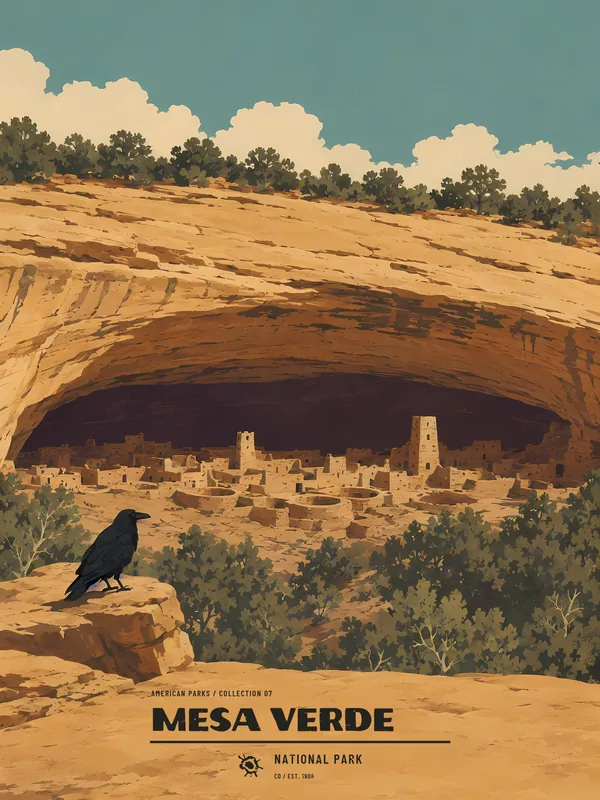
Mesa Verde is the only major American national park created to protect human handiwork rather than a landscape. In southwestern Colorado, a wooded high plateau shelters villages built directly into the rock beneath enormous alcoves by the Ancestral Puebloans more than seven centuries ago. You don't come here for waterfalls or geysers. You come to walk through stone villages suspended above the void, with Cliff Palace as the highlight. Plan on a full day for the essentials, or two if you want to fit in several guided tours and take your time at the overlooks. This is a park that takes a little effort to reach, with winding mountain roads and ladders to climb, and it stays with you.
This guide gives you the big picture: location, fees, areas, timing, and seasons. Each question has its own detailed guide, so follow the links as you read.
Mesa Verde at a Glance: Where the Park Is and How to Get There
The park lies in southwestern Colorado, in the region known as the Four Corners. The entrance and the Visitor and Research Center are along U.S. 160. They are 10 miles west of Mancos, 10 miles east of Cortez, and about 35 miles west of Durango. These three towns are your closest options for groceries and lodging.
Here's a classic trap: getting through the entrance isn't enough. From the entrance station, you still have roughly 12 miles of winding, climbing mountain road before you reach the main sites on Chapin Mesa. Allow close to an hour for the drive inside the park, without counting stops. A car is essential. There is no public shuttle to get around the park, and Durango is the most convenient airport, with Cortez offering some additional flights.
Every visit starts at the Visitor and Research Center near the entrance. This is the only place where you can purchase guided-tour tickets for the cliff dwellings in person. Stop there first, before heading up onto the plateau.
Entrance Fees, Passes, and Reservations
You pay to enter Mesa Verde by vehicle or by person, and the ticket is valid for several consecutive days.
- Private vehicle: $30 in peak season, $20 in the off-season.
- Motorcycle: $25 in peak season, $15 in the off-season.
- Pedestrian, cyclist, or bus passenger: $15 per person.
The park's annual pass costs $55. If your road trip includes several national parks, the federal America the Beautiful pass, valid for one year throughout the system, will quickly pay for itself. Our National Park Entrance Fees and Passes page explains the basics of entrance fees and passes.
The important reservation isn't for entry. It's for the guided tours. The most spectacular cliff dwellings, including Cliff Palace, Balcony House, and, depending on the season, Long House on Wetherill Mesa, can only be visited with a ranger on a low-cost ticket, and space is limited. These tickets go quickly in summer. Reserve as soon as you can and arrive at the exact time on your ticket. If you're late, the group will leave without you.
Reservations, Permits, and Rules to Follow
Guided Tours: Reserve Ahead
Entry into the major cliff dwellings, including Cliff Palace, Balcony House, and Long House, requires a ranger-led tour. Reserve these tours through recreation.gov. In July and August, spaces sell out weeks in advance. In May, June, September, and October, a few last-minute tickets may be available at the Visitor and Research Center ticket desk, but don't count on finding one on a midsummer weekend.
Permits and Backcountry Trails
Mesa Verde doesn't have large stretches of open backcountry. Unguided hiking is limited to a handful of marked trails, including Petroglyph Point Trail, about 3.1 miles round-trip. Off-trail access in archaeological areas requires a permit issued at the Visitor and Research Center. Our Hiking guide covers the options and access requirements.
Essential Rules
Never touch the ancient structures. Skin oils permanently damage the stone and plaster. Rangers remind visitors of this on every guided tour, and it's also the law.
Stay on marked trails in archaeological areas. The Archaeological Resources Protection Act provides for severe penalties for leaving them.
Drones are prohibited throughout the park, with no exceptions.
Pets are allowed in the park on a leash no longer than 6 feet, but they aren't allowed on trails, inside dwellings, or at any archaeological site.
Don't collect plants, rocks, pottery fragments, or any artifact. Even a chip of clay lying on the ground is protected by federal law.
Getting Around Mesa Verde
You explore Mesa Verde by car, moving from one site parking area or overlook to the next. There's no mandatory shuttle like the one at Zion. You keep your own vehicle and set your own pace. The tradeoff is that driving requires attention.
The main road climbs from the entrance station to the plateau through a series of switchbacks, steep grades, and cliffside overlooks. Follow the posted speed limits carefully. They often drop to 25 mph in the curves. Watch for overheating brakes on the way down, and downshift instead of riding the brakes. Fill up before you enter. Gas stations are scarce inside the park.
The park is divided into two main areas, which we cover in more detail below:
- Chapin Mesa, the historic heart of the park, open year-round and served by two scenic loops.
- Wetherill Mesa, wilder and quieter, reached by a narrow road and closed for much of the winter.
Our Getting Around page covers drive times inside the park, seasonal road conditions, and mountain-driving advice.
How Much Time Do You Need to Visit Mesa Verde?
A full day lets you see the essentials: the museum, one or two guided cliff-dwelling tours, and a scenic loop on Chapin Mesa. It's the most common itinerary, and it's already a full one given the distances inside the park.
Two days make for a different experience. You can add Wetherill Mesa, fit in more guided tours, walk more, and enjoy the late-day light on the alcoves. A half day, on the other hand, is frustrating. By the time you reach the sites from the entrance, there's hardly any time left.
Our advice is to allow at least one full day, or two if Mesa Verde is a real stop on your itinerary rather than a quick detour. Our Itinerary and Timing page lays out the schedule hour by hour.
Plan your visit
What to See and Do in Mesa Verde
The visit centers on two mesas. Here's how we break them down.
Road trip journal · 3 areas
Chapin Mesa Area
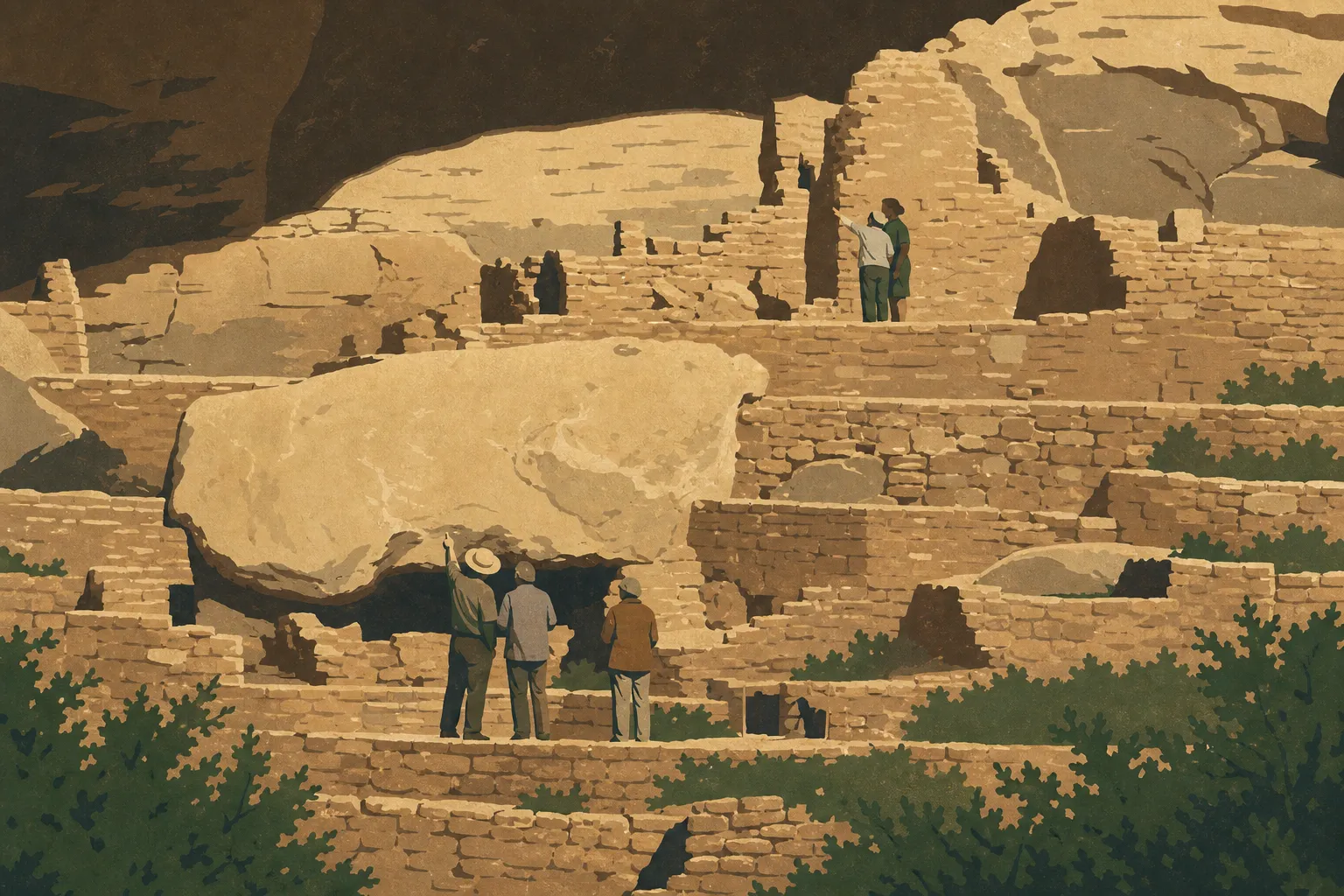
This is the park's hub and its most visited area. It includes the Chapin Mesa Archaeological Museum, an excellent introduction to the Ancestral Puebloans before you head down to the sites, and especially Cliff Palace, the largest cliff dwelling in North America, with roughly 150 rooms. The Cliff Palace tour takes you down carved steps and back up ladders. It's physically demanding but manageable if you're comfortable with heights.
Also on Chapin Mesa, Balcony House is the most strenuous tour, with a ladder several yards high and a tunnel passage. It's a real little adventure course, and families with kids who are ready for it tend to love it. Two scenic loops round out the area. The Mesa Top Loop traces the evolution of settlement over six centuries, from the first semi-subterranean houses to the cliff dwellings. The Cliff Palace Loop lines up overlooks looking down into the alcoves. Several viewpoints offer a full view of Cliff Palace without the descent.
Wetherill Mesa Area
More isolated and quieter, this area rewards visitors who make the time. You reach it by a narrow, winding road that's closed in winter and during part of the shoulder seasons. Its signature cliff dwelling, Long House, is seen on a guided tour and rivals Cliff Palace in size, with far fewer visitors around. You can cover much of the area on foot or by bike on a flat loop, making it a good place to slow down.
Overlooks and Sites You Can Visit Without a Ticket
Not everything requires a guided ticket. The Far View Sites bring together the remains of mesa-top villages that you can visit on your own, and they're easy and informative. Numerous overlooks along the roads open onto views of the canyon and alcoves. Depending on preservation work underway, emblematic sites such as Spruce Tree House may be visible only from an overlook. Check with the Visitor Center that day.
Explore the park
The Best Hikes in Mesa Verde
Here, hiking mainly gets you to or near the archaeological sites. The trails are short but often technical, with ladders, carved steps, and high elevation that leaves you breathless faster than you might expect. On Chapin Mesa, Petroglyph Point Trail leads to a panel of petroglyphs along a narrow, engaging route. Other short loops reach overlooks and mesa-top villages.
Two simple rules apply. Never leave the marked trails because the site is fragile and protected, and carry water because the plateau is dry and exposed. Our Hiking page has the trail details, difficulty ratings, and elevation gains.
The detailed guide Mesa Verde Hiking: The Best Trails for Every Ability Mesa Verde hiking trails, difficulty, access, and seasonal advice, including… Read the guide →Wildlife and Plants to Look For
The park's name, “green table,” comes from its covering of juniper and pinyon pine, broken up by areas shaped by large past fires. Wildlife includes mule deer in the early morning, wild turkeys, plenty of lizards, and a wide range of birds, including raptors soaring above the canyons. Rattlesnakes and coyotes are around but keep a low profile. Watch wildlife, never feed it, and keep your distance. Our Wildlife page covers the species and the best times to spot them.
The detailed guide Mesa Verde Wildlife: Which Animals to See and Where to Find Them Mule deer, wild turkey, black bear, mountain lion, and coyote Read the guide →When to Visit Mesa Verde
Mesa Verde is at its best from late spring through early fall, when all areas and guided tours are open. The high-plateau climate can surprise you:
- Spring: changeable weather, from 39 to 70 °F, with some snow possible into May.
- Summer: sunny days that can top 90 °F, with frequent thunderstorms in July and August.
- Fall: 50 to 75 °F, beautiful light, but the first snow can arrive as early as October.
- Winter: temperatures often below 30 °F, icy roads, and snow tires, four-wheel drive, or chains sometimes required.
In peak season, the issue isn't the weather but the availability of guided-tour tickets. In winter, part of the park, including Wetherill Mesa, the campground, and some services, closes. The Visitor Center and museum remain open except on Thanksgiving, Christmas, and January 1. The month-by-month calendar is on our When to Visit page, and our Weather page has the climate details.
The detailed guide When to Visit Mesa Verde: Best Times, Weather, and Seasons The best times to visit Mesa Verde are May and September Read the guide →Where to Stay in Mesa Verde
You have two basic options. First, stay in the park. Far View Lodge, open only in season, puts the cliff dwellings within reach at sunrise, and the large Morefield campground offers tent and RV sites. It is seasonal as well. Second, stay outside the park. Cortez and Mancos, less than 20 minutes from the entrance, offer motels and more affordable year-round lodging, while Durango adds more options farther away.
For a full comparison, see our Where to Stay in Mesa Verde guide, our Hotels and Lodges page for a roof over your head, our Camping page for Morefield and alternatives, and our RV Camping page for sites and services suited to recreational vehicles.
Stay in the park
Around Mesa Verde: Things to Do Nearby
Mesa Verde naturally fits into a larger tour of the American Southwest. To the west, the Four Corners region includes other Ancestral Puebloan sites, including the large Chaco complex in New Mexico and the sites at Hovenweep. For scenery, Monument Valley and its iconic buttes are only a few hours away, and Durango, a well-preserved mining town, is worth a stop for its historic steam train.
To build a real road trip, use our American West road trips with itineraries that link the parks, and our regional guides covering southwestern Colorado as a whole. You can also get your passport stamped at the entrance. Our NPS Passport and Stamps page explains how it works.
Our Take: Is Mesa Verde Worth the Trip?
Yes, absolutely, as long as you know what you're coming for. Mesa Verde doesn't offer the grand geological spectacle of the nearby Utah parks. It offers something else: a rare, moving glimpse into a civilization that built cities in the cliffs and then left them. Climb down the Balcony House ladder, walk along the walls of Cliff Palace, and listen to a ranger describe the daily lives of its residents. It stays with you.
The park is especially rewarding for travelers interested in history and culture, and for families with kids old enough to climb. It takes some advance planning, including guided-tour tickets, mountain driving, and altitude. With good preparation, it's a memorable stop. Rushed into a half day, it disappoints. Our recommendation is to reserve your tours, keep a full day open, and, if you're traveling with kids, take a look at our Family page. For food on-site, our Where to Eat page lists options in the park and nearby.
Frequently Asked Questions
How much time do you need to visit Mesa Verde?
Plan on a full day for the essentials: the museum, one or two guided cliff-dwelling tours, and a scenic loop on Chapin Mesa. Two days let you add Wetherill Mesa and more hiking. A half day is too short because of the distances inside the park.
How much is the entrance fee at Mesa Verde?
Entry costs $30 per private vehicle in peak season ($20 in the off-season), $25 for a motorcycle, and $15 per person arriving on foot or by bike. The ticket is valid for several days. The park's annual pass costs $55, and guided cliff-dwelling tours cost extra.
Can you visit Mesa Verde by car?
Yes. You can visit all of Mesa Verde in your own vehicle, with no mandatory shuttle. The main road climbs to the plateau through numerous curves. Follow the reduced speed limits, take it easy on your brakes downhill, and fill up before entering.
Do you need a reservation to see Cliff Palace?
Yes. You can only visit Cliff Palace on a ranger-led tour, with a paid ticket and limited space. You can make the reservation, among other places, at the Visitor and Research Center near the park entrance. In summer, time slots fill quickly. Reserve early and arrive at the exact time.
When is the best time to visit Mesa Verde?
Late spring through early fall gives you the full park, with all areas and guided tours open. Summer is hot, above 90 °F, and afternoon thunderstorms are common. Fall is milder and brighter. Winter closes some sites. The details are on our When to Visit page.
Is Mesa Verde worth visiting?
Yes, especially if you're interested in Ancestral Puebloan history and culture. The park protects cliff dwellings that are unique in their kind, and you experience it mainly through guided tours. With good preparation and a full day, it leaves a lasting impression.
The American Parks shop
Bring Mesa Verde home
Our park-inspired creations, made to order and shipped to your door.