

Renting a Car in the United States: Licenses, Insurance, Deductibles, and Comparison Site Traps
French driver's license, CDW, deductibles, airport taxes: what you really need to know before booking a rental car in the United States.
By Erika Müller · · 6 min read
In the United States, a car is not a luxury, it is basic infrastructure. Without one, most national parks remain out of reach, and distances between points of interest regularly stretch for hundreds of miles. Before you click “Book,” here is what you need to check, line by line.
Is your French driver's license valid in the United States?
Yes. In almost every U.S. state, a French driver's license is enough. Federal law does not require an international driving permit, but some rental companies require one in their terms and conditions, especially for rentals longer than 90 days.
You can get an International Driving Permit (IDP) through the French prefecture system. It costs about 10 euros and is issued within a few days. We still recommend getting one: if you are pulled over, it can prevent misunderstandings with an officer who is not used to foreign documents. It is valid only when carried with your original French license, never on its own.
If your license is one of the older pink cards without an electronic chip, some rental counters may be especially strict about it abroad. Bring your national ID card as backup.
Minimum age and young driver surcharge
Most companies rent to drivers aged 21 and up. Under 25, a young driver fee is added automatically: expect to pay about 25 to 40 dollars per day, depending on the company and the state. Over a ten-day rental, this line item can double the base price.
A few companies rent to drivers as young as 18, but they charge the highest rates and apply the broadest coverage exclusions. Check the age policy before comparing prices.
At the other end of the age range, some rental companies set a limit of 70 or 75. Contact the company directly if this applies to you.
CDW, LDW, and liability insurance: making sense of the coverage
This is where many travelers lose both time and money. Two products deserve to be separated.
CDW (Collision Damage Waiver) and LDW (Loss Damage Waiver) cover the rental vehicle in the event of a collision or theft. They do not cover damage caused to third parties. LDW is more comprehensive because it includes theft, but both usually come with a remaining deductible.
Liability insurance is required to drive in the United States. It is included with every rental, but only at the state's legal minimum, which is often very low (around 15,000 dollars in California, for example). After a serious accident, you would be responsible for the difference.
Check your coverage before leaving: your French auto insurance is not valid in the United States. However, some premium credit cards, such as Visa Premier and Mastercard Gold, cover CDW if you pay for the rental with the card. Read the exact terms, since each issuer sets its own limits and exclusions.
The deductible: what the contract mentions in fine print
Even with CDW, a rental usually includes a deductible (also called an excess): the amount you still owe after a covered incident. It ranges from 500 to 2,500 dollars, depending on the contract and vehicle type.
To remove it, rental companies offer supplemental coverage, often called “super CDW” or “zero deductible,” for about 10 to 30 dollars per day. Independent policies sold by specialized insurers with no connection to the rental companies often cover the same deductible for less and can be purchased before your trip.
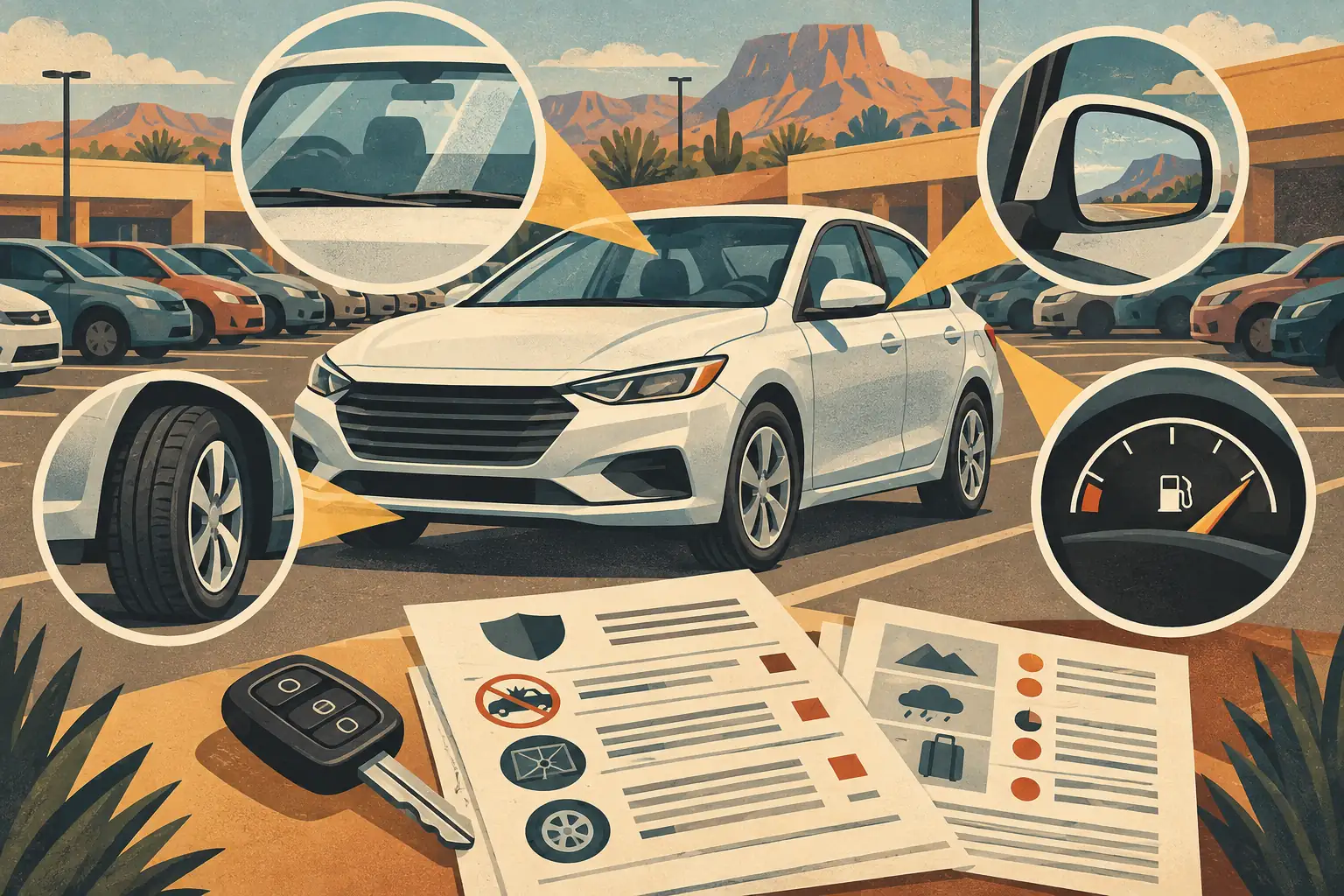
One commonly overlooked detail: damage to tires, windshields, the undercarriage, and mirrors is frequently excluded from standard CDW. These items are billed separately, and some rental companies cover them only through additional optional products.
One-way rentals, tolls, and filling up the tank
If you are planning a road trip through the American West with a one-way route, such as Los Angeles to Las Vegas, a one-way rental is possible, but it may come with a substantial drop-off fee: 100 to 400 dollars depending on the distance and company. Check this amount before building your itinerary, since it does not always appear on the comparison site's results page.
For tolls, the United States increasingly relies on electronic toll lanes: E-ZPass on the East Coast, SunPass in Florida, and FasTrak in California. Driving through a reserved lane without a transponder can result in fines forwarded by the rental company, sometimes along with processing fees of 15 to 25 dollars per transaction. Companies offer a daily toll pass, usually for around 5 to 15 dollars per day: worthwhile on urban highways in the Northeast, but unnecessary if you will be driving mainly through the parks.
For fuel, a U.S. gallon equals about 3.8 liters. Prices vary considerably from state to state: much higher in California and noticeably lower in Nevada or Arizona. Returning the vehicle with a full tank is almost always cheaper than paying the fuel rate charged by the rental company.
What comparison sites only reveal at the last step
Comparison platforms advertise a starting price “before taxes and fees.” Charges added at checkout include:
| Fee | Approximate amount |
|---|---|
| Airport concession fee | 10 to 15% of the total |
| Additional driver | 10 to 15 dollars per day |
| Built-in GPS navigation | 10 to 15 dollars per day |
| Prepaid fuel option | Often overpriced |
The practical rule: never compare prices before reaching the final booking page, which shows the total with all taxes and fees included. A rate advertised at 30 dollars per day can reach 55 or 60 dollars once mandatory charges are added.
For trips focused on national parks, a rental car is often the largest item in the travel budget, even before lodging. Planning for these hidden fees means you will not have to cut back elsewhere, including on the America the Beautiful pass, which provides access to all the parks for about 80 dollars per year.
Booking directly through the rental company's website can sometimes unlock member rates or give you better control over the options you select. Comparison sites are still useful for mapping out price ranges, but they are less reliable when it comes to booking down to the last dollar.