Lassen Volcanic National Park: The Complete Visitor Guide
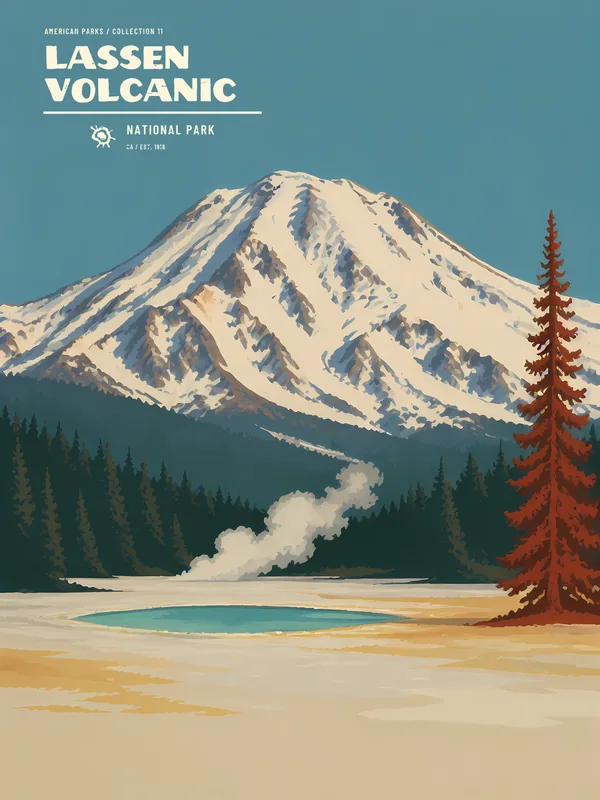
Lassen Volcanic is the volcanic California no one expects. Three hours north of Sacramento, this park brings together all four types of volcanoes found on Earth, high-elevation lakes in improbable shades of blue, and boiling mud pots that steam right beside the trail. It gets one-tenth the visitors of Yosemite, and that's exactly what makes it special.
The quick answer. The park sits in northern California, across the Cascade Range. Visitors come to see Lassen Peak, a volcanic dome whose most recent eruption took place between 1914 and 1917, along with hydrothermal areas such as Bumpass Hell. Plan on a full day for the main park road, and two to three days for hiking and exploring the more remote areas. The high season runs from June through October. The rest of the year, snow closes the main road.
Lassen Volcanic at a Glance: Where the Park Is and How to Get There
The park occupies the southern end of the Cascade Range in Shasta, Lassen, Plumas, and Tehama counties in northern California. Two main entrances bookend the park road that crosses the park from north to south.
From Interstate 5 at Redding, take Highway 44 east for about 48 miles to the junction with Highway 89, then drive 1 mile south to the north entrance at Manzanita Lake. From Interstate 5 at Red Bluff, take Highway 36 east for about 51 miles to the junction with Highway 89, which leads to the southwest entrance near Mineral.
There is no public transportation serving the park, so you'll need a car. The most convenient airports are Sacramento, about a three-hour drive away, and Reno, Nevada, about 2.5 hours away. For route details, driving times, and parking information, see our guide to getting to Lassen Volcanic.
Entrance Fees, Passes, and Reservations
Admission is charged per vehicle and remains valid for seven consecutive days. Here's the National Park Service's official fee schedule:
- Private vehicle: $30 during the high season ($10 in winter, when access is limited).
- Motorcycle: $25.
- Pedestrian, bicyclist, or shuttle passenger: $15 per person.
- Annual park pass: $55, which pays for itself on the second visit of the year.
If your road trip includes several national parks, the America the Beautiful pass, at $80, covers all national parks for 12 months, so it quickly pays off. Lassen does not use a timed entry reservation, unlike the famous systems at Yosemite and Arches, so you can simply show up at the entrance station. Our Fees and Passes page has the full details on fees, fee-free days, and passes. If you're collecting stamps, stop by the visitor center. Our Passport and Stamps page tells you where to find them.
Reservations, Permits, and Rules to Follow
Campground reservations: Front-country campgrounds (Manzanita Lake, North Summit Lake, and South Summit Lake) take reservations through Recreation.gov. In July and August, sites disappear within minutes of reservations opening, so act several weeks ahead. A few sites remain available on a first-come, first-served basis. Check the exact quota on Recreation.gov before counting on one.
Wilderness permits: Every night spent in the backcountry requires a free wilderness permit, available through self-registration at the ranger stations near the park entrances. There is currently no online quota, but that could change. Confirm the current rules on the NPS website before you leave.
Rules to remember:
- Hydrothermal areas: stay strictly on the boardwalks and marked trails. The sulfur crust around Bumpass Hell and Sulphur Works can give way under an adult's weight and expose you to acidic water near the boiling point. Every year, visitors get burned after leaving the trails.
- Campfires: prohibited in the wilderness. Gas stoves are allowed.
- Dogs: allowed in the park, but prohibited on trails. Areas around the hydrothermal features are especially dangerous for animals.
- Food and scented items: always store them in a food locker or bear box at the campground. Rangers check.
- Drones: prohibited throughout the park.
- Leave No Trace: take nothing and leave nothing anywhere in the park.
Getting Around Lassen Volcanic
The park's backbone is the park road, the internal section of Highway 89. It runs about 31 miles from the north entrance to the southwest entrance. The road climbs above 8,200 feet near Lassen Peak and reaches nearly all of the central area's points of interest. You can drive it in 45 minutes without stopping, but plan on half a day once you add photo stops and trailheads.
Here's the crucial point: the road is closed in winter, usually from November through May, because of snow. Depending on the year, it may not fully reopen until June or even early July. You reach the remote areas, including Warner Valley, Butte Lake, and Juniper Lake, by separate secondary roads that branch off outside the park. Some are unpaved. There is no shuttle, so you'll need to drive to each area. Our guide to getting around the park covers road conditions, seasonal closures, and connections between areas.
How Long Do You Need to Visit Lassen Volcanic?
It depends on your appetite for exploring. In one day, the southwest entrance lets you combine Sulphur Works, Lake Helen, the Bumpass Hell hike, and a stop at Manzanita Lake in the north. That's the park-in-a-day version. With two days, you can add the Lassen Peak climb and Kings Creek Falls without rushing. With three days or more, head to the remote areas, including Warner Valley and its Devils Kitchen, or Cinder Cone at Butte Lake.
Our advice is to plan on two days for the right balance on a first visit. To fit the park into a larger road trip and arrange your stops efficiently, use our one- to three-day itineraries.
Plan your visit
What to See and Do in Lassen Volcanic
The park is divided into clearly distinct geographic areas. Each has its own character and access point. Here's how to approach them.
Road trip journal · 5 areas
The North Area: Manzanita Lake
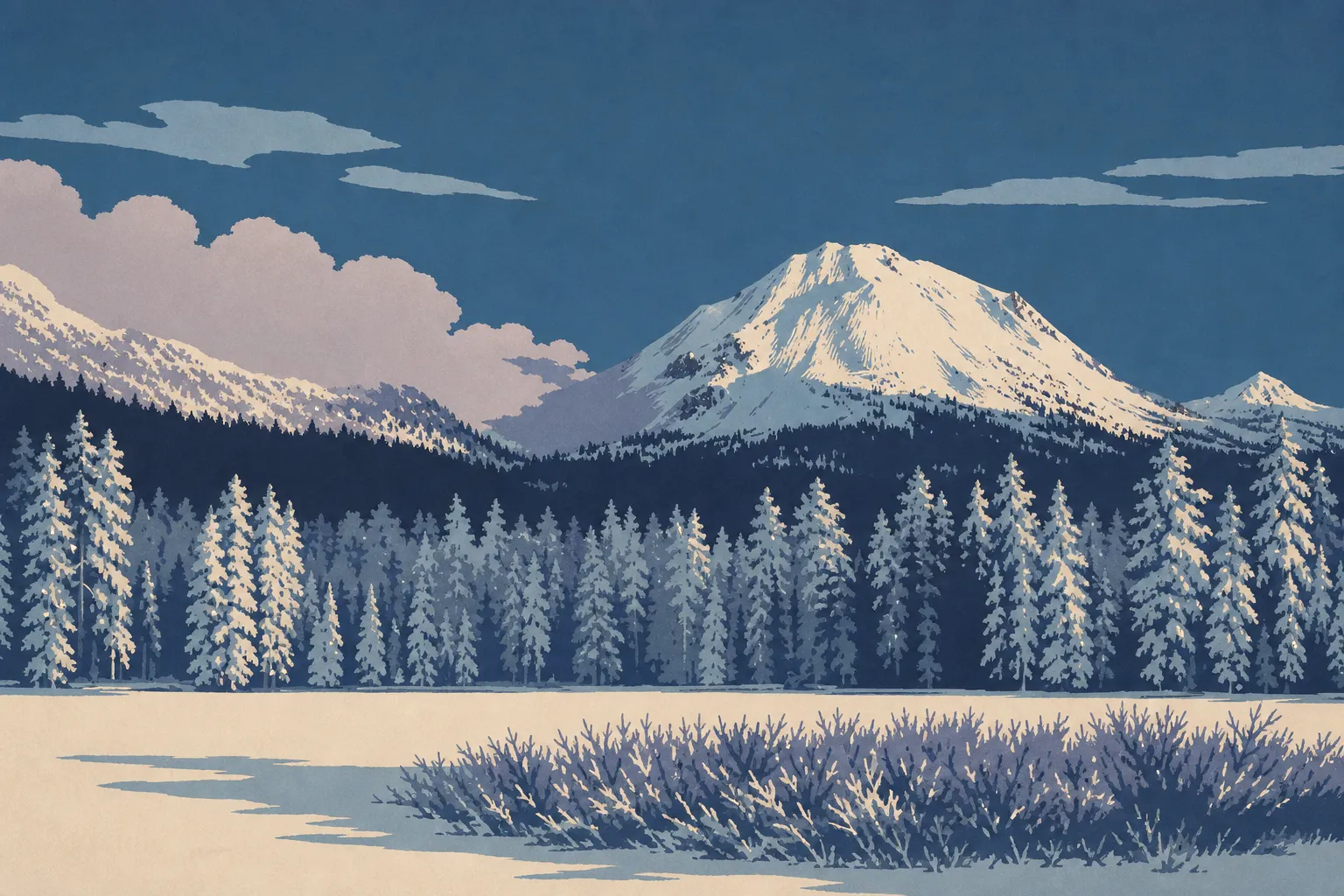
This is the gentlest introduction to the park. Manzanita Lake reflects Lassen Peak in its calm waters and offers an easy family-friendly loop trail and catch-and-release fly fishing. Nearby, the Loomis Museum tells the story of the early twentieth-century eruptions through striking period photographs. The area also has the park's largest campground and a small store.
Along the Main Road: Bumpass Hell and Lassen Peak
This is where Lassen shows its raw side. Bumpass Hell is the park's largest hydrothermal area. From a secure wooden boardwalk, you look down on mud pots, hissing fumaroles, and boiling springs. The round trip from the parking area is about 3.1 miles. A little higher up, the Lassen Peak trail climbs to the summit at about 10,456 feet, with 360-degree views of the Cascade Range and, on clear days, Mount Shasta to the north. It's a strenuous hike with steep elevation gain and no shade, but the views are spectacular. Along the way, Lake Helen and Emerald Lake glow deep blue with water from the late snowmelt.
The Southwest Area: The Sulphur Works Entrance
Just steps from the south entrance, Sulphur Works puts geothermal features within easy reach of the parking area. Fumaroles and a boiling mud pot sit right beside the road, making this a good stop if you're short on time or don't walk far. The Kohm Yah-mah-nee Visitor Center is open year-round and serves as your information hub and passport-stamp stop.
The East Area: Warner Valley and Devils Kitchen
Wilder and reached by a secondary road from Chester, this area leads to Devils Kitchen and Boiling Springs Lake, where volcanic activity drives the water to high temperatures. You'll find far fewer people here, which makes it a good place to slow down.
The Northeast Area: Cinder Cone and Butte Lake
This area is for determined hikers and is reached by a rough road from Butte Lake. Cinder Cone is a cinder cone climbed on a loose-sand trail. From the top, you get a sweeping view of the Painted Dunes and the Fantastic Lava Beds, a field of lava in ocher and rust tones. It's one of the park's most unusual hikes.
Each area has its own character. For the full list of activities, including swimming, fishing, snowshoeing, and stargazing, see our guide to things to do in Lassen Volcanic.
Explore the park
The Best Hikes in Lassen Volcanic
The park has about 149 miles of trails, from a family-friendly boardwalk to challenging summit climbs. The highlights include Bumpass Hell for geothermal features, Lassen Peak for its summit panorama, Kings Creek Falls for a cool break, and Cinder Cone for its lunar landscape. At higher elevations, snow can block some trails until July. Our Hiking page brings together the details for every route, including difficulty, elevation gain, duration, and trailhead.
The detailed guide The Best Hikes in Lassen Volcanic for Every Experience Level The best Lassen Volcanic trails, with practical details by area, difficulty,… Read the guide →Wildlife and Plants to Look For
From 4,900 feet to more than 9,800 feet, Lassen's landscape ranges from conifer forests to high-elevation meadows and rocky tundra. Wildlife includes black bears, mule deer, coyotes, marmots, and a wide variety of birds around the lakes. As everywhere, keep your distance and never feed the animals. Our Wildlife page lists the best times and places for viewing.
The detailed guide Lassen Volcanic Wildlife: What You’ll See and Where to Look Black bears, Sierra Nevada red foxes, mountain lions, and more Read the guide →When to Visit Lassen Volcanic
In short, the ideal window runs from July through September, when the park road is open, the trails are clear, and the lakes are accessible. January averages 40°F during the day and 21°F at night. In July, daytime temperatures reach 88°F. The park gets heavy snow, and temperatures fall below 32°F about 164 days a year. Winter has its audience, with snowshoeing and backcountry skiing, but motorized access is very limited. Our When to Visit page covers the park month by month, while our Weather page has average temperatures and precipitation.
The detailed guide When to Visit Lassen Volcanic: Best Season and Weather When should you visit Lassen Volcanic? July to mid-September offers the best… Read the guide →Where to Stay in Lassen Volcanic
There are two main approaches. Inside the park, lodging is mostly limited to campgrounds, with Manzanita Lake offering the most amenities, plus a historic ranch operated seasonally. Outside the park, the communities of Mineral, Chester, and Old Station offer motels and vacation rentals. For a first summer visit, book early. Supply is limited compared with July and August demand.
Our dedicated guides cover the lodging options: our Where to Stay guide (the big picture), our Hotels and Lodges page, our Camping page, and, for RV travelers, our RV Camping page (sites, services, and restrictions). Dining options inside the park are scarce. Our Where to Eat page lists what's available in the park and nearby.
Stay in the park
Around Lassen Volcanic: Things to Do Nearby
Lassen pairs well with other gems in northern California. To the northwest, Mount Shasta rises in a glacial silhouette. To the east are volcanic high plateaus and, farther on, Lake Tahoe. The Redding area offers Burney Falls and the Sundial Bridge. These extensions work best as part of a larger road trip. Our Regions and Road Trips guides can help you build a coherent route.
Our Take: Is Lassen Volcanic Worth the Trip?
Yes, as long as you come in season and are comfortable with the pace of a park that still feels under the radar. Lassen doesn't have Yellowstone's scale, but it offers a compact, peaceful version of the same fumaroles and bubbling basins, without the crowds or traffic jams. When we visited in early September, we hiked to Bumpass Hell and barely passed a handful of other hikers, then watched Lassen Peak reflected in Manzanita Lake at sunset. If you like living geology and quiet open spaces, Lassen is well worth the detour. To plan a smooth visit, especially with young children, our Family page will help you avoid surprises.
Frequently Asked Questions
When is the best time of year to visit Lassen Volcanic National Park?
The best time to visit Lassen is July through September. The park road is clear of snow, high-elevation trails are passable, and the lakes are accessible. June and October are still possible, but late or early snowfall can close some roads.
How long should you spend in Lassen Volcanic National Park?
Plan on one day for the main park road and two to three days for hiking and exploring the remote areas. Two days offers the right balance for a first visit.
Are there volcanoes in California?
Yes. California has several volcanoes, and Lassen is a showcase: Lassen Peak last erupted between 1914 and 1917. The park alone contains four major types of volcanoes, including a lava dome, shield volcano, cinder cone, and stratovolcano, alongside Mount Shasta a little farther north.
The American Parks shop
Bring Lassen Volcanic home
Our park-inspired creations, made to order and shipped to your door.