
Camping at White Sands: 10 Backcountry Sites, Permits, and Fees
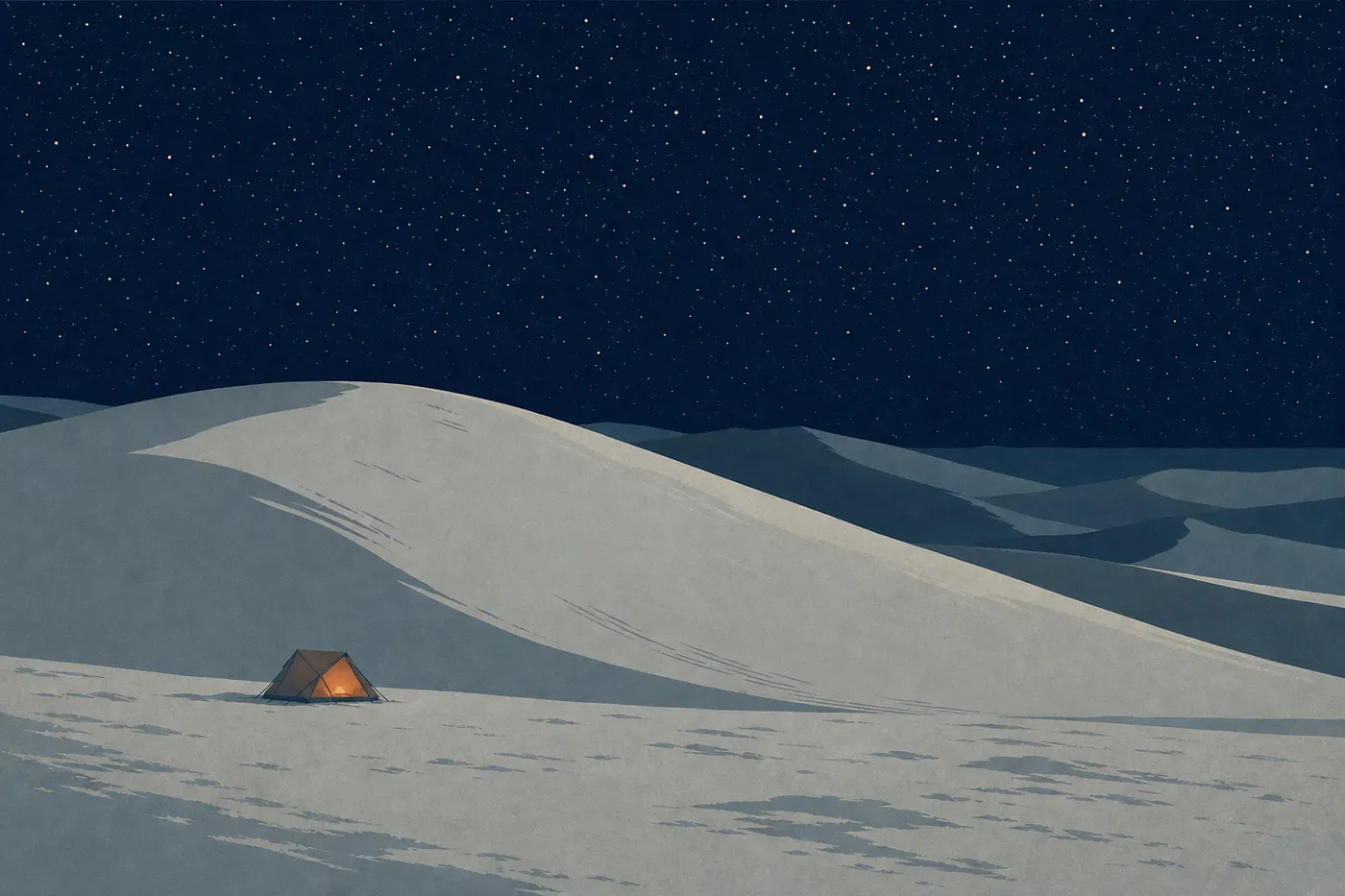
White Sands isn't your typical camping destination. The only NPS-managed campground is a primitive backcountry camp deep in the gypsum dunes, accessible on foot and without water or electricity. There are no developed campgrounds with restrooms and hookups here. Instead, you'll sleep under New Mexico's stars in an all-white landscape. Families and RV travelers looking for more comfort can choose from campgrounds in the Alamogordo area, less than 19 miles away.
The short version: There is 1 campground in the park (Backcountry Camping, with 10 tent-only sites), and you get the permit the same day at the visitor center. It costs $2 a night and is first come, first served. Restrooms and cell service are available, but there are no water or electrical hookups. For everything else, head to campgrounds outside the park.
Campgrounds in the park (1)
- Campground Backcountry Camping first come, first served · 10 sites Directions ↗
 Base map © OpenStreetMap · © CARTO
 White Sands campgrounds by the numbers
1 official campgrounds inside the park, 10 campsites in total, 0 of them reservable.
| Campground | Sites | Booking | Fee / night | Open | Amenities |
|---|---|---|---|---|---|
| Backcountry Camping | 10 (10 tent only) | First come, first served | from $1.50 | toilets, cell service |
Source: National Park Service (NPS API), retrieved October 6, 2026. Fees and dates change: check the campground page before you go.
Can you camp inside White Sands?
Yes, as long as you're comfortable with primitive camping rules. White Sands has no developed campgrounds, and there is no drinking water or electricity in the park. The only on-site option is Backcountry Camping, with 10 tent-only sites accessible on foot from Dunes Drive. Sites are first come, first served and cost $2 a night.
Camping outside the designated sites is strictly prohibited. Fires are also banned year-round. The risk of fire in the gypsum dunes is real, and rangers enforce the rule.
Camping in the park: backcountry camping
Backcountry sites (primitive sites)
The park has 10 numbered primitive sites, about a 0.9-mile walk from the main road. Each site is marked and fitted with metal anchor stakes, which are essential for securing a tent in high winds. Restrooms are available, and the area has cell service.
What you'll find: a marked tent site, anchor stakes, restrooms, and cell service. What you won't find: drinking water, trash cans, electricity, or a place to resupply.
Each site generally accommodates 2 to 6 people. A group may occupy only one site. The park entrance fee is charged separately from the backcountry permit ($2 a night).
RV vs. tent camping: what you need to know
RVs can't stay overnight inside the park. Larger vehicles, over 23 feet long, are also discouraged on Dunes Drive because of the tight turns and narrow shoulders.
If you're camping in a tent: Backcountry Camping is your only option inside the park. There are 10 sites, first come, first served, for $2 a night. Bring a backpack large enough for all your gear, including water. Plan on at least 3 liters per person for the night, and more in summer.
If you're traveling in an RV or van: Choose a developed campground outside the park. Alamogordo, 15 miles east on US Highway 70, has several properties with water and electrical hookups and dump stations. Our White Sands RV camping guide covers the best-located options.
Camping nearby: campgrounds outside the park
When the park is full or you need more amenities, two areas stand out.
Oliver Lee Memorial State Park is about 16 miles south of Alamogordo. It offers tent and RV sites, with water, electricity at some sites, and showers. The Sacramento Mountains provide a pleasant alternative to the gypsum desert, about a 30-minute drive from the park entrance.
Alamogordo has several private campgrounds and RV parks in town, all less than 30 minutes away. It's a practical choice if you arrive late in the afternoon or are traveling with your family.
Our White Sands lodging guide covers hotels, motels, and lodges for anyone who'd rather skip the tent.
Backcountry camping permit
White Sands Backcountry Camping uses an in-person permit system. There are no online reservations and no six-month booking window through Recreation.gov. You simply go to the visitor center the same day, before the permit desk closes, and get your permit on-site, subject to availability.
All 10 sites fill early on fall weekends and during American school breaks. Get to the visitor center in the morning to secure a spot.
Our White Sands hiking guide covers the routes from Dunes Drive to the sites, as well as the trails you can link together from camp.
How and when to book a campsite at White Sands
Advance booking through Recreation.gov: Not available for Backcountry Camping. You handle everything in person at the visitor center on the day you arrive.
Timing matters: The permit desk closes before sunset, and the park itself closes 30 minutes after local sunset. Rangers recommend arriving before noon on busy days.
Best time to camp: Fall (October–November) and late spring (late April through May). Summer nights remain warm, often above 72°F, and spring is windy. Our guide to the best seasons at White Sands helps you choose based on your tolerance for heat and wind.
Fees: how much does a night at White Sands cost?
Every camper must pay the park entrance fee:
| Category | Fee |
|---|---|
| Private vehicle (7 days) | $25 |
| Walk-in or bicycle entry | $15 |
| Motorcycle | $20 |
| White Sands annual pass | $45 |
The Backcountry Camping permit costs an additional $2 a night, paid at the visitor center the same day. Our National parks fees and passes guide explains the America the Beautiful pass ($80 per year, valid at all federal recreation sites) and when it pays off on a multi-park trip.
Safety and best practices
White Sands presents challenges that most parks don't.
Heat and dehydration: In summer, temperatures regularly reach 100–104°F. The white gypsum reflects ultraviolet light, so sunburn can happen faster than you expect even when skies are partly cloudy. Bring at least 3 to 4 liters of water per person per night, not counting the round-trip walk to the site.
Getting turned around in the dunes: The uniform white landscape erases visual landmarks in every direction. Save a GPS waypoint for your site as soon as you set up. At night, it's easy to lose the trail if you're relying on a headlamp alone. Cell service at the sites helps, but it doesn't replace saving a waypoint before dark. When we visited in October, several campers simply left their shoes outside the tent as a visual marker. It worked, but a GPS waypoint is still the safest bet.
Wildlife: White Sands is home to rattlesnakes and scorpions. Shake out your shoes and clothing in the morning before putting them on. Never turn over a rock with your bare hands.
Wind: Spring brings powerful gusts that can flatten a poorly equipped tent. Sturdy anchor stakes and taut guylines are essential.
Check the official NPS website or ask the rangers at the visitor center if you have questions about park regulations.
Which campground is right for you?
You're tent camping and want an unusual experience: The 10 Backcountry Camping sites are a good fit. Get to the visitor center early, carry all your water, and you'll spend the night in a setting unlike any other American park. Our complete White Sands guide provides the broader context you need to plan your visit.
You're traveling with young children or in an RV: Choose a developed campground in Alamogordo or at Oliver Lee State Park. The amenities more than make up for the 25- to 30-minute drive to the entrance. Our guide to visiting White Sands with kids lists the facilities best suited to children.
You're hiking and want to hit the trails at dawn: Backcountry Camping puts you at the center of the trail network. Read our Hiking guide before choosing a site so you can plan for the distances and elevation gains.
Frequently asked questions
Can you camp at White Sands National Park?
Yes, through the NPS-managed Backcountry Camping program: 10 tent-only sites accessible on foot from Dunes Drive for $2 a night. There are no developed campgrounds with running water or electricity inside the park.
Which campground should you choose at White Sands?
If you're looking for an immersive experience in the gypsum dunes, the 10 Backcountry Camping sites are the obvious choice. Get your permit at the visitor center the same day, pay $2 a night, and you'll have restrooms and cell service on-site. For more comfort or if you're traveling in an RV, Oliver Lee Memorial State Park and Alamogordo's campgrounds are the best-located alternatives.
When should you book a campground at White Sands?
There are no advance reservations for White Sands Backcountry Camping. You can only get the permit in person at the visitor center on the day you arrive. During the busy season, including fall and spring weekends, arrive before noon because the 10 sites fill early.
How do you camp at White Sands?
Go to the visitor center on the day you arrive and get a Backcountry Camping permit ($2 a night), then walk to your marked site in the dunes. Bring all your water and food. There is no place to resupply, although restrooms and cell service are available.
How much does a campsite at White Sands cost?
The Backcountry Camping permit costs $2 a night, paid at the visitor center the same day. You also have to pay the park entrance fee: $25 per vehicle for 7 days, or $15 for walk-in or bicycle entry.
Are there bears or alligators at White Sands?
No. White Sands is a gypsum desert in New Mexico, far from bear and alligator country. The local wildlife to watch for includes rattlesnakes and scorpions, which may crawl under shoes and clothing left on the ground. Always shake out your gear before using it.