
White Sands National Park: The Complete Visitor Guide
Picture a sea of brilliant white dunes, so bright they look like snow in the middle of the desert. That's White Sands, in southern New Mexico: the world's largest gypsum dune field, designated a national park on December 20, 2019, after more than 80 years as a national monument. People come to walk barefoot through cool, powdery sand, sled down the dunes, and stand transfixed as the sunset sets the whole landscape aglow. Allow half a day for the essentials, or a full day if you want to hike and stay for sunset. This is a compact, accessible, spectacular park that's ideal for a stop on a Southwest road trip.
Here's the game plan: where the park is, how to get in, what to see in each area, and which pages to visit for more detail.
White Sands at a Glance: Where the Park Is and How to Get There
White Sands sits in southern New Mexico along US Highway 70, between Las Cruces and Alamogordo. The entrance is about 15 miles west of Alamogordo and 52 miles east of Las Cruces. From Alamogordo, the drive takes about 20 minutes. From Las Cruces, allow just under an hour via San Agustin Pass.
There is no public transportation to the park, so you'll need a car. The nearest town for lodging, gas, and meals is Alamogordo. The closest major airports are in El Paso, Texas, about 1.5 hours away, and Albuquerque, farther north.
One thing to know before you go: the park lies within White Sands Missile Range. During missile tests, US 70 and the park close temporarily, usually for a few hours and rarely more than twice a week. The closures are announced in advance, but they can throw off a tight schedule. Check the calendar that morning.
Entrance Fees, Passes, and Reservations
Admission to White Sands costs $25 per private vehicle and is valid for seven consecutive days. Other fees include:
- Motorcycle: $20
- Pedestrian, bicyclist, or bus passenger, per person: $15
If you're visiting several national parks during the year, White Sands' annual pass costs $45. For a true road trip that includes multiple parks, the America the Beautiful pass, valid at all federal national parks, is almost always the better deal. Our Fees & Passes page explains entrance fees and passes.
The good news is that you don't need an entrance reservation or timed entry reservation to visit the park, unlike other sites such as Arches. You arrive, pay, and go in. Bring a way to pay by card, and keep your receipt on the dashboard.
Reservations, Permits, and Rules to Follow
For a regular day visit, you don't need a reservation. Pay at the entrance or in advance through recreation.gov.
Backcountry camping at a few dispersed dune sites with no facilities requires a permit obtained at the visitor center the same day, subject to availability. There is no car camping in the park. For nearby campgrounds, our Camping page lists the best options in the area.
Here are the essential rules to know before you enter:
- You may not remove sand, plants, or animals. Gypsum and its ecosystem are protected by federal law.
- Dogs are allowed on a short leash, less than 6 feet long, throughout all areas open to the public. They aren't allowed in the backcountry.
- Obey the speed limits on Dunes Drive. Wind can reduce visibility, and animals regularly cross the road.
- Some areas of the park may close without notice for military tests or to protect local wildlife.
Getting Around White Sands
The park revolves around one road, Dunes Drive, an approximately 8.1-mile round-trip loop that gradually leads into the heart of the dunes. The first few miles are paved. The final section runs over compacted gypsum, hard and white like a salt flat. A regular passenger car can handle it easily in dry weather. Drive slowly and watch for windblown sand on the road.
Along Dunes Drive, pullouts serve the trails, sheltered picnic tables with curved metal awnings that have become a signature of the park, and areas where you can freely climb and sled down the dunes. Everything starts from the road. There is no shuttle and no remote area to reach. That's what makes White Sands so easy to visit.
One safety rule matters more than it may seem: away from marked trails, the dunes all look alike and it's easy to lose your bearings. Note where you started, carry water, at least 1 liter per person and more in summer, and never head into the dunefield during the hottest part of the day without sun protection.
How Much Time Do You Need at White Sands?
For the essentials, allow half a day: drive Dunes Drive, walk one or two short trails, sled down a few dunes, and head out. This is the most common format, often planned for a morning or late afternoon.
For a fuller visit, plan on a full day. You can fit in a longer hike, have a picnic, and stay for sunset, the highlight of the day at White Sands. The low light brings out the contours and makes the sand glow red. It's also the coolest time to visit in summer.
One timing tip: the entrance closes 30 minutes after local sunset, and the gates open at 7 a.m. Plan a summer visit for early morning or late in the day to avoid the midday heat. Our Itinerary & Timing page lays out several visit options based on how much time you have.
Plan your visit
What to See and Do at White Sands
The heart of the visit can be summed up in one word: dunes. But between the trails, sledding, and wildlife watching, you can easily fill several hours. Here are the areas and activities not to miss, from easiest to more demanding.
Road trip journal · 4 areas
The Visitor Center and Surroundings
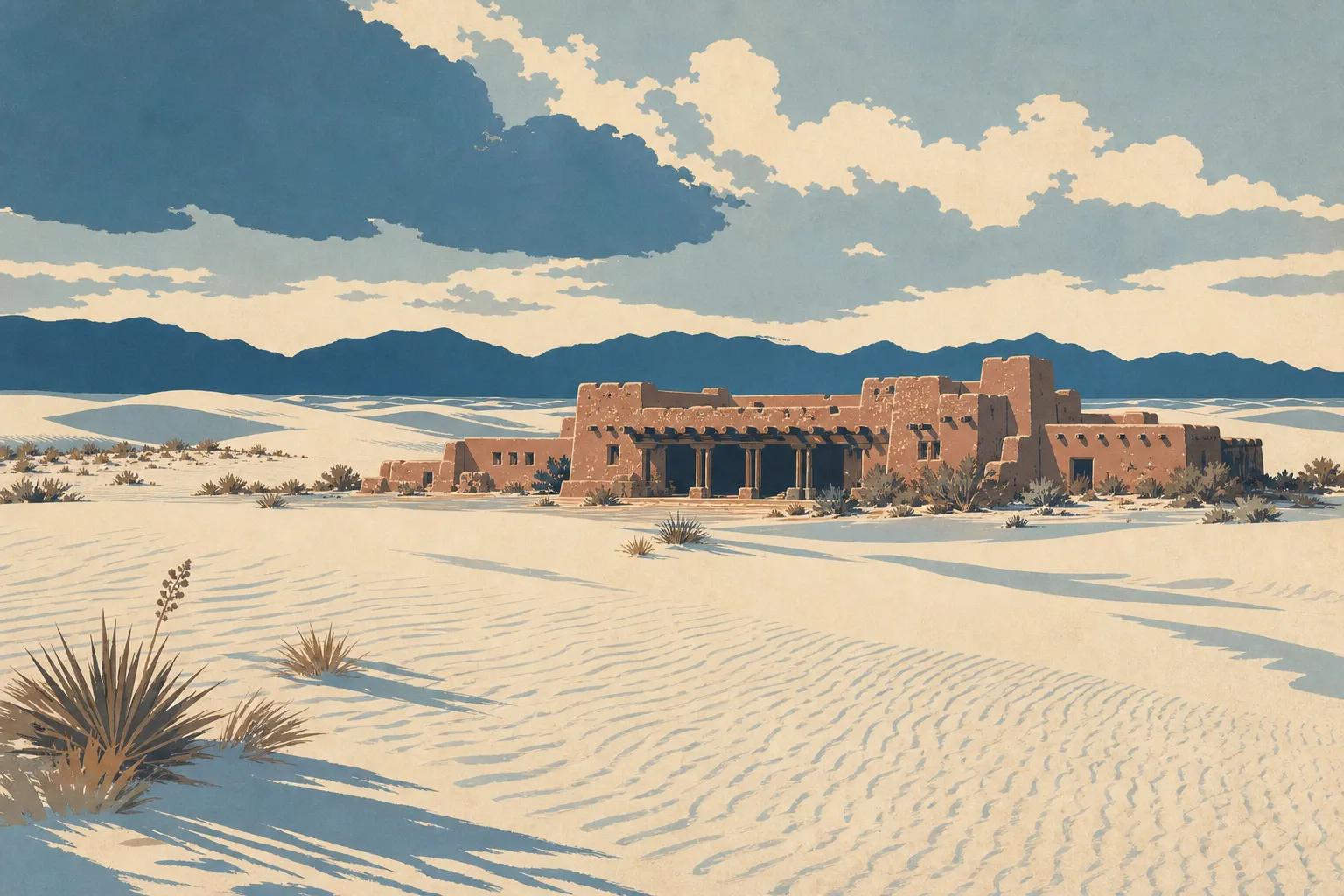
The visitor center at the park entrance occupies a handsome adobe building from the 1930s. Check the day's weather, military closure information, and exact sunset time. If you're in the mood, you can also buy a plastic sled, the famous saucer, at the gift shop. It's the required stop before you head into the white landscape.
Sledding the Dunes
Sledding down a gypsum dune is the park's signature activity, and everyone can do it. Choose a fairly steep dune away from vegetation, wax the bottom of your saucer with the wax sold on-site, and go for it. Kids love it, and so do adults. We won't judge. The tallest, most open dunes are toward the end of Dunes Drive.
Short, Marked Trails
Several easy walks let you get to know the park without losing your way. Interdune Boardwalk is a short, accessible boardwalk that's ideal for a first look and includes signs about the geology and desert life. Playa Trail and Dune Life Nature Trail are two short loops that show how vegetation clings to the dunes. With a little luck, you'll also spot tracks from nocturnal animals in the sand early in the morning.
The Big Crossing: Alkali Flat Trail
For hikers, Alkali Flat Trail is the park's main challenge: an approximately 5-mile loop through the heart of the dune field, marked by posts set in the sand. The name is a little misleading. It's anything but flat, with continuous climbs and descents over the dunes. Heat makes it strenuous, and you need to follow the markers carefully because the landscape offers no landmarks. Carry plenty of water, start early, and don't hesitate to turn around if the wind picks up.
Full details on every hike, including distances, elevation gains, and difficulty levels, are on our Hiking page. For a complete list of activities, including photography, seasonal ranger programs, and moonlight outings, visit our Things to Do page.
Explore the park
The Best Hikes at White Sands
White Sands isn't a long-distance hiking park, and that's perfectly fine. Here, you hike for direct contact with the dunes, not to rack up miles. The highlights range from a boardwalk that takes just a few minutes, Interdune Boardwalk, to a genuinely strenuous trek, Alkali Flat Trail, with short nature loops in between.
A word about safety, which applies to every walk in the dunefield: stay on marked trails, don't count on reliable cell service, and turn back if the weather changes. Complete trail-by-trail information and our advice are on the Hiking page.
The detailed guide White Sands Hikes: The Best Trails for Every Skill Level A practical guide to White Sands trails, including Alkali Flat, Dune Life, and… Read the guide →Wildlife and Plants to Look For
At first glance, the dune field looks barren. Yet it teems with life, most of it discreet and nocturnal. White Sands is home to several species that have turned white over the course of evolution to blend into the gypsum, including certain lizards and small rodents. It's a textbook example of adaptation to the environment. You'll have an easier time spotting their tracks early in the morning than seeing the animals themselves.
As for plants, hardy species colonize the hollows between the dunes. Yuccas grow taller so they won't be buried, while grasses and shrubs help hold the sand in place. Sunrise and sunset are still the best times to look for birds and small mammals. Our Wildlife page explains which species to watch for and where to find them.
The detailed guide White Sands Wildlife: Animals to See and Where to Find Them White Sands wildlife guide Read the guide →When to Visit White Sands
Temperatures vary sharply throughout the year. Summer is very hot, with midday highs that make visiting strenuous, so go early in the morning or in the evening. Fall is the most comfortable season, with mild days and cool nights. Winter stays mild during the day but evenings are cold. Spring is windy, with beautiful light but gusts that can blow sand around and make a hike difficult.
In short, fall and late spring offer the best balance. For month-by-month details, average temperatures, and seasonal advice, see our When to Visit page and our Weather page.
The detailed guide When to Visit White Sands: Best Time, Weather, and Seasons The best time to visit White Sands is October and November Read the guide →Where to Stay Near White Sands
The park has no lodging, and regulated backcountry camping hasn't been offered for several years. Always check the current status before relying on it. In practice, you'll stay outside the park. The most convenient base is Alamogordo, about 20 minutes away, with chain motels, restaurants, and supermarkets. Las Cruces, which is larger, is an alternative if you're arriving from the west.
To compare all your options, see our Lodging guide (the Where to Stay page), our Hotels & Lodges selection, our Camping page, and our RV page if you're traveling by van or RV. Our Where to Eat page covers meals in and around the park.
Stay in the park
Around White Sands: Things to Do Nearby
White Sands pairs well with other sites in southern New Mexico. Nearby, Alamogordo and the surrounding area offer enough to round out a day. Farther north, Trinity Site, where the first nuclear test in history took place on July 16, 1945, opens to the public only a few days each year. Plan well in advance if the subject fascinates you.
To build a true circuit, White Sands fits naturally into a road trip connecting El Paso, Las Cruces, and northern New Mexico. Our Road Trip and Region pages put the park into a broader itinerary, with distances and stops that work well on the road.
Our Take: Is White Sands Worth the Trip?
Yes, without a doubt, as long as you know what you're coming for. White Sands isn't a park where you'll hike for days. It's a concentrated place of immediate wonder. When we visited in the late afternoon, the way the light shifted across the dunes at sunset was worth the trip on its own. You'll leave with sand in your shoes and a head full of images.
The best way to use it is as a half-day or full-day stop on a Southwest road trip, scheduled outside the hottest hours, with sledding and sunset included. Make it your only destination for the day and you'll see everything. Add it to a circuit and it becomes one of the trip's most memorable highlights.
Use this complete guide as your starting point. Follow the links throughout the text to explore each topic in more depth.
Frequently Asked Questions
How much time do you need at White Sands?
For a visit to White Sands, allow half a day for the essentials, including Dunes Drive, one or two short trails, and some sledding. Plan a full day if you want to hike and stay for sunset. It's a compact park where everything starts from one road.
Why is White Sands famous?
White Sands is famous for being the world's largest gypsum dune field. Its brilliantly white landscape is unique on the planet and has been protected as a national park since December 20, 2019. The sand feels cool to the touch, and you can sled down the dunes.
What is the closest town to White Sands?
The closest town to White Sands is Alamogordo, about 15 miles east of the entrance, or roughly a 20-minute drive. It's the most convenient base for lodging, meals, and gas because the park has no accommodations.
How much does it cost to enter White Sands?
Admission to White Sands costs $25 per private vehicle and is valid for seven days. Motorcycles cost $20, while pedestrians and bicyclists pay $15 per person. The park also offers a $45 annual pass, but the America the Beautiful pass is often a better deal on a road trip.
The American Parks shop
Bring White Sands home
Our park-inspired creations, made to order and shipped to your door.
Latest park news
- White Sands: A Flash Flood Warning Hit the Park and Its SurroundingsThe National Weather Service issued an official flash flood warning for the White Sands area on September 29.